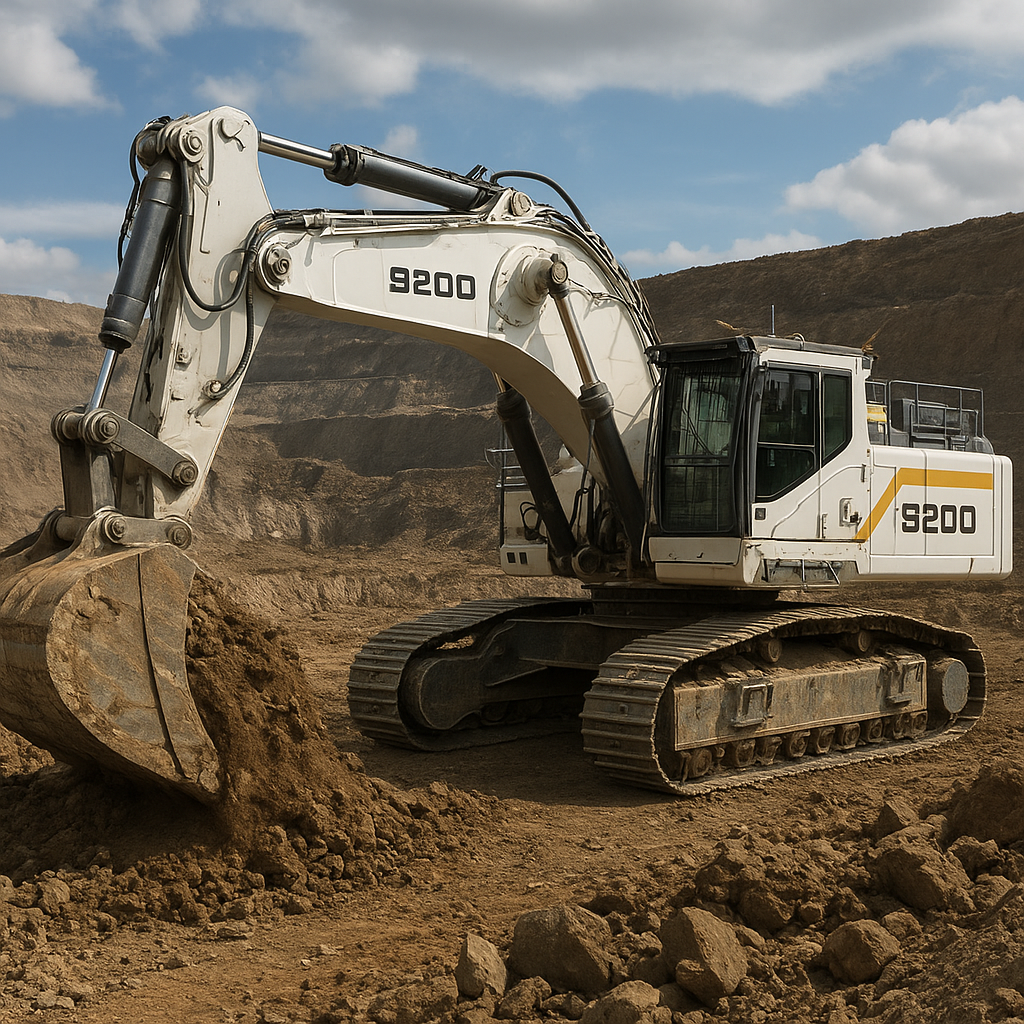
The Liebherr R 9200 represents a modern example of heavy-duty mining machinery designed to meet the demanding needs of open-pit operations. In this article we examine its design philosophy, typical applications, technical characteristics, operational performance, and the practical considerations that mine operators should weigh when deploying such a machine. Special attention is given to real-world use cases, maintenance strategies, and environmental and safety features that define the machine’s value proposition.
Overview and design philosophy
The nameplate characteristic of the machine is its role as a large-scale hydraulic mining excavator. Manufactured by Liebherr, the Liebherr R 9200 is engineered to provide robust, reliable digging and loading performance in harsh mining environments. It blends advanced hydraulics, operator ergonomics, and modular serviceability to deliver consistent productivity. While the line-up of models from Liebherr includes various sizes—some aimed at ultra-large operations—the R 9200 occupies a position aimed at medium-to-large open-pit applications where a balance between bucket size, cycle time, and mobility is required.
Key technical features and components
The R 9200 integrates several technical subsystems optimized for heavy-duty mining tasks:
- Hydraulic system: High-capacity pumps and robust cylinders provide the force necessary for digging and swinging under load. The hydraulic layout is tuned for smooth, controllable operation and efficient power transfer.
- Powertrain: Diesel engines or diesel-electric configurations are commonly used in this class to deliver the high continuous power output needed for deep digging and extended shifts.
- Bucket and arm geometry: The R 9200 is outfitted with a bucket and boom combination chosen to match the mine’s material characteristics and the loading profile of haul trucks. Bucket capacities for machines in this segment are selected to optimize the balance between mass moved per cycle and cycle time.
- Operator cabin and controls: Modern Liebherr cabins emphasize visibility, climate control, low-vibration mounts, and intuitive control layouts to reduce operator fatigue and increase productivity.
- Serviceability: Modular access to filters, fluid points, and major hydraulic components reduces downtime during routine maintenance and repairs.
Typical specifications (representative ranges)
Exact specifications for the R 9200 may vary by year, customer configuration, and optional packages. The following ranges provide a representative idea for machines in this class:
- Operating weight: typically in the low to mid-hundreds of tonnes (configuration-dependent).
- Engine power: often in the several-hundred to over a thousand kilowatts range depending on the installation.
- Bucket capacity: commonly between roughly 10 m3 and 25 m3 for medium-to-large buckets; specialized buckets for high-density materials or coal may differ.
- Digging reach and depth: designed to match open-pit benches and haul-truck configurations, with booms and sticks sized to achieve required dipper depths and reach envelopes.
Note: For precise numbers, including certified curb weights, hydraulic pressures, and factory-specified fuel consumption, consult the official Liebherr technical documentation or the local Liebherr sales representative, as mine-specific options and attachments significantly affect final figures.
Applications and operational roles
The R 9200 is intended for heavy excavation contexts where continuous, high-volume material movement is required. Common applications include:
- Open-pit mining: Loading of haul trucks, stockpile reclaimer duties, and bench clearing operations. The machine’s bucket size and cycle performance determine its match to specific truck fleets.
- Quarrying: Extraction of dimension stone and aggregates where high-reliability hydraulic excavators are preferred for selective digging and loading.
- Bulk materials handling: Loading of barges, railcars or hoppers in large earthworks projects where large, repetitive scoops are needed.
- Reclamation and site preparation: Large excavators can be re-tasked for reclamation, stripping, and reclamation- phase works where heavy material movement is required.
In each role, pairing the excavator with the correct truck fleet and operational plan is essential to unlock the machine’s productivity potential. A well-matched system reduces idle time, improves tonnage per shift, and optimizes fuel usage.
Performance, productivity and economics
Key performance indicators for an R 9200 in operation include payload per cycle, cycles per hour, fuel consumption per tonne moved, and availability. Liebherr machines emphasize a balance between raw digging force and hydraulic control to maintain steady cycle times under varying material conditions.
Productivity considerations
- Matching bucket size to truck capacity: Oversized buckets can increase load times and decrease cycle cadence; undersized buckets reduce payload per cycle and increase truck waiting times.
- Cycle time optimization: Advanced hydraulics and operator assistance systems help shorten swing and crowd times, improving effective cycles per hour.
- Material density and fragmentation: Denser or poorly fragmented material reduces bucket fill factor, directly affecting productivity; pre-shooting or blasting strategies are often coordinated to improve digability.
Cost of ownership
Lifetime costs include acquisition, fuel, scheduled maintenance, unscheduled repairs, and component replacement (e.g., buckets, teeth, undercarriage in tracked variants). Liebherr’s focus on serviceability and durable components aims to reduce downtime and repair frequency, improving total cost of ownership. Factors that materially influence economics:
- Utilization rate (hours per year)
- Local fuel and labor costs
- Availability of authorized service and parts
- Condition monitoring and predictive maintenance practices
Maintenance, diagnostics and lifecycle management
Efficient maintenance strategies are critical for mining excavators to achieve high availability. Liebherr integrates diagnostic capabilities and easy access to service points to minimize maintenance downtime.
- Planned preventive maintenance: Routine filter changes, fluid checks, hydraulic hose inspections, and wear part replacements performed on scheduled intervals.
- Condition-based monitoring: Sensors and telematics can track engine hours, hydraulic pressures, oil cleanliness, and operating loads to trigger maintenance before failures occur.
- Wear components: Buckets, cutting edges, pins and bushings are consumables; using OEM or approved aftermarket parts preserves performance and reduces secondary damage.
Many operators deploy a combination of on-site technicians and factory-trained service teams for major overhauls. Reconditioning and component remanufacture programs extend useful life while controlling capital expenses.
Safety, operator ergonomics and environmental considerations
Modern mining excavators like the R 9200 are designed with operator safety and environmental impact reduction in mind:
- Safety systems: Rollover protection, fall prevention, emergency shutdowns, camera systems and proximity detection for personnel and vehicles reduce risk in busy pit environments.
- Operator ergonomics: Comfortable seating, climate control, low vibration mounts, and optimized sightlines reduce fatigue and improve sustained productivity over long shifts.
- Emissions and fuel efficiency: Engine tuning and hydraulic efficiency improvements reduce fuel burn and emissions per tonne moved. Some mines supplement traditional drivetrains with electrification in loading cycles or hybrid systems where available.
Environmental initiatives
Operators increasingly value machines that enable lower CO2 intensity per tonne moved. Strategies include:
- Optimized dig cycles to reduce wasted swing and idling
- Use of renewable diesel or low-carbon fuels where compatible with engine warranties
- Integration with fleet-level optimization software to reduce empty-haul trips and idling
Technology integration and digital features
Liebherr continues to invest in digital systems to support productivity and maintenance:
- Telematics and fleet management platforms provide remote access to machine health, location, and operating metrics.
- On-board diagnostics assist technicians in rapid fault identification and guided troubleshooting.
- Operator assistance and load monitoring tools help ensure consistent loading profiles and prevent overloading or damaging cycles.
Deployment examples and typical mine workflows
In a typical open-pit mine scenario, the R 9200 is assigned to a bench where it loads a fleet of haul trucks sized to the excavator’s bucket capacity. A few typical workflows:
- Primary loading: The excavator loads 6–12 haul trucks in a coordinated cycle, maintaining continuous excavation as trucks rotate through loading stations.
- Stockpile creation: The machine performs high-cycle stacking to create intermediate stockpiles for later processing.
- Bench stripping: In early-stage mining, the excavator removes overburden in large volumes to expose ore horizons.
Coordination with blast scheduling, truck dispatch systems, and crusher throughput is essential to minimize bottlenecks and idle time.
Case studies and industry reception
Large mining companies generally evaluate machines like the R 9200 with a focus on matching fleet composition, haulage costs, and productivity targets. Industry reports and operator testimonials often highlight:
- Reliability in abrasive conditions thanks to robust hydraulic components and wear protection.
- Competitive fuel economy relative to comparable models when operated with optimized cycles.
- Strong aftermarket support networks in major mining regions, improving spare-part availability and repair turnaround.
Comparisons and fleet integration
When integrating an R 9200 into an existing fleet, mines consider:
- Truck matching: Ideal truck payload should align with the excavator’s bucket mass to minimize partial loads and waiting.
- Maintenance alignment: Standardizing on similar makes or systems can simplify parts inventories and technician training.
- Operational tempo: Cycle-time expectations must match crushing, hauling, and processing capacities to avoid queuing at load and dump points.
Buying considerations and procurement tips
Key items to evaluate before purchase:
- Configuration options (bucket types, booms, sticks) to match material characteristics
- Warranty terms and availability of local support
- Telematics and software packages for fleet integration
- Resale and lifecycle value backed by service history and OEM refurbishment programs
Conclusion
The R 9200 from Liebherr is a capable, purpose-built mining excavator that balances digging force, payload handling and operational resilience. With a focus on hydraulic efficiency, operator comfort, and maintainability, it is suitable for a wide range of open-pit mining and heavy-material handling tasks. Effective deployment depends on proper matching to haulage fleets, proactive maintenance regimes, and digital integration to maximize uptime and productivity. For project-specific figures such as exact engine power, operating weight, and official fuel consumption, it is recommended to consult Liebherr’s official technical sheets or speak with an authorized dealer so that the machine’s configuration can be tailored to specific site conditions and production targets.
Key strengths: excavator, mining, hydraulic performance, bucket versatility, efficiency, safety, maintenance, productivity, fleet compatibility, and digital diagnostics.
)
)