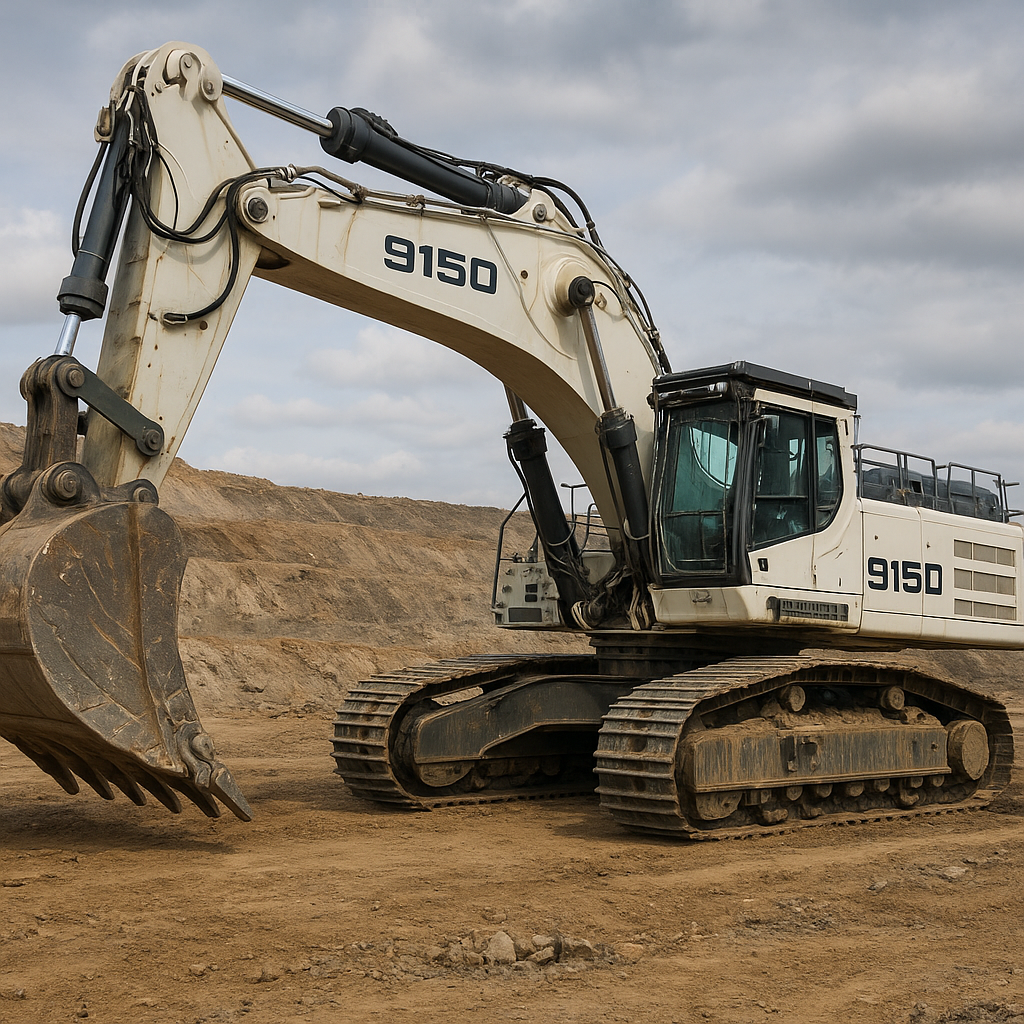
The Liebherr R 9150 is a heavyweight contender in the realm of large-scale excavation equipment, designed primarily for demanding surface mining and quarrying tasks. Combining robust mechanical design, advanced hydraulic systems and operator-focused ergonomics, the machine aims to deliver steady productivity in harsh environments. In the following sections we explore its design, typical applications, operational performance, maintenance considerations and practical tips for operators and fleet managers.
Design and technical overview
The R 9150 is a purpose-built hydraulic excavator optimized for heavy-duty loading and material handling in open-pit mining and large quarries. Its architecture balances a powerful powertrain, durable undercarriage and a loading package sized to match common large haul trucks. Liebherr designs this family of machines with modular components to simplify servicing and to increase uptime.
Core components and layout
- Engine: Typically a high-displacement diesel engine delivering robust continuous power suited for heavy digging cycles; engines for machines in this class usually produce power in the range of roughly 300–500 kW, depending on emission stage and configuration.
- Hydraulic system: Advanced hydraulic circuits and pumps designed to prioritize controlled digging force, smooth swing motion and efficient bucket filling. Liebherr’s hydraulic controls emphasize precise pilot handling and load-sensing features.
- Underframe and tracks: Heavy-duty track systems with wide shoes for ground-bearing distribution and stability while loading large trucks. Track designs focus on durability in abrasive conditions.
- House and swing components: Reinforced swing bearing and gear systems with redundant lubrication paths and robust housings for long life under cyclic loads.
- Attachment interfaces: Standardized pin and boom geometry that accept a range of buckets (from rock buckets to heavy-duty coal buckets), rippers and hydraulic attachments like breakers.
Typical specifications (sample ranges)
Exact figures vary by model year and customer configuration, but machines in the R 9150 class typically exhibit the following ranges:
- Operating weight: approximately 90–120 tonnes depending on configuration and attachment.
- Bucket capacity: commonly from 4 to 8 m³, with options for specialized smaller or larger buckets based on material density and loading strategy.
- Engine output: approximately 300–500 kW (continuous rating depending on emission stage and tuning).
- Stick and boom reach: designed to provide sufficient dig depth and loading height to service the majority of large haul trucks; typical dig depths and reach figures depend on boom/stick combination.
- Swing torque and hydraulic flow: sized to allow rapid positioning of the attachment while maintaining control during heavy loading cycles.
These ranges are representative rather than prescriptive—Liebherr offers equipment variations and customer options to match specific mine plans, truck sizes and material characteristics.
Primary applications and workflows
The R 9150 excels where repeated heavy-duty material removal, truck-loading and large-scale digging cycles are required. Its most common deployments include:
- Open-pit mining operations for overburden removal and ore loading.
- Quarrying and dimension stone extraction where high breakout forces and robust attachments are necessary.
- Bulk material handling at ports, terminals and large processing yards when configured with the appropriate bucket and reach.
- Stockpile reclamation and yard re-handling when flexibility and reach are more important than trenching depth.
- Specialized works such as road construction cut/fill tasks for large earthmoving projects.
Typical loading cycles and fleet integration
In a standard mining workflow the excavator is paired with haul trucks whose payload and body volume are matched to the excavator’s bucket capacity and cycle time to maximize truck fill factor and minimize idle time. Fleet planners typically pair machines like the R 9150 with 60–100-ton class haul trucks, but exact pairings depend on local haul road constraints and economic priorities.
Key workflow considerations include:
- Matching bucket volume to truck body dimensions to achieve an efficient number of passes per truck.
- Optimizing bench height and positioning to reduce truck spotting time.
- Sequencing loading points and using shovel/truck telemetry to synchronize cycles for higher throughput.
Performance, productivity and operational metrics
Performance for the R 9150 can be considered across several metrics: production (tonnes per hour), fuel efficiency, cycle times and availability. Operators and owners measure success by how the machine contributes to predictable daily production goals while controlling operating costs.
Productivity drivers
- Bucket fill factor: achieving a high fill factor is essential. Design of the bucket and matching to material characteristics can improve each pass’s payload by up to 10–20% versus poorly matched buckets.
- Cycle time: optimized operator technique, hydraulics response and efficient swing motion reduce the time per load and increase hourly throughput.
- Truck matching: correctly paired haul trucks reduce rehandling and queuing losses, increasing net tonnes moved per hour.
- Maintenance uptime: planned preventive maintenance and rapid serviceability preserve availability and productive hours.
Fuel efficiency and emissions
Liebherr emphasizes a balance between power and fuel consumption. For machines in this class, fuel burn varies widely with material hardness, bucket size, cycle time and operator technique, but a modern hydraulic excavator of this scale will typically consume several dozen to over a hundred liters of diesel per hour under full loading conditions. Advanced engine controls, variable hydraulic flow and smart idling strategies can reduce fuel consumption compared with older machines.
Operational statistics (illustrative)
As an example of operational realities (note these are illustrative and subject to site conditions):
- Hourly production: depending on bucket size and material, machines like the R 9150 can move anywhere from a few hundred to over a thousand tonnes per hour in favorable conditions when integrated in an optimized fleet.
- Availability: well-maintained excavators typically achieve operational availability in the 85–95% range; planned maintenance programs and remote monitoring can push availability higher.
- Fuel consumption: average site fuel rates for heavy digging cycles may range from about 30–150 L/h depending on load factors and engine tuning.
Operator comfort, control systems and safety
Liebherr cabins are designed to reduce operator fatigue and support sustained, precise digging. Instruments, joystick ergonomics and visibility are key contributors to safety and efficiency.
Cab features
- Ergonomic seating with multiple adjustments and suspension to reduce vibration exposure.
- Climate control and ample glazing to improve comfort and visibility in all seasons.
- Integrated control consoles with digital displays for diagnostics, fuel management and hydraulic settings.
- Optional camera packages and proximity detection systems to enhance situational awareness around the machine.
Safety systems
Modern excavators incorporate multiple safety elements: ROPS/FOPS certified cabs, emergency stop systems, safe-access ladders and anti-slip surfaces, and optional electronic systems such as travel interlocks and zone restriction functionality to prevent unsafe operations adjacent to berms or infrastructure.
Maintenance, life-cycle costs and total ownership
Beyond acquisition price, the long-term cost of an excavator is dominated by fuel, maintenance, parts and downtime. Liebherr supports owners with service networks, wear part programs and diagnostic tools designed to lower life-cycle costs.
Maintenance best practices
- Daily inspections of hydraulic hoses, pins and bushings to detect early wear.
- Scheduled oil and filter changes using OEM-recommended fluids to extend component life.
- Implementing telematics and machine monitoring to predict failures and plan interventions during planned downtime windows.
- Using correct bucket selection and limiting overloading to prevent excess stress on swing and undercarriage systems.
Total cost considerations
Key elements that affect total ownership cost include:
- Fuel consumption and efficiency initiatives.
- Component life and wear part replacement intervals (pins, bushings, track shoes, buckets).
- Access to aftermarket parts and local service networks—closer support translates to lower logistical downtime costs.
- Residual value and resale market demand—reliable, widely supported machines tend to retain value better.
Attachments, customization and adaptability
The R 9150 can be fitted with a variety of attachments to tailor the machine to specific tasks. The right attachment choices maximize efficiency and reduce unnecessary stress on the machine.
- Buckets: General-purpose, rock, coal, and high-capacity buckets for different densities and material types.
- Rippers and grapples: for loosening compacted material or handling irregular loads.
- Hydraulic breakers: for fragmentation tasks on benches or in quarry faces.
- Quick couplers and pin systems: enable rapid changeover between tasks and improve fleet flexibility.
Comparisons and market position
The R 9150 sits in a competitive cohort of large hydraulic excavators aimed at medium-to-large surface mining and quarry operations. Buyers compare machines based on productivity, reliability, fuel economy, dealer support and resale value. Major considerations when comparing brands include the availability of service, compatibility with existing fleet sizes and the ease of integrating telematics systems.
Competitor machines in roughly similar classes often include models from major manufacturers such as Caterpillar, Komatsu and Hitachi, each offering different strengths in fuel economy, operator ergonomics or parts availability. Liebherr differentiates itself through European engineering focus, robust build quality and extensive customization for mining environments.
Practical advice for buyers and fleet managers
Consider the following when evaluating the R 9150 for a project:
- Match bucket volume and reach to the haul truck size and bench geometry to maximize payload per pass and minimize truck idle time.
- Evaluate total ownership cost, not just upfront price—factor in fuel burn, campatibility with available service networks and spare parts logistics.
- Specify appropriate cooling packages and dust-sealing options for hot or abrasive environments to extend component life.
- Plan operator training focused on productive bucket filling techniques and smart idling to improve fuel economy and reduce wear.
- Use telematics and remote monitoring from day one to create baselines for fuel consumption, idle time and cycle efficiency; these baselines enable targeted improvements.
Environmental and sustainability considerations
Mining equipment manufacturers are progressively addressing emissions and efficiency. Newer Liebherr engines comply with prevailing emissions standards for their markets and often include features to reduce idle-time emissions. Fleet managers can further reduce environmental impact through:
- Adopting optimized dispatching and truck-excavator matching to reduce unnecessary cycles and idling.
- Implementing fuel management strategies and regular maintenance to maintain peak engine efficiency.
- Exploring alternative fuels or hybrid solutions where available and compatible with operations.
Conclusion
The Liebherr R 9150 is engineered as a heavy-duty hydraulic excavator capable of supporting demanding surface mining and quarrying operations. Its strengths lie in robust mechanical design, flexible attachment options and operator-focused features that aid long shifts in challenging conditions. While exact performance metrics depend heavily on configuration, site conditions and operator technique, machines of this class are valued for their ability to sustain high-volume loading cycles and integrate into coordinated fleet operations. For potential buyers, the most important considerations are correct matching of bucket and truck sizes, a disciplined maintenance regime and access to responsive service and parts—elements that together maximize uptime and long-term return on investment.
Liebherr and R 9150 represent a combination of durable hardware and adaptable deployment options; when properly specified and managed, the machine delivers consistent, high-capacity performance in the toughest surface mining contexts.
)
)