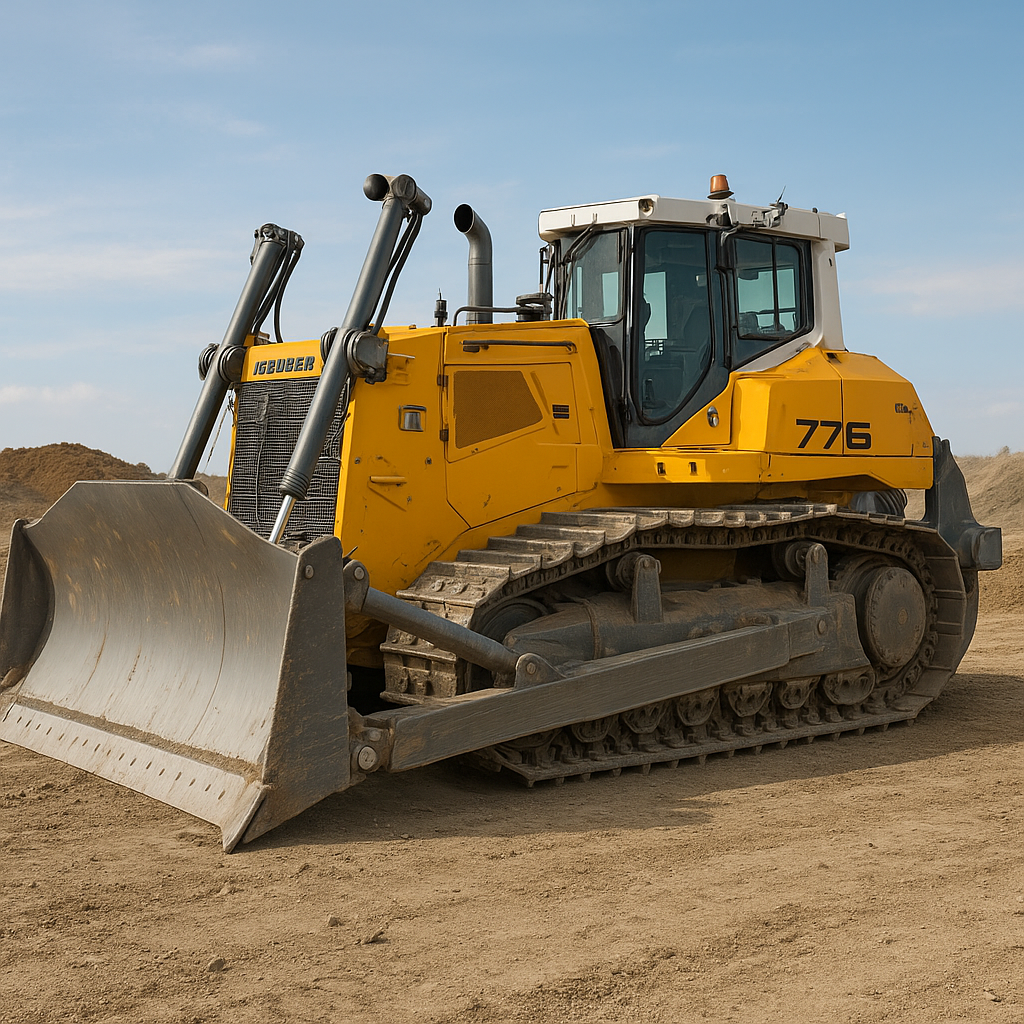
The Liebherr PR 776 is a heavy-duty Liebherr PR 776 crawler dozer designed for demanding earthmoving and mining tasks. Combining robust construction with modern control systems and operator-focused ergonomics, this machine aims to deliver high productivity, long service life and straightforward maintenance. The following article explores its design, common applications, technical characteristics (where available in general ranges), operational considerations and economic and environmental aspects relevant to fleet managers, operators and procurement specialists.
Design and core features
The PR 776 inherits many design philosophies common to Liebherr’s heavy earthmoving equipment: emphasis on component durability, modular design for easier servicing, and a focus on operator visibility and ergonomics. Key subsystems include powertrain, undercarriage, blade and hydraulic systems, all built to tolerate continuous heavy use in harsh conditions.
Powertrain and engine
The machine is powered by a high-displacement diesel engine tuned for broad torque delivery rather than peak rpm. While exact ratings vary by market and emissions stage, the class typically features engines in the upper mid‑range for crawler dozers, with power outputs commonly falling into an approximate range of 300–420 kW (about 400–560 hp). The engine is matched with a durable transmission and final drive package engineered to deliver reliable tractive effort for pushing large payloads.
The diesel systems are designed to meet the applicable emissions regulations (Stage IV/Tier 4 final or regional equivalents depending on the model year and market) and often include features such as cooled exhaust gas recirculation (EGR), selective catalytic reduction (SCR) and diesel particulate filtration where required.
Undercarriage and track system
Undercarriage design is one of the defining elements of any crawler dozer. The PR 776 uses a heavy-duty track frame and robust track components intended for long wear life under abrasive materials. Typical features include sealed track rollers, strong track shoes with multiple grousers for traction, and reinforced idler assemblies. The undercarriage is designed to be serviceable in sections to reduce downtime during maintenance.
Ground pressure is a critical parameter for dozers operating across varying soils. Depending on blade configuration and optional track width, the PR 776 class machines can be specified to balance flotation and traction—wider shoes to reduce ground pressure on soft ground, narrower tracks for higher traction in firm conditions.
Blade, ripper and attachments
The PR 776 is typically offered with a choice of blade types to suit different applications: straight blades (S-blade) for finishing and fine grading, universal or semi‑universal blades (U/SU) for higher capacity earthmoving, and angled blades for pushing material. Blade capacities and widths depend on configuration but are engineered to handle large volumes of material efficiently.
Many units are fitted with multi-shank rippers for ripping compacted subsoil or rock seams. The ripper and blade hydraulics are sized to ensure consistent material penetration and controlled load handling. A selection of undercarriage, blade and ripper combinations allow operators to optimize the machine for quarry work, bulk earthworks, road building or reclamation.
Applications and typical uses
The versatility and power of the PR 776 makes it suitable for a wide range of heavy applications. Typical uses include:
- Mining and quarrying: pushing blasted rock, building haul roads and maintaining benches.
- Large-scale earthworks: dam construction, land reclamation, and major excavation projects.
- Bulk material handling: stockpile management and pushing large volumes of material on site.
- Road and infrastructure construction: subgrade preparation, embankment building and fine grading when fitted with appropriate blades.
- Forestry and land clearing: where powerful dozers remove tree stumps and vegetation in advance of site works.
In mining and quarry environments, the PR 776 frequently operates around the clock; its design targets sustained performance under continuous loads, with service intervals and component life cycles in mind to reduce operational interruptions.
Performance, efficiency and representative specifications
Exact specifications for a given PR 776 vary by year and configuration. Instead of single definitive numbers, the following are representative values and performance considerations for machines in this class.
Representative technical data (approximate)
- Operating weight: roughly 50–80 tonnes depending on equipment and attachments.
- Engine power: commonly in the order of 300–420 kW (400–560 hp).
- Blade capacity: typical capacity for a heavy dozer blade in this class ranges from 8 to 16 m3 depending on blade type and configuration.
- Ground pressure: dependent on track shoe width but typically engineered to balance traction with flotation—configurations might range from around 0.9 to 1.6 kg/cm2.
- Maximum drawbar pull / tractive effort: substantial, allowing the machine to push large loads; exact numbers are model- and setup-dependent.
- Top speed: travel speeds for high-powered crawler dozers are typically between 8 and 12 km/h forward when unloaded; lower speeds under load are used for controlled pushing.
- Fuel capacity and consumption: large-capacity tanks (several hundred liters) to support extended shifts; average consumption varies widely with duty cycle but is a significant operational cost.
These values are indicative and should be confirmed from manufacturer documentation or the specific machine’s datasheet when making procurement or fleet planning decisions.
Operator environment, safety and controls
Liebherr places emphasis on operator comfort and visibility, which directly affects productivity and safety. Cab features typically include well-arranged controls, climate control, sound insulation, and wide glazing for sightlines to the blade and tracks.
- Control systems: ergonomic joysticks and multifunction displays for monitoring machine systems and diagnostics.
- Visibility: large windows and optional cameras for rear and side views enhance situational awareness on busy sites.
- Safety systems: ROPS/FOPS-certified cab structures, emergency egress provisions, and strobe lights or beacons for site compliance.
- Automation and assist systems: modern machines in this class often offer optional grade-control or guidance systems (GNSS-capable) to improve precision and reduce rework.
Improved ergonomics reduce operator fatigue, which can have a measurable effect on productivity over long shifts—an important consideration for continuous operations in mining or large civil projects.
Serviceability, maintenance and lifecycle considerations
Serviceability is a major cost driver over a dozer’s life. The PR 776’s design focuses on modular components, accessible service points and diagnostic systems that help minimize downtime.
- Access: large panels and strategically placed ladders and platforms allow technicians to reach routine service points quickly.
- Component modularity: transmission, final drives and hydraulic pumps may be replaced as modules to reduce repair time.
- Scheduled maintenance: manufacturer-prescribed intervals for oil, filter and coolant changes, plus undercarriage inspections, are critical to preserve warranty and longevity.
- Wear items: track shoes, rollers, idlers and blade cutting edges are the most frequently replaced items and should be monitored with an inventory plan to avoid extended outages.
Implementing a condition-based maintenance program—using telematics data, vibration analysis and oil sampling—can extend component life and lower total cost of ownership.
Economic aspects: acquisition, operation and resale
Buying and operating a PR 776 class dozer requires analysis beyond purchase price. Key economic elements include fuel costs, maintenance, operator training, expected availability, and resale value.
- Acquisition: purchase cost reflects configuration, attachments and factory options such as emissions packages and automation systems. Leasing or long-term rental options can convert capital expense into operating expense for short projects.
- Operating costs: fuel is often the largest variable expense. Selecting the right engine tuning and operator training to encourage fuel-efficient practices can reduce costs significantly.
- Downtime cost: fast repair turnarounds and a ready supply of spare parts reduce lost production time.
- Resale value: machines from established manufacturers with documented service histories typically retain value better on the secondary market.
Many large users assess total lifecycle cost (TCO) when choosing equipment—factoring in availability guarantees, service contracts and extended warranties can make ownership more predictable.
Environmental and regulatory considerations
Emissions regulations and environmental concerns shape modern heavy equipment design. The PR 776 class machines typically comply with regional emissions standards through SCR, DPF and other aftertreatment technologies. Operators should consider:
- Fuel choice and efficiency: optimizing fuel consumption reduces both cost and carbon footprint for large operations.
- Noise and dust control: mufflers, acoustic packages and dust suppression strategies on site improve community relations and worker safety.
- End-of-life and recycling: many components (steel structures, hydraulics, electronics) can be recycled; responsible disposal of lubricants and filters is necessary for regulatory compliance.
Telematics, automation and future trends
Integrating telematics into heavy equipment fleets is now standard for large operations. Fleet managers can use machine data (hours, fuel burn, idle time, fault codes) to optimize utilization and schedule preventive maintenance. For the PR 776 class machines, common telematics benefits include:
- Remote health monitoring to preempt failures.
- Utilization reports for better fleet allocation.
- Integration with site planning and grade-control systems to reduce rework.
Automation and semi-autonomous operation are increasing in mining and earthmoving. While fully autonomous push dozers are emerging mainly in large-scale mining, options such as auto-grade control, semi-autonomous repeatable cycles and remote operation enhance safety and productivity today.
Comparisons and competitive landscape
In its class, the PR 776 competes with other heavy crawler dozers from global manufacturers. Buyers consider factors such as fuel consumption, parts availability, dealer network strength, operator comfort, residual value and the availability of specialized attachments. Liebherr’s reputation for robust engineering and support in many regions makes the PR class a consideration for operators seeking a balance of durability and modern features.
Practical tips for operators and fleet managers
Maximizing the performance and life of a PR 776-class dozer requires disciplined operational practices. Practical recommendations include:
- Train operators on efficient blade techniques and gear selection to reduce fuel use and undercarriage wear.
- Maintain an inventory of critical wear parts such as track shoes, idler seals and cutting edges to minimize repair time.
- Implement telematics-based maintenance scheduling and oil-analysis programs for condition-based maintenance.
- Select blades and attachments appropriate for the job—over-sized blades increase fuel consumption and stress the drive train.
- Conduct regular undercarriage inspections and adjust track tension according to the manufacturer’s guidance to prolong component life.
Used machines and lifecycle expectations
Heavy dozers in this class can have long productive lives if properly maintained. A well-serviced PR 776 can remain in operation for thousands of hours—often measured in tens of thousands—before major overhauls are necessary. Secondary market values depend strongly on documented maintenance records, hours, undercarriage condition and the presence of major attachments.
Refurbishment or rebuild programs for engines, transmissions and final drives can extend machine life economically compared to full replacement. For mining operations, refurbishment cycles are often part of planned fleet management.
Summary
The Liebherr PR 776 is a heavy-duty crawler dozer class machine engineered for high-capacity pushing, earthmoving and mining tasks. With emphasis on a robust engine and durable undercarriage, adaptable blade and ripper options, and operator-focused features that enhance operator comfort, the PR 776 is designed to deliver strong productivity and reliability across demanding applications. Attention to maintenance, fuel management and the use of telematics will significantly influence operational costs and lifespan. For anyone specifying heavy dozers, understanding site requirements, duty cycles and lifecycle economics is essential to selecting the right configuration and maximizing return on investment.
Key advantages at a glance:
- Liebherr PR 776 – robust heavy-duty design.
- Class-leading durability in challenging applications.
- Flexible blade and attachment options for multiple jobs.
- Good potential for long service life with proper maintenance.
)
)