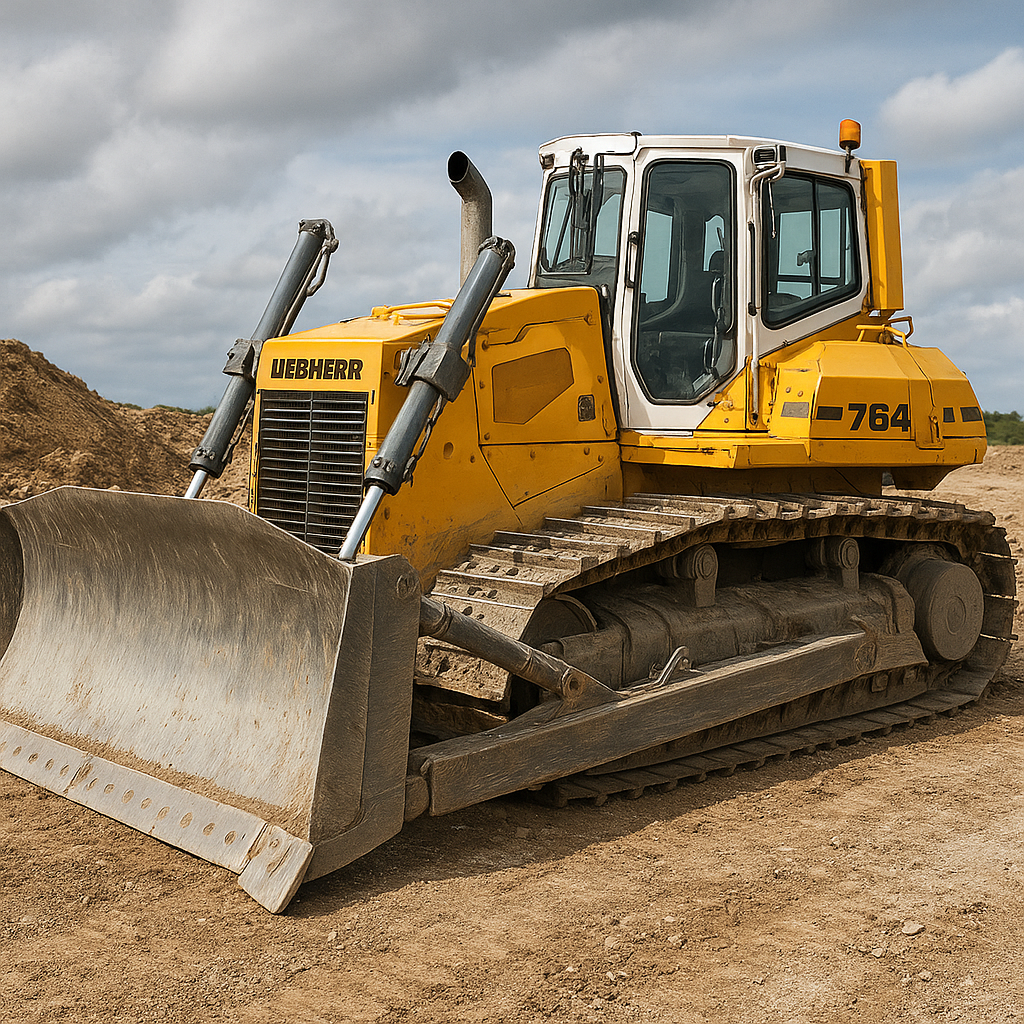
The Liebherr PR 764 is a heavy-duty crawler dozer designed for demanding earthmoving tasks across construction, mining, quarrying and large-scale land development projects. Combining robust mechanical engineering with modern operator comforts and optional electronic assistance systems, the PR 764 aims to deliver high productivity, longevity and adaptability in a variety of ground conditions. In the following sections, we examine the machine’s core design features, typical applications, performance characteristics, maintenance considerations and its position within the market of large dozers.
Design and technical features
The PR 764 represents Liebherr’s approach to building a reliable and powerful crawler dozer platform. While specific equipment and exact figures may vary by market, customer specification and model year, several structural and technical elements are characteristic for this class of machine.
Structure and chassis
- The PR 764 is built around a heavy-duty undercarriage tailored for high traction and long service life. Track frames, rollers and track chains are engineered to withstand abrasive and heavy-load environments. Reinforced components and strategically placed wear plates help extend longevity in mining and quarry applications.
- Low-ground-pressure (LGP) variants are often available, featuring wider track shoes and modified track spacing to reduce ground pressure for softer soils or marshy terrain. This makes the machine adaptable to a wider range of site conditions without sacrificing productivity.
Powertrain and hydraulics
- The PR 764 is equipped with a high-torque diesel engine from Liebherr’s in-house engine range or a licensed OEM supply, tuned for heavy-duty cycle performance and reliable torque delivery at low rpm. Modern iterations typically comply with current emissions standards (e.g., Stage V / Tier 4 final where applicable), employing aftertreatment systems and careful fuel management.
- Transmission systems include robust torque converters or power-shift transmissions designed to handle severe duty cycles and frequent directional changes. Hydraulic systems are sized to provide responsive blade control and accessory operation.
Blade, ripper and tool options
- Several blade configurations are offered, including straight blades (S-blade), universal blades (U-blade), semi-universal and semi-U designs, each optimized for particular materials and tasks — from fine grading and dozing to bulk pushing of loose material.
- Multi-shank rippers or single-shank ripper options allow the PR 764 to pre-loosen compacted ground, rock or frozen layers prior to dozing or loading operations.
- Hydraulic attachments and quick couplers make it simpler to tailor the machine for specialized tasks like land reclamation, heavy grading, or snow removal.
Electronics, control and optional systems
- Advanced control options are commonly available, including factory-fitted telematics for fleet monitoring, maintenance alerts and fuel management. GPS-based grade control systems and 3D machine control can be integrated for precise grading and automated workflows.
- Operator interfaces emphasize simplicity and visibility: ergonomic joysticks or pilot controls, digital displays for engine and hydraulic parameters, and customizable working modes for different ground conditions.
Applications and typical use-cases
The versatility of the PR 764 allows it to serve many roles on large civil, mining and infrastructure projects. Below are typical sectors and tasks where such a machine excels.
Mining and quarry operations
- In surface mining and quarry environments the PR 764 can be used for waste stripping, pushing overburden, stockpile management and reshaping haul roads. Its robust undercarriage and powertrain are well suited to abrasive rock and repeated heavy-load cycles.
- Integrated ripper attachments are valuable for breaking sub-surface layers and easing loading by excavators or wheel loaders.
Large-scale earthworks and civil engineering
- Major road and airport construction projects require machines that move high volumes of material efficiently — the PR 764 can perform bulk dozing, rough grading and final profiling when equipped with the appropriate blade and optional grade-control systems.
- Land reclamation, levee and dam construction also benefit from powerful, stable dozers capable of operating in wet and variable soils when configured as an LGP variant.
Pipeline and utility corridor construction
- Long linear works such as pipelines need machines that can clear vegetation, form access roads, build pads and backfill trenches. The PR 764’s long track contact and heavy frame allow safe operations on slopes and uneven terrains.
Forestry, agriculture and snow clearing
- Although not a primary role, specialized configurations with protective guarding and different blade designs allow the PR 764 to be used in forestry land preparation, large-scale agricultural earthworks, or as a heavy snow clearance asset in regions with severe winter conditions.
Performance, efficiency and operational data
Performance indicators for heavy dozers include engine power, operating weight, blade capacity and ground pressure. Exact numbers for the PR 764 differ depending on year, configuration and options, but the machine is designed to occupy the medium-to-large dozer class with competitive values in hauling force and productivity.
Typical performance characteristics
- Engine output: modern large dozers in this class often deliver several hundred kilowatts of power; the PR 764 is engineered to provide ample torque for sustained pushing and ripping tasks while meeting emissions regulations.
- Operating weight and mass: substantial machine weight contributes to traction and dozing capability. LGP variants reduce specific ground pressure to increase operability on soft surfaces.
- Blade capacity: depending on blade type, capacity will be optimized either for volume (U-blade for bulk) or precision (S-blade for finishing work).
Because manufacturers issue detailed specifications for each machine configuration, users typically consult official Liebherr documentation or local dealers to obtain precise values such as net power, operating weight, travel speed, drawbar pull and hydraulic flow rates. These figures are critical when matching a machine to a jobsite’s required productivity and material characteristics.
Fuel efficiency and emissions
- Recent iterations of heavy equipment emphasize reduced fuel consumption through engine management, optimized hydraulics and operator-selectable work modes. Telematics allow fleet managers to analyze fuel usage patterns and adjust operating procedures to reduce total cost of ownership.
- Compliance with emissions regulations (Stage V / Tier 4 final in many markets) is achieved via aftertreatment systems like diesel particulate filters (DPF) and selective catalytic reduction (SCR). These systems are designed to be serviceable and to integrate with the machine’s maintenance schedule.
Operator comfort, safety and maintenance
Liebherr places attention on the operator environment and on making maintenance efficient to maximize uptime. The PR 764 reflects this trend with features that enhance safety, comfort and serviceability.
Cab and ergonomics
- Spacious cabs with climate control, soundproofing and adjustable seating reduce operator fatigue during long shifts. Visibility is enhanced by large glazing areas and strategically positioned mirrors or cameras.
- Intuitive control layouts, adjustable joysticks and multi-function displays allow operators to manage machine systems with minimal distraction. Visibility to the blade and ripper is prioritized to improve productivity and avoid accidental collisions.
Safety systems
- Rollover protection structures (ROPS) and falling-object protection systems (FOPS) are standard or available depending on market and worksite requirements. Safety interlocks and emergency exits are designed to meet applicable regulations.
- Optional camera systems, proximity sensors and object-detection aids are increasingly used to enhance situational awareness on congested worksites.
Serviceability and lifecycle costs
- Easy access to routine maintenance points — filters, fluid check points, battery compartments and grease fittings — reduces downtime. Modular components and diagnostic software help technicians isolate faults quickly.
- Liebherr’s global dealer network provides parts support and scheduled maintenance programs, which are essential in regions where uptime and consistent performance are critical to project schedules.
Market positioning and competitors
In the market for large crawler dozers, the PR 764 competes with machines from global manufacturers such as Caterpillar, Komatsu, John Deere and Volvo Construction Equipment. Buyers typically choose based on local dealer presence, total cost of ownership, fuel efficiency, and specific feature sets like integrated grade control or specialized undercarriage options.
Factors influencing purchase decisions
- Project requirements: matching blade type and traction needs to material and site conditions is essential.
- Operating cost: fuel economy, maintenance intervals and parts costs weigh heavily in lifecycle calculations.
- Resale value and durability: machines that maintain structural integrity and have proven reliability tend to retain value better in the secondary market.
- Support network: availability of local parts, trained technicians and rapid service response times influence uptime and overall satisfaction.
Environmental considerations and regulations
Modern heavy equipment must balance productivity with environmental responsibilities. Liebherr has been implementing technologies to reduce emissions and noise, and to improve fuel efficiency across its product lines.
- Emissions compliance: engines and exhaust aftertreatment systems are designed to meet regional regulatory requirements, which helps reduce NOx and particulate matter emissions in sensitive areas.
- Noise reduction: sound insulation and engine enclosure design aim to reduce operational noise levels, improving working conditions and mitigating community impact on projects near populated areas.
- Site-sensitive configurations: LGP variants reduce ground damage in ecologically sensitive or agricultural terrains, while reduced idling strategies and telematics-based monitoring help decrease unnecessary fuel use and emissions.
Purchasing, lifecycle and resale
Acquiring a machine like the PR 764 involves evaluation of initial cost, expected productivity, maintenance plan and resale expectations. Leasing and rental markets often offer an alternative to outright purchase for short-term or project-limited uses.
Financing and rental
- Many buyers use manufacturer financing, bank loans or leasing arrangements tailored to construction seasonality. Rentals provide flexibility for peak-demand periods without long-term capital commitment.
Resale and refurbishment
- Well-maintained dozers can have a strong secondary market. Rebuilt undercarriages, new engines or remanufactured components extend service life and enhance resale value.
Concluding overview and future outlook
The Liebherr PR 764 exemplifies a heavy-duty dozer platform built for demanding operations where robust traction, reliable power delivery and operator comfort are necessary. Its modularity — with options for blade type, ripper configurations, LGP tracks and integrated electronics — allows it to be tailored to a wide array of projects from mining to infrastructure.
Looking ahead, continued focus on fuel efficiency, telematics-enabled fleet optimization and emissions reduction will shape future updates to machines like the PR 764. Integration with autonomous or semi-autonomous workflows, advanced 3D machine control and further improvements in ease of maintenance will likely increase productivity and lower total cost of ownership for fleet operators.
Key highlights:
- Liebherr engineering focused on durability and productivity.
- Flexible configurations for varied site conditions, including LGP options.
- Dozer blade and ripper choices tailored for bulk pushing or precision grading.
- Modern engine and aftertreatment technologies for emissions compliance.
- Telematics and optional grade control systems to boost accuracy.
- Comfortable and safe operator environment with ergonomic controls.
- Serviceability aimed at minimizing maintenance downtime.
- Competitive positioning against other large dozers in terms of total cost of ownership and uptime.
- Adaptability to mining, civil engineering, pipeline, forestry and snow clearance tasks.
- Focus on efficiency and environmental considerations in modern configurations.
)
)