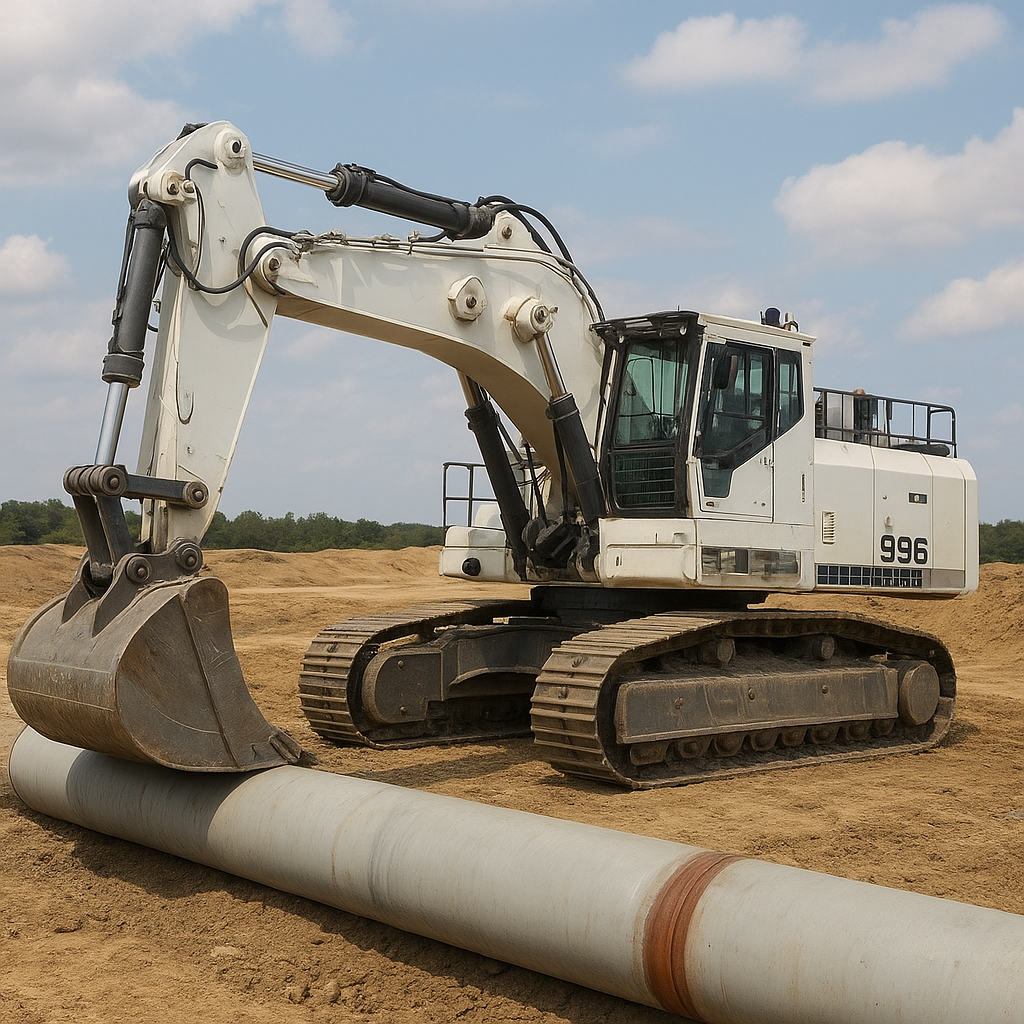
The Liebherr P 996 Litronic is a heavyweight machine in the realm of earthmoving and pipeline construction. Engineered for large-scale trenching, pipeline preparation and heavy excavation duties, this model combines robust mechanical design with advanced hydraulic and electronic control systems. In the following sections, we will explore the machine’s technical attributes, practical applications on pipeline projects, operational and maintenance considerations, and other notable information that makes the P 996 Litronic an important tool for contractors working on demanding civil and energy infrastructure works.
Design and Technical Features
The P 996 Litronic is built around principles of strength, reliability and adaptability. Liebherr’s design for this class of machine emphasizes a powerful drive train, durable undercarriage and a hydraulic system optimized for sustained heavy-duty operations. Key aspects of the machine’s design include specialized boom and arm arrangements for deep dug trenches and long-reach operations, reinforced structural components to withstand cyclical loads, and modular attachments to adapt the base excavator to specific pipeline tasks.
- Hydraulic system: The P 996 Litronic typically features high-capacity hydraulic pumps and closed-center electronic controls to deliver fast, precise and consistent hydraulic flow for bucket, crowd and swing operations. The electronic control (Litronic) allows for smooth modulation and programmable response, improving both efficiency and operator comfort.
- Engine and powertrain: Designed to provide sustained power for heavy digging and lifting, the machine uses high-output diesel engines (with turbocharging and advanced fuel management) matched to the hydraulic system for optimal performance under continuous loads.
- Undercarriage and mobility: A robust track system with wide shoes and reinforced rollers ensures stability and low ground pressure, which is important when working on soft soils alongside pipeline trenches. The undercarriage is often reinforced for abrasive, rocky sites.
- Attachment versatility: The P 996 is commonly fitted with a range of attachments: large buckets for bulk excavation, trenching buckets for precise pipeline bedding, hydraulic breakers for rock removal, ripper teeth for stubborn strata and specially designed clamshell or quick-coupler systems for fast attachment swaps.
- Cab and controls: The operator cab emphasizes visibility, ergonomics and integrated electronic displays. Climate control, suspended seating and programmable joystick controls are common to reduce fatigue and increase precision during long shifts.
Typical Technical Specifications and Performance Ranges
Exact specifications for the P 996 Litronic depend on the particular variant, build year and optional equipment packages. The following figures represent typical ranges for machines in this class and are useful for general planning and comparison. Users should consult the manufacturer or dealer documentation for model-specific, certified numbers.
- Operating weight: approximately 80–160 tonnes depending on undercarriage, counterweight and attachments.
- Engine power: commonly in the range of 400–700 kW (around 530–940 hp), tuned for continuous high-load operation.
- Bucket capacity: depending on role, buckets range from about 2.5 to 12 m³, with larger capacities used for bulk excavation and smaller trenching buckets for pipeline work.
- Maximum digging depth: typical long-reach or heavy excavator configurations provide dig depths of 8–14 m depending on boom and arm geometry.
- Maximum reach: working reaches can extend to 15–25 m in long-reach versions used for deep trenches or piling adjacent to pipeline alignments.
- Hydraulic operating pressure: high-performance systems often operate in the range of 300–350 bar for heavy work functions.
- Fuel consumption: heavy-duty hydraulic excavators of this size often average 40–120 L/h depending on load, duty cycle and hydraulic demand; peak consumption occurs during continuous heavy digging or hammering.
- Swing torque and lifting capacity: these parameters vary widely; systems are calibrated to provide stable lifting and precise control for pipe-laying lifts that require delicate positioning.
Applications in Pipeline Construction and Related Sectors
The P 996 Litronic shines where scale, power and precision must come together. Its design makes it particularly well-suited to the following pipeline-related applications:
- Trench excavation: Deep and wide trenching for large-diameter pipelines requires machines that can maintain consistent production while minimizing time between passes. The P 996’s reach and bucket options make it a go-to for long runs of trenching on major pipeline projects.
- Pipe bedding and backfilling: After pipe laying, careful placement of bedding material and controlled backfilling is essential. The machine’s hydraulic control and range of buckets allow for accurate grading and compaction preparation.
- Installation of larger pipeline components: For tasks that require lifting and positioning heavy pipe sections, concrete sleepers or valves, the P 996’s lifting capacity—when fitted with the appropriate rigging and counterweight—can be leveraged to assist with precise placement alongside cranes.
- Sidecasting and spoil handling: Efficient management of spoil and sidecast material is critical for maintaining a clean work corridor. The P 996 can move large volumes quickly, particularly when equipped with high-capacity buckets.
- Rock excavation and blasting support: In rocky terrains, the model’s compatibility with hydraulic breakers and rippers allows contractors to prepare pipe alignments without changing the primary machine fleet.
- Specialized pipeline environments: Offshore support yards, compressor station construction, and pump station civil works also use machines like the P 996 for heavy civil earthworks and infrastructure excavation.
Operational Efficiency and Productivity
Achieving cost-effective pipeline construction depends heavily on equipment utilization, reliability and fuel efficiency. The P 996 Litronic contributes to productivity gains in several ways:
- Optimized hydraulic management: Electronic hydraulic controls and efficient pump systems minimize wasted flow and improve response time, resulting in faster cycle times for digging and loading.
- High breakout force and crowd force: These characteristics enable the machine to penetrate compacted soils and remove obstructions without frequent attachment changes, reducing downtime.
- Reduced crew requirements: A single large excavator can often replace multiple smaller machines for tasks like bulk excavation and spoil handling, lowering logistical complexity and overall labor needs.
- Attachment flexibility: Quick-change couplers and a broad attachment ecosystem allow operators to switch roles—from trenching to breaking rock—within a shift, maintaining high uptime.
- Telematics and machine monitoring: Many modern Liebherr machines include telematics that track fuel use, operating hours and maintenance alerts. These data help site managers optimize deployment and predict maintenance windows to avoid unplanned outages.
Maintenance, Safety and Operator Considerations
Large excavators require disciplined maintenance and experienced operators to realize their full potential. The P 996 Litronic’s design facilitates safe operation while lowering lifecycle costs when proper practices are followed.
- Preventive maintenance: Regular checks of hydraulic hoses, seals, undercarriage wear parts and engine systems are critical. Many operators schedule condition-based maintenance using onboard diagnostics.
- Service accessibility: Liebherr typically designs service points for ease of access—filters, fluid check points and grease points are positioned to minimize service time and reduce safety risks during maintenance.
- Operator training: Given the machine’s size and control sophistication, certified operator training improves efficiency, prevents damage and increases safety margins on congested pipeline sites.
- Safety systems: Features such as rearview cameras, 360° visibility packages, load-limiting software and fail-safe hydraulic locks contribute to safer material handling and lifting operations.
- Ground protection: On sensitive sites, specialized undercarriage pads or track distribution solutions help reduce ground pressure and environmental impact while maintaining machine stability.
Environmental and Economic Considerations
Large hydraulic excavators like the P 996 Litronic are significant capital investments and also represent notable ongoing operational costs and environmental footprints. Modern iterations and good site practices help mitigate negative impacts while maximizing return on investment.
- Fuel efficiency and emissions: Advances in engine control and exhaust after-treatment help reduce emissions (NOx and particulate matter) relative to older machines. Efficient hydraulic systems further lower fuel consumption per unit of work.
- Lifecycle cost: Total cost of ownership depends on initial acquisition, attachment options, fuel, parts, and scheduled maintenance. High productivity per hour can lower unit earthmoving cost, improving economic viability for large pipeline projects.
- Noise and disturbance: Pipelines often run through sensitive areas; choosing configurations with noise abatement packages and optimized working schedules reduces disturbance to nearby communities and wildlife.
- Reusability and resale: Well-maintained large excavators can retain substantial resale value. Proper refurbishment and certification extend usable life on secondary markets.
Case Uses and Project Examples
While specific project names depend on contractor disclosure, machines of this class have been employed in major pipeline programs worldwide—continental gas transmission lines, crude oil pipeline installations, and large-diameter water transfer schemes. Typical project roles include:
- Primary trench excavation for high-diameter transmission lines where consistent trench geometry and high production are critical.
- Site preparation for compressor stations and pump stations, where bulk excavation and precise grading are required.
- Construction of access roads and spoil management corridors adjacent to pipeline right-of-way.
- Integration with pipe-laying spreads where excavators support clearance, bedding, backfill and final reinstatement operations.
Choosing the Right Configuration
Selecting the appropriate P 996 Litronic configuration depends on soil type, pipeline diameter, trench depth, nearby obstacles and environmental constraints. Key decision factors include:
- Boom and arm length: Choose long-reach versions for deep trenches or to work across wider trenches without repositioning.
- Bucket sizing: Balance bucket capacity with required trench width and trucking cycle to avoid overloading trucks or increasing spoil handling time.
- Attachment selection: For rocky routes, plan for breakers and rippers; for sandy soils, use buckets and dozers optimized for rapid spoil movement.
- Counterweight and stability: Heavier counterweights increase lifting performance but affect transport logistics and ground pressure.
Final Notes and Practical Advice for Contractors
Deploying a Liebherr P 996 Litronic effectively requires advanced planning across logistics, transport, staffing and site sequencing. Key practical advice includes:
- Perform route and site surveys to determine where the machine must be assembled or disassembled; large excavators often require transport in segments.
- Coordinate attachment and parts inventories to avoid downtime—track wear items and have replacement components staged.
- Leverage telematics for real-time performance and fuel monitoring so project managers can reassign assets in response to actual productivity data.
- Invest in operator training focused on both productivity and fuel-efficient techniques; small changes in operation can yield measurable savings over long projects.
Summary
The Liebherr P 996 Litronic is a heavyweight, versatile excavator well suited for demanding pipeline construction, deep trenching and heavy civil earthworks. Combining strong hydraulic performance, a durable undercarriage and modern electronic controls, the machine is designed to increase site productivity while offering flexible attachment options for a wide range of tasks. Technical specifications vary by configuration, but typical metrics show substantial power, impressive reach and high bucket capacities. For contractors planning large pipeline projects, selecting the right P 996 configuration and following disciplined maintenance and operational practices can deliver strong productivity and favorable lifecycle economics.
)
)