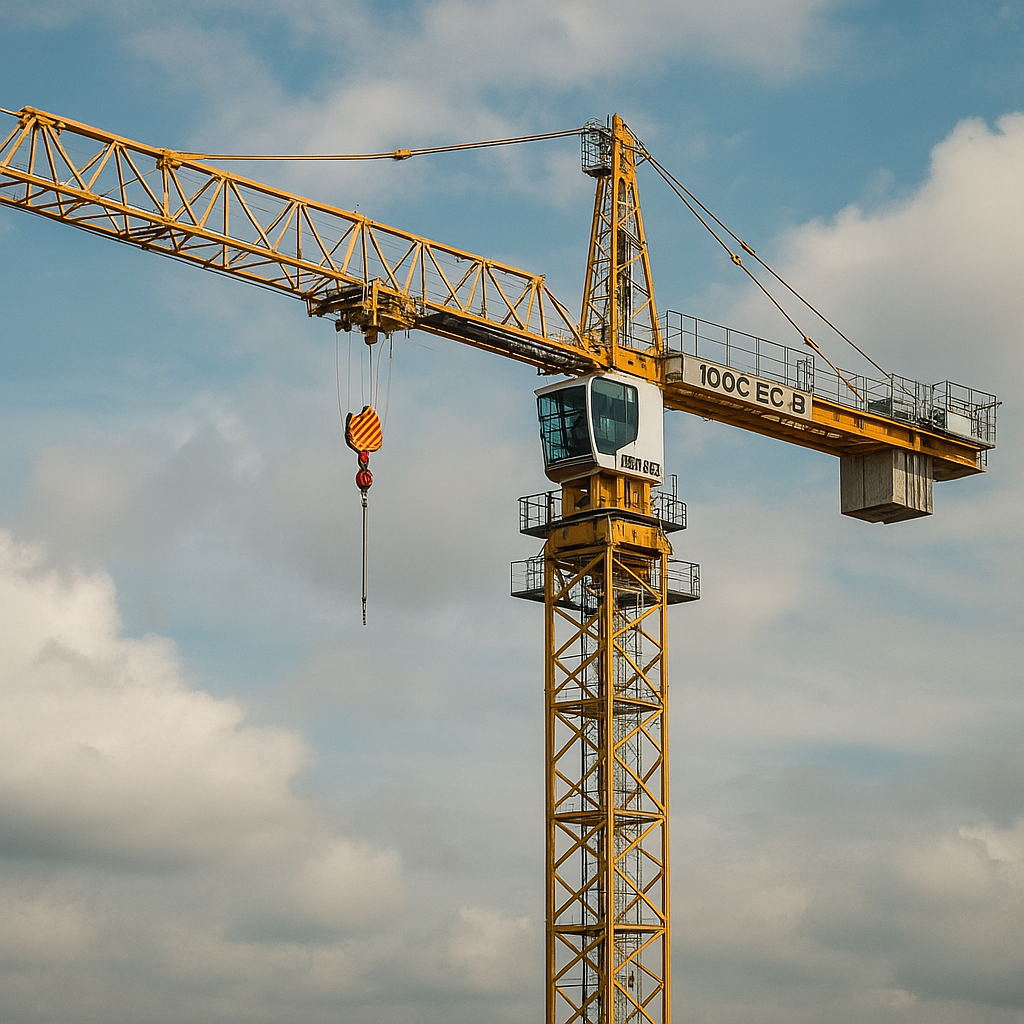
The following article explores the Liebherr 1000 EC-B tower crane, describing its design, typical uses, operational advantages and practical considerations for contractors and project managers. The text outlines how this machine integrates into modern construction workflows, examines its technical characteristics and maintenance demands, and highlights real-world applications where the 1000 EC-B provides measurable value. Throughout the article, several key concepts are emphasized to help readers quickly identify important features and decision points when considering this crane for projects.
Overview and design characteristics
The Liebherr 1000 EC-B is a member of Liebherr’s line of heavy-duty construction cranes designed for demanding building and industrial sites. As a purpose-built Liebherr product, the 1000 EC-B combines robust structural engineering with advanced electronics and drive systems. The model is intended to balance high lifting performance with flexibility on sites that require a reliable operator-focused solution.
Key design principles for the 1000 EC-B include modularity, ease of installation, and precision control. The crane is engineered to be assembled from pre-fabricated sections—mast segments, slewing unit, and jib components—that allow transportation by standard heavy-load trucks and assembly without extraordinary site preparation. The slewing unit and drives are designed for steady motion and accurate positioning, making the crane suitable for tasks requiring repetitive or precise lifts.
Structurally, the crane emphasizes a combination of stiffness and weight optimization. The mast uses lattice sections that provide a high strength-to-weight ratio, permitting the crane to reach significant heights when tied into the building or fixed to a foundation. The jib—available in multiple lengths depending on configuration—provides long outreach while maintaining the necessary counterbalance and stress distribution characteristics.
Technical specifications and performance
Specifications for the 1000 EC-B vary by local configuration, selected cab or remote control options, and specific jib and counter-jib combinations. While exact figures depend on the chosen setup, some general performance characteristics can be described to give a clear picture of the crane’s capabilities.
Load capacity and reach: The 1000 EC-B is engineered to handle substantial lift loads suitable for large structural elements, precast concrete units and mechanical plant equipment. Typical configurations of cranes in this performance class provide maximum rated capacities at short radii and progressively lower capacities toward the tip. In practical use, such cranes are often selected for jobs where the combination of mid-range capacity and extended jib reach is critical.
Hoisting and slewing performance: The crane’s hoisting system uses variable-frequency drive technology to deliver smooth acceleration and precise positioning. This reduces load swing and improves productivity during repetitive lifts. Slewing mechanisms are similarly designed to provide controlled rotation under load, with integrated braking systems and safety interlocks that protect both the crane and personnel on site.
Height and anchoring: Depending on the mast section count and whether the crane is tied to a structure, the 1000 EC-B can achieve significant hook heights. For multi-storey high-rise projects, the modular mast allows climbing sections to be added as the building rises. Conversely, on low-rise or ground-level industrial sites, the crane can be configured with fewer mast sections to optimize stability and lower the requirement for guying or permanent anchors.
Efficiency is supported by modern drive systems and energy-recovery options built into many of Liebherr’s designs. These features can reduce fuel or electricity consumption during cyclic lifting operations and improve the effective working time per shift. Electronic load monitoring and software-based control systems also contribute to higher utilization rates and reduced downtime caused by operator error.
Applications and industries
The 1000 EC-B is versatile and finds application across a wide range of industries and project types. Typical uses include:
- Residential and commercial high-rise construction, where repeated placement of prefabricated floor slabs and facade elements is required
- Industrial plant installation and maintenance, including lift-in of heavy mechanical equipment and HVAC modules
- Precast concrete yards and infrastructure projects (bridges, tunnels) where controlled, heavy lifts are common
- Portside and logistics operations that require fixed or semi-permanent lifting capacity for handling oversized freight
- Renewable energy projects, such as installation of turbine components where site access is limited but precise placement is critical
In each of these contexts, the rationales for choosing the 1000 EC-B include predictable performance, known safety systems, and widespread availability of parts and service from Liebherr’s international network. The crane’s balance of reach and capacity makes it especially useful on urban sites where space is constrained and precise positioning of materials is required.
Assembly, transport and site logistics
Transport logistics
One of the design goals for the 1000 EC-B is transportability. The crane breaks down into sections optimized for truck transport, enabling movement between sites without specialized heavy haulage in many configurations. Equipment planners typically schedule a small convoy of trucks for mast sections, counterweights and the slewing unit, and coordinate on-site crane assistance or a mobile crane for initial erection steps.
Assembly sequence
Typical assembly involves installing the base and foundation, erecting the first mast sections, mounting the slewing unit and counter-jib, and finally assembling the jib and trolley systems. On tighter urban sites the crane can be erected in a flat-top configuration to minimize clearance height during assembly. For tall buildings the crane can be anchored to the structure and climbed using hydraulic climbing frames or climbing cages supplied by the manufacturer.
Foundations and anchors
Site engineers must evaluate bearing conditions and design a suitable foundation or anchoring system. Depending on soil conditions and the chosen height and loading regime, foundations can range from spread footings to reinforced concrete piles. Tie-in points to the building are carefully calculated to transfer lateral and moment loads safely into the structure.
Safety systems, controls and operator ergonomics
Safety is central to the 1000 EC-B’s design. Liebherr equips its tower cranes with advanced monitoring and protection systems that include load moment indicators, anti-collision systems, and overload protection. These systems are integrated with the crane’s electronic control architecture to restrict or modify crane movements when parameters approach pre-set safety limits.
Operator ergonomics are improved through modern cabs with climate control, adjustable seats and excellent all-round visibility. Remote-control options are available for certain operations where the operator can achieve better sightlines from ground level. Digital diagnostics provide technicians and fleet managers with near-real-time data on performance, enabling predictive maintenance and fast troubleshooting.
Safety protocols on sites that utilize the 1000 EC-B typically include strict exclusion zones, certified rigging practices, and coordinated lifting plans. Many contractors also take advantage of Liebherr’s remote monitoring and telemetry services to ensure that cranes operate within safe envelopes and that unusual conditions trigger immediate inspection.
Maintenance, lifecycle costs and sustainability
Lifecycle cost analysis is crucial when selecting heavy lifting equipment. The 1000 EC-B is positioned as a durable asset with reasonable maintenance requirements when serviced according to manufacturer schedules. Regular inspections of structural components, hydraulic systems, wire ropes and safety devices are essential to maintain operational readiness and to preserve residual value.
From a sustainability perspective, the crane’s electric drives and efficient hoist systems reduce fuel consumption and greenhouse gas emissions when compared to older, less efficient machines. When configured for grid power or hybrid operation, the effective carbon footprint per lift can be reduced. Responsible end-of-life management and the high recyclability of steel components also contribute to the model’s environmental profile.
Costs that owners should account for include scheduled maintenance, periodic replacement of wear parts (wire ropes, slewing bearings, brakes), and the expenses associated with annual inspections and certification. For rental companies, utilization rates and ease of repositioning between jobs are major drivers of return on investment.
Case studies and typical project profiles
While specific project references vary regionally, the 1000 EC-B is commonly selected for medium-to-large urban construction projects where cranes must lift heavy prefabricated elements and common building systems. Projects that benefit most from the 1000 EC-B’s capabilities often share common traits:
- Dense urban footprint, where long jib reach reduces the need to relocate the crane during a build
- High frequency of repetitive lifts, where electronic control systems and smooth hoisting reduce cycle times
- Requirement for high residual capacity to lift mechanical plant or facade modules in late-stage construction
Contractors also report advantages when the 1000 EC-B is integrated into a fleet and deployed across similar job types: maintenance teams become familiar with the model, spare parts inventories are streamlined, and operators gain specific expertise that raises productivity and safety metrics.
Market context, availability and aftermarket support
Liebherr is a globally recognized manufacturer with a broad portfolio of construction equipment. The 1000 EC-B benefits from the company’s extensive dealership and service network, which simplifies access to spare parts, technical service and certified training. For buyers and rental companies, this network provides assurance that downtime can be minimized through timely support.
The market for tower cranes is influenced by construction cycles, urbanization trends and infrastructure spending. In regions with sustained building activity, demand for reliable mid-to-large capacity cranes like the 1000 EC-B remains steady. Rental companies often keep several units ready for rapid deployment since clients value predictable performance and Liebherr’s brand reputation.
Operational considerations and selection criteria
Selecting the 1000 EC-B (or any tower crane) requires careful evaluation of project-specific factors:
- Planned maximum lift weight and the typical lift radius—these determine the necessary capacity curve and jib length
- Site access and transport constraints that influence the number and size of transport loads
- Height under hook requirements and whether the project needs climbing or tie-in arrangements
- Local regulatory and certification requirements for tower cranes and lifting operations
- Availability of trained operators and maintenance technicians familiar with Liebherr systems
Contractors should request load charts for the exact configuration under consideration and verify foundation and tie-in designs with structural engineers. Early engagement with the crane supplier ensures that the machine is configured and delivered to meet the project’s specific lifting program.
Future developments and technological trends
Tower crane technology continues to evolve with greater emphasis on digitization, remote diagnostics and automation. Future iterations of cranes in this class are likely to feature more advanced collision avoidance systems, telematics integration for fleet management and increasingly efficient electric drive systems to reduce operational costs and environmental impact.
Liebherr invests in such innovations across its models, and the 1000 EC-B benefits from software updates and modular electronic packages that can be fitted for modern fleet requirements. As construction industry demand grows for safer, faster and more sustainable operations, cranes that offer connectivity and data-driven maintenance become more valuable assets to owners and contractors alike.
Conclusion
The Liebherr 1000 EC-B is a versatile, robust solution for many medium-to-large construction and industrial lifting challenges. Its modular design, emphasis on maintenance predictability and integrated safety systems make it a preferred option in environments that demand dependable performance. By understanding site needs, lift profiles and logistics early in project planning, contractors can leverage the 1000 EC-B’s strengths—particularly its balanced combination of capacity and reach—to improve productivity, reduce risks and optimize total cost of ownership. For teams seeking a crane with proven reliability and strong aftermarket support, the 1000 EC-B is a compelling candidate worth detailed evaluation.
)
)