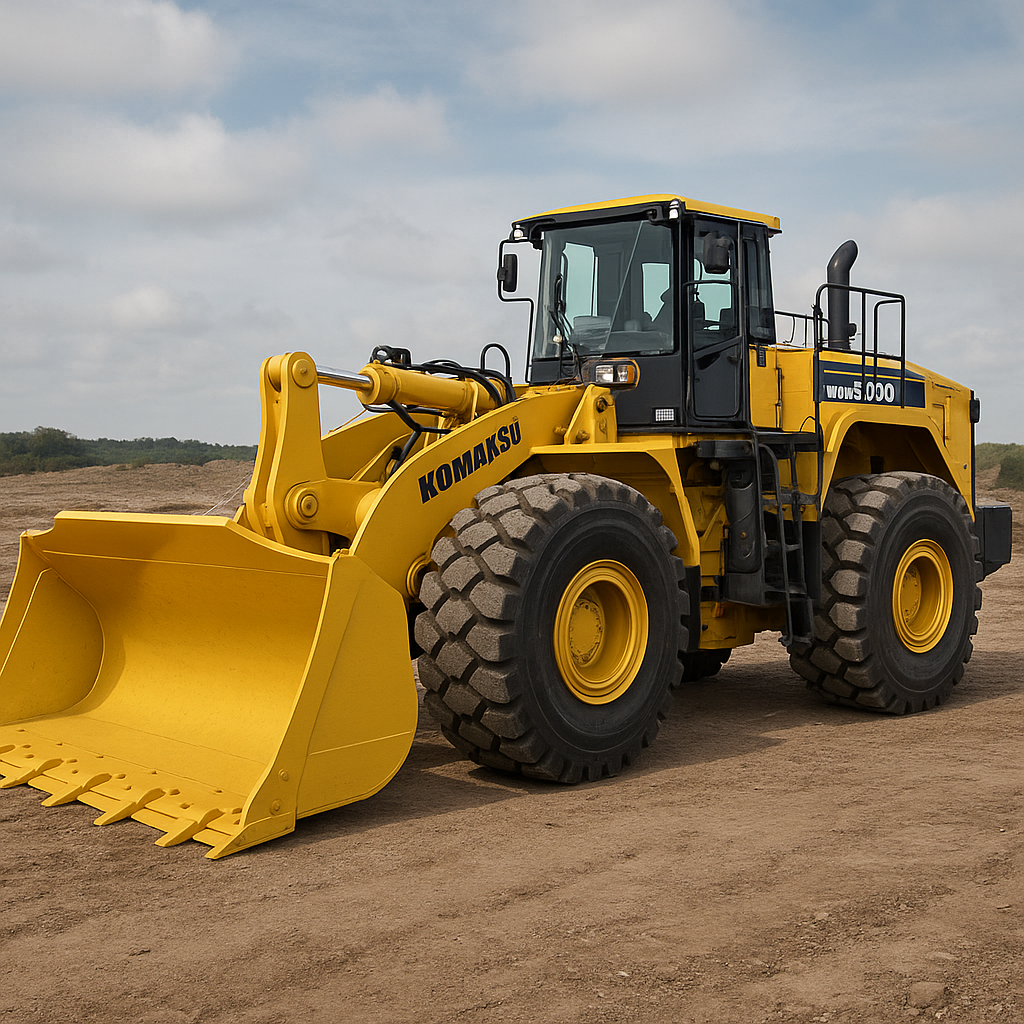
The Komatsu WD600-6 is a heavy-duty wheel dozer built to move large volumes of material quickly and reliably in demanding environments such as mining, quarries, and large earthmoving projects. Combining robust chassis design, powerful propulsion, and operator-focused ergonomics, the WD600-6 is intended to deliver high productivity, long service intervals and simplified maintenance in harsh applications. The following sections discuss the machine’s design principles, typical applications, key features, operational considerations, and approximate technical data that can help fleet managers, operators and specifiers evaluate its fit for a project.
Design and core features
The WD600-6 was engineered as a purpose-built wheel dozer rather than a converted wheel loader. Its configuration emphasizes durability, traction and pushing capacity while optimizing stability and mobility across hard and loose ground.
Powertrain and drivetrain
- Engine: Heavy-duty diesel engine tuned for continuous high-load operation and strong low-end torque for pushing and ripping.
- Transmission: Typically a robust torque converter with planetary gear stages or a similar heavy-duty automatic/lock-up arrangement designed to transfer high torque to the axles with durability in mind.
- Axles and differentials: Reinforced axles and limited-slip or lockable differentials are common to maximize traction and balance torque across wheels when working on uneven terrain.
Hydraulics and controls
- High-capacity hydraulic systems power blade lift, tilt and auxiliary functions. Valve packages are sized to allow confident, responsive blade control under heavy loads.
- Modern variants include electronic control logic that improves efficiency during cycle work and protects driveline components from shock loading.
Blade and attachments
- Standard blades include straight (S), semi-U and full U configurations; blade widths and capacities are sized for high-volume dozing and can be fitted with end bits and replaceable cutting edges.
- Optional rippers or multi-shank rippers can be fitted on the rear to pre-loosen compacted material before dozing operations.
- Attachment mounting is heavy-gauge and designed for frequent service in abrasive environments.
Operator cab and ergonomics
- Spacious cab with emphasis on visibility to the blade and immediate surroundings, reducing operator fatigue and improving safety.
- Comfort features such as suspension seats, climate control, and logically grouped controls help maintain productivity during long shifts.
- Instrumentation and optional telematics provide engine, fuel and health indicators to support predictive maintenance and fleet monitoring.
Applications and industries
The WD600-6 is commonly deployed where very large volumes of material must be moved or piled rapidly and where traction and machine robustness are critical. Typical environments include:
- Open-pit mining: Building and maintaining haul roads, clearing bench faces, pushing blasted rock to dumping areas, and shaping waste dumps.
- Quarries and aggregate operations: Stockpile formation, reclaiming material, and site leveling due to its ability to push and spread material consistently.
- Bulk material handling terminals: Port and stockyard operations where quick windrow forming and dozing of bulk materials increase throughput.
- Large earthworks and civil engineering: Road building, dam and levee construction, and preparation of large building pads.
In these roles the WD600-6 is valued for its ability to combine the mobility of a wheeled machine with pushing force approaching that of smaller track dozers, making it suitable where high travel speed and pneumatic-tyre operation reduce cycle times or routing costs.
Performance, productivity and typical specifications
Performance of the WD600-6 depends on application, ground conditions and operator technique. The model is designed for sustained heavy duty cycles and high daily throughput. Below are typical technical figures and performance indicators; note these are approximate ranges reported across heavy wheel dozers in this size class and can vary by configuration, tyre selection and optional equipment.
Typical specifications (approximate)
- Operating weight: 30–45 tonnes (depending on options, blade and attachments).
- Engine power: 350–550 kW (470–740 hp) gross — tuned for high torque at low rpm.
- Blade capacity: 10–18 m³ (blade type and width influence capacity).
- Breakout force / drawbar pull: Very high; typically calibrated to match heavy-duty earthmoving tasks (specific values vary by machine configuration).
- Top travel speed: 25–40 km/h (depending on gearing and tyre selection) — enabling rapid repositioning across large sites.
- Fuel consumption: Highly application-dependent; heavy push cycles can consume several dozen liters per hour — modern machines include management systems to optimize fuel use.
- Tyres: Oversized, heavy-duty radial or bias tyres with multiple ply ratings to resist cuts and damage in rock and scrap environments.
Please treat the above figures as indicative. For exact values, options and weights consult the specific machine serial data sheet or the manufacturer’s specification guide for the WD600-6.
Operational considerations and best practices
To get the most from a powerful wheel dozer like the WD600-6, operators and site managers should pay attention to machine configuration, tyre choice, and work methods. The following considerations help maximize uptime and overall effectiveness.
Matching machine to task
- Choose blade type to match material flow: U-blades are best for higher-capacity, free-flowing materials, while straight blades can be better for spreading and precise grading.
- Tyre selection must balance puncture resistance, flotation and rolling resistance. Aggressive treads increase traction but raise fuel draw; smoother treads improve travel economy on haul roads.
Operator technique
- Use controlled engine rpm and appropriate gear selection to avoid frequent shifting and to keep torque delivery smooth during push operations.
- Maintain consistent pass width and angle to form uniform windrows—this reduces rework and improves cycle efficiency.
- Train operators on blade control nuances, especially when loading or working alongside haul trucks and other equipment.
Maintenance strategies
- Adopt scheduled inspections focused on driveline, cooling, hydraulic hoses, blade cutting edges and tyre condition. Abrasive environments accelerate wear on these components.
- Use manufacturer-recommended lubricants and filters. Heavy-duty applications often benefit from shorter lubrication intervals for high-stress components.
- Telematics and onboard diagnostics, if fitted, can highlight trends in fuel use, hours between faults and opportunities to preempt component failure.
Reliability, serviceability and lifecycle cost
One of the most important metrics for heavy equipment procurement is lifecycle cost rather than initial purchase price. The WD600-6 is positioned to deliver competitive lifecycle economics through:
- Robust componentry: Reinforced frames, heavy axles and industrial-grade hydraulics reduce the frequency of catastrophic failures.
- Service access: Engine and hydraulic components are arranged for easier routine servicing — filters, drains and inspection points are located to minimize downtime during maintenance windows.
- Parts availability and dealer support: Komatsu’s global dealer network provides parts distribution and machine support that help minimize machine idle time. Having access to common wear parts and scheduled maintenance kits helps plan costly shop time.
When comparing machines for a fleet, consider fuel efficiency per tonne moved, mean-time-between-failure (MTBF) based on site history, and resale values. Heavy machines with strong global support networks typically retain value better by attracting wider buyer interest on the secondary market.
Safety and environmental aspects
Modern heavy equipment designs incorporate improved safety features and efforts to reduce environmental impact. For the WD600-6 or similar models, consider the following:
- ROPS/FOPS certified cabs protect operators in roll-over and falling-object scenarios.
- Visibility enhancements, such as camera systems and mirrors, reduce blind spots which is critical when working near haul trucks and on benches.
- Engine emissions controls: machines conform to applicable emissions stages (e.g., EU Stage or EPA tiers) depending on market and model year, often using advanced fuel injection and aftertreatment to meet regulations.
- Noise reduction features and cab insulation improve operator comfort and reduce site noise impact.
Comparisons and fleet integration
Deciding whether the WD600-6 is the right machine involves comparing it to alternative equipment such as track dozers, wheel loaders and articulated dump trucks for specific tasks.
- Compared with track dozers: Wheel dozers are faster on travel, less damaging to paved surfaces and easier to reposition. Track dozers may provide more consistent traction on very soft soils and have lower ground pressure for certain tasks.
- Compared with wheel loaders: Wheel dozers are purpose-built for continuous pushing and shaping, often more stable with larger blade capacity and designed to work continuously without the same bucket-cycle focus of a loader.
- Integrated fleet role: A WD600-6 is best used where continuous pushing tasks dominate — for example, final stockpile shaping, reclaiming windrows, and road maintenance — while loaders can handle bucketed loading and fine grading complementary tasks.
Tips for procurement and specification
When specifying a machine for purchase or rental, clarify the following to suppliers to ensure the delivered configuration meets site needs:
- Exact expected daily operating hours and duty cycle, so the supplier can recommend appropriate cooling packages and maintenance intervals.
- Primary material type (rock, blasted ore, coal, overburden) to guide blade, tyre and ripper selections.
- Site constraints such as bench width and travel distances to determine gearing and speed options.
- Required emissions level and local service support to ensure compliance and maintainability.
Final remarks
The Komatsu WD600-6 is a heavyweight contender in the realm of wheel dozers, engineered to deliver continuous, high-volume dozing capability across mining, quarry and major earthmoving operations. Its strengths lie in balancing raw pushing power with speed and operator-centered features that sustain productivity over long shifts. Accurate specification, correct tyre and blade choices, consistent preventive maintenance, and skilled operators are the keys to unlocking the machine’s full value in a demanding fleet.
)
)