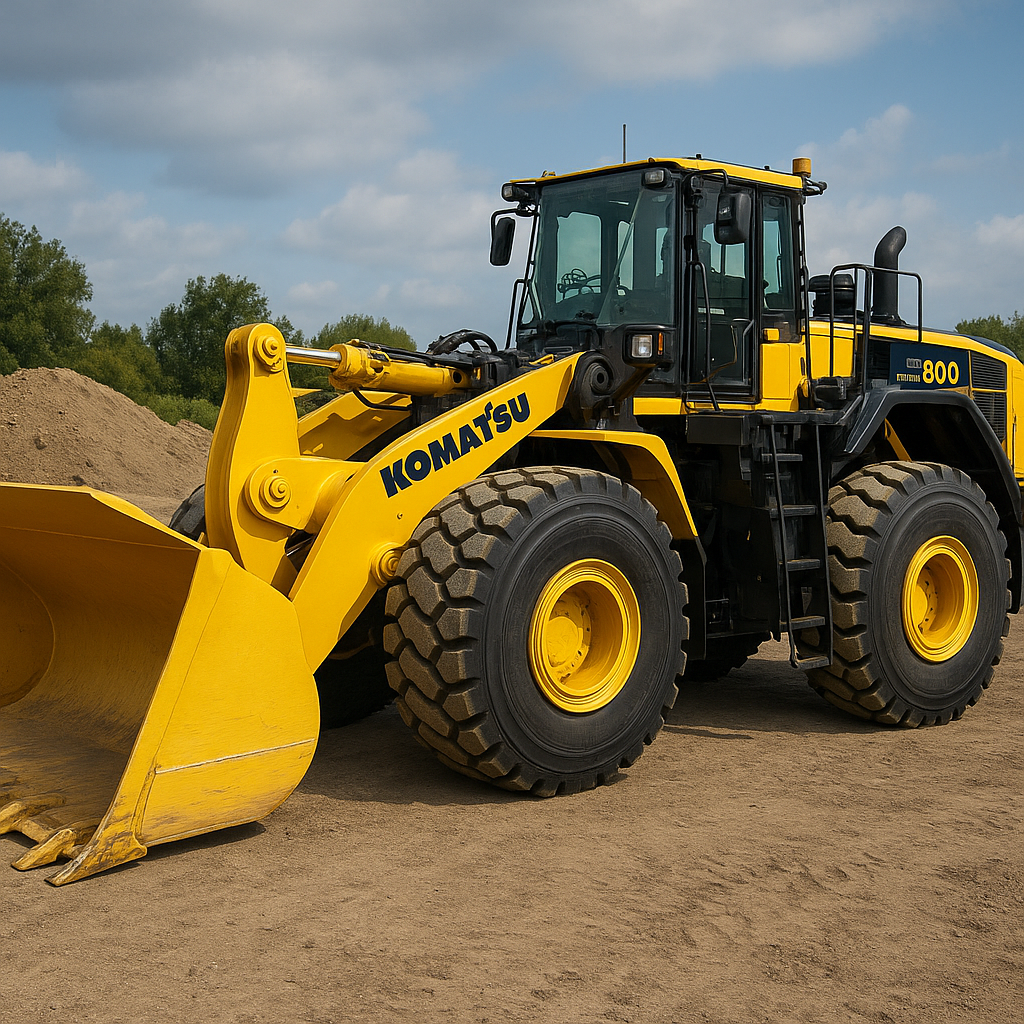
The Komatsu WA800-8 represents a pinnacle in large-capacity earthmoving equipment designed for the most demanding mining and heavy construction environments. This article explores the machine’s design philosophy, technical characteristics, practical applications, and operational considerations. You will find information about typical performance figures, maintenance practices, safety and comfort features, environmental impacts, and real-world use cases that illustrate why this model is valued by operators and fleet managers. Throughout the text I highlight several key terms to emphasize the most important concepts.
Overview and design philosophy
The Komatsu WA800-8 is part of Komatsu’s lineup of heavy wheel loaders developed to move large volumes of material efficiently and reliably. As a high-capacity machine, it is engineered to balance power, durability, and operator comfort while minimizing downtime in remote and harsh operating conditions. The overall architecture combines a robust undercarriage, reinforced frame, advanced hydraulics, and a high-torque drivetrain tailored for sustained heavy-duty cycles.
Core design priorities include structural strength for long service life, a hydraulic system optimized for digging and loading performance, and systems that reduce lifecycle costs through improved fuel management and easier maintenance. The WA800-8 is most often specified for applications that require moving large quantities of overburden, ore, rock, and aggregate in short cycles, where machine stability and consistent productivity are essential.
Key technical features
Powertrain and engine
The machine is powered by a high-displacement diesel engine configured to deliver sustained torque for heavy loading. Komatsu’s engines emphasize reliability, serviceability, and compliance with regional emissions standards. Typical engineering choices include a robust cooling package, turbocharging, and electronic engine management to balance power delivery with fuel economy under varying loads.
Important powertrain traits include multiple speed ranges for travel, a lock-up torque converter or transmission controls for effective power transfer, and heavy-duty axles designed to withstand the loads and shock associated with frequent material handling. The emphasis is on delivering ample tractive effort and breakout force for demanding loading cycles while maintaining component longevity.
Hydraulics and lifting system
The lifting and attachment systems on the WA800-8 rely on powerful hydraulic circuits sized for quick cycle times and precise control. The hydraulic system is typically designed with redundant filtration and cooling to protect components in dusty or hot environments. Key advantages are fast bucket rollback and dump speeds that reduce cycle time, as well as pilot controls and electrical-hydraulic integration that allow fine operator control when working with large bucket capacities.
Structural components and attachments
The loader frame and loader arms are made from high-tensile steel with reinforced stress points to minimize fatigue. Buckets for the WA800-8 are available in several configurations—general purpose, rock, and high-capacity styles—allowing customers to tailor the machine to specific material types and loading conditions. Quick-change couplers and heavy-duty teeth or wear packages extend working life in abrasive environments.
Performance figures and typical specifications
Published specifications for machines in this class vary by configuration, market, and optional equipment. Below are representative performance categories you can expect for the WA800-8 class of wheel loader:
- Operating weight: generally in the range of tens of tonnes, reflecting reinforced structure and large-capacity buckets.
- Bucket capacity: multiple buckets available, ranging from high-volume coal/aggregate buckets to rock buckets optimized for density and breakout; capacities vary by material density and application.
- Engine power: substantial rated power to ensure rapid cycle times and maintain travel speed when loaded.
- Hydraulic flow and pressure: high-flow systems to support fast lift and tilt times even under heavy loads.
- Breakout force and hinge pin height: engineered to optimize digging and filling of haul trucks with consistent dumps at target heights.
Exact numeric values depend on specific specification sheets for markets and options. For procurement or performance modeling, consult Komatsu’s regional product documentation or a local dealer to confirm ratings such as gross horsepower, operating weight, rated payload, and bucket geometry for the chosen configuration.
Primary applications and use cases
The Komatsu WA800-8 is purpose-built for several heavy-duty sectors where large material volumes must be moved quickly and reliably. Typical applications include:
- Large-scale mining operations – loading haul trucks, stockpile management, and ore handling in surface mines where cycle time and reliability directly affect production.
- Quarrying and aggregate production – moving blasted rock and aggregate to crushers or feeders; machines are optimized for abrasive wear resistance.
- Major earthworks and infrastructure projects – mass excavation, embankment building, and other heavy civil works requiring high daily production.
- Ports and bulk terminals – handling bulk commodities such as coal, iron ore, and aggregate for stockpiling and ship loading operations.
In each of these contexts, the WA800-8’s strengths are its capacity to load large haul units quickly, robust durability under continuous cycles, and ability to carry heavy loads safely across rough terrain.
Operator environment and safety features
Komatsu places emphasis on operator ergonomics and safety to improve productivity and reduce fatigue. The cab design typically includes a spacious operator station with excellent visibility towards the bucket and the surroundings. Air suspension seats, climate control, and low-vibration platforms help keep operators comfortable during long shifts.
Safety systems can include rear-view cameras (and multi-camera packages), proximity detection, integrated telematics alarms, and automatic throttle/load control modes that limit risky behavior. ROPS/FOPS certified cabins and heavy-duty guarding on critical exterior components are standard in high-risk environments.
Training support and onboard diagnostic aids further reduce the likelihood of operator error and allow quicker troubleshooting when abnormalities are detected.
Maintenance, lifecycle management and total cost of ownership
Lifecycle costs are a critical decision factor for large loaders. The WA800-8 aims to minimize total cost of ownership by focusing on several areas:
- Service accessibility: grouped service points, ground-level access to major components, and modular design reduce service time.
- Durable components: heavy-duty axles, reinforced frames, and sealed bearings reduce replacement frequency in abrasive conditions.
- Fuel-efficiency features: engine controls, optimized hydraulics, and load-sensing systems lower fuel burn per ton moved.
- Telematics and predictive maintenance: integrated monitoring systems provide real-time data on operating hours, fuel consumption, and component health to plan interventions before failures occur.
Planned maintenance intervals and the availability of aftermarket support and parts significantly influence operational uptime. Many operators adopt condition-based maintenance strategies supported by telematics to extend component life and avoid unplanned downtime.
Environmental performance and emissions
Modern iterations of heavy wheel loaders are designed to meet region-specific emissions standards. This involves engine technologies such as selective catalytic reduction (SCR), diesel particulate filters (DPF), and precise fuel injection systems to reduce NOx and particulate matter. The WA800-8 line is configurable to comply with local regulatory frameworks while striving for better fuel economy.
Beyond emissions, efforts to reduce noise and improve hydraulic efficiency also mitigate the machine’s environmental footprint at the job site. Fuel-efficiency improvements are doubly valuable because they reduce both operational cost and greenhouse gas emissions per unit of material moved.
Telematics, automation and productivity technologies
Industry trends increasingly integrate telematics and automation into large wheel loaders. The WA800-8 can be equipped with fleet management systems that collect data about fuel consumption, idle time, location, and productivity metrics. Managers use this information to optimize fleet allocation, schedule maintenance, and evaluate operator performance.
Advanced systems may include load-assist technologies, automated bucket fill optimization, and semi-automated machine control that reduces cycletime variance and increases consistency. In mining, integration with mine planning systems allows loaders to be assigned dynamically to tasks that optimize overall site throughput.
Real-world performance and statistical indicators
Operational statistics for machines like the WA800-8 commonly tracked by users and fleet managers include:
- Average tons moved per hour and per shift – a direct measure of site productivity.
- Fuel consumption per ton moved – a key efficiency metric.
- Availability/Uptime percentages – influenced by maintenance strategy and support.
- Mean time between failures (MTBF) and mean time to repair (MTTR) – used for reliability planning.
Typical performance ranges vary widely based on the material density, bucket selection, haul distances, and site layout. For example, in a high-production surface mine with short haul distances, a large loader can achieve significantly higher tons-per-hour figures than in a dispersed site with long travel segments.
Case studies and practical examples
Case 1: In a hard rock quarry focusing on high-throughput aggregate, a WA800-8 configured with a rock bucket and heavy wear package can operate in continuous shifts loading haul trucks. The operator’s ability to achieve consistent fills reduces truck waiting times and maximizes crusher feed.
Case 2: At a coastal bulk terminal handling coal, the loader’s large bucket and stability provide fast truck loading and stockpile management. Dust-suppression options and enclosed cabs with filtration systems improve environmental compliance and operator comfort.
Case 3: On a large earthwork project, fleet managers integrate the loader into a system with dozers and articulated haul trucks. Telematics-enabled scheduling and productivity tracking allow the site to optimize loading cycles and reduce idle time in the loader-truck interactions.
Procurement considerations and customization
When specifying a WA800-8, buyers should consider the following:
- Material characteristics (density, abrasiveness) to select appropriate bucket types and wear packages.
- Haul truck sizes to match bucket payload for efficient truck-loading cycles and minimal over- or under-loading.
- Regional emissions and noise regulations that may mandate specific engine or exhaust configurations.
- Aftermarket support network and availability of parts to ensure fast turnarounds on repairs.
- Optional equipment such as cameras, telematics, fire suppression, and operator comfort packages that enhance safety, monitoring, and retention.
Economic considerations and return on investment
Large loaders are capital-intensive assets whose value derives from their ability to move large volumes quickly and reliably. A thorough total cost of ownership analysis includes the purchase price, fuel and consumable costs, maintenance and parts, operator labor, downtime costs, and estimated resale value. Productivity gains—measured as increased tons moved per shift or reduced truck idle time—are often the largest contributors to ROI when a loader is well-matched to the site’s needs.
Summary and outlook
The Komatsu WA800-8 is engineered for heavy-duty material handling tasks where durability, power, and productivity are paramount. With robust structural components, powerful drivetrains, advanced hydraulics, and options for telematics and automation, it serves mining, quarrying, bulk handling, and large civil projects effectively. Key operational priorities for owners include selecting the right attachments, implementing proactive maintenance, and leveraging telematics to optimize utilization.
Across the lifecycle of a machine, attention to fuel management, component wear, and operator training will determine whether the WA800-8 delivers the intended efficiency and production benefits. For any organization considering this class of loader, close collaboration with equipment dealers and fleet engineers ensures the machine is configured to the job and supported locally for maximized uptime.
Highlighted terms
- Komatsu WA800-8
- wheel loader
- engine
- bucket
- hydraulics
- payload
- fuel efficiency
- operator
- emissions
- maintenance
)
)