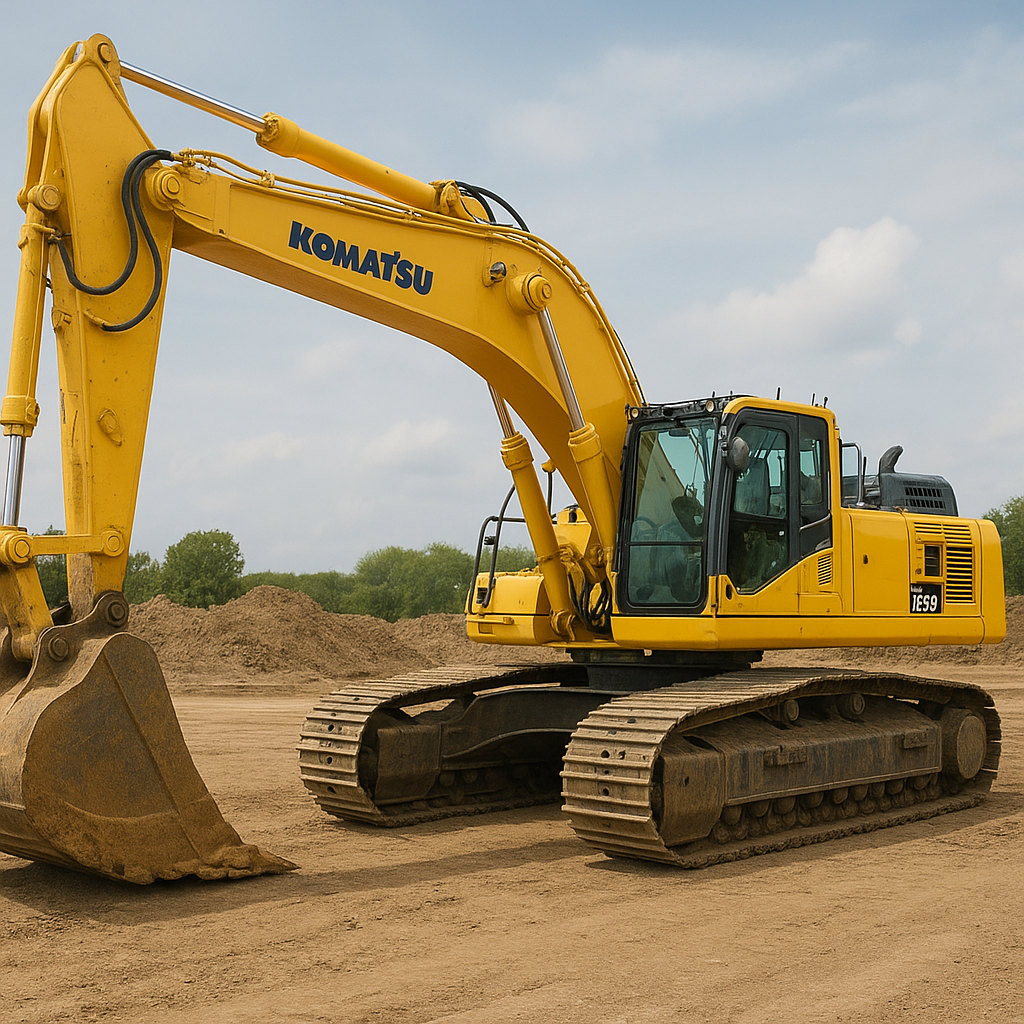
The Komatsu PC850-8 is a heavy-duty hydraulic crawler excavator designed for the most demanding tasks in construction, mining, quarrying and large-scale civil engineering. Combining robust build quality, powerful hydraulics and operator-centered features, this machine is engineered to move large volumes of material efficiently while offering flexibility through a wide range of attachments and configurations. The following article examines the PC850-8’s typical specifications, real-world applications, maintenance and operational considerations, and other practical information that will help fleet managers, operators and project planners assess its fit for specific jobs.
Technical overview and key characteristics
The PC850-8 belongs to Komatsu’s family of large crawler excavators and represents a balance of power, durability and serviceability. While specific configurations can vary by market and production batch, several core characteristics consistently define this model:
- Engine: Heavy-duty diesel engine tuned for sustained high-load operation and long service intervals. Many units in this class are equipped with engines delivering high torque at low rpm for digging power and fuel efficiency.
- Hydraulics: Advanced hydraulic systems with load-sensing pumps or electronic control that optimize flow to work equipment, improving cycle times and responsiveness under heavy loads.
- Operating weight: Typically in the high-tonnage range, often around 80,000–90,000 kg (approximately 176,000–198,000 lb), depending on counterweight and attachment configuration.
- Bucket capacity: Designed for large buckets; common sizes range from roughly 2.0 to 4.0 m3 for standard digging buckets, while specialized heavy-duty buckets for quarry work can be larger.
- Digging reach and depth: A working reach that commonly exceeds 12–15 meters and maximum digging depths often in the 9–10+ meter range, depending on boom/arm choice.
- Undercarriage: Heavy-gauge track frames and shoes sized for high stability, with options for wide undercarriage variations to improve flotation and minimize ground pressure.
Komtrax telematics and electronic monitoring are commonly integrated on machines in this family, enabling remote diagnostics, preventive maintenance scheduling and performance analytics. These systems can help reduce unplanned downtime and control lifecycle costs by tracking fuel burn, hour meters and fault codes.
Typical applications and industries
The PC850-8 is used across a broad range of heavy industries where large volumes of earth, rock or aggregate must be moved quickly and reliably. Key sectors include:
- Mining and quarrying: Primary loading of haul trucks, feed systems for crushers and primary rock excavation. In these applications the PC850-8’s large bucket options and robust undercarriage allow it to work directly on rock benches and unstable surfaces.
- Civil engineering and infrastructure: Major earthworks for highways, dams, ports and airport construction where deep excavation and high productivity cycles are required.
- Bulk material handling: Stockpile loading, shipyard and terminal operations where capacity and reach are valued for efficient material movement.
- Pipeline and heavy utilities: Trench excavation for long linear projects, especially when paired with long-reach configurations.
- Demolition and recycling: Equipped with specialized attachments (shears, crushers, grapples) the machine can be repurposed for heavy demolition and secondary processing work.
Different attachments and undercarriage choices enable the PC850-8 to switch roles quickly, from deep digging to high-capacity loading or attachment-based demolition work.
Attachments, options and configurations
One reason the PC850-8 is popular in large operations is the versatility offered through attachments and customizable configurations. Typical options include:
- Buckets: General-purpose, rock, high-capacity and low-profile buckets for different materials and loading requirements.
- Hydraulic breakers: For breaking rock and concrete; powerful breakers matched to the excavator class can significantly increase productivity in quarrying and demolition.
- Rippers and grapples: Useful for loosening compacted ground or handling irregular loads and scrap.
- Shears and crushers: Attachment-mounted shears and mobile crushers convert the excavator for demolition and secondary processing tasks.
- Long-reach booms and arms: For dredging, deep trenching and specialized demolition work where extended reach is required.
- Quick couplers: Increase versatility by enabling rapid attachment changes on site.
Manufacturers and aftermarket suppliers offer reinforced linkage, heavy-lift packages and cold-weather kits to tailor machines for site-specific demands.
Performance, productivity and fuel considerations
High productivity in a machine of this size results from the combined effect of hydraulic efficiency, powertrain torque characteristics and optimal bucket sizing for the intended truck or conveyor system. Several factors affect real-world performance:
- Cycle time: Efficient hydraulic circuits and balanced boom/arm geometry reduce time per scoop and increase tonnes moved per hour.
- Bucket-truck matching: For loading applications, matching bucket capacity to the payload of haul trucks or tippers minimizes spillage and tilting cycles.
- Fuel efficiency: Large excavators are designed for long shifts; modern electronic engine controls, auto-idling and economy modes reduce fuel consumption relative to older machines. Typical fuel consumption varies widely by duty cycle but can range from several dozen to over a hundred liters per hour under heavy continuous load—monitoring and operating best practices significantly impact total fuel costs.
- Attachment impact: Heavy attachments (e.g., breakers or grapples) change hydraulic demand and may increase fuel draw; correct hydraulic flow matching is essential for efficiency.
Using telematics for performance monitoring can identify fuel-inefficient patterns (excess idling, improper attachment selection or poor operator technique) and support targeted training or machine setup changes.
Maintenance, reliability and total cost of ownership
Maintenance and lifecycle costs are critical for machines in the PC850-8’s class since downtime can be extremely costly in large projects. Key maintenance and reliability considerations include:
- Planned maintenance: Scheduled intervals for filters, fluids and wear inspections keep systems operating predictably. Heavy-duty components like hydraulic pumps, final drives and undercarriage parts require routine checks and replacement planning.
- Component accessibility: Dash-8 series and similar Komatsu machines are typically engineered for serviceability, with ground-level access to filters and centralized grease points to shorten routine servicing times.
- Wear parts: Bucket teeth, cutting edges, track shoes and bushings are high-wear items; keeping a parts inventory matched to fleet usage patterns reduces downtime.
- Telematics-driven maintenance: Systems that log engine hours, operating conditions and fault history help shift maintenance from reactive to predictive. This can extend component life and reduce unplanned repairs.
- Refurbishment and rebuild: Large excavators are often candidates for mid-life rebuilds where major components are remanufactured to extend service life economically compared with full replacement.
Operators and fleet managers often evaluate total cost of ownership (TCO) rather than purchase price alone. Metrics used include uptime percentage, fuel cost per tonne moved, parts cost per operating hour and residual value at defined hour thresholds.
Safety features and operator environment
Safety and operator ergonomics are emphasized in modern large excavators. Features typically offered or available for the PC850-8 class include:
- ROPS/FOPS cabs with reinforced structures to protect operators in rollover or falling object scenarios.
- High-visibility arrangements with mirrors, cameras and optionally integrated 360-degree visibility packages for congested sites.
- Climate control and vibration-damping seats to reduce operator fatigue during long shifts.
- Intuitive control layouts, multi-function joysticks and clear display panels for operational diagnostics and performance monitoring.
- Built-in alarms for overload, over-temperature and service reminders to alert operators and maintenance crews.
Site safety practices—daily walkaround inspections, control of entry zones and strict lifting protocols—remain essential, as with any large mobile machine.
Case study examples and operational scenarios
To illustrate typical real-world uses, consider several scenarios where a PC850-8 (or similar large excavator) is highly effective:
- Open-pit quarry loading: A PC850-8 is paired with 40–60 tonne haul trucks. With a matched bucket, the excavator fills each truck in a minimal number of passes, maximizing shovel-cycle efficiency and reducing truck idle time. Rugged rock buckets and reinforced linkages are standard to withstand abrasive material.
- Dam excavation: The machine performs mass excavation, creating terraces and moving material to stockpiles. Long-reach options enable deep cuts from a stable platform and reduce the need for repositioning on steep slopes.
- Port bulk handling: Working on quay aprons, the excavator loads ships and rail cars. Fine control and large-capacity buckets minimize cycle times while dust suppression and spill control measures protect the environment.
In each scenario, productivity is linked to operator skill, attachment selection and onsite logistics coordination (truck routing, stockpile placement and maintenance scheduling).
Market position, resale and lifecycle considerations
Large excavators such as the PC850-8 are significant capital investments. Market factors that influence value and purchasing decisions include:
- Resale value: Machines from well-known OEMs with documented maintenance histories and telematics-tracked usage usually command higher resale prices.
- Utilization rate: High-utilization fleets amortize acquisition costs faster but face earlier wear; purchasing strategy often balances buy vs. rent based on project pipeline certainty.
- Fleet standardization: Standardizing on a manufacturer simplifies parts inventories and service training but can limit flexibility for niche attachments.
- Financing and lifecycle planning: Leasing, rental or staged replacement programs are commonly used to manage capital expenditure peaks and maintain modern, efficient fleets.
Environmental and regulatory aspects
Large excavators must comply with emissions and noise regulations that vary by region. Typical considerations include:
- Engine emissions: Compliance with local stages/tiers (e.g., EPA/CARB tiers, EU Stage regulations) often influences which engine and aftertreatment systems are fitted, including particulate filters and selective catalytic reduction (SCR) for NOx control.
- Fuel type and alternatives: While diesel remains standard, there is growing interest in fuels and powertrain alternatives (e.g., biodiesel blends, electrification in hybrid architectures) for reducing carbon intensity on-site.
- Noise and dust control: Site mitigation measures for noise and dust are often mandated for urban or environmentally sensitive projects; machine selection and operation practices can help meet these requirements.
Summary of strengths and selection guidance
The Komatsu PC850-8-class excavator offers a combination of heavy lifting and digging capability, robust components built for abrasive conditions and technological features that support uptime and efficiency. When choosing this class of machine, consider:
- Match bucket size and arm reach to the intended application and the sizes of haul partners (trucks, conveyors).
- Prioritize machines with telematics-enabled service histories to support predictive maintenance and resale value.
- Evaluate local support networks for parts and service to minimize downtime—OEM presence and certified dealer networks matter greatly for large equipment.
- Factor in lifecycle costs—fuel, wear parts and major component replacement—rather than focusing solely on capital price.
Approximate technical data to guide specification
Note: exact figures depend on year, market and installed options; the following ranges provide guidance for planning and comparison:
- Operating weight: ~80,000–90,000 kg
- Engine power: ~400–470 kW (approximately 535–630 hp)
- Bucket capacity: ~2.0–4.0 m3 for standard buckets; higher capacities available for bulk handling
- Maximum digging depth: ~9–11 meters depending on boom/arm
- Reach at ground level: commonly >12 meters, up to 15+ meters for standard or long-reach configurations
- Fuel consumption: highly variable; heavy continuous loading can demand several dozen to over 100 liters per hour—site monitoring is essential
These estimates should be confirmed with manufacturer documentation or dealer technical sheets for specific machine serial numbers and configurations.
Final considerations for operators and fleet managers
Successful deployment of a PC850-8-class excavator depends on aligning machine capability with project needs, ensuring access to skilled operators and establishing a proactive maintenance regime. Emphasize training on efficient operating techniques, monitor machine telematics to refine jobsite logistics and plan for wear-part turnover in high-abrasion environments. With the right support and configuration, this class of excavator can deliver high productivity, long service life and reasonable lifecycle costs in the most demanding material-moving roles.
)
)