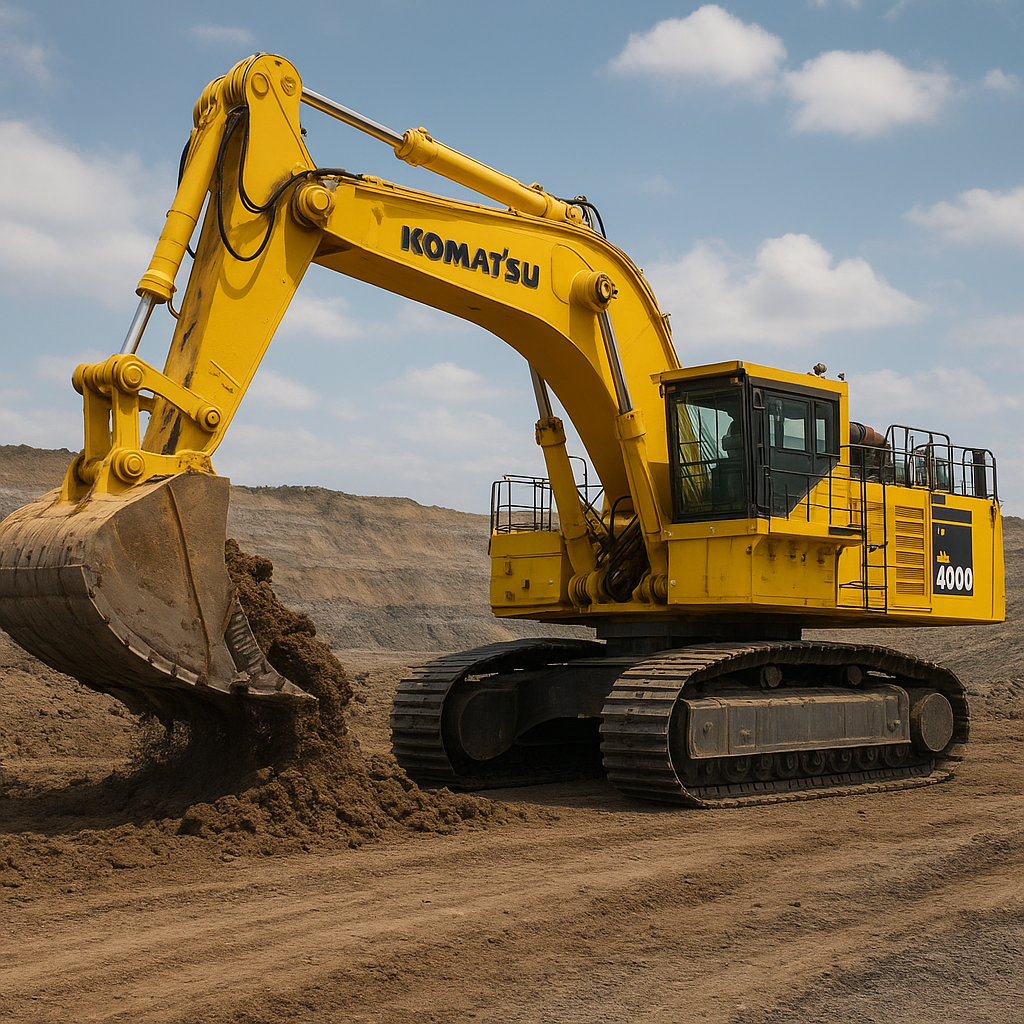
The Komatsu PC4000 is a heavy-duty hydraulic mining excavator that has earned a reputation in the global extractive industries for its combination of high capacity, reliability and adaptability to the toughest open-pit conditions. Designed to handle large volumes of overburden and ore, the PC4000 operates as a central piece of equipment in modern mine fleets. This article examines the machine’s design, typical specifications, operational roles, maintenance considerations and environmental and safety aspects, offering practical insights for engineers, fleet managers and anyone interested in large-scale mining machinery.
Design and technical characteristics
The Komatsu PC4000 is engineered as an ultra-class hydraulic shovel/excavator with a focus on maximizing material moved per hour while minimizing downtime. Its design integrates a robust undercarriage, reinforced boom and arm assemblies, and heavy-duty components intended to withstand continuous loading cycles in open-pit mining environments. Key design priorities include structural strength, hydraulic efficiency, operator comfort and serviceability.
Core components
- Engine: The PC4000 is typically powered by a large diesel engine optimized for continuous high-load operation. Engine power varies by configuration and market emissions requirements, but typical installed power is in the range of approximately 1,800–2,200 kW (depending on model variants and tuning).
- Hydraulic system: A high-flow, high-pressure hydraulic system delivers continuous digging force and fast cycle times. Redundant and modular hydraulic components are used to enhance uptime and simplify repairs.
- Boom and arm: Structures are fabricated from high-strength steel with reinforced joints and pinned connections. Bucket options vary for different materials (soft overburden, hard ore, abrasive rock).
- Undercarriage: Heavy-duty crawler undercarriage provides traction and stability on rough pit floors. Track assemblies are sized to distribute weight and reduce ground pressure while enabling controlled movement.
- Cab and controls: Ergonomically designed operator cabins offer visibility, climate control and modern control systems, including optional electronic monitoring and telematics packages.
Typical specifications (approximate)
Specifications vary with model year and specific configuration; the figures below represent typical ranges for PC4000-class machines and should be verified against manufacturer data for a particular serial/model number.
- Operating weight: approximately 350–450 tonnes
- Bucket capacity: commonly in the range of 12–23 m³ (standard to large bucket options)
- Engine power: approximately 1,800–2,200 kW
- Maximum digging depth: typically up to 9–11 meters, depending on arm/boom configuration
- Swing speed: roughly 2.5–4 rpm
- Travel speed: usually around 2–3 km/h (crawler travel)
- Fuel consumption: highly variable—rough guidelines are 120–250 L/h under typical load cycles, depending on digging intensity, bucket size and hauling match
Applications and operations in mining
The primary role of the Komatsu PC4000 is in large-scale open-pit mining operations. It is used across many mining sectors, including coal, copper, gold, iron ore and other bulk commodities. The machine’s capacity to load large haul trucks and to perform rapid stripping operations makes it vital in high-throughput mines.
Common use cases
- Truck loading: PC4000 excavators are frequently paired with large rigid haul trucks. Matching bucket size and truck body capacity is critical to achieving high payload efficiency and minimizing truck waiting time.
- Overburden removal: The excavator’s digging reach and bucket volume make it effective for removing overburden in pre-stripping and waste haulage operations.
- Ore handling: In ore benches, the PC4000 can maintain cycle rates required to feed crushers, conveyors or directly load trucks bound for processing plants.
- Rehandle and reclamation: The machine’s versatility allows it to be used for reclamation, rehandle of stockpiles and construction of haul roads or berms.
Fleet matching and productivity
Optimizing productivity with the PC4000 depends on careful fleet integration. Typical considerations include:
- Haul truck match: PC4000 units are commonly paired with trucks in the medium-to-large class. The optimal truck class depends on bucket size; for example, buckets in the 12–15 m³ range pair efficiently with 60–100 tonne trucks, while larger 18–23 m³ buckets are best matched to 150+ tonne trucks. Correct matching reduces fragmentation (partial loads) and increases truck-cycle efficiency.
- Cycle time: A single excavation cycle consists of dig, swing, dump and return. Cycle times are influenced by bucket fill factor, operator skill, bench configuration and truck positioning. Typical cycle times under steady operation vary widely but are an important KPI for measuring performance.
- Utilization: Effective utilization of a PC4000 requires minimizing idle time (truck delays, maintenance downtime) and optimizing shovel-truck choreography. Telemetry and fleet management systems can increase effective utilization by 5–15% in well-integrated operations.
Reliability, maintenance and lifecycle costs
Given the capital cost of a PC4000-class excavator, lifecycle management is essential to achieve desired return on investment. Maintenance planning, parts availability, and trained technicians all play a major role in ensuring consistent production and predictable operating costs.
Maintenance strategies
- Preventive maintenance: Scheduled inspections of hydraulic systems, undercarriage wear, structural components and engine systems reduce the incidence of catastrophic failures. Lubrication intervals, hydraulic fluid analysis and scheduled component inspections are standard.
- Condition-based monitoring: Vibration analysis, oil particle analysis and temperature monitoring allow early detection of component wear or failure. Many modern PC4000 machines can be fitted with OEM telematics to capture engine hours, fuel consumption and fault codes remotely.
- Component life-cycle management: Major wear components—such as bucket teeth, pins and bushings, track shoes and hydraulic cylinders—should be monitored and replaced before reaching failure thresholds. Reconditioning of booms and arms is typically part of a long-term maintenance plan in high-hour machines.
Costs and parts availability
Operating costs for a PC4000 include fuel, consumables (teeth, filters, hydraulic oil), maintenance labor and spare parts. Fuel is often the largest single operating expense. Parts availability depends on regional dealer networks; in major mining regions Komatsu’s global dealer footprint generally ensures access to genuine components and technical support, which reduces downtime risk. Planned rebuilds or component exchanges (engines, pumps) are significant cost events that should be factored into five- to ten-year lifecycle budgets.
Safety and environmental considerations
Safety in the operation of ultra-class excavators is paramount. The PC4000 incorporates safety features and is operated within strict site controls designed to protect personnel and equipment. Environmental considerations are increasingly important for mining operators seeking to reduce emissions and improve sustainability.
Operator and site safety
- Visibility and controls: Cab design emphasizes visibility to the loading point and truck decks. Modern control suites often feature camera systems and proximity detection to prevent collisions and to protect personnel working near the machine.
- Worksite procedures: Isolation protocols, safe truck-shovel approach patterns, clear communication (radio, light systems) and exclusion zones around the shovel swing are standard safety measures.
- Emergency systems: Fire detection and suppression options, emergency shutoffs and escape routes from elevated cabins are commonly included in mining excavator specifications.
Environmental performance
Advances in engine technology and emissions control have improved the environmental profile of large diesel excavators, including models in the PC4000 family. Operators often pursue strategies to lower the environmental footprint:
- Engine tuning and emissions control: Tier / Stage compliant engines and after-treatment systems reduce NOx and particulate emissions. Specific standards depend on regional regulation.
- Fuel efficiency programs: Operator training, idle reduction policies and optimized digging cycles help lower fuel consumption.
- Electrification and hybrid options: In some mine sites, shovels/excavators are included in electrified solutions (e.g., cable reel systems, hybrid electrics or using cleaner fuels) to reduce diesel emissions. While full electric operation for super-class shovels is not yet ubiquitous, hybrid or semi-electric integrations are part of long-term industry trends.
Operational tips and best practices
To maximize the PC4000’s service life and production efficiency, operators and fleet managers should adopt a combination of technical, organizational and training measures.
- Operator training: Skilled operators can improve bucket fill, reduce cycle times and lower stress on components. Training programs focusing on bench preparation, truck positioning and fill techniques produce measurable gains in productivity and component life.
- Matching and scheduling: Properly matching bucket size to truck body capacity and scheduling shifts to minimize idle time yields better fuel efficiency and higher throughput.
- Preventive parts inventory: Maintaining a stock of critical wear items (teeth, pins, filters) reduces mean time to repair in remote locations. A parts-management strategy tied to operating hours can reduce downtime risk.
- Data-driven decisions: Use telematics and production reporting to track KPIs such as tonnes per hour, fuel burn per tonne and availability. Data analysis helps prioritize maintenance and optimize fleet deployment.
Case studies and real-world performance
Operators worldwide report that PC4000-class excavators excel in high-throughput applications where robust design and continuous duty cycles are the norm. Typical outcomes reported by mines with well-managed PC4000 fleets include:
- Increased hourly production: When correctly matched to truck fleets and maintained, a PC4000 can deliver consistent, high hourly tonne outputs, particularly when cutting ore benches designed for efficient bucket fill.
- Improved availability: With disciplined maintenance practices and OEM support, operational availability in the high 80s to mid-90s (percent uptime) is achievable.
- Lifecycle resilience: Major components can be refurbished or replaced as part of mid-life overhauls, extending effective service life by many years and spreading capital costs.
One commonly observed pattern is the direct relationship between operator skill and the machine’s apparent fuel consumption: modest improvements in technique can reduce fuel burn per tonne moved by several percent, which translates to significant annual savings at scale.
Purchasing, leasing and resale considerations
When acquiring a PC4000, owners consider capital cost, financing options, dealer support and resale value. Leasing and rental can be effective for short-term needs or to bridge project schedules. Resale values depend on hours, maintenance history and the remaining service life of major components.
- New vs used: New machines offer the latest emissions and electronics but come at a premium. Used units can be economical if they have documented maintenance records and have been operated in non-abrasive conditions.
- Warranty and support: Comprehensive warranties and regional dealer support reduce operational risk, particularly in remote mining regions.
- Refurbishment: OEM rebuild programs or certified rebuilders can restore a PC4000 to near-new condition as a cost-effective alternative to purchasing a new unit.
Future trends and innovations
The mining industry is evolving with digitalization, automation and sustainability goals shaping equipment design and deployment. Relevant trends for machines like the PC4000 include:
- Autonomous and semi-autonomous operation: Integration with mine automation platforms enables remote operation and driverless truck/shovel coordination, improving safety and efficiency.
- Predictive maintenance: Use of machine learning on telematics data enables better prediction of component failures and optimized maintenance schedules.
- Electrification: Hybrid power systems, cable-assisted electrification and infrastructure for lower-emission energy sources are being explored to reduce greenhouse gas emissions from large surface mining equipment.
Conclusion
The Komatsu PC4000 is a high-capacity hydraulic excavator engineered for the demands of modern open-pit mining. Its strengths lie in robust structural design, powerful hydraulics, and adaptability to a range of mining tasks—from stripping to ore loading. Achieving peak performance requires careful fleet matching, disciplined maintenance and skilled operation. As mining continues to adopt automation and emissions-reduction technologies, machines in the PC4000 class will evolve, incorporating more advanced electronics, predictive maintenance tools and electrification options to meet future productivity and sustainability targets.
Keywords: Komatsu, PC4000, excavator, mining, bucket, payload, power, fuel consumption, maintenance, safety
)
)