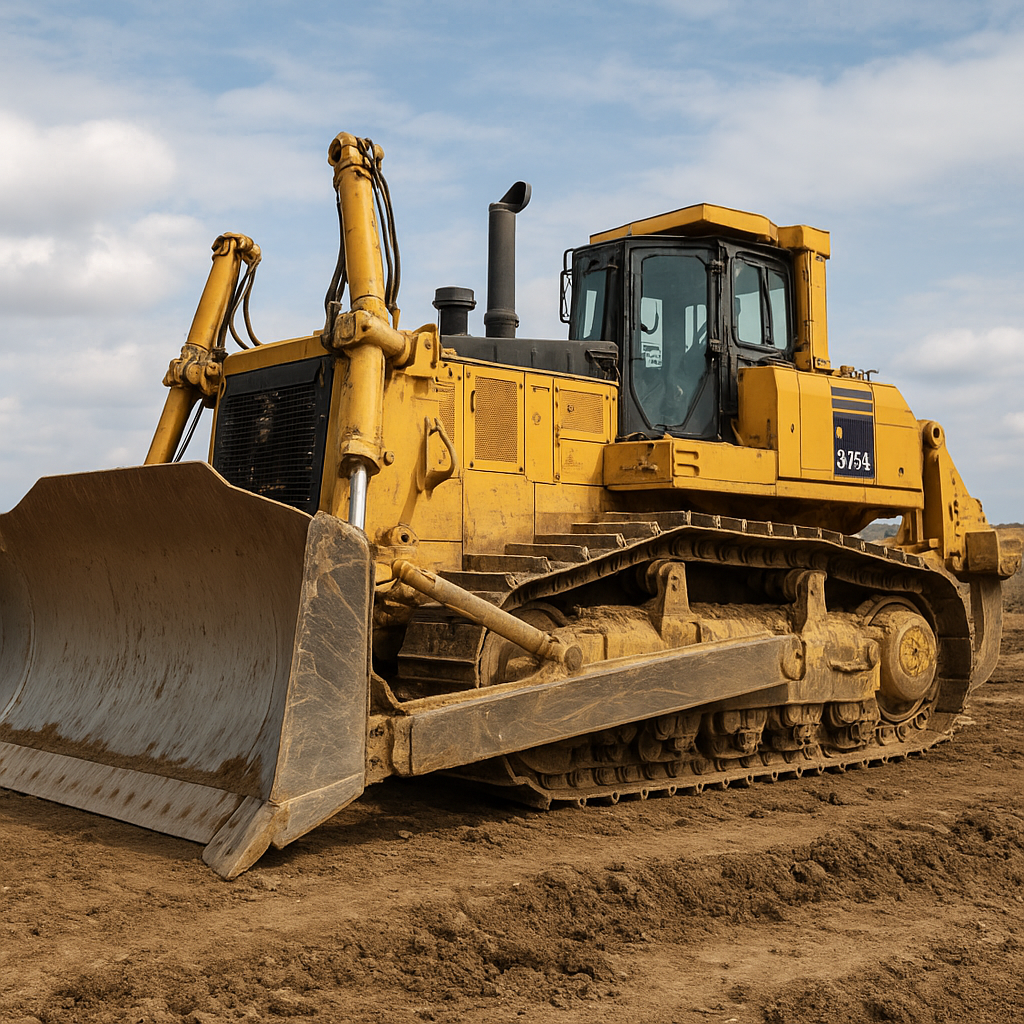
The Komatsu D375A is a heavy-duty crawler dozer designed to move large volumes of earth, rock and other materials in demanding construction, mining and civil engineering applications. Built by Komatsu, one of the world’s leading manufacturers of heavy equipment, the D375A blends robust undercarriage components, high-capacity blades and powerful engines to deliver sustained productivity in harsh environments. This article examines the machine’s design principles, typical applications, key technical characteristics, maintenance and operational considerations, and practical guidance for potential buyers and operators.
Design and technical characteristics
The Komatsu D375A belongs to the class of large track-type dozers engineered for pushing, spreading and ripping. While specifications vary across submodels and regional configurations, the D375A line is characterized by a series of consistent design choices that prioritize durability, traction and operator comfort.
Powertrain and engine
- Engine type: turbocharged diesel engine with electronic fuel control (Komatsu designs engines for high torque at low rpm to optimize pushing power and fuel efficiency).
- Power range: depending on year and variant, gross engine power typically lies in the range of approximately 300–410 hp (about 224–305 kW). Exact figures depend on emissions package and tuning.
- Transmission and drive: heavy-duty final drives and robust torque converters are common, with drive systems optimized to transfer high torque to the tracks for maximum drawbar pull.
Weight, dimensions and undercarriage
- Operating weight: varies by configuration (blade, ripper and additional options) but commonly falls in the approximate range of 40–55 tonnes. Specific models and attachments can shift this number upward or downward.
- Undercarriage: large rollers, heavy track links and wide shoe options allow the D375A to be fitted for higher flotation or higher traction depending on site conditions. Track shoe widths commonly offered for machines of this class range from about 610 mm to 1067 mm, sometimes even wider for specialty jobs.
- Blade capacity: blade sizes differ by type (straight, universal, semi-U) and range typically from roughly 8 to 18 cubic meters, depending on blade design and machine configuration.
Hydraulics and attachments
- Hydraulic circuits are sized for heavy lift and tilt operations associated with large blades and rippers.
- Common attachments include multi-shank rippers for loosening compacted material, single-shank rippers for heavy rock, winches for forestry or recovery operations and specialized blades for land reclamation and slope work.
- Many D375A machines can be equipped with modular bolt-on cutting edges, rock guards and wear packages to extend service life in abrasive conditions.
Operator environment and controls
- Modern Komatsu cabs for this class offer ROPS/FOPS protection, ergonomic controls, climate control and adjustable seating to reduce operator fatigue and increase productivity.
- Instrumentation typically includes electronic monitoring for engine parameters, diagnostics and fuel use tracking. Some models may provide telematics-ready hardware for remote monitoring.
Applications and jobsite performance
The D375A is suited to tasks that demand continuous, heavy pushing capacity and long-term durability. Its primary applications include:
- Mining and quarry operations: pushing and spreading blasted rock, stockpile management and mining bench cleanup. The machine’s weight and traction make it effective for repositioning large volumes of material.
- Large civil earthworks: highway construction, dam building, airport site preparation and bulk grading where high-capacity blades and steady push force reduce cycle times.
- Land reclamation and site preparation: stripping topsoil, shaping terrain and preparing building pads and embankments.
- Forestry and land clearing: when fitted with protective guards and winches, D375A dozers can work in reclamation and heavy land-clearing roles.
- Specialty jobs: slope stabilization, winter snow pushing in large-scale operations and support in heavy demolition tasks where ground engagement and traction are critical.
Performance on site is a function of appropriate matching of tracks, blade type and power output to the work. For example, a semi-U blade is ideal for high-capacity dozing and bulk movement, while a straight blade (S-blade) offers precise grading control. A multi-shank ripper fitted to the rear increases productivity when working with compacted layers or frozen ground by pre-loosening material for more efficient blade loading.
Operational efficiency and fuel consumption
Fuel consumption for large crawler dozers like the D375A varies widely with load, cycle type, terrain and operator technique. General observed ranges for comparable machines under typical working conditions are between about 25 and 60 liters per hour (roughly 6.5–16 gallons per hour). Heavier push conditions, continual ripping, or operations at full throttle push consumption to the higher end of the spectrum.
Factors that improve operational efficiency:
- Matching blade type to the material and job—using a high-capacity blade where bulk movement is needed and a precision blade for fine grading reduces wasted cycles.
- Using optimal track shoe width and undercarriage configuration to lower ground resistance and prevent excessive slipping.
- Operator training—skilled operators reduce excessive throttle usage and cycle time, directly lowering fuel burn.
- Implementing idle management and automatic engine idle features to avoid unnecessary fuel use during downtime.
Maintenance, durability and lifecycle
One of the strengths of Komatsu equipment is the emphasis on serviceability and long component life. The D375A benefits from Komatsu’s focus on modular components, reinforced wear points and accessible service locations.
Key maintenance areas
- Undercarriage: the most wear-prone system on track machines. Regular inspection, proper track tension and replacement of worn components at the correct intervals extend life and control operating cost.
- Engine and cooling system: regular oil, fuel and air filter replacement, coolant checks and attention to turbocharger health keep performance consistent.
- Hydraulic systems: contamination control, filter changes and leak inspection prevent costly failures.
- Blade and ripper wear parts: monitoring cutting edges, end bits, shank points and ripper teeth allows for timely replacements before excessive structural wear.
Properly maintained, a D375A operating in construction can deliver many thousands of operating hours. In mining and heavy civil applications, lifecycle cost is driven by undercarriage wear, engine rebuild intervals and the cost-to-repair of major structures after extended use in abrasive rock environments.
Safety and operator considerations
Safety features typically include ROPS/FOPS certified cabs, enhanced visibility from the operator station, backup cameras or mirrors, and emergency shutoffs accessible to the operator. Additional site-specific safety measures include:
- Routine prestart inspections for hydraulic leaks, loose hardware and track integrity.
- Clear communication protocols on busy sites, including radios and flagging for blind spots.
- Secure mounting and safe operation of optional winches and heavy attachments to avoid overload conditions.
Operator comfort directly affects safety and productivity. Ergonomic seating, low-vibration cab mounts and intuitive control layouts reduce fatigue, which decreases the likelihood of mistakes that could cause accidents or equipment damage.
Variants, upgrades and telematics
Over its production life, the D375A platform has seen multiple submodels and incremental upgrades reflecting emission standards, electronic control systems and comfort features. Regional markets often receive slightly different configurations to meet local regulatory and operational needs.
- Emission and engine control upgrades: later models received updated fuel systems and emissions hardware to meet stricter regulations while maintaining torque and fuel efficiency.
- Operator and control upgrades: improved displays, joystick controls and hydraulic responsiveness are commonly included in newer iterations.
- Telematics: modern Komatsu machines can be equipped with remote monitoring to track hours, fuel use, fault codes and location—helpful for fleet management and preventive maintenance planning.
Economic and environmental considerations
When evaluating the D375A for a fleet, buyers consider marginal cost per cubic meter moved and total lifecycle cost. Important economic factors include purchase price or lease rates, resale value, expected uptime, and maintenance costs.
- Total cost of ownership: includes fuel, parts, undercarriage overhauls, labor and downtime. Machines with telematics and well-documented maintenance histories typically retain higher residual values.
- Environmental impact: modern diesel engines and cleaner combustion profiles reduce particulate and NOx output relative to older units, but operators can further reduce greenhouse gas emissions through idling controls, optimized machine matching and fuel-efficient operating practices.
Practical tips for buyers and operators
Prospective owners and fleet managers should consider the following:
- Specify blade and undercarriage options that match the primary material and terrain to avoid suboptimal machine-task matching.
- Inspect historical maintenance records and undercarriage wear patterns when evaluating used D375A units—undercarriage condition is a major determinant of remaining value.
- Consider telematics or remote monitoring solutions to improve preventive maintenance and reduce unplanned downtime.
- Train or certify operators on machine-specific controls and efficient pushing techniques to conserve fuel and reduce wear.
- Plan for attachment versatility—rippers, winches and specialized blades can significantly broaden the machine’s utility across seasons and job types.
Comparisons and market position
In its class, the D375A competes with other large crawler dozers from global manufacturers. The comparative strengths of Komatsu machines often cited by owners include robust build quality, good dealer support networks in many regions and strong resale values when inventory is supported by manufacturer-backed service programs.
Choosing between brands frequently comes down to local dealer support, availability of parts, operator familiarity and total lifecycle cost rather than raw performance numbers alone.
Summary and final notes
The Komatsu D375A is a heavy, capable crawler dozer engineered for continuous, high-production work across mining, civil construction and land reclamation. Its strengths lie in durability, strong pushing capacity, flexible attachment options and an operator-focused cab environment. While exact specifications vary by submodel and market, typical characteristics include a high-torque diesel engine, reinforced undercarriage and blade options that accommodate both bulk earthmoving and finish grading tasks. For buyers and operators, careful machine-task matching, diligent undercarriage management and operator training are key to maximizing productivity and minimizing operating cost.
Komatsu, D375A, crawler, dozer, engine, horsepower, operating weight, blade, tracks and fuel efficiency are central concepts when evaluating this machine for large-scale earthmoving projects.
)
)