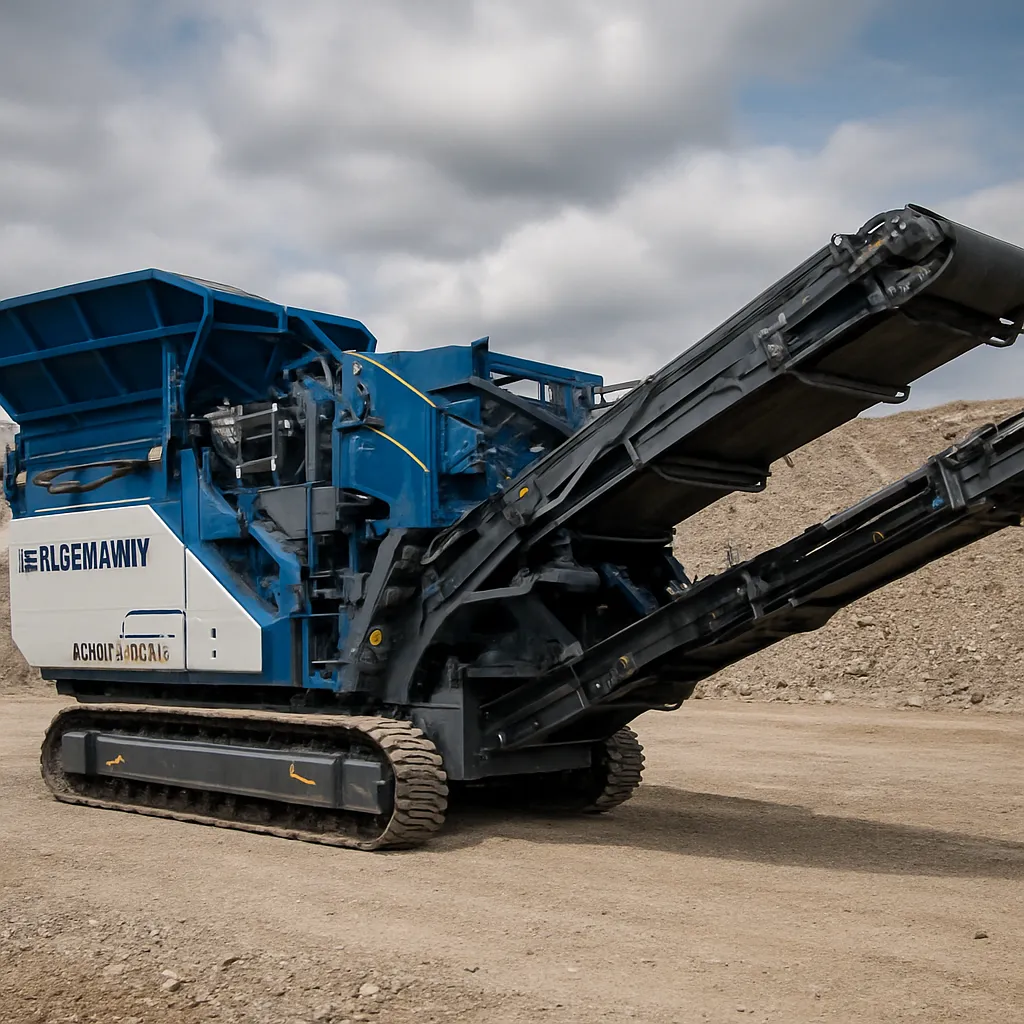
The Kleemann MOBIREX MR 110 is a widely recognized mobile jaw crushing plant designed for efficient primary crushing in quarrying, recycling and construction applications. Combining robust engineering, ease of transport and flexible configuration options, the MR 110 has become a dependable choice where on-site crushing and rapid relocation are essential. This article explores the machine’s features, typical applications, operational considerations and other interesting facts to help operators, fleet managers and project planners assess its suitability for different tasks.
Overview and key characteristics
The MOBIREX MR 110 is a purpose-built mobile unit centered around a heavy-duty jaw crusher configured to handle a wide range of raw materials, from natural rock to reinforced concrete. Its main strengths lie in its combination of high performance with operational mobility, enabling contractors to move the crusher between sites or within a large quarry quickly and economically. The unit is engineered to provide consistent and reliable primary crushing as part of a staged processing circuit, whether feeding secondary crushers, screens or conveying systems.
Design principles
- Compact track-mounted chassis for relatively fast setup and relocation.
- Integrated feed hopper with pre-screening option to remove fines and improve throughput efficiency.
- Hydraulically adjustable crusher settings that enable quick adaptation to changing job requirements.
- Multiple drive options (diesel-hydraulic or electric drive where grid power is available), balancing portability and fuel economy.
Notable technical highlights
- Feed opening dimension typically associated with the MR 110 series is around 1100 mm (nominally indicated by the model number), enabling the machine to accept large feed lumps and deliver dependable primary crushing.
- Adjustable closed side setting (CSS) for controlling finished product size and maximizing throughput depending on material characteristics.
- Robust crusher components (wear plates, toggle assemblies, eccentric shafts) designed for high-impact loads and extended service life to ensure operational durability.
- On-board conveyors for crushed material discharge and optional return conveyors for recirculating oversize, facilitating closed-circuit operation.
Applications and typical workflows
The MR 110 is used across a spectrum of industries where primary crushing is required. Its flexibility makes it a strong choice for projects that need on-site processing, rapid redeployment and variable output demands.
Main application areas
- Quarrying: Processing of hard rock, limestone, granite and other aggregates where a robust primary crusher is essential.
- Construction and demolition recycling: Crushing reinforced concrete, asphalt and mixed demolition waste to produce reusable aggregates.
- Infrastructure projects: On-site crushing for road construction, pipeline trenches and large earthworks where material reuse reduces haulage costs.
- Mining support (small/medium operations): Initial sizing of blasted rock prior to secondary crushing stages.
- Temporary operations and seasonal works: Forestry, landscaping or seasonal aggregate supply where rapid setup and takedown matter.
Typical processing circuits
Common workflows employing the MR 110 include:
- Primary jaw crushing feeding a mobile cone crusher or impact crusher for secondary and tertiary stages—suitable for producing cubical aggregates.
- Primary crushing with an integrated pre-screen and fines removal, producing a coarse product while rejecting or separately handling small fractions.
- Closed-circuit solutions where the MR 110 works with a return conveyor and screening unit to meet precise product size specifications on site.
- Standalone primary crushing for on-site reuse of demolition material where final grading is accomplished by mobile screens or wash plants.
Performance, specifications and real-world metrics
Performance of the MR 110 varies depending on configuration, material hardness and operator settings. Rather than immutable values, the following ranges represent realistic expectations operators can use for planning purposes.
Typical performance ranges
- Throughput: Depending on material size, hardness and desired product size, production commonly ranges from about 100 to 350 tonnes per hour in practical operations. Harder stone and tighter closed side settings reduce capacity, while softer materials and coarser settings increase it.
- Feed size capability: The nominal feed opening associated with the MR 110 allows acceptance of large lumps up to several hundred millimeters; however, the maximum recommended feed size depends on the material and the setup—operators should avoid overloading the feed to sustain crusher life.
- Operating weight: Typical mobilized weight for machines in this class is often in the region of 25–40 tonnes depending on options (e.g., additional conveyors, screening decks or diesel-electric power packs).
- Engine / drive power: Drive systems for mobile jaw crushers commonly provide between 150 and 300 kW of prime power in crusher drive packages; exact figures depend on market configuration and emission stage of the installed engine.
- Closed side setting (CSS): Adjustable ranges frequently fall between approximately 30 and 150 mm, enabling versatility for different product gradings.
These ranges are intended as planning guidance. Exact manufacturer specifications for a particular MR 110 variant should be consulted when designing a processing line, ordering the machine or preparing transport and site logistics.
Fuel consumption and operational costs
Fuel consumption is influenced by engine load, whether the unit is diesel-hydraulic or draws electric power, material hardness and idle time. A typical mobile jaw crusher in continuous operation may consume tens of litres per hour under heavy load; using electric drives where available and optimizing duty cycles can reduce operational fuel consumption and lower lifecycle costs. Predictive maintenance and correct selection of wear parts also contribute to overall cost efficiency.
Operation, maintenance and safety considerations
Efficient use of the MR 110 depends on good operational practices, scheduled maintenance and adherence to safety protocols. Properly managed, the machine delivers high uptime and predictable performance.
Operational best practices
- Feed control: Ensure consistent and even feed distribution to prevent crusher overloading and to maximize crushing efficiency and wear life.
- Pre-screening: Use an integrated or separate pre-screen to remove fines, reducing unnecessary crushing and improving throughput.
- Material segregation: When possible, segregate materials (e.g., separate concrete, asphalt and unreinforced rubble) to optimize wear part selection and downstream processing.
Maintenance and parts
Regular maintenance is essential for maximizing availability:
- Daily checks: Lubrication points, hydraulic lines, wear of jaw plates and conveyor integrity.
- Planned replacement: Jaw plates, cheek plates and conveyor belts should be replaced before performance drops significantly; monitor wear patterns to optimize cost-effective rotations.
- Access and serviceability: The MR 110 is designed with service-friendly layouts; hydraulic or electrically assisted access panels reduce downtime during inspections and component replacements.
- Spare parts strategy: Keep critical consumables and hydraulic seals on hand for rapid turnaround. Partnering with manufacturer support networks reduces lead times for major components.
Safety systems and site integration
Safety is paramount when operating heavy mobile crushers:
- Machine guarding: Ensure all guards, emergency stops and lockout systems function as intended.
- Dust and noise mitigation: Use water suppression, dust extraction or enclosed conveyors where required to meet local regulations and protect worker health.
- Traffic management: Integrate the crusher into a broader site traffic and lifting plan to avoid collisions and ensure safe material handling.
- Training: Provide operator training on start-up, shutdown, emergency procedures and routine checks to prevent accidents and costly downtime.
Environmental and economic considerations
Modern crushing operations are judged not only by output but also by their environmental footprint and cost-effectiveness. The MR 110’s design supports both objectives when configured and operated appropriately.
Environmental management
- Dust control: Pre-screening and water suppression systems reduce airborne particulates. Enclosed conveyors and local extraction can further limit emissions.
- Noise management: Acoustic enclosures and strategic placement reduce noise exposure to workers and nearby communities; proper scheduling can also minimize disruption.
- Reduced haulage: On-site crushing minimizes truck movements, lowering greenhouse gas emissions and decreasing wear on public roads—an important consideration in urban or remote projects.
- Recycling advantages: Using the MR 110 to process demolition material on-site reduces virgin material demand and landfill use, contributing to circular construction practices.
Economic benefits and deployment strategies
Cost-effectiveness arises from several factors:
- Lower logistics costs when processing materials on site, especially for large civil engineering tasks where haul distances are significant.
- Flexibility to adjust production to match demand, avoiding idle investments in fixed crushing infrastructure.
- Residual value: Mobile crushers often retain good resale value, particularly when maintained with manufacturer-approved parts and service records.
- Rapid mobilization/demobilization: Ideal for contractors who switch jobs frequently or need temporary processing plants for short-duration projects.
Upgrades, options and complementary equipment
The MR 110 can be tailored with options that enhance performance or adapt it to specific jobsite needs. Typical enhancements include advanced pre-screen systems, hydraulic folding conveyors for transport, and remote monitoring capabilities.
Common options
- Pre-screen and fines chute to reduce material throughput of unwanted fines.
- Extended discharge conveyors to facilitate stockpiling without additional support equipment.
- Diesel-electric hybrid drives or plug-in electric options where grid power availability allows reduced fuel use and emissions.
- Remote telemetry and fleet management systems to monitor performance, fuel use and maintenance intervals for optimized uptime.
Complementary machines
For full production lines, the MR 110 is often paired with:
- Mobile cone or impact crushers for secondary and tertiary reduction to produce marketable aggregate sizes.
- Mobile screening units to classify multiple products and create saleable fractions.
- Wash plants for applications requiring high specification aggregates.
- Belt feeders, stackers and magnetic separators depending on material type and product quality goals.
Practical tips for buyers and fleet managers
Choosing an MR 110 for a fleet requires balancing jobsite demands, lifecycle costs and support networks. Below are practical considerations to guide procurement and deployment.
- Match machine configuration to the dominant duty: Hard rock quarries need different wear part strategies than demolition recycling operations.
- Assess transport logistics: Although mobile, the size and weight of the MR 110 require suitable trucks and permits; choose folding conveyor options to simplify road moves.
- Evaluate power options: If electricity is available on-site, electric drives reduce operating costs and emissions—factor this into total cost of ownership analyses.
- Plan for training and support: Ensure that operators, mechanics and planners are trained on the specific MR 110 configuration; establish spare parts agreements with suppliers.
- Consider modularity: If your operations require frequent changes in product spec, choose options that speed reconfiguration such as quick-change jaw plates or hydraulic adjustments.
Conclusion
The Kleemann MOBIREX MR 110 is a purpose-driven mobile jaw crusher that balances robust primary crushing capability with the flexibility required in modern quarrying, recycling and construction environments. With appropriate configuration—pre-screening, power options and protective measures—the MR 110 can deliver strong throughput, manageable operating costs and reliable availability. Prioritizing correct maintenance, operator training and environmental controls maximizes the value of the investment and ensures safe, efficient processing across diverse jobsite scenarios.
Key words emphasized for quick reference: MOBIREX MR 110, jaw crusher, mobility, throughput, efficiency, durability, maintenance, fuel consumption, versatility, safety.
)
)