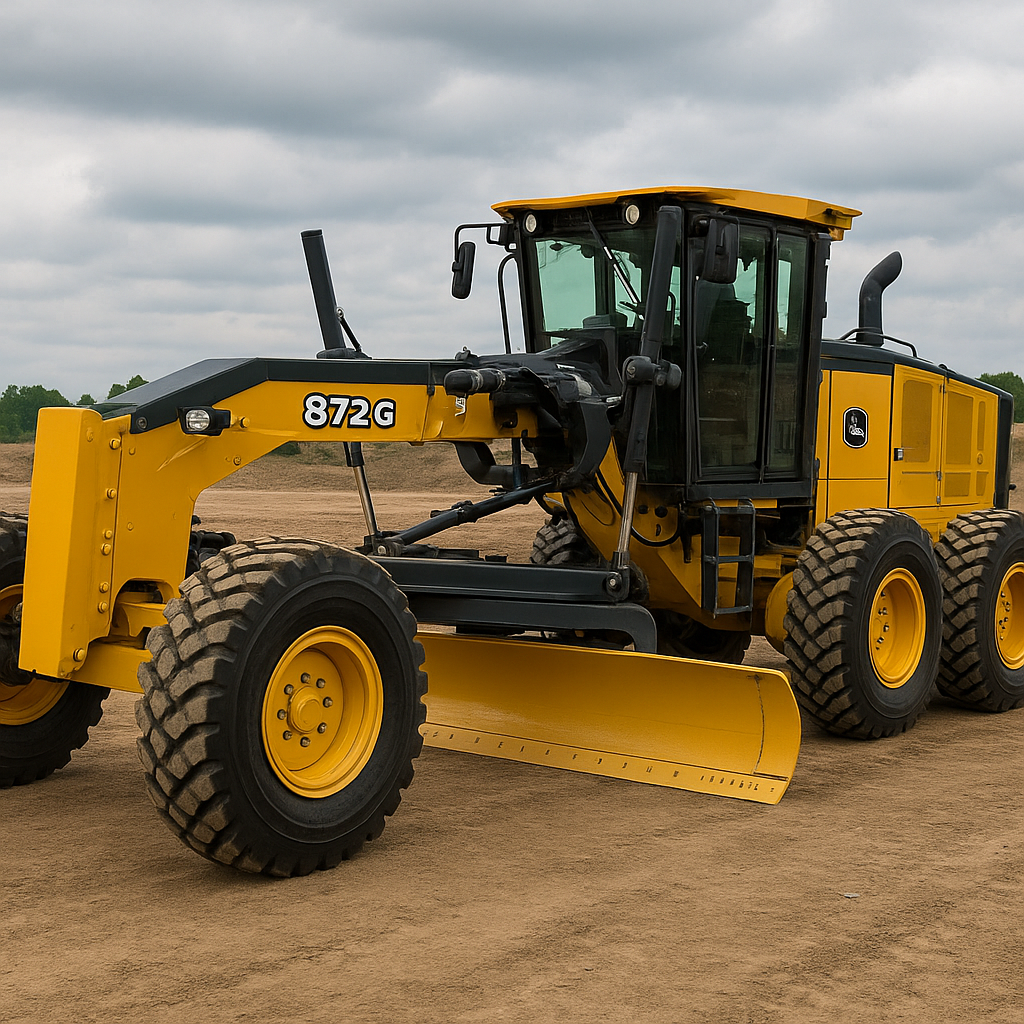
The John Deere 872G motor grader is a heavy-duty earthmoving machine designed to deliver reliable performance across a wide range of grading, roadbuilding and maintenance tasks. Known for its robust construction, operator comfort and versatile attachments, the 872G bridges the gap between compact graders and larger industrial models. This article explores the machine’s typical applications, key features, operational advantages, maintenance considerations and purchasing tips, offering practical information for contractors, municipal fleets and equipment managers.
Overview and Typical Applications
The John Deere 872G is commonly used in projects requiring precise surface shaping, drainage creation and road maintenance. Its design emphasizes balance between power, agility and operator control, making it a popular choice for:
- Construction and road building — fine grading of base courses, creating drainage crowns and final grading before paving.
- Maintenance of unpaved roads — reshaping rutted surfaces, managing crown and ditch profiles to improve drainage and extend road life.
- Snow removal and seasonal cleanup — mounting front plows, wing plows or V-blades for efficient snow clearance.
- Mining and quarry support — creating haul road profiles and maintaining site access roads.
- Utility and agricultural corridors — right-of-way grading and establishing stable surfaces for pipelines and cables.
Its combination of articulated steering and precise moldboard control makes the 872G suitable for projects that require both long moldboard passes and tight turning radii for trimming around obstacles. In municipal fleets, it is often favored for its maneuverability and ease of service compared with larger graders.
Key Features and Design Highlights
The 872G incorporates several features that contribute to its effectiveness on the jobsite. Highlights include a durable undercarriage and frame, refined hydraulic systems for smooth blade control, and an operator station designed for comfort and visibility. Below are notable elements that help define the machine’s capabilities:
- Engine and powertrain: The grader uses a purpose-built diesel engine tuned for reliable low-end torque, which is critical for pulling the moldboard through heavy material. Engine characteristics support sustained work in variable conditions.
- Moldboard and blade control: The machine offers precise blade positioning with multiple hydraulic controls for angle, pitch and side shift. This allows operators to perform cutting, spreading and finishing passes with consistent results.
- Articulation and frame: The articulated frame improves maneuverability and reduces tire scrub during turns. It also supports accurate grading lines when combined with differential lock and steering systems.
- Hydraulics: A responsive hydraulic system ensures smooth movements of the blade, scarifier (where equipped), rippers and optional accessories like wing plows or front-mounted tools.
- Operator environment: A well-appointed cab with clear sightlines to the moldboard, easy-to-use controls and ergonomic seating reduces fatigue and improves precision over long shifts.
- Attachment compatibility: The grader accommodates rear rippers, front blades, snow wings, and GPS-ready masts, increasing versatility for seasonal and specialized tasks.
Performance Characteristics and Operational Use
Performance of the 872G is judged by several operational metrics: grading accuracy, cycle time, fuel consumption and durability under heavy use. While exact performance figures vary with configuration and attachments, common performance characteristics include:
- Grading precision: The combination of hydraulic responsiveness and operator ergonomics enables fine tolerances in final surfaces. This is critical for pavement base courses and finish grading prior to asphalt or concrete placement.
- Fuel efficiency: The engine and transmission are calibrated to offer a balance of power and economy. Operators who utilize appropriate gear ranges, maintain constant blade depth, and reduce unnecessary travel between sites will see improved consumption numbers.
- Traction and stability: Multiple axle configurations and weight distribution ensure consistent traction when cutting firm material or working on slopes. Optional differential locks and tire choices further enhance grip.
- Cycle times and productivity: With a capable engine and efficient hydraulics, the 872G can maintain continuous cutting and spreading operations, making it suitable for both long production runs and spot grading tasks.
Real-world productivity depends on operator skill, site material, and job planning. Many contractors report that a well-maintained grader operated by an experienced operator can substantially reduce the amount of material moved by excavators, thanks to accurate grading passes.
Maintenance, Reliability and Lifecycle Costs
Maintaining a motor grader like the 872G involves routine inspections, fluid changes, and attention to wear items. Longevity and lifecycle costs are influenced by maintenance practices, operating environment and attachment use. Key maintenance topics include:
- Scheduled servicing: Regular oil and filter changes for the engine, hydraulics and transmission extend component life. Following manufacturer-recommended intervals helps prevent downtime and costly repairs.
- Blade and cutting edges: The moldboard cutting edges and end bits wear with use and should be inspected frequently. Replacing worn edges on schedule preserves grading accuracy and reduces stress on the machine.
- Hydraulic system care: Clean hydraulic fluid and filter changes prevent premature pump and cylinder wear. Leaks should be addressed immediately to avoid contamination and performance loss.
- Tire and wheel maintenance: Proper tire pressure and wheel alignment reduce uneven wear and improve fuel efficiency. In abrasive environments, choosing heavier-duty tires or chains may be cost-effective.
- Corrosion prevention and frame inspection: Regular cleaning and inspection of articulating joints, pivot pins and mounts will identify wear before failure. Lubrication schedules must be adhered to for bushings and pins.
Reliability of the 872G is generally regarded as strong when maintained properly. Operators and fleet managers often consider total cost of ownership (TCO) — including fuel, parts, downtime and resale — when comparing grader models. Choosing OEM parts, adhering to service intervals and training operators to use fuel-saving techniques can significantly lower TCO.
Operator Comfort, Controls and Technology
Operator comfort and control systems have a direct impact on productivity. The 872G typically incorporates features that reduce fatigue and enhance precision:
- Ergonomic cab: Adjustable seating, climate control and well-laid-out controls minimize fatigue during long shifts and allow operators to focus on finish quality.
- Visibility: Large glass areas and optimized cab placement provide clear views of the moldboard and work area. Some machines include additional mirrors and optional cameras for enhanced safety.
- Control interfaces: Proportional hydraulic controls and user-friendly joysticks or levers allow fine manipulation of the moldboard and attachments. Some units can be equipped with electronic control systems to improve repeatability.
- Machine guidance: Many modern graders are compatible with GPS and laser guidance systems. These technologies enable automated blade control for consistent grading profiles, reducing the dependence on stringlines and stakes.
Integration with guidance systems can significantly increase productivity and reduce material wastage, especially on large or repetitive grading tasks. For contractors pursuing higher accuracy and lower labor costs, investing in GNSS-based systems is often cost-effective.
Attachments and Versatility
One of the strengths of the 872G is its ability to accept a variety of attachments that expand its application range. Common attachments and options include:
- Rear ripper — for breaking up compacted materials prior to grading.
- Front blades and snowplows — converting the grader into an efficient snow removal machine.
- Side wings — extend grading width for ditching and creating drainage swales more quickly.
- Scarifiers — short, replaceable teeth for loosening hard surfaces.
- GPS/laser masts and controls — for automated slope and elevation control.
These accessories make the grader adaptable across seasons and project types, increasing uptime and utility for contractors who face variable work demands throughout the year.
Safety and Environmental Considerations
Safety is critical when operating heavy equipment. The 872G often includes standard safety features such as ROPS/FOPS-certified cabs, seatbelts, emergency exits, and robust lighting for night work. Additional considerations for safe operation include proper training for operators, clear site communication, and routine pre-shift inspections.
Environmental concerns are increasingly important in construction operations. Efficient engines, proper emissions controls (where applicable), and regular maintenance reduce emissions and fuel consumption. Using biodegradable hydraulic fluids where recommended and preventing leaks protect soil and water on environmentally sensitive sites.
Purchasing, Resale Value and Cost Considerations
When considering a purchase, buyers typically evaluate the following factors:
- Initial cost vs. long-term operating cost: A lower purchase price can be offset by higher fuel consumption or more frequent repairs. Evaluate total cost of ownership rather than sticker price alone.
- Dealer support and parts availability: Strong local dealer networks reduce downtime and simplify maintenance planning.
- Resale value: John Deere equipment often maintains competitive resale values thanks to brand recognition, parts availability and perceived reliability. Proper maintenance records enhance resale prospects.
- Attachment compatibility: A machine that supports a wide range of attachments offers better flexibility and return on investment.
For fleet managers, leasing options, certified used units with service histories, and extended warranty packages are ways to manage upfront costs while ensuring reliability. When purchasing used, examine service logs, inspect hydraulic systems, check for frame cracks around articulation joints, and verify the condition of the hydraulic cylinders and cutting edges.
Typical Technical Data (Approximate and Variable)
The exact specifications of a John Deere 872G can vary by year, market and optional equipment. Below are typical specification ranges that prospective buyers commonly encounter; consider these approximate and confirm with the seller or manufacturer documentation for a specific machine:
- Operating weight: Approximately 18,000–20,000 kg (40,000–44,000 lb), depending on configuration and attachments.
- Engine power: Roughly 150–220 kW (200–295 hp) at rated speed; actual power varies by engine tuning and emissions package.
- Moldboard width: Commonly in the range of 3.7–4.3 m (12–14 ft), with different cutting edge options available.
- Maximum travel speed: Typically up to 40–50 km/h (25–31 mph) depending on gearing and tires.
- Blade range: Significant range of angle, pitch and side shift to accommodate varied grading profiles.
Note: These figures are illustrative ranges. Always consult the specific machine’s spec sheet for exact numbers relevant to a particular serial number and market model year.
Practical Tips for Operators and Fleet Managers
- Train operators on fuel-efficient techniques: maintaining consistent throttle, avoiding excessive idling and using appropriate gears will reduce fuel costs.
- Keep a tight preventive maintenance schedule: tracking oil, filter and hydraulic changes prevents expensive breakdowns.
- Document service history: a complete maintenance record improves resale value and eases troubleshooting.
- Invest in operator comfort and visibility upgrades: they often pay back through improved grading quality and reduced rework.
- Match attachments to job needs: don’t oversize the grader for simple maintenance tasks; conversely, ensure adequate machine power for heavy production work.
Conclusion
The John Deere 872G motor grader is a versatile and reliable machine that serves a wide range of grading, maintenance and seasonal duties. Its strengths lie in balanced power, precise blade control and adaptability through attachments and guidance systems. Proper maintenance, operator training and matching the machine configuration to job requirements are key to maximizing productivity and minimizing lifecycle costs. For contractors and municipal operators looking for a mid-to-large class grader with proven support infrastructure, the 872G remains a competitive option.
Engine, moldboard, articulation, hydraulics, operator, productivity, fuel efficiency, maintenance, attachments, resale
)
)