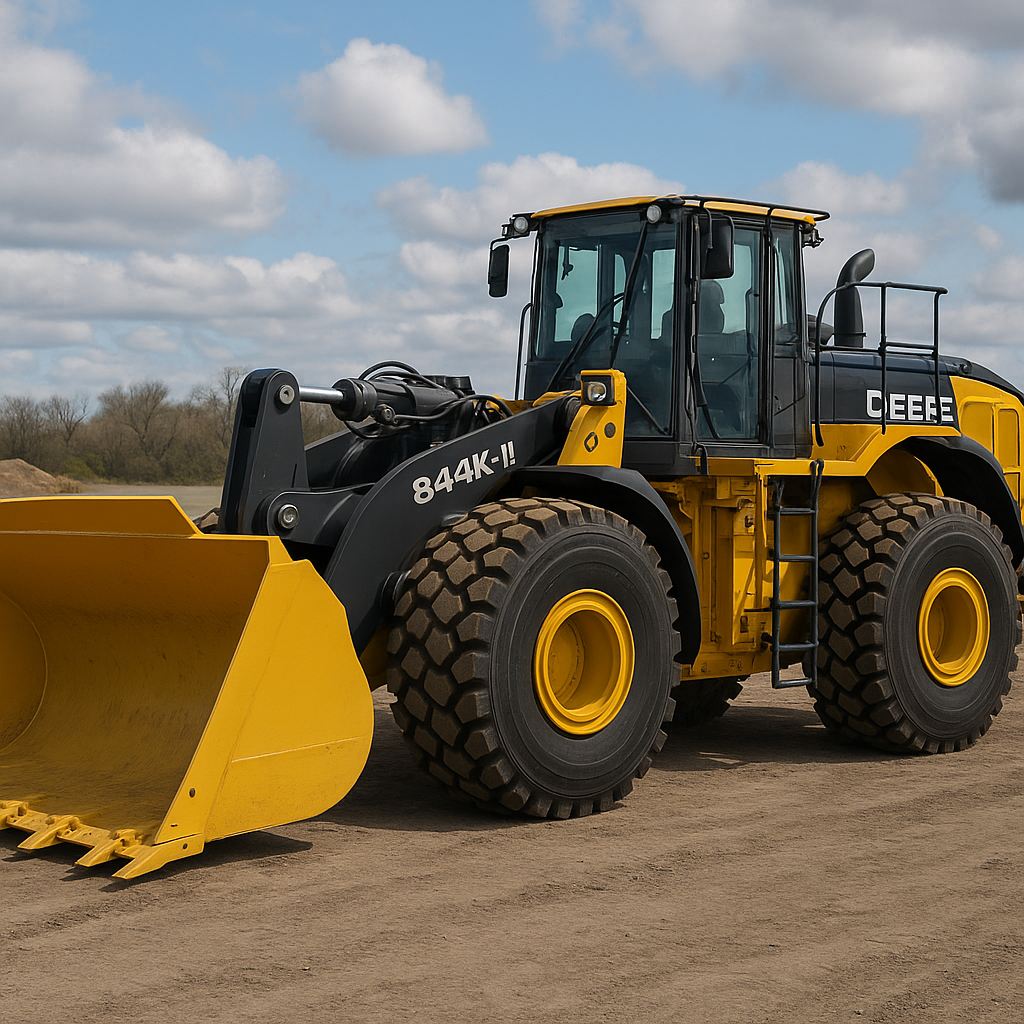
The John Deere 844K-II wheel loader is a versatile heavy machine designed for demanding material-handling tasks across construction, quarry, mining, and agricultural sectors. Combining a durable frame, advanced hydraulic systems, and a focus on operator comfort, the 844K-II delivers a balance of power, efficiency, and reliability that makes it a popular choice for contractors and fleet operators who need consistent performance in harsh environments. This article reviews the machine’s design, typical uses, technical characteristics, maintenance considerations, and market context, providing practical information for buyers, operators, and fleet managers.
Design and key features
The John Deere 844K-II reflects the manufacturer’s commitment to robust engineering and serviceability. The walker-frame chassis and reinforced loader arms are engineered to handle high-stress cycles while keeping fatigue and long-term wear under control. Key design elements prioritize uptime and simple field servicing.
- Engine architecture: The loader is equipped with a turbocharged diesel engine tuned to deliver high torque at low rpm, which improves fuel economy and material-moving consistency. Emissions control systems in many markets incorporate aftertreatment to meet regional standards.
- Hydraulics: A load-sensing hydraulic system provides smooth, responsive control and better fuel utilization under varying loads. Hydraulic circuits are designed for fast cycle times and consistent breakout forces when lifting heavy material.
- Transmission and axles: Heavy-duty powershift transmission options and robust axles help the 844K-II maintain traction and stability. Advanced torque converter designs deliver efficient acceleration with minimized slippage.
- Operator environment: The cab is designed for long shifts, offering ergonomic controls, excellent visibility to the bucket and sides, and options for climate control and sound dampening. These features increase productivity by reducing operator fatigue.
- Serviceability: Tilt-up hood, grouped service points, and accessible filters and drains reduce maintenance time. Modular components simplify repairs and lower life-cycle costs.
Typical applications and real-world uses
The 844K-II thrives in roles that require repetitive loading, material transport, and stockpile management. Its combination of lift capacity and maneuverability suits it to a variety of environments.
- Construction: Loading dump trucks, moving aggregate, site clearing, and general material handling. The loader handles earthmoving tasks, backfilling, and road-base work with attachments such as general-purpose and multi-purpose buckets.
- Quarries and aggregates: High breakout forces and durable components enable efficient handling of crushed stone, sand, and gravel. The machine’s ramped torque and hydraulic responsiveness reduce cycle times during truck loading.
- Mining (surface): Utility and support tasks in surface mining operations—stockpile reclamation, transfer of overburden material, and transporting coarse fragments where a heavy-duty wheel loader is required.
- Recycling and waste handling: Processing bulky waste, loading bunkers, and moving recycled material. Optional packages with reinforced guarding protect the machine in abrasive, dirty environments.
- Agriculture and feedlots: Handling silage, grain, and bedding material. The loader’s maneuverability and attachment flexibility (bale spears, forks) make it useful on large farms and feedlots.
- Municipal and utility work: Snow removal, road maintenance, and material transport for public works departments.
Performance and technical specifications (typical figures)
Specifications may vary by market, year, and optional equipment. The figures below represent commonly reported ranges for the 844K-II and similar K-series models; always consult the machine’s serial-number-specific documentation or a dealer for exact data.
- Engine power: Approximately 180–240 kW (≈ 240–320 hp) gross, with net power often cited around 170–200 kW depending on regional ratings and emission packages. Some sources list a nominal rating near 177 kW (238 hp).
- Operating weight: Typical operating weight ranges from about 12,000 to 14,000 kg (≈ 26,500–30,900 lb), depending on bucket size and attachments.
- Bucket capacity: Standard bucket sizes vary; common capacities are in the range of 2.5 to 5.0 m3 (≈ 3.3–6.5 yd3), with options for light-material buckets or heavy-duty rock buckets.
- Breakout force: Loader arm and bucket breakout forces typically fall in a range that supports heavy-duty digging and loading—often reported around 150–200 kN depending on configuration.
- Top travel speed: Road speeds commonly reach between 35 and 45 km/h (≈ 22–28 mph), enabling efficient relocation on-site or between nearby job locations.
- Hydraulic flow: High-flow hydraulic options can supply several hundred liters per minute to support attachments such as grapples, brooms, and high-capacity couplers.
The numbers above should be used as guidance rather than absolute certifications. Exact performance will depend on factors such as bucket selection, tire choice, counterweight, and whether the machine has an optional high-lift linkage or a quick-attach system for hydraulic tools.
Attachments and versatility
One reason the 844K-II is widely used is its broad attachment compatibility, which expands its utility beyond a simple loader. Common attachments include:
- General-purpose, multi-purpose, and rock buckets
- Pallet forks and bale spears for agricultural or material-handling work
- High-capacity grapples for logs and bulky material
- Snow blades and snow blowers for municipal use
- Brooms, sweepers, and hammers for site cleanup and demolition
- Quick coupler systems to simplify swapping tools and reduce downtime
These attachments allow a fleet manager to standardize on a single base machine while addressing seasonal and task-specific demands, improving the machine’s return on investment and day-to-day flexibility.
Operator comfort, safety, and control systems
Modern wheel loaders like the 844K-II prioritize the operator experience, which has direct effects on safety, efficiency, and overall machine uptime. Notable features typically include:
- Spacious cab with wide glass area for panoramic visibility and reduced blind spots
- Ergonomically positioned joystick controls, adjustable seat, and climate-controlled HVAC systems to reduce fatigue
- Integrated telematics and monitoring systems (optional or factory-installed) that report engine hours, fuel burn, maintenance alerts, and machine health metrics remotely
- Rear-view cameras and proximity detection systems that improve safety in busy job sites
- Rollover protection structures (ROPS) and falling-object protective structures (FOPS) where required by regulation or job needs
These elements are part of the broader trend in heavy equipment toward intelligent systems that assist operators and help fleets manage assets more effectively.
Maintenance, service intervals, and life-cycle considerations
Maintaining an 844K-II for long service life involves adhering to scheduled maintenance, using correct lubricants and filters, and monitoring wear items. Best practices include:
- Routine daily checks: visual inspections, fluid levels, tire/wheel condition, greasing of pivot points
- Service intervals: oil and filter changes, hydraulic fluid checks, and fuel system maintenance at manufacturer-recommended hours
- Use of manufacturer-approved parts for major components (transmission, axle, hydraulic pumps) to preserve performance and warranty
- Record-keeping: track hours, repairs, and part replacements to predict component end-of-life and plan replacements during off-peak times
- Operator training: well-trained operators reduce unnecessary stress on drivetrain components, reduce idle time, and improve productivity
Telematics packages can significantly reduce unscheduled downtime by providing alerts about diagnostics codes, fuel consumption irregularities, or abnormal operating metrics.
Economic factors: acquisition and operating costs
Purchasing an 844K-II involves evaluating both upfront purchase or lease costs and long-term operating expenses. Factors that influence total cost of ownership (TCO) include:
- Fuel consumption: Modern engines and load-sensing hydraulics aim to lower fuel use. Actual fuel burn depends on duty cycle—load-and-carry applications typically achieve better fuel economy per ton moved than high idling or severe digging cycles.
- Resale and residual value: John Deere’s brand strength and dealer support typically sustain higher resale values compared with lesser-known brands, provided machines are well-maintained.
- Parts and service network: Availability of local dealers, genuine parts, and certified technicians reduces downtime and can influence purchasing decisions for geographically dispersed fleets.
- Financing and warranty: Manufacturer or dealer financing, extended warranty options, and maintenance contracts can mitigate cash flow concerns and lower the risk of unexpected costs.
Operators and fleet managers should model scenarios for fuel prices, utilization rates (hours per year), and expected resale to estimate TCO more accurately.
Environmental considerations and emissions
As emissions regulations have tightened globally, wheel loaders have adapted with cleaner engines and aftertreatment systems. The 844K-II typically incorporates:
- Fuel-injection and turbocharging strategies to lower particulate and NOx emissions
- Aftertreatment such as diesel particulate filters (DPF) and selective catalytic reduction (SCR) for markets requiring stricter standards
- Systems that improve fuel economy and lower greenhouse-gas emissions per ton of material moved
Choosing the right configuration for regulatory compliance is essential; some regions may require specific emission packages or certified engines.
Comparisons and competitive landscape
The John Deere 844K-II competes with wheel loaders from other major OEMs in the 20–30-ton class. Buyers often compare machines on metrics such as lift and breakout forces, fuel efficiency, cab comfort, warranty, and dealer support. In many markets, decision factors include:
- Attachment ecosystem compatibility and ease of switching
- Availability of telematics and remote monitoring
- Proven track record for reliability in similar applications
- Upfront cost versus total cost of ownership
For fleets that emphasize uptime and strong dealer infrastructure, John Deere remains a preferred brand. For operators focused solely on lowest acquisition cost, competitors may present trade-offs in long-term serviceability and resale value.
Buying tips and fleet integration
When considering a purchase or lease of an 844K-II, evaluate the following:
- Perform a duty-cycle analysis: match bucket size and powertrain options to the most common tasks rather than the heaviest occasional job
- Consider telematics: modern monitoring can pay dividends in uptime and predictive maintenance
- Inspect used machines thoroughly: check for frame cracks, hydraulic leaks, and evidence of high-impact work which accelerates wear
- Negotiate maintenance or service agreements when acquiring multiple units to reduce per-unit downtime and secure parts availability
Integrating the machine into a fleet also means training operators on fuel-efficient techniques and documenting service history for higher future resale value.
Conclusion and outlook
The John Deere 844K-II is a capable, well-rounded wheel loader that suits a wide range of medium-to-heavy material-handling tasks. Its strengths lie in balanced power and hydraulic performance, robust construction, and a focus on operator comfort and serviceability. While exact specifications can vary with options and regional configurations, the model typically offers competitive engine power, versatile bucket capacities, and a suite of technology options—including telematics and emissions controls—that align the machine to modern fleet requirements.
For contractors and fleet managers seeking a durable loader that combines efficiency, adaptability, and a strong dealer network, the 844K-II remains a solid option. Matching the machine’s configuration to the intended application, applying disciplined maintenance, and leveraging telematics will maximize productivity and lower lifetime operating costs.
Quick reference summary
- Primary roles: Loading, stockpiling, material handling across construction, quarry, mining, recycling, and agriculture
- Typical engine power: Approx. 170–200 kW (net), with common ratings reported near 177 kW (238 hp)
- Operating weight: Roughly 12,000–14,000 kg (26,500–30,900 lb), configuration-dependent
- Bucket capacity: Generally 2.5–5.0 m3 (3.3–6.5 yd3) depending on material and application
- Key advantages: Serviceability, dealer support, ergonomic cab, broad attachment compatibility
)
)