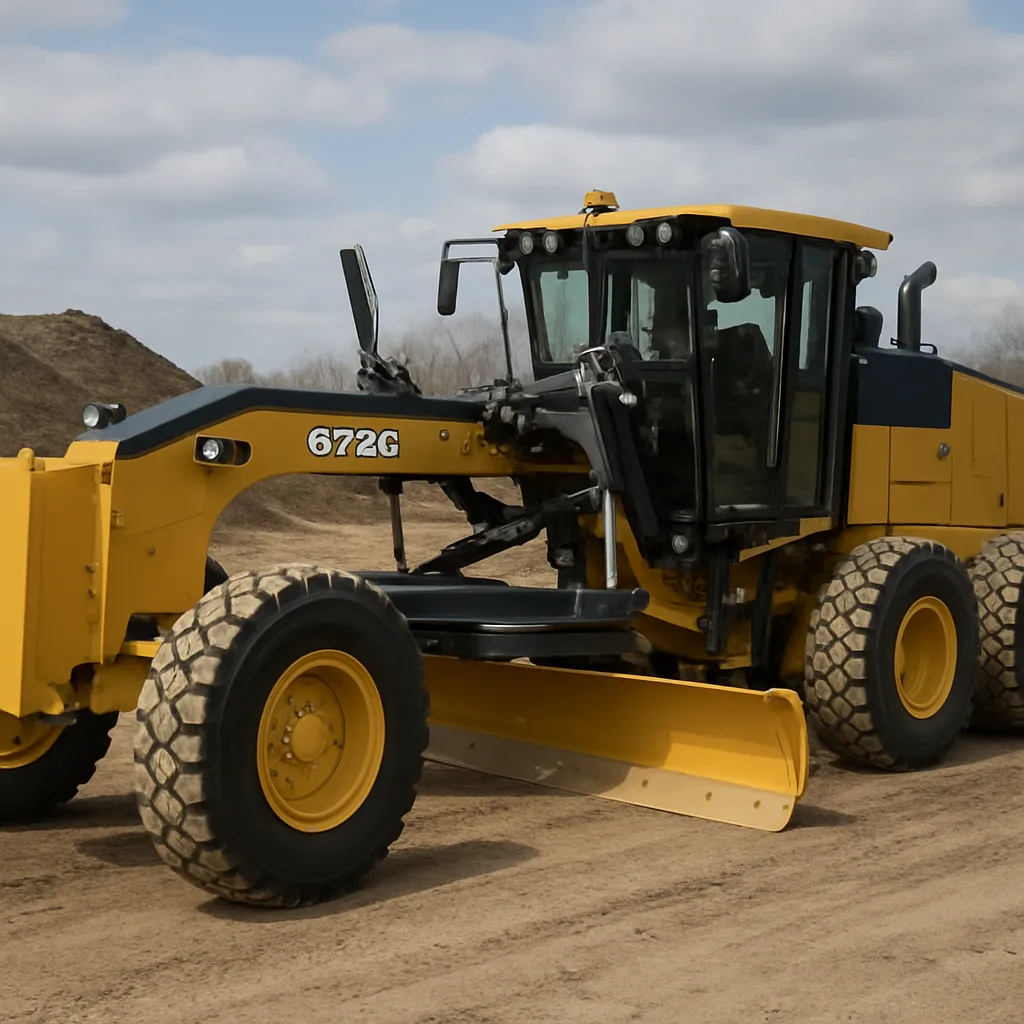
The John Deere 672G is a versatile and widely used motor grader designed for medium-to-heavy earthmoving tasks. Known for its combination of reliability, operator comfort, and adaptability, the 672G has been a common sight on roadways, construction sites, and large estates where precise grading and surface finishing are critical. This article explores the machine’s history, technical features, typical applications, operational performance, maintenance considerations, and practical buying tips for contractors and fleet managers.
Overview and background
The 672G belongs to John Deere’s range of graders that balance power and agility. It was introduced as part of the company’s effort to provide a durable and easily serviceable machine for contractors who need consistent performance across a variety of ground conditions. The 672G sits in the mid-size class of graders — larger and more powerful than compact utility graders but smaller and more maneuverable than the largest highway graders.
Design philosophy
John Deere designed the 672G to prioritize four main attributes: precise blade control, straightforward maintenance, operator productivity, and adaptability to multiple attachments. These priorities translate into durable mechanical systems, robust hydraulic components, and a cab layout focused on visibility and ease of control. The machine is often chosen where a balance of power and maneuverability is required.
Market positioning
In markets worldwide, the 672G competes with equivalent mid-range graders from other major manufacturers. It is commonly purchased by municipal works departments, road contractors, and large farms or estates that perform regular road maintenance. Its resale market remains healthy because of John Deere’s brand recognition and dealer networks, which provide parts and service continuity.
Technical features and specifications
The following section summarizes the most important technical features of the 672G. Exact specifications can vary by model year and options. Where precise figures are not universal, values are presented as typical ranges or approximate numbers commonly associated with this type of machine.
Typical specifications (approximate)
- Engine: John Deere PowerTech series diesel; displacement commonly in the 6–7 liter class; engine management for torque control and emissions.
- Gross power: typically in the range of 170–220 horsepower (approx. 125–165 kW), depending on configuration and model year.
- Operating weight: commonly between 14,000–18,000 kg (30,000–40,000 lb) for different setups and optional equipment.
- Transmission: powershift or multi-speed gearbox with torque converter; many units offer direct-drive options for efficiency.
- Blade length: usually around 3.7–4.0 meters (12–13 ft) with optional wings or extensions available.
- Steering and articulation: articulated frame with circle drive and drawbar control; provides fine lateral adjustment and articulation for turning.
- Hydraulic system: load-sensing or pressure-compensated circuits to operate blade, rippers, and attachments.
- Cab: ROPS/FOPS certified, climate-controlled, designed for operator visibility and ergonomic controls; options for heated seats, air suspension, and advanced displays.
These characteristics make the 672G a capable grader for both shaping loose materials and achieving precise surface tolerances in base and finishing courses.
Blade, circle and implement systems
The grader’s blade assembly is engineered for both strength and precise positioning. Features typically include a heavy-duty circle with hardened teeth for durability, a hydraulic or electro-hydraulic blade positioning system, and the ability to angle and side-shift the moldboard for complex grading patterns. Optional scarifiers or front blades increase the machine’s utility for cutting ruts, thawing frozen surfaces, or managing snow.
Operator station and controls
Operator ergonomics are emphasized with a clear view to the moldboard and work zone, logically grouped controls, and optional joystick kits for smoother blade manipulation. A comfortable operator environment reduces fatigue and increases productivity during long shifts. Many 672G units are compatible with John Deere’s telematics, allowing fleet managers to monitor hours, fuel usage, and maintenance alerts remotely.
Applications and industries
The John Deere 672G finds use in a wide array of sectors because of its adaptability. Its primary role is to produce smooth, correctly crowned surfaces, but appropriate attachments expand its capability considerably.
Road construction and maintenance
- Subgrade preparation and leveling prior to paving.
- Final grading and finishing of gravel and asphalt surfaces.
- Routine maintenance of rural and secondary roads—shaping drainage crowns and redistributing surface material.
Infrastructure and site development
- Site grading for building pads and parking areas.
- Preparing corridors for utilities and pipelines.
- Shaping slopes, ditches, and access roads on construction sites.
Agriculture, forestry and land management
- Maintaining farm tracks, haul roads, and fire lanes.
- Land reclamation projects and contouring for erosion control.
- Snow removal on large properties when equipped with plows or wings.
Mining and heavy industrial
Although larger graders dominate high-tonnage mining operations, the 672G is used in smaller quarries, aggregate yards, and industrial sites to maintain haul roads and work areas where precise grading improves truck cycle times and extends pavement life.
Performance, productivity and fuel economy
Performance of the 672G is defined by the combination of blade control, powertrain response, and operator skill. Productivity metrics are typically measured in linear meters graded per hour or cubic meters of material moved per shift. Several factors influence these metrics:
- Material type (loose gravel vs. compacted subbase).
- Operating technique (windrow management, blade angle, overlap control).
- Ground slope and environmental conditions (wet or dry).
- Attachment choices such as rippers or winches that can increase cycle time but improve overall site readiness.
Fuel consumption varies with engine load and operating conditions. A mid-size grader like the 672G typically achieves competitive fuel efficiency for its class when operated with optimal gear selection, proper blade management, and regular maintenance of the engine and hydraulic systems. Integration of telematics can help fleet managers track consumption trends and adjust operating practices to reduce costs.
Maintenance, reliability and ownership costs
One of the 672G’s selling points is the relative simplicity of routine maintenance and the global availability of parts through John Deere’s dealer network. Key maintenance considerations include:
- Regular engine oil and filter changes, air intake inspections, and fuel system maintenance to preserve performance and emissions compliance.
- Hydraulic system checks: fluid levels, filter replacements, and hose inspections to prevent downtime from leaks or failures.
- Wear part management: timely replacement of cutting edges, circle teeth, and scarifier teeth to avoid more extensive repairs.
- Undercarriage, tires or wheels, and articulation joint inspections for machines operating on abrasive surfaces.
Ownership costs are influenced by acquisition price (new vs. used), expected hours per year, and local service availability. Many operators prefer to purchase used 672G units because of their durability and relatively stable resale values. Properly maintained units often remain productive for many thousands of hours.
Common maintenance intervals and practices
- Daily checks: fluids, walk-around inspection, tire/pressure or wheel lug condition, visible hydraulic leaks.
- Weekly: grease points, air filter pre-cleaner, hydraulic strainers.
- Monthly or hourly-based: fuel filtration replacement, coolant checks, engine belts.
- Major service: transmission and hydraulic oil changes at manufacturer-specified hour intervals.
Safety, ergonomics and operator training
Safety features typically found on the 672G include ROPS/FOPS-certified cabs, visibility-focused glazing, lights and mirrors for low-light operation, and optional rear-view cameras. Ergonomic considerations—such as adjustable seats, intuitive control placement, and reduced vibration through cab mounting—improve operator comfort and reduce fatigue-related incidents.
Training is essential to maximize productivity and safety. Proper blade techniques, understanding of grader geometry, and safe machine handling on slopes or soft ground are topics that significantly reduce accident risk and improve material handling efficiency.
Environmental considerations and modern upgrades
Older graders may not meet the latest emissions standards, but many operators retrofit or select newer models with improved engine controls and exhaust aftertreatment systems to comply with regulations. John Deere often offers solutions such as exhaust catalytic converters, diesel particulate filters, and electronic engine management to lower emissions.
Telematics and remote monitoring systems are common upgrades. These systems provide data on machine health, fuel consumption, location, and utilization. Equipment managers use this information to schedule preventive maintenance and optimize fleet deployment.
Buying guide and practical advice
When considering a John Deere 672G, evaluate the machine from both a technical and financial perspective. Useful steps include:
- Define the primary tasks and match optional attachments (front blade, scarifier, ripper) to those tasks.
- Decide between new and used: new machines offer warranties and the latest emissions packages; used machines can offer lower initial cost but require inspection and history verification.
- Inspect service history, hours, hydraulic condition, and wear items when buying used.
- Consider dealer support in your region for parts and scheduled maintenance—this often makes a major difference in total cost of ownership.
- Factor in resale value and potential trade-in options within the John Deere dealer network.
For fleets, standardizing on a single brand or model family simplifies training, parts inventory, and service protocols.
Conclusion
The John Deere 672G remains a solid choice for contractors and public works agencies that require a reliable grader capable of precise surface shaping, durable performance, and accessible maintenance. While technology and emissions rules continue to evolve, the practical combination of strong mechanical design, comfortable operator environment, and wide dealer support keeps the 672G relevant in many markets. Carefully matching machine configuration and attachments to your specific jobsite needs — and maintaining the unit according to recommended schedules — will ensure long service life, predictable operating costs, and strong productivity.


)
)