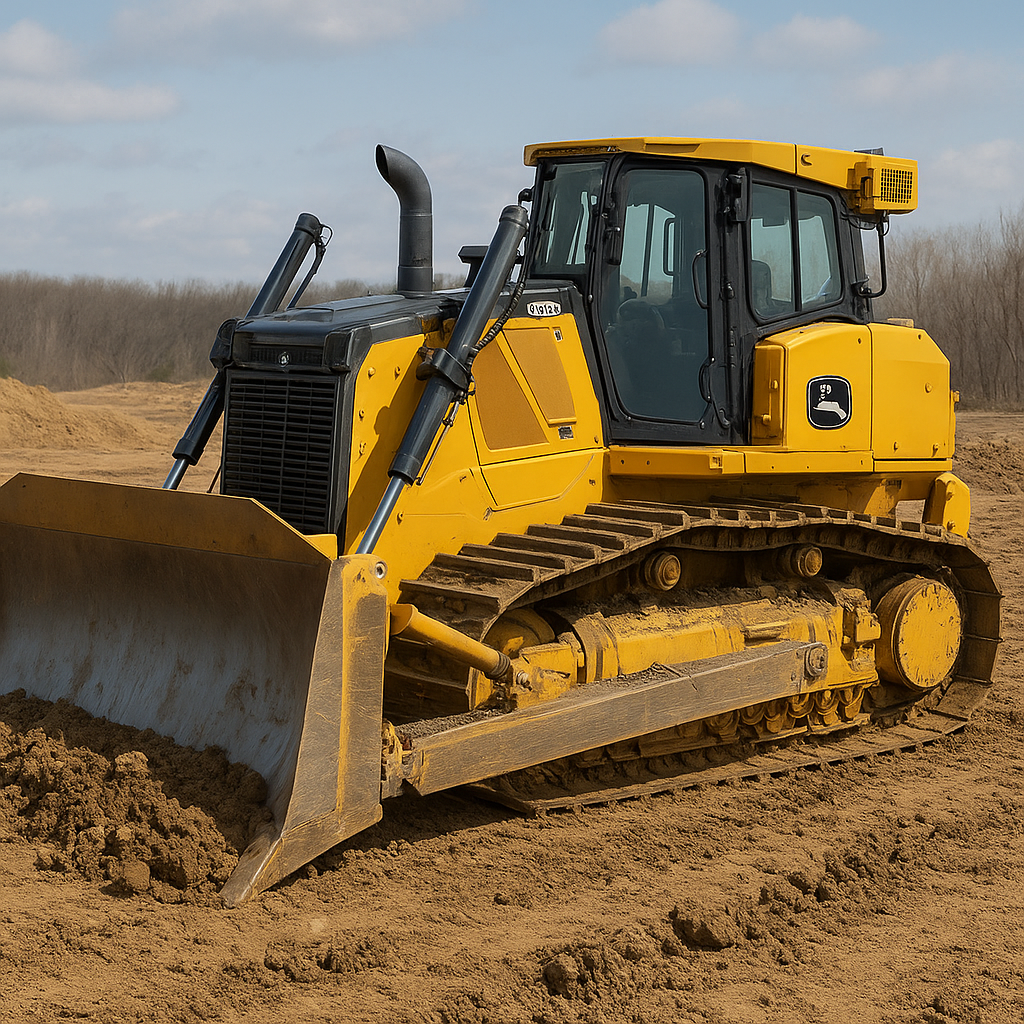
The John Deere 1050K crawler dozer stands as a robust example of modern earthmoving machinery, combining heavy-duty power, advanced hydraulics and a versatile undercarriage to tackle demanding jobs. Designed for contractors, mining support, land reclamation and large-scale construction, the 1050K offers a balance of performance, operator comfort and serviceability that makes it a common choice where reliability and productivity are required. In the following sections we will explore its design, typical specifications, common applications, operational considerations, available attachments, maintenance practices and the environmental and safety features that matter to professionals.
Overview and Design Philosophy
The John Deere 1050K is engineered to deliver long-term durability across challenging environments. Its design philosophy centers on three main pillars: heavy-duty construction, serviceable components and operator-focused ergonomics. The crawler dozer format—featuring tracks instead of wheels—provides superior traction and flotation on soft or uneven ground, enabling the 1050K to move large volumes of material while maintaining stability.
The chassis and frame of the machine are built to resist twisting and impact. Key structural elements are reinforced at stress points, and modular components are often used to simplify field repairs and reduce downtime. Under the hood, the 1050K typically relies on a turbocharged diesel engine optimized for torque delivery at low engine speeds, which is critical for pushing loads and engaging in finish grading operations.
John Deere integrates hydraulic and electronic systems in the 1050K to improve controllability: load-sensing hydraulics, responsive transmission controls and diagnostics that help technicians identify issues quickly. Operator cabins are designed to reduce fatigue and improve visibility, with controls arranged for intuitive operation and adjustable seating for extended shifts.
Technical Specifications (Typical and Approximate)
Exact specifications for the 1050K can vary depending on the market, model year and optional equipment; below are commonly cited figures and technical characteristics that you can expect for a machine in this class. Use these as a reference when comparing configurations or preparing specifications for procurement.
- Operating weight: approximately 30,000–40,000 kg (66,000–88,000 lb), depending on blade type, ripper and track configuration.
- Engine: turbocharged diesel compliant with modern emissions standards (typical power output range: 200–350 kW / 270–470 hp, depending on tuning and certification).
- Drawbar pull / traction: designed for high drawbar pull to cope with heavy push workloads; rated drawbar pull values vary with track shoes and undercarriage setup.
- Transmission: powershift or hydrostatic options in some configurations, with multiple gears for forward and reverse; smooth modulation is key for grading tasks.
- Blade types: straight (S-blade), universal (U-blade), semi-U and angle blades available; capacities differ but commonly exceed several cubic meters per pass.
- Ground pressure: relatively low when equipped with wide tracks for better flotation—important in marshy or soft soil conditions.
- Fuel capacity: substantial tanks to support long operating shifts, often in the 400–800 liter range depending on tank options and market.
- Undercarriage: heavy-duty rollers, idlers and sprockets; sealed and lubricated track cartridges (SALT) options available to extend life.
- Ripper: multi-shank and single-shank rippers offered for breaking compacted surfaces and rock.
- Cab and controls: climate-controlled cab, ergonomic joystick or lever controls, integrated displays for machine monitoring and optional camera systems for rear/side visibility.
Again, these numbers are indicative; an exact spec sheet should be requested from a dealer for procurement or detailed planning. The 1050K’s configuration options permit tailoring to specific site requirements.
Primary Applications and Industries
The 1050K’s capabilities suit it to a broad spectrum of heavy earthmoving tasks. Typical applications include:
- Bulk earthmoving on large construction sites—moving topsoil, cut-and-fill operations and foundation preparation.
- Road building and corridor clearing—grading embankments, preparing base layers and creating right-of-ways for highways and railways.
- Mining and quarry support—pushing overburden, maintaining haul roads and preparing pads for equipment.
- Agricultural land reclamation—drainage preparation, terracing and large-scale landscaping.
- Forestry and land clearance—removal of brush, stump push and site prep for replanting or development.
- Demolition and site cleanup—moving debris, piling, and creating access routes for follow-on equipment.
The tracked design gives the 1050K the ability to operate in wet or uneven terrain where wheeled dozers would struggle. Its power and blade options also make it effective for both heavy ripping tasks and fine grade finishing, depending on attachments and operator skill.
Performance and Productivity
Productivity with the 1050K depends on a combination of machine configuration, operator skill, site conditions and how well auxiliary systems—such as GPS grade control—are integrated. Key performance aspects include:
- Push capability: High torque at low engine speeds allows the 1050K to move large loads steadily without frequent gear changes.
- Blade efficiency: Selecting the correct blade type for the task (U-blade for bulk carry, S-blade for cutting and spreading) can significantly improve cycle times and fuel use.
- Traction management: Wide tracks and track-tension systems reduce slippage, improving fuel economy and reducing wear.
- Grade control systems: Factory- or dealer-installed GPS or laser systems can increase final-grade accuracy and reduce rework, often improving throughput by measurable percentages on third-party case studies.
- Fuel efficiency: Modern engine controls, variable-displacement hydraulics and automatic idle/shutdown features contribute to lower fuel consumption per ton moved compared to older-generation machines.
In practical terms, an experienced operator using a well-configured 1050K can achieve high daily material volumes on large sites, with productivity gains particularly obvious when the machine is paired with automated grade control.
Attachments, Options and Customization
One of the strengths of the 1050K is the breadth of available attachments and options that allow the machine to be tailored to job-specific requirements. Common options include:
- Blade choices (S, U, semi-U, angle)—each optimized for different materials and tasks.
- Rippers (multi-shank or single-shank) for breaking compacted ground or shallow rock layers.
- Winches and tow packages for logging or heavy recovery applications.
- Track shoe widths and grouser designs to adapt to soft soils, rock or mixed conditions.
- Cab options such as enhanced climate control, upgraded sound insulation, and advanced operator displays or telematics modules.
- Hydraulic modifications to support specialty implements or integrated tool circuits.
Dealers can often provide package configurations that match local regulatory requirements and common jobsite conditions, making the 1050K a flexible asset for fleets that undertake diverse work.
Safety and Operator Comfort
Modern dozers like the 1050K emphasize safety and operator welfare for both regulatory compliance and productivity reasons. Important features typically include:
- ROPS/FOPS certified cab to protect the operator in rollovers and falling-object situations.
- Improved visibility via large windows and optional camera systems to reduce blind spots around the machine.
- Ergonomic controls—joysticks or low-effort levers positioned for minimal fatigue and precise inputs.
- Climate control and vibration-dampening seats to lower operator strain during long shifts.
- Integrated monitoring and diagnostic readouts that alert operators to maintenance needs, fluid levels and performance anomalies.
These features help reduce the likelihood of accidents and support sustained operation without excessive operator turnover or downtime due to fatigue-related errors.
Maintenance, Serviceability and Life-Cycle Costs
Serviceability is a major factor in total cost of ownership for heavy equipment. The 1050K is designed with accessibility in mind—wide service doors, grouped routine service points and modular components simplify daily checks and major repairs. Key maintenance-related considerations are:
- Routine service intervals for oil, filters and cooling system checks—regular maintenance extends component life and reduces unscheduled downtime.
- Undercarriage wear is often the largest recurring cost for tracked machines; selecting appropriate track components and managing tension reduces replacement frequency.
- Telematics and remote diagnostics that can transmit machine health data to fleet managers, helping schedule maintenance proactively and avoid catastrophic failures.
- Parts availability and dealer support networks—key in minimizing out-of-service time; John Deere’s global dealer network typically provides broad parts coverage.
When evaluating life-cycle costs, consider fuel consumption, undercarriage turnover, resale value and the impact of downtime. Proper operator training and preventive maintenance yield measurable reductions in operating costs over the life of the machine.
Environmental and Regulatory Considerations
Emissions regulations vary by region, and the 1050K’s engines have been adapted across model years to meet Tier/Stage requirements (e.g., Tier 4 Final in the US/EU Stage IV in Europe). Environmental and regulatory features include:
- Advanced exhaust after-treatment (DOC, DPF, SCR where applicable) to reduce NOx and particulate emissions.
- Fuel-efficiency technologies such as auto-idle and shutdown timers that reduce unnecessary idling and lower emissions over long shifts.
- Noise-reduction measures in the cab and engine compartment to comply with local noise ordinances and improve site conditions.
- Recyclable and serviceable components that ease disposal and environmental impact at end of life.
When procuring a 1050K, verify the engine certification for your operating region and consider options that reduce fuel consumption and emissions, especially on jobs with strict environmental requirements.
Case Studies and Real-World Use
Across construction, mining and land development projects, the 1050K has been used to accelerate earthmoving tasks and reduce crew sizes by enabling a single machine to perform multiple functions with different attachments. Typical real-world advantages reported by contractors include:
- Reduced cycle times when using GPS-assisted grade control versus manual grading.
- Lower operating costs per cubic meter moved due to improved fuel economy and reduced rework.
- Improved uptime from modular design and dealer-supported maintenance programs.
Real-world productivity will vary by operator skill, material type, machine configuration and site logistics, but the general consensus among fleet managers is that a properly spec’d 1050K delivers strong returns on heavy, repetitive earthmoving tasks.
Purchasing, Leasing and Resale Considerations
When deciding between purchasing or leasing a 1050K, review:
- Utilization rates: High-hour operations often favor purchase, while short-term projects might justify leasing.
- Financing and total cost: Consider service contracts, residuals and warranty packages to evaluate total cost of ownership.
- Resale value: John Deere machines typically retain reasonable resale values when well-maintained and when there is strong dealer support in the secondary market.
- Customization: Lease agreements may limit permanent modifications, while ownership allows tailored retrofits and long-term investments in attachments.
Consult dealers for trade-in options, certified used programs and extended warranty or maintenance agreement options that can stabilize cost projections for fleet budgeting.
Summary and Final Thoughts
The John Deere 1050K crawler dozer represents a versatile and robust option for organizations that require a machine capable of heavy pushes, reliable ripping and accurate grading across tough sites. Its strength lies in the combination of a durable undercarriage, powerful low-speed torque delivery, a range of blade and ripper options, and modern operator comforts that improve productivity. While exact specifications vary by year and configuration, the 1050K consistently targets the upper range of medium-to-large dozers in terms of operating weight, horsepower and capacity.
For procurement decisions, inspect local dealer offerings for the precise engine certification, undercarriage options and telematics packages available in your region. Investing in operator training, appropriate attachments and a proactive maintenance plan will maximize the value and life span of a 1050K in any heavy earthmoving fleet.
Key terms highlighted
crawler, dozer, engine, horsepower, torque, blade, undercarriage, durability, fuel efficiency, versatility
)
)