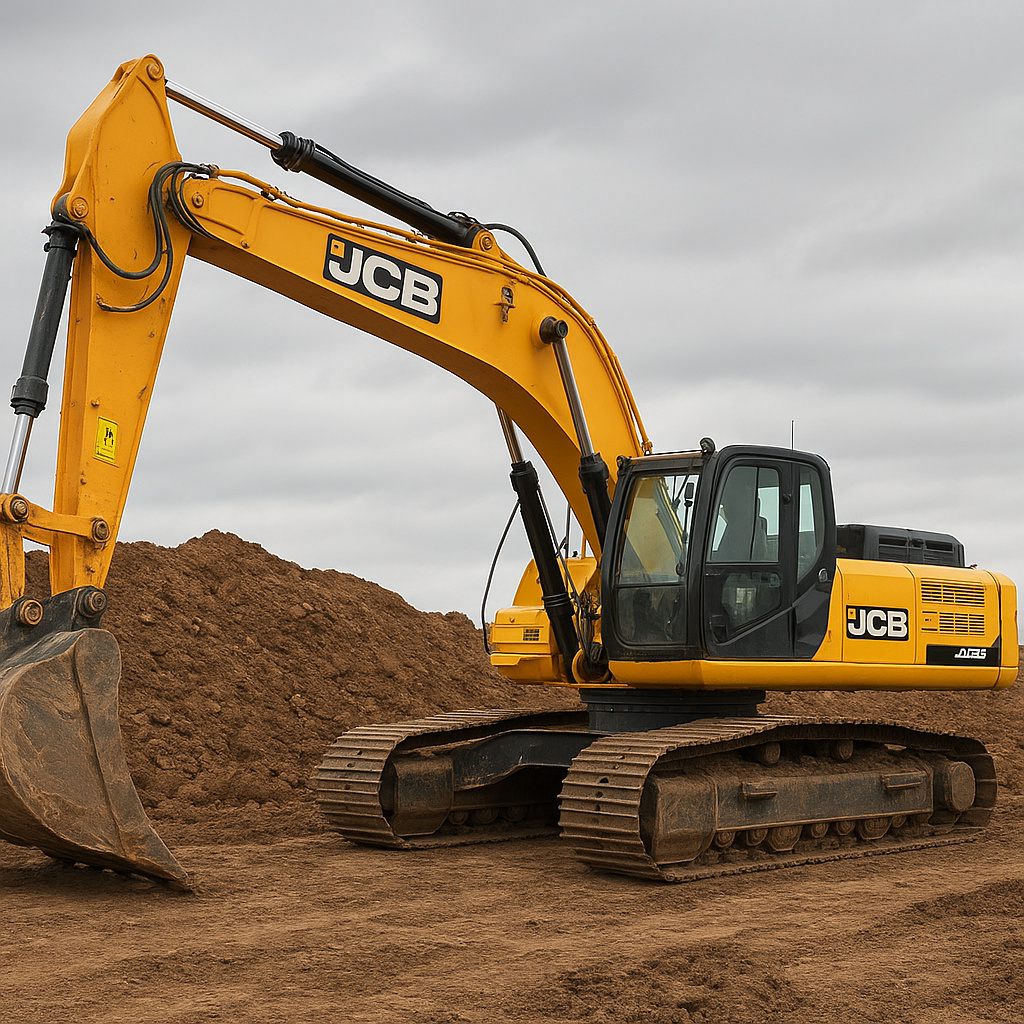
The JCB JS460 is a heavyweight tracked excavator designed for demanding construction, quarrying and earthmoving tasks. Combining robust structural design with modern powertrain and hydraulic systems, the JS460 targets contractors and operators who need reliable performance in high-production environments. This article examines the machine’s typical applications, key characteristics, operational strengths, safety and maintenance considerations, and some practical statistics and metrics that help owners and fleet managers assess its suitability for specific jobs.
Design and key technical characteristics
The JCB JS460 belongs to JCB’s JS-series of large excavators, engineered for heavy-duty duty cycles. Although exact specifications can vary by year, market and configuration, the JS460 is generally positioned in the 40–50 tonne operating weight class and is built around a number of defining elements:
- Durability – heavy box-section carbody, reinforced boom and arm castings, and hardened wear surfaces designed for high-impact environments.
- Power – high-output diesel engines tuned to balance torque, responsiveness and fuel economy for continuous heavy work.
- Hydraulics – a high-flow hydraulic system with variable displacement pumps and advanced control logic to optimize cycle times and attachment performance.
- Operator comfort – ergonomically designed cab with suspension seating, excellent all-round visibility and intuitive controls to reduce operator fatigue over long shifts.
- Telemetry – factory-fitted and optional telematics systems (such as JCB LiveLink) to monitor hours, fuel consumption, location and maintenance alerts remotely.
Typical dimensional and performance figures (subject to model year and options):
- Operating weight: generally around 40,000–48,000 kg depending on undercarriage and counterweight configuration.
- Engine power: in the range of 180–260 kW (approx. 240–350 hp) depending on market emissions stage and tuning.
- Maximum digging reach: commonly 11–12 m.
- Maximum digging depth: typically 7–8 m.
- Bucket capacity: standard buckets often range 1.5–3.0 m3; heavy-duty rock buckets available with lower volumes and thicker plates.
- Travel speed: usually around 3.5–5.0 km/h in standard gearing.
Because JCB offers multiple configurations (for example long-reach, heavy-duty and demolition variants), prospective buyers should consult the official specification sheet for the precise numbers for the chosen build.
Primary applications and industries
The JS460 is intended where a combination of mass, reach and hydraulic power is required. Typical uses include:
- Civil engineering and infrastructure – large-scale earthworks, trenching for utilities, foundation excavation, road construction and embankment works.
- Quarrying and aggregates – loading haul trucks, wheel loaders and mobile crushers; secondary breaking and ripping with heavy-duty attachments.
- Demolition – when fitted with purpose-built booms and attachments such as pulverizers and shearers, the machine can perform building demolition and selective dismantling.
- Pipeline and energy projects – trench excavation for pipeline installation and backfill, cable laying support and site preparation for renewable energy developments.
- Mining and site preparation – surface mining support roles, overburden removal and stockpile management in open-pit operations.
Versatility is a major strength. With the correct attachment package, a single JS460 can switch between loading duties, precision trenching, rock breaking and even material sorting, making it an attractive option for contractors who require flexibility and high utilisation.
Attachments and customization
Attachments expand the JS460’s capability far beyond a standard digging role. Common and valuable options include:
- Hydraulic breakers for concrete and rock demolition.
- Grapples and sorting grabs for recycling and demolition handling.
- Rippers and heavy-duty buckets for breaking compacted ground and rock.
- Quick couplers to speed attachment changes and increase site productivity.
- Thumbs for handling irregular materials like logs and scrap.
- Tiltrotators (where retrofit options exist) for precise grading and complex positioning.
Choice of undercarriage (standard vs long track, heavy-duty pads) and counterweight packages also allows buyers to tailor stability and transport dimensions to their projects.
Performance, productivity and fuel economy
In heavy machines like the JS460, the interplay between hydraulic design, engine management and operator technique determines productivity and fuel usage. Some performance considerations:
- Cycle times – optimized hydraulic flow and bucket geometry reduce swing and bucket-fill times, improving load per hour when coupled with efficient operator technique.
- Fuel consumption – modern JS-series machines typically feature engine and hydraulic control strategies (auto idle, economy modes, load-sensing hydraulics) to reduce fuel burn. Typical consumption varies broadly with duty but experienced operators report fuel rates consistent with other machines in the 40–50 t class when matched for output.
- Payload matching – matching bucket size to truck or loader capacity improves productivity; a JS460 with a 2.5 m3 bucket loading 30–40 tonne trucks will have a different cycle profile than when loading smaller 10–15 tonne vehicles.
- Hydraulic efficiency – variable displacement pumps and advanced valve control reduce losses in transit and idle, preserving power for digging and swing when required.
Actual efficiency figures are site- and operator-dependent. JCB provides performance data for specific configurations; many fleet managers use telematics to benchmark fuel per hour and cubic metres moved per litre to compare machines in similar roles.
Safety, ergonomics and operator environment
Large excavators expose operators to long hours and sometimes harsh environments, so JCB places emphasis on safety and operator wellbeing:
- Cab protection – ROPS and FOPS-certified cabins with strong glazing and optional mesh guards for high-risk demolition or quarry environments.
- Visibility – large glazed surfaces, right-hand cab access, and optional camera systems to enhance rear and blind-spot awareness.
- Climate control – powerful HVAC systems keeping the cab comfortable in extreme temperatures; some packages include enhanced filtration for dusty jobsites.
- Ergonomics – adjustable seats, low-effort joystick controls, clear instrumentation and low vibration levels to reduce fatigue.
- Safety features – travel and swing alarms, travel lockouts, and hydraulic lockout switches for maintenance and entry/exit.
Good housekeeping practices, proper training and use of PPE remain essential complements to built-in safety systems.
Maintenance, serviceability and lifecycle costs
A machine’s total cost of ownership often matters more than initial purchase price. JCB designs the JS460 to minimize downtime and simplify routine servicing:
- Ground-level access to service points including filters, grease points and battery isolators reduces time and risk during daily checks.
- Modular components and standardised parts simplify inventory management for fleet operators.
- Telematics – LiveLink and similar systems provide remote fault codes, hours logging and preventive maintenance alerts to keep machines on schedule.
- Durability items – heavy-duty wear parts, reinforced pins and bushes, and optional bolt-on wear plates extend life in high-abrasion jobs.
Proper maintenance planning is vital in large excavators. Firms that track intervals for hydraulic oil, engine oil, filters and undercarriage inspections generally see improved machine availability and resale value.
Environmental compliance and emissions
Engines used in modern JS460 units typically comply with current regional emissions standards (e.g., Stage V in Europe, Tier 4 Final in North America) using a combination of technologies such as selective catalytic reduction (SCR), diesel particulate filters (DPF) and precise fuel injection mapping. Benefits include:
- Lower NOx and particulate emissions compared to older machines.
- Improved fuel efficiency through optimized combustion.
- Potential eligibility for work on sites with strict emissions rules or incentives for low-emission equipment.
Operators should account for aftertreatment maintenance (DPF regeneration cycles, DEF/AdBlue top-ups) in their operational planning.
Operational tips for maximum productivity
To get the most from a JS460, consider these practical recommendations:
- Match bucket size to application and transport vehicles; oversizing reduces cycle count but may increase fuel per m3.
- Use appropriate attachments—rock buckets, tooth types and ripper arrangements influence cycle clearing and penetration performance.
- Train operators on fuel-efficient techniques, such as minimizing unnecessary idling, using appropriate engine modes, and smooth joystick operation to reduce spillage and rework.
- Implement telematics-driven preventive maintenance to catch wear items early and avoid unscheduled downtime.
- Monitor tyre or track wear and maintain proper tension and alignment to protect the undercarriage investment.
Market positioning and resale considerations
The JS460 competes in a mature segment populated by machines from other major OEMs. Buyers evaluate machines on:
- Initial price vs lifetime operating cost – including fuel, maintenance and resale value.
- Reliability – evidenced by service intervals, build quality and dealer support networks.
- Versatility – how easily the machine adapts to multiple tasks via attachments and configuration choices.
Well-maintained JS460 units typically retain value due to strong demand for heavy excavators in infrastructure and mining projects. Comprehensive service records, low hours relative to age and sensible attachment inventories improve resale prospects.
Typical statistical performance indicators
While specific numbers vary by model year and application, fleet managers often monitor these indicators to compare machines:
- Fuel consumption per hour: varies widely with duty, often in the range 12–40+ litres/hour depending on load and engine tuning; heavy digging and breaking approach the upper end.
- Fuel per tonne moved: dependent on cycle efficiency, bucket size and haul distance; common benchmarking helps compare different brands and operators.
- Availability: well-maintained large excavators target 90%+ uptime across a season in professional fleets.
- Mean time between failures (MTBF): quality operators and OEM support aim to maximize MTBF through preventive maintenance; exact MTBF figures vary by site and usage profile.
To obtain accurate, site-specific metrics, owners should use telematics systems and track performance over representative job cycles.
Conclusion: who should choose the JS460?
The JCB JS460 is suited to medium-to-large contractors, quarry operators and civil engineering firms requiring a robust excavator capable of long hours under severe conditions. Its strengths lie in structural durability, flexible attachment compatibility, and modern engine and hydraulic management systems that together deliver reliable production on heavy earthmoving, loading and demolition tasks. For buyers, the decision should be informed by matching the machine’s configuration to intended tasks, evaluating local dealer support and comparing lifecycle costs using telematics-derived performance data.
Final practical notes
When considering a purchase or lease, request detailed specification sheets for the exact model year, confirm emissions compliance for your region, inspect undercarriage condition (on used machines), test telematics functionality and verify that recommended attachments and service parts are available locally. These steps help ensure the machine performs as expected and that ownership costs remain predictable.
)
)