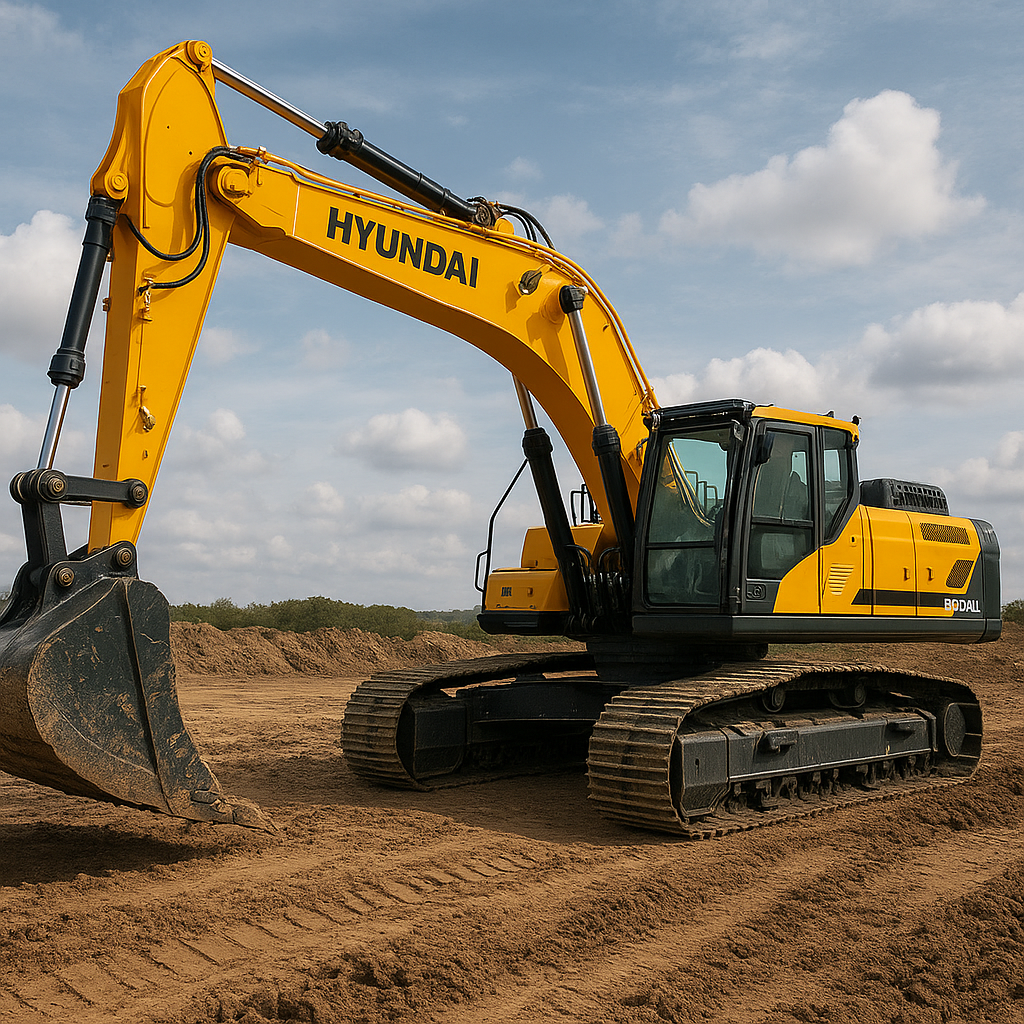
The Hyundai HX520L is a heavy-duty hydraulic excavator designed for the most demanding earthmoving, quarrying and infrastructure projects. Combining modern engine management, advanced hydraulics and a reinforced undercarriage, the machine aims to deliver high productivity with reduced operating costs. This article explores the HX520L’s design, typical applications, technical characteristics, attachments, and practical advice for operators and fleet managers.
Design and key features
The HX520L represents Hyundai’s approach to the 50-ton class excavator segment: a balance of robust construction and contemporary electronic control. From the reinforced boom and arm to the undercarriage built for heavy loading cycles, the machine is engineered to withstand continuous, high-stress operation in tough environments.
Powertrain and emissions
The excavator is equipped with a high-displacement diesel engine tuned for consistent torque delivery across the working range. Depending on market and configuration, the HX520L is offered with engines meeting current emissions standards (Stage V in Europe / Tier 4 Final in North America) and integrates aftertreatment systems where required. The powertrain is optimized to provide reliable high-end torque for demanding digging tasks while offering modes for reduced consumption during light work.
Hydraulic system and control
A sophisticated hydraulic architecture is central to the HX520L’s performance. Electronic control allows for variable flow to attachments, simultaneous multi-function operation and features such as automatic throttle-kickback, adjustable response settings, and regeneration circuits that improve cycle times and efficiency. High-pressure, electronically managed hydraulics also support a wide range of heavy-duty attachments while maintaining smooth machine behavior under load.
Operator environment
Hyundai places emphasis on the cab as a productivity hub. The HX520L cab typically includes ergonomic seating, climate control, low-vibration mounts, and an intuitive control layout. Visibility from the cab is enhanced by large glazed areas and optional camera packages. Electronic displays provide diagnostic information, fuel consumption readouts and selectable work modes, helping operators balance performance and fuel economy. These features contribute to improved operator comfort and reduced fatigue during long shifts.
Structure and durability
The boom, arm and undercarriage incorporate reinforced plate work, large pins and heavy-duty bushings in wear zones. Critical joints are designed for easy servicing, and strategic gussets and ribs increase resistance to material fatigue. This focus on structural resilience aims to reduce unplanned downtime and lower lifecycle costs through improved component longevity and straightforward maintenance.
Applications and typical work environments
The HX520L is a multipurpose machine that finds application across a wide spectrum of heavy industries. Its size and capabilities make it particularly suited to projects where large volumes of material must be moved efficiently and reliably.
- Open-pit mining and quarrying: The machine’s mass and hydraulic power enable efficient loading of heavy-duty haul trucks and feed systems in quarries and small- to medium-scale mines.
- Heavy civil engineering: Large excavation projects for bridges, tunnels, foundations and earthworks benefit from the HX520L’s reach and bucket capacity.
- Road and railway construction: The excavator is used for cut-and-fill operations, slope shaping and placing large drainage elements and track ballast handling.
- Port and bulk material handling: With appropriate attachments, the HX520L can handle bulk cargo, stockpile management and material transfer.
- Pipeline and utilities: Its digging force and reach are valuable for trenching and backfilling sections of pipeline in varied terrains.
- Demolition and recycling: When fitted with shears, pulverizers or hydraulic breakers, the machine can operate in demolition roles or process concrete and structural debris.
Across these tasks the HX520L is chosen where a balance between digging power, reach and load cycle efficiency is required. The machine’s modular attachment compatibility extends its utility beyond excavation into material processing and specialized site tasks.
Performance and technical data (typical figures)
Technical specifications can vary by country and optional configuration. Below are representative figures and performance ranges intended to give a practical picture of what to expect from a 50-ton class machine such as the HX520L. Always consult the manufacturer’s data sheet for exact figures for a specific serial-numbered machine.
- Operating weight: approximately 50,000–55,000 kg (110,000–121,000 lb) depending on counterweight and attachments
- Engine power: roughly 350–410 kW (470–550 hp) gross, subject to engine choice and emissions package
- Bucket capacity: typical range 1.8–3.5 m3 (2.4–4.6 yd3), configurable for digging or loading roles
- Maximum digging depth: around 7.5–8.5 m (24.6–27.9 ft) with standard arm; long-reach variants extend digging depth further
- Maximum reach at ground level: approximately 11.5–12.5 m (37.7–41.0 ft)
- Bucket breakout force: commonly in the region of 280–340 kN, influenced by arm geometry and hydraulic settings
- Travel speed: typically 3.5–6.5 km/h for low/high range depending on track configuration
- Hydraulic system pressure: main system pressures frequently fall in the range 300–350 bar (4,350–5,075 psi) for heavy-work circuits
- Fuel tank capacity: 800–1,000 liters (211–264 US gallons) depending on market options
These figures place the HX520L within the heavy excavator class where productivity is measured both by cycle time and material moved per hour. The combination of a high-capacity bucket, powerful hydraulics and stable undercarriage allows sustained performance on large-scale jobs.
Attachments, tooling and customization
A significant strength of the HX520L is its versatility through attachments. Modern projects frequently demand adaptable machines; choosing the right tooling can make the excavator a multipurpose asset.
- Buckets: digging, rock, and heavy-duty loading buckets of varying widths and profiles for different materials and cycle targets.
- Hydraulic breakers: for secondary breaking in quarrying, demolition or road construction work.
- Grapples and sorting arms: for recycling, demolition and bulk material handling.
- Rippers and compactors: specialized ground preparation and compaction implements.
- Thumbs and shear attachments: useful in demolition and material sorting operations.
- Quick coupler systems: reduce downtime by enabling fast, safe attachment changes and greater fleet flexibility.
OEM and third-party attachment options are typically engineered to match the machine’s hydraulic flow and pressure characteristics. Properly matched tooling ensures optimal performance and can extend the machine’s useful applications into niche markets.
Safety, maintenance and lifecycle considerations
Operational safety and proactive maintenance are critical to extracting maximum value from a machine of this class. The HX520L usually includes safety features such as ROPS/FOPS-certified cabs, rear and side cameras, audible alarms, and emergency stop systems for attachments.
Maintenance accessibility
Design choices often prioritize serviceability: grouped daily-check points, wide-access panels, centralized greasing points and modular component assemblies reduce routine service time. Predictive maintenance is supported through telematics systems (for example Hyundai’s Hi-Mate or equivalent fleet solutions in some markets) which provide remote diagnostics, usage statistics and maintenance alerts.
Total cost of ownership
When evaluating heavy excavators, fleet owners judge machines by total cost of ownership: acquisition cost, fuel consumption, maintenance, parts availability and resale value. The HX520L aims to reduce lifecycle costs through fuel-saving modes, robust component design and dealer networks that support quick parts turnaround. Planned maintenance and operator training further minimize unplanned downtime and protect long-term asset value.
Market position and competition
In the global market, the HX520L competes with other manufacturers’ 50-ton class models — machines from well-known brands in Japan, the United States, and Europe that target the same combination of power, reach and durability. Buyers typically choose based on local dealer support, parts availability, operator familiarity and the specific tasks required on the jobsite.
Hyundai has developed the HX-series to offer a competitive alternative in this segment, focusing on operational efficiency, modern hydraulics and a strong dealer network in key regions. Fleet operators often benchmark machines on fuel consumption per ton moved, ease of maintenance and the availability of aftermarket support.
Operator tips and best practices
To maximize productivity and extend component life, operators and site managers can follow several practical guidelines:
- Use the correct bucket type and size for the material — overfilling large buckets reduces cycle efficiency and increases fuel use.
- Employ eco or economy modes for non-demanding tasks; reserve high-power settings for heavy digging or loading cycles.
- Monitor hydraulic temperatures and maintain clean hydraulic fluid to preserve pump and valve life.
- Implement daily inspections: grease points, track tension, fastener torque and wear on pins/bushings.
- Leverage telematics to review operator behavior, identify fuel-saving opportunities, and schedule predictive maintenance.
- Train operators on smooth multi-functioning to shorten cycle times without excess fuel burn or stress on components.
Environmental and regulatory considerations
Modern heavy excavators must meet stringent emissions and noise regulations in many regions. The HX520L is delivered with engine and aftertreatment packages that comply with applicable standards for the target market. Additionally, fuel-saving features and idle-shutdown systems contribute to lower onsite emissions and reduced operating costs. When working in sensitive environments, operators should follow local guidelines for spill prevention, noise mitigation and dust control.
Summary
The Hyundai HX520L is a robust entrant in the heavy excavator market, engineered to deliver a mix of high-duty performance, adaptability and manageable lifecycle costs. With a focus on refined hydraulics, operator ergonomics and structural durability, the machine is well suited to quarrying, heavy civil works, bulk handling and other demanding applications. Exact specifications vary with country and configuration, but typical characteristics include high operating weight, large bucket capacity options and powerful hydraulics designed to sustain continuous heavy-duty cycles. Proper maintenance, correct attachment selection and operator training are key to unlocking the machine’s full potential and ensuring long-term value.
Hyundai HX520L — a heavy excavator intended for heavy-duty work where reliability, durability and operational efficiency matter. Regular maintenance and appropriate attachment use will help maintain power delivery, protect the engine, preserve hydraulic systems and reduce overall maintenance costs over the machine’s lifecycle.
)
)