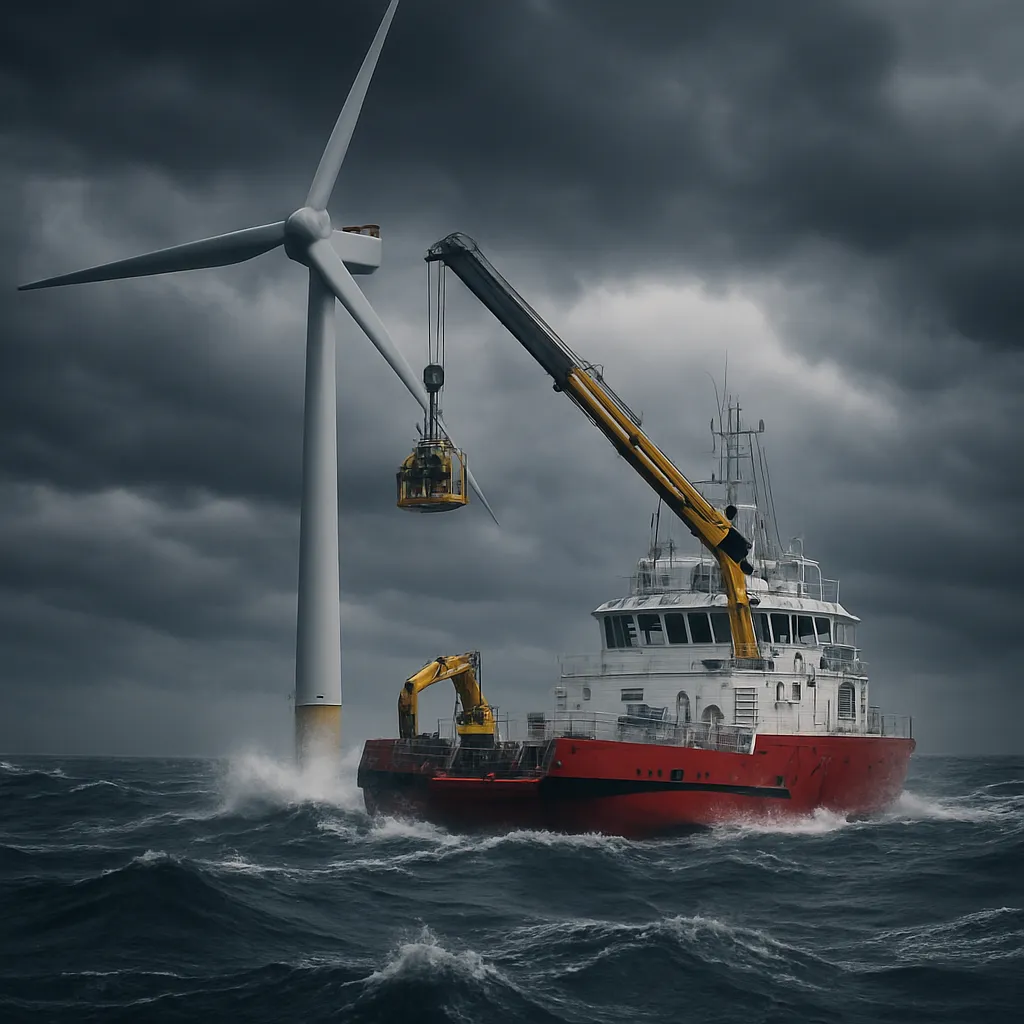
The relentless power of the ocean creates a formidable environment for the upkeep of offshore wind farms. When gale‐force winds, pounding waves, and unpredictable currents collide, specialized machines and techniques step in to ensure that turbines continue to function at peak performance. This article explores how cutting‐edge technologies, innovative vessel designs, and advanced maintenance strategies work together to sustain these enormous structures in stormy seas.
Advanced Robotics and Automation in Harsh Marine Conditions
Automation and robotics have revolutionized the way technicians approach turbine maintenance far from shore. In an environment where human intervention is risky or impossible, unmanned systems take center stage.
Autonomous Climbing Robots
- Equipped with magnetic suction or gripper arms, these units ascend turbine towers, inspecting welds and structural joints.
- Integrated sensors capture high‐resolution imagery and ultrasonic readings to detect hairline fractures before they escalate.
- Onboard AI algorithms analyze data in real time, triggering alerts for critical defects that require immediate attention.
Remotely Operated Vehicles (ROVs)
- Deployed from specialized service vessels, ROVs navigate around submerged sections of jacket foundations.
- High‐pressure water jets remove marine growth, while cameras and sonar assess potential scour around piling bases.
- These robust machines can withstand depths exceeding 100 meters, operating in currents exceeding 2 knots.
Dynamic Positioning and Vessel Innovation for Stability
Transporting equipment and personnel safely to offshore turbines demands vessels designed for resilience in rough waters. Dynamic Positioning (DP) systems are critical in this domain.
Dynamic Positioning Systems
- Utilize GPS, wind sensors, and inertial measurement units (IMUs) to maintain vessel position within a meter of accuracy.
- Automated thruster adjustments compensate for wave forces, enabling safe deployment of technicians via gangways.
- DP levels range from 1 to 3, with level 3 providing full redundancy for the most challenging operating conditions.
Gangway and Motion Compensation Technology
- Active heave compensators absorb vessel motion, creating a stable bridge between ship and turbine platform.
- Advanced telescopic gangways adjust length and angle in real time, ensuring safe transfer even in 3‐meter waves.
- These systems reduce risk and increase the window of operability, maximizing maintenance uptime.
Remote Monitoring and Predictive Maintenance Strategies
Predictive maintenance transforms how service teams schedule inspections and repairs. Instead of fixed intervals, data‐driven insights guide resource allocation precisely when needed.
Sensor Networks and Data Analytics
- Embedded sensors within gearbox bearings, blade roots, and generator coils provide temperature, vibration, and strain data.
- Machine learning models analyze historical performance, identifying anomalies that precede component failures.
- Real‐time dashboards display turbine health metrics, enabling engineers to prioritize critical tasks remotely.
Digital Twins for Turbine Assets
- A virtual replica simulates physical processes, forecasting wear patterns based on environmental loading and operational profiles.
- Scenario modeling helps evaluate “what‐if” maintenance plans, optimizing downtime and costs.
- Integration with vessel scheduling software ensures that field crews and specialized machines are dispatched efficiently.
Specialized Tools and Techniques for Stormy Seas
Stormy conditions demand tools that are both durable and precise. Engineers have developed bespoke solutions to meet these challenges.
Turbine Blade Repair Systems
- On‐site resin injection rigs seal trailing‐edge cracks within minutes, even under high humidity and salt spray.
- Mobile curing tents, mounted on platforms, create controlled environments to expedite composite restoration.
- Laser‐scanning devices map surface profiles, guiding automated sanding heads for seamless finish and aerodynamic integrity.
Underwater Inspection and Scouring Tools
- High‐pressure water nozzles cut through barnacles and mussel colonies without harming metal surfaces.
- Side‐scan sonar units detect shifting sediments around monopiles and gravity bases.
- Custom‐designed ROV manipulators handle anodes, replacing sacrificial corrosion protection elements in situ.
Human‐Machine Collaboration and Safety Protocols
Even with advanced automation, skilled technicians remain indispensable. The combination of human expertise and machine precision enhances overall efficiency and safety.
Virtual Reality (VR) Training Simulators
- Technicians rehearse complex maintenance procedures in simulated rough‐sea scenarios.
- Haptic feedback gloves and motion platforms replicate vessel movements, improving readiness for emergency evacuations.
- Performance metrics track reaction times and procedural accuracy, refining individual certification programs.
Collaborative Robotics
- Cobot arms assist engineers during nacelle overhauls, handing tools and components as needed.
- Force‐torque sensors prevent accidental tipping or misalignment of heavy assemblies.
- Safety fencing and light‐curtains create dynamic zones, halting robot motion instantaneously if a worker crosses into a hazard area.
Future Innovations and Emerging Trends
The drive toward ever‐more reliable and cost‐effective offshore wind maintenance is spurring continuous innovation.
Swarm Robotics
- Multiple small drones coordinate inspections, reducing mission time and improving coverage.
- Collaborative mapping software stitches together sonar and laser data into unified 3D models.
- Redundancy in swarm architecture ensures mission success even if individual units fail.
Wave‐Energy‐Powered Service Platforms
- Floating buoys convert wave motion into power for charging ROVs and autonomous climbing robots.
- These platforms can remain on station for weeks, cutting transit costs and carbon footprint.
- Integration with offshore wind farm grids offers bidirectional energy flow for enhanced resilience.
Through the synergy of automation, advanced vessel design, and predictive analytics, maintenance teams are increasingly able to face the most daunting marine conditions. As technology continues to evolve, the future of offshore wind promises higher reliability, lower costs, and safer work environments for the people and machines that keep our turbines spinning, even when the sea rages.