Advancements in modern engineering rely heavily on a fleet of specialized machines that transform ambitious blueprints into towering bridges and labyrinthine tunnels. From preliminary surveys to the final touches of pavement, each stage demands a unique set of tools and technologies. The synergy between human expertise and machine capabilities continues to push the boundaries of what infrastructure projects can achieve.
Surveying and Design Technologies
Accurate mapping and soil analysis form the cornerstone of any major bridge or tunnel project. Sophisticated geotechnical instruments assess ground conditions while laser-based total stations capture precise topographical data. These machines feed critical information into digital design platforms, enabling engineers to simulate stresses and optimize structural components.
Laser Scanners and Total Stations
- Total stations measure angles and distances with sub-millimeter precision.
- LIDAR-equipped scanners generate detailed 3D point clouds of the terrain.
- Data integration ensures that project designs account for minute variations in elevation.
Soil Testing and Borehole Drilling
- Automated drilling rigs extract samples at varying depths to analyze composition.
- In-situ penetrometers gauge load-bearing capacity directly within the field.
- Real-time data transmission allows geotechnical teams to adapt foundation designs on the fly.
Excavation and Tunneling Machinery
The process of carving through rock and soil demands a combination of brute force and surgical accuracy. State-of-the-art machines handle enormous pressures while maintaining stability within confined spaces. These specialized devices reduce human risk and accelerate project timelines dramatically.
Tunnel Boring Machines (TBMs)
Tunnel Borers are colossal wonders of engineering, equipped with rotating cutting heads and conveyor belts to transport debris. They operate under immense ground pressure, carving out circular tunnels with diameters of up to 18 meters. Automated steering systems enable TBMs to follow pre-programmed alignments with minimal deviation.
- drilling discs break apart solid rock.
- Hydraulic thrust cylinders push the machine forward.
- Segment erectors line the tunnel walls with precast concrete rings.
Cutterheads and Excavators
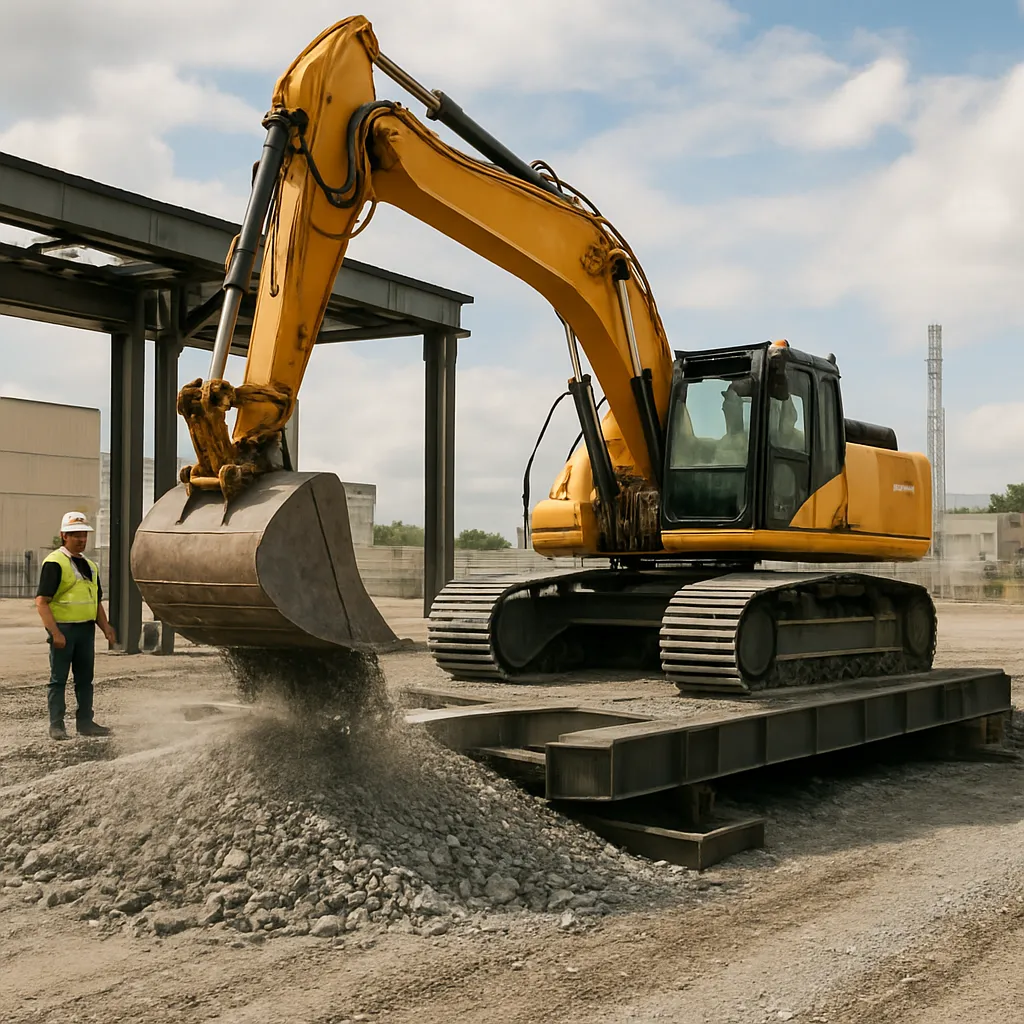
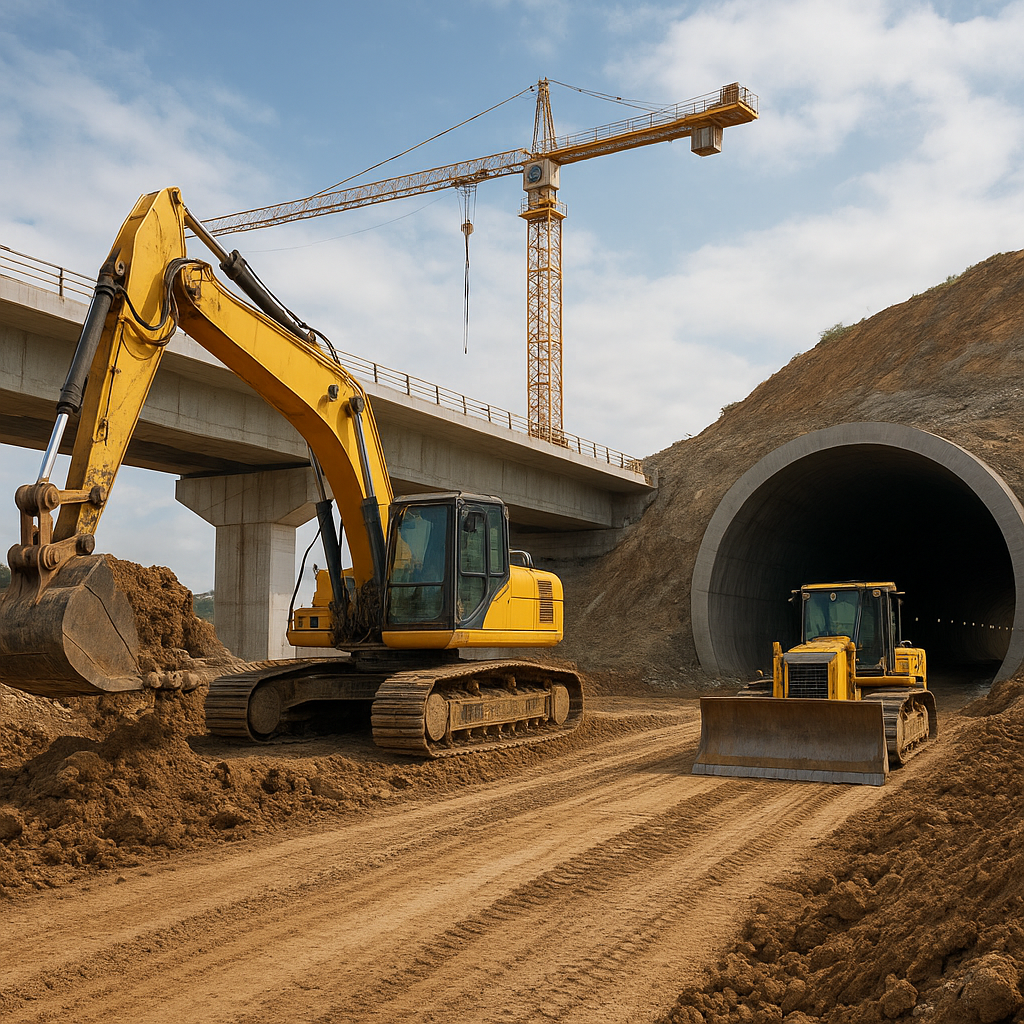
On open-cut sections, heavy-duty excavators and hydraulic hammers take over. They are equipped with bucket attachments, rotating cutters, and vibratory plates suitable for a wide range of materials:
- Standard buckets for loose soil removal.
- Rock breakers for hard strata.
- High-torque drum cutters for soft rock and clay.
Bridge Erection and Assembly Equipment
Constructing a bridge involves a choreography of cranes, girders, and tensioning systems. Each machine plays a pivotal role from lifting massive steel trusses to aligning precast concrete segments. Safety sensors and automated controls ensure flawless operations even in challenging weather conditions.
Launching Girders and Falsework
- Incremental launching machines propel superstructures across piers.
- Retractable supports, known as falsework, provide temporary stability.
- Laser-guided alignment keeps segments within millimeter tolerances.
High-Capacity Cranes and Gantries
Gantry cranes traverse the length of the bridge deck, hoisting materials with pinpoint accuracy. Capable of lifting thousands of tonnes, they streamline the placement of:
- Pre-stressed concrete beams.
- Steel box girders.
- Pre-tensioned cable stays.
Automation, Robotics, and Safety Innovations
Modern construction sites are progressively embracing automation and robotics to boost productivity and reduce human exposure to hazardous environments. Integrating sensors, AI-driven control units, and remote-operation consoles creates a cohesive ecosystem where machines communicate seamlessly.
Robotic Inspection Drones
- Aerial drones perform routine inspections of bridge decks and tunnel linings.
- Equipped with high-resolution cameras and ultrasonic sensors for crack detection.
- Real-time reporting accelerates maintenance planning and prevents structural failures.
Automated Material Handling
- Autonomous vehicles transport aggregates and reinforcement steel within the site.
- Conveyor belts dynamically adjust speed based on load and distance.
- GPS-guided systems ensure materials reach the correct workstation without delays.
Environmental Considerations and Future Outlook
As global emphasis on sustainability intensifies, construction machines are evolving to minimize ecological footprints. Innovations range from hybrid powertrains to noise-reduction enclosures, ensuring that major infrastructure projects coexist harmoniously with natural surroundings.
Low-Emission Engines and Hybrid Power
- Diesel-electric hybrid excavators cut fuel consumption by up to 30%.
- Battery-operated drilling jumbos eliminate local air pollution in tunnel sections.
- Regenerative braking on cranes recovers energy during lowering operations.
Noise and Dust Mitigation
- Acoustic barriers absorb sound from pile drivers and heavy machinery.
- Water mist systems suppress airborne dust particles at breaking and cutting points.
- Enclosed cabs with active noise cancellation protect operator health.