Logistics hubs around the globe rely on sophisticated machines to maintain seamless operations throughout every hour of the day. The convergence of advanced technologies, streamlined processes, and strategic planning helps warehouses, distribution centers, and freight terminals meet the ever-growing demand for speedy shipments and accurate order fulfillment. This article dives into the machinery at work, the systems that coordinate them, and the innovative approaches that keep modern hubs running nonstop.
Automated Workflows Powering Logistics Hubs
The heart of any logistics hub is its ability to handle inbound and outbound goods without interruption. At the core of this capability lies automation—the strategic deployment of machines that move, sort, and process packages with minimal human intervention. From high-speed conveyor belts to complex sorting networks, these automated workflows have transformed manual warehouses into dynamic, data-driven facilities.
Operators integrate sensors, control units, and custom software to choreograph hundreds of machines simultaneously. Package scanners read labels in milliseconds, redirecting parcels down specific lanes based on destination and priority. This level of precision enhances efficiency and reduces errors, ensuring that the right goods reach the right customers on time.
One hallmark of modern hubs is the fully automated tote retrieval system. Shuttles glide along rails between towering storage racks, picking and delivering crates in response to real-time orders. This approach not only accelerates throughput but also optimizes floor space usage, as vertical storage can extend dozens of meters upward without obstructing ground-level operations.
Key Machinery Driving Continuous Operations
Conveyor and Sortation Systems
- High-speed rollers and belts, engineered for loads from a few grams to hundreds of kilograms.
- Dynamic sorters equipped with tilting plates, robotic arms, or sliding shoes to reroute items at junction points.
- Sensors and vision systems that scan barcodes, QR codes, and RFID tags for accurate sorting.
By combining these elements, logistics hubs achieve remarkable levels of productivity, handling thousands of parcels per hour with pinpoint accuracy.
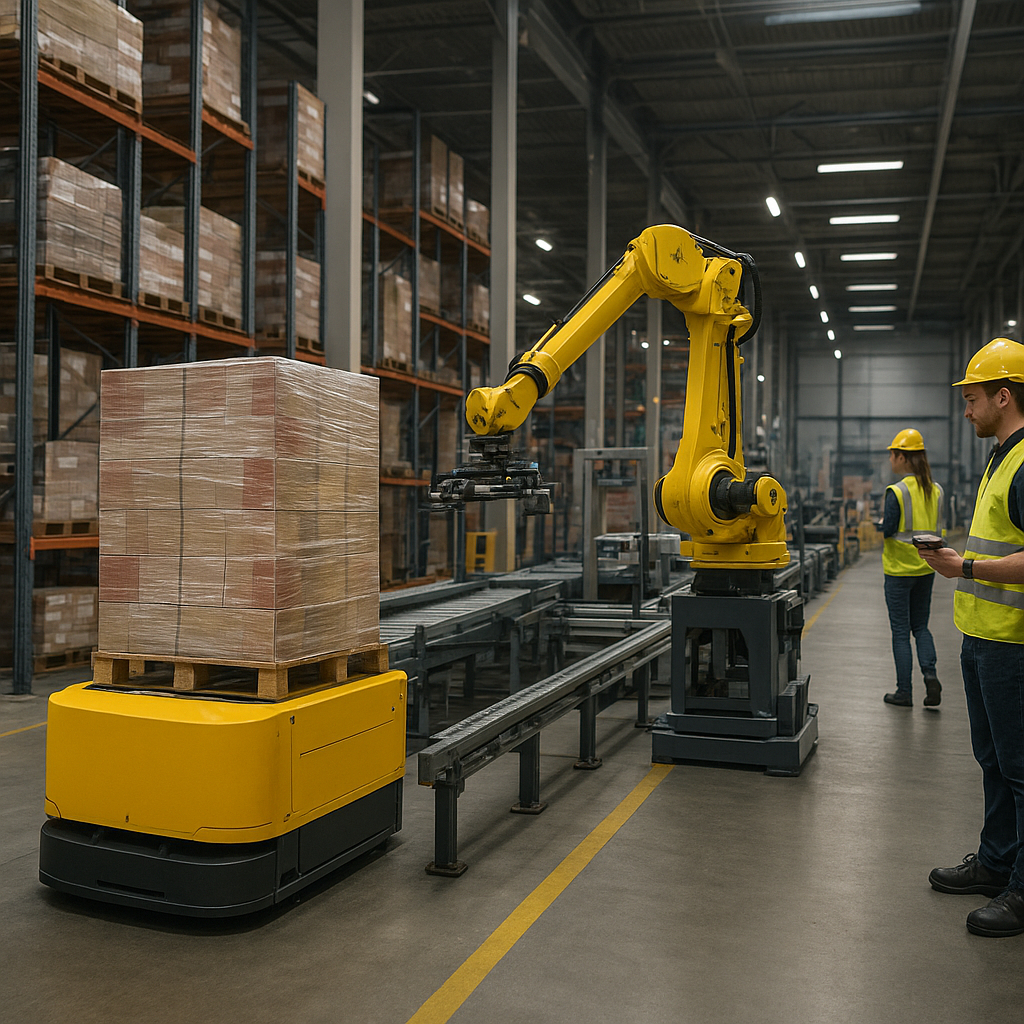
Automated Guided Vehicles (AGVs) and Autonomous Mobile Robots (AMRs)
- AGVs follow fixed paths marked on the floor or via magnetic tape, transporting pallets and containers between stations.
- AMRs leverage LiDAR, cameras, and AI to navigate flexible routes, avoiding obstacles and rerouting in real-time.
- Fleet management software assigns tasks, tracks battery levels, and schedules charging to ensure uninterrupted service.
These mobile machines boost reliability by reducing manual lifting, improving safety, and ensuring that materials arrive precisely when needed for packing or shipping.
Robotic Arms and Pick-and-Place Stations
Advanced robotics systems equipped with multi-joint arms, grippers, and suction cups excel at sorting, picking, and placing items of various shapes and sizes. Integrated with AI-driven vision, they adapt to irregular objects—soft packages, odd geometries, and fragile goods—with minimal downtime. Collaboration with human workers in mixed-zone environments further enhances throughput while preserving safety.
Digital Integration and Real-time Monitoring
To coordinate thousands of machines around the clock, logistics hubs rely on a seamlessly connected ecosystem. Enterprise Resource Planning (ERP) systems communicate with Warehouse Management Systems (WMS), Transportation Management Systems (TMS), and custom dashboards that display live performance metrics.
Real-time data streams enable integration across all operations, from inventory tracking to shipment scheduling. Operators use touchscreen interfaces and mobile apps to override machine commands, reassign priorities, or troubleshoot bottlenecks on the fly. Such agility is vital when dealing with unexpected surges in orders, equipment maintenance, or network disruptions.
Key performance indicators (KPIs) like order cycle time, dwell time, and throughput rates feed into centralized analytics platforms. Predictive algorithms process historical and live data to forecast demand spikes, allocate resources, and trigger preventive maintenance schedules. This proactive methodology drives optimization of both human and mechanical assets, reducing downtime and extending equipment life.
Underpinning all these functions is an industrial-grade network infrastructure. High-bandwidth wired connections and private wireless networks ensure minimal latency and secure communication. Edge computing nodes close to sensor clusters process critical tasks locally, while cloud services handle large-scale analytics and machine learning workloads.
Challenges and Future Innovations
Despite remarkable advances, 24/7 operations face ongoing challenges. Peak season overloads, fluctuating shipping volumes, and supply chain disruptions require constant adaptation. The integration of renewable energy sources and sustainable practices also adds complexity to operating budgets and infrastructure planning.
Emerging solutions aim to address these pain points. Innovations in battery technology will allow AGVs and AMRs to enjoy longer operating times and faster charging cycles. Modular conveyor designs promise swift reconfiguration, enabling hubs to expand or repurpose sections without extensive downtime. Meanwhile, the adoption of collaborative robots (cobots) enhances human-machine teamwork, unlocking new levels of scalability and customization.
On the software side, advanced digital twins replicate entire facility layouts in virtual environments. Operators can simulate traffic flows, equipment placements, and process changes before applying them to live systems. This approach not only improves decision-making but also drives continuous improvement cycles, elevating service levels while curbing costs.
Finally, increased focus on just-in-time delivery and circular economy principles encourages hubs to incorporate reverse logistics capabilities. Machines designed for quality inspection, re-packaging, and refurbishing goods will add a new dimension to end-to-end supply chain management, promoting sustainability and customer satisfaction.