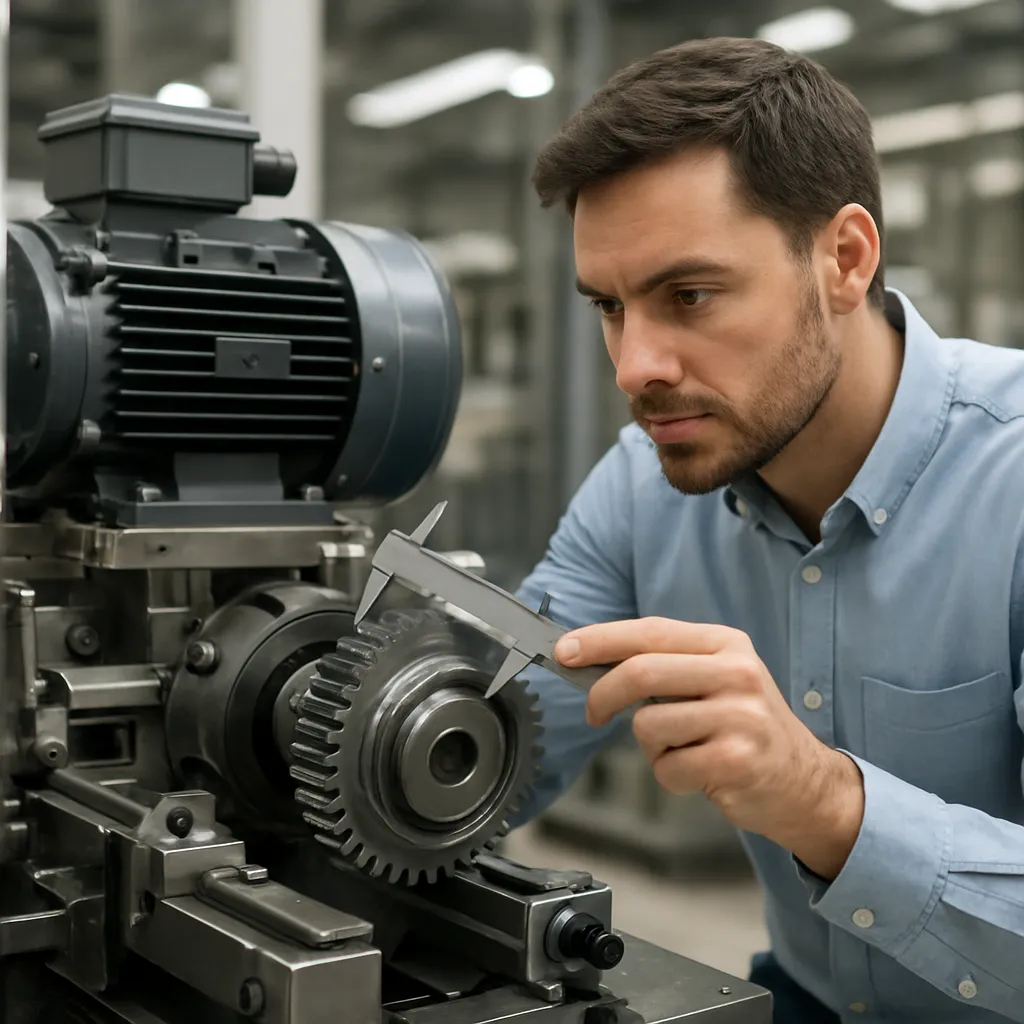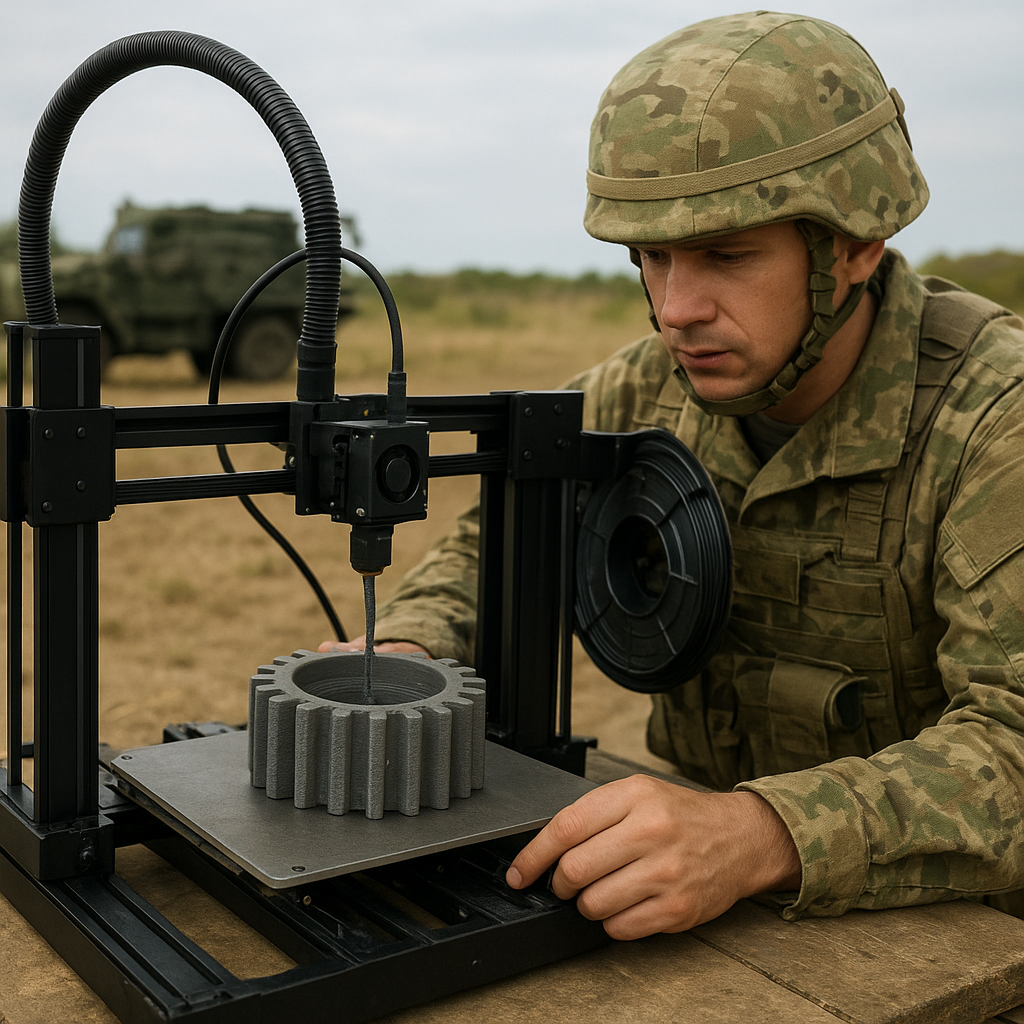
From remote drilling platforms to mobile repair units in construction zones, the integration of cutting-edge fabrication methods has reshaped how machinery receives timely support and parts replacements. By combining advanced design algorithms with portable manufacturing systems, engineers and technicians can now overcome logistical hurdles and ensure uninterrupted operations in demanding environments.
Advancements in Machine Technology and On-Site Fabrication
The relentless pace of innovation in manufacturing technologies has brought forth a new era where heavy equipment can be serviced away from traditional workshops. Portable 3D printers, modular CNC machines, and adaptive robotics have become indispensable assets for teams needing to fabricate replacement components under challenging circumstances. This trend is fueled by improvements in material science, miniaturization of control electronics, and the development of intelligent software that guides the manufacturing process with minimal human intervention.
Engineers now rely on digital twins—high-fidelity computational replicas—to simulate stresses and optimize designs even before any physical part is produced. When a critical component fails on a remote site, technicians can retrieve the digital model from a secure cloud repository, adjust parameters for the current operating conditions, and initiate production within hours. The synergy between real-time monitoring systems and on-site fabrication platforms leads to unprecedented levels of operational efficiency and reliability.
3D Printing for Field Repair and Rapid Replacement
In-field additive manufacturing has rapidly outpaced traditional supply chains in scenarios demanding urgent intervention. Several sectors—ranging from oil and gas exploration to disaster relief and military logistics—have adopted portable printers capable of processing metal powders, engineering-grade polymers, and composite materials. The resulting parts often match or even exceed the performance of factory-produced items due to optimized geometries made possible by layer-by-layer deposition.
Key Advantages of On-Site Additive Manufacturing
- Customization: Tailor components to unique environmental stresses, such as extreme temperatures or corrosive atmospheres.
- Speed: Produce complex geometries in a matter of hours instead of weeks or months tied to global shipping.
- Cost Reduction: Eliminate overhead from warehousing spares and reduce emergency airlift expenses.
- Sustainability: Use only the material required, minimizing waste and enabling recycled feedstock loops.
- Resilience: Maintain critical infrastructure even when traditional logistics channels are compromised.
These benefits underscore why industries facing volatile conditions have prioritized investment in field-capable printers. For instance, geotechnical drilling rigs operating in remote deserts can now replace corroded couplings or worn drill heads without waiting for parts shipments that may take weeks to arrive. Technicians simply upload the requisite CAD files, verify build parameters on a ruggedized touchscreen interface, and initiate the print cycle. Subsequent post-processing steps—such as heat treatment or abrasion blasting—can often be completed within the same makeshift workshop.
Reducing Downtime with On-Demand Parts Production
One of the greatest challenges in heavy industry is minimizing machine downtime. Every hour a critical asset sits idle translates into lost revenue, contractual penalties, or even safety hazards. Field fabrication mitigates these risks by transforming supply chain dynamics from linear to just-in-time models. Instead of carrying an exhaustive inventory of spares, organizations maintain a digital library of certified components ready for instant production.
Implementation of this model relies on several pillars:
- Data Connectivity: Secure real-time telemetry streams from machinery enable predictive algorithms to flag wear patterns before failures occur.
- Digital Catalogs: Standardized file formats and metadata ensure seamless transfer of part specifications between central design offices and in-field equipment.
- Quality Assurance: Portable non-destructive testing (NDT) tools—such as ultrasonic scanners and X-ray fluorescence analyzers—verify that printed parts meet stringent performance criteria.
- Training and Expertise: Technicians must be versed in both CAD modeling and additive manufacturing workflows, acting as cross-disciplinary specialists in remote conditions.
By orchestrating these elements, companies can schedule on-demand builds during planned maintenance windows or respond instantly to unexpected breakdowns. The result is a paradigm where the supply chain becomes a real-time, adaptive organism, rather than a series of static warehouses and transport routes.
Maintenance and Operational Considerations
While on-site fabrication offers transformative advantages, it introduces new layers of complexity to maintenance regimes. Organizations must establish protocols for handling raw materials, securing build environments, and disposing of or recycling support structures and unused powder. Ensuring that field printers operate within certified temperature and humidity ranges is critical for achieving consistent mechanical properties.
Key operational practices include:
- Implementing controlled enclosures with HEPA filtration to prevent contamination of sensitive metal powders.
- Maintaining detailed build logs that trace every printed component from powder batch to finished part, facilitating full traceability.
- Scheduling regular calibration and preventive maintenance of on-site machines to avoid build failures under high-stakes conditions.
- Establishing emergency procedures for safely handling any malfunctions involving high-power lasers or heated extruders.
Furthermore, integrating additive manufacturing into existing maintenance workflows requires cross-functional collaboration. Field service teams coordinate with design engineers, materials scientists, and quality control specialists via secure communication platforms. This collaboration ensures that even the most complex components—such as hydraulic manifolds or turbine blades—can be adapted for local production without sacrificing performance or safety standards.
Challenges and Pathways to Future Innovation
Looking ahead, the continuous evolution of on-site fabrication will hinge on overcoming several hurdles. Expanding the range of viable materials remains a top priority. While metals like stainless steel and titanium are now commonplace, certain high-temperature alloys and specialized polymers have not yet been fully adapted for portable printers. Advances in multi-material printing and hybrid manufacturing—where additive and subtractive processes converge—promise to extend capabilities further.
Another frontier is the integration of artificial intelligence for autonomous build optimization. By analyzing sensor data in real time, AI-driven systems could adjust laser power, scanning speed, and layer orientation on the fly, maximizing mechanical performance while reducing build times. Such systems could also predict when a particular printer requires maintenance or consumable replacement, preventing unplanned outages.
Achieving these advancements will require concerted efforts across industry, academia, and regulatory bodies. Standardization of testing protocols, material certifications, and software security measures will be crucial for wider adoption. As the technology matures, we can expect a proliferation of mobile fabrication units supporting sectors as diverse as disaster response, space exploration, and rural infrastructure development.