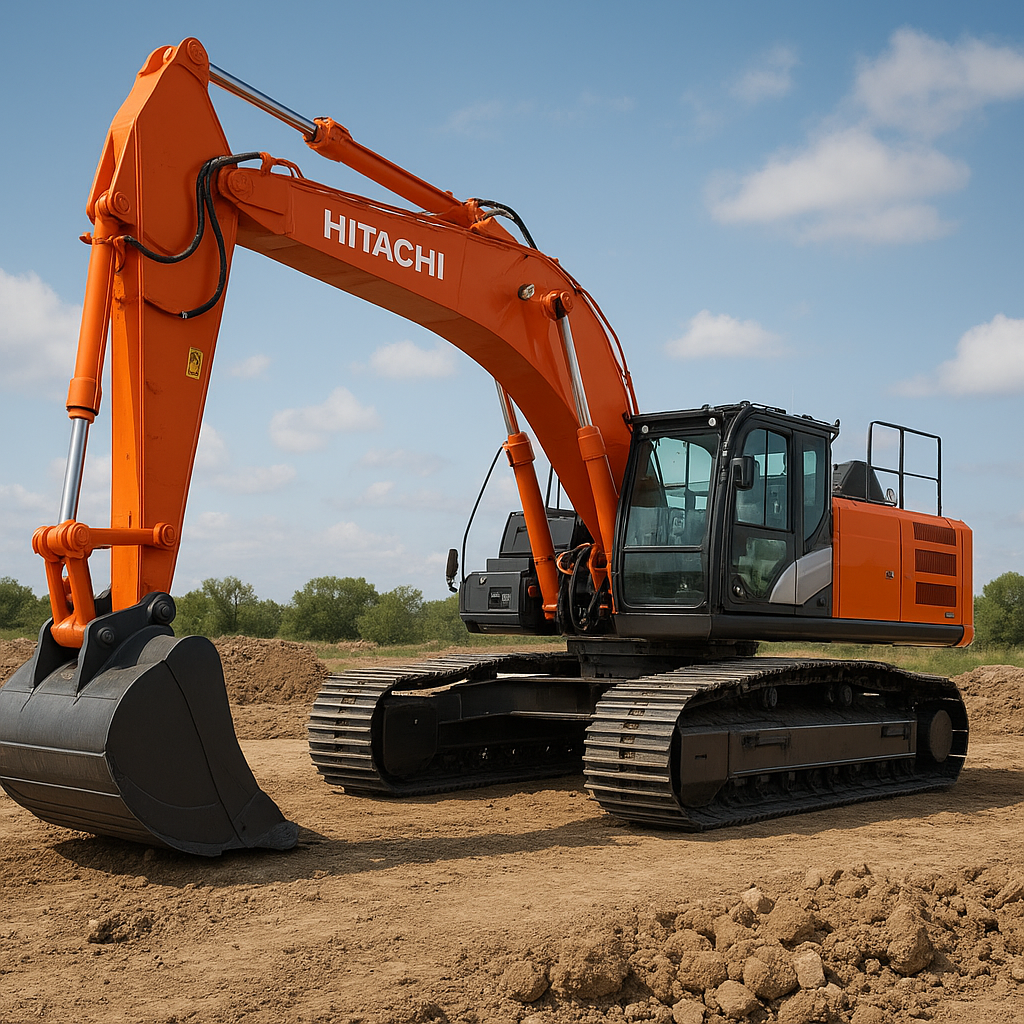
The Hitachi ZX890LCR-6 represents one of the flagship machines in the heavy excavator category, engineered to handle some of the most demanding earthmoving, quarrying, and construction tasks. Built with a focus on robust performance, improved fuel efficiency and operator comfort, this model is often chosen where the combination of reach, lifting capability and durability is essential. Below you will find a detailed overview of its design, typical applications, operational strengths, maintenance considerations, and market context.
Overview and key design features
The Hitachi ZX890LCR-6 is a large, purpose-built hydraulic excavator intended for heavy-duty applications. The model name indicates its place in Hitachi’s product line, and the suffix LCR commonly denotes a reduced tail swing configuration, which allows the machine to operate in tighter spaces without sacrificing counterweight or lifting capacity. The “-6” denotes the generation, incorporating improvements in hydraulics, emissions compliance and operator ergonomics introduced with the sixth series.
Typical design highlights include an advanced hydraulic system, a high-capacity undercarriage, reinforced structural components for longevity, and a cab designed for all-day productivity. The machine is built to provide a balance between digging force, lifting capability and travel performance even under continuous heavy loads.
Structural and hydraulic architecture
At the heart of the ZX890LCR-6 is a robust hydraulic circuit designed to deliver smooth, responsive control across all cylinders and attachments. The system usually integrates variable displacement pumps and electronic control modules to optimize oil flow and pressure based on operator commands and load demands. This results in improved fuel economy and precise operation.
Key structural attributes typically include:
- Reinforced boom and arm sections with heavy-duty pins and bushings to withstand repetitive shock loads.
- An undercarriage constructed for long track life, often with sealed components to minimize wear and contamination.
- Modular counterweight design that can be adjusted to match application requirements—balancing stability with transport constraints.
- Attachment-ready hydraulic couplers and piping for quick changes between buckets, breakers, grapples and specialized tools.
Powertrain and emissions
Machines in this class are fitted with high-displacement diesel engines that meet regional emissions regulations (Tier 4 Final / Stage IV in many markets, or equivalent local standards). The powertrain integrates engine management with hydraulic controls to balance power output and fuel consumption. Standard features often include an idle management system, automatic engine shut-down settings for long idling periods, and an ECO mode that reduces fuel consumption while preserving productivity.
Note on specifications: exact engine output, operating weight and bucket capacities vary by market configuration and optional equipment. Manufacturers typically provide several configuration packages to match quarry, port, construction or mining uses.
Applications and typical use cases
The ZX890LCR-6 is engineered for high-demand environments. Its combination of power and reach makes it ideal for jobs that require long cycles, heavy digging force and frequent attachment changes.
- Quarrying and mining: This excavator excels at face digging, loading large haul trucks and handling heavy rock and overburden. Its reinforced structure and large bucket options are optimized for abrasive materials and continuous operation.
- Bulk material handling and ports: With proper attachments (e.g., clamshells or grapples), the unit is used to manage bulk commodities, load/unload vessels and manage stockpiles. The LCR configuration aids maneuverability in confined port areas.
- Heavy civil construction: Large excavation for dams, reservoirs, foundation pits and deep utilities benefits from the machine’s reach and stability.
- Pipeline and infrastructure: When combined with specialized buckets or rock rippers, the ZX890LCR-6 is used in trenching and backfilling tasks for major pipeline projects and large utilities.
- Demolition: Fitted with long-reach booms or hydraulic breakers, the excavator can be utilized in demolition applications where controlled force and reach are necessary.
Attachment versatility
One of the machine’s strengths is the capacity to operate a wide range of attachments. Typical options include:
- High-capacity digging buckets (3–6 m3 class, depending on configuration)
- Hydraulic breakers for secondary fragmentation
- Grapples and orange-peel attachments for handling irregular loads
- Rotating clamshells and hoppers for bulk handling
- Compaction wheels and rippers for ground preparation
Performance characteristics and statistical notes
While exact specifications depend on configuration and market, excavators in the 80–90 tonne class typically show the following approximate performance ranges. These ranges help in selecting the ZX890LCR-6 for a particular application:
- Operating weight: Generally falls in the 80,000–95,000 kg range depending on counterweight and attachments.
- Engine power: Commonly in the 300–400 kW range (roughly 400–540 HP), depending on emissions tuning and optional packages.
- Bucket capacity: Typical buckets range from about 3.0 m3 to over 5.5 m3, with specialized heavy-duty buckets available for rock handling.
- Maximum digging depth: Commonly around 7.5–10.0 meters for standard booms and arms; long-reach configurations extend reach beyond this range.
- Maximum reach: Often in the 12–15 meter class for standard booms; long-reach variants can exceed these figures.
Beyond these numbers, what distinguishes the ZX890LCR-6 in real-world use is its cycle efficiency—how quickly it can complete repetitive digging and loading cycles—along with uptime, maintainability and fuel consumption per tonne moved. Manufacturers and fleet operators report that machines of this generation typically deliver measurable improvements in fuel economy and hydraulic responsiveness compared with prior generations, sometimes on the order of 5–15% depending on the application and operator behavior.
Jobsite productivity metrics
Jobsite planning often uses metrics such as cubic meters moved per hour, fuel used per hour, and availability percentage. For a large excavator like the ZX890LCR-6, benchmark values may include:
- Cubic meters per hour: Highly application-dependent; in loading operations with optimized cycle times, a 3.5–5.0 m3 bucket could move several hundred cubic meters per hour.
- Fuel consumption: Averages vary widely with duty cycle, but fleet reports generally place heavy-class excavator consumption in a range that makes fuel efficiency improvements particularly valuable over multi-year operations.
- Availability/Uptime: Target uptimes for modern heavy excavators often exceed 90% with proactive maintenance and telematics-based diagnostics.
Operator comfort, safety and onboard technology
Operator productivity depends as much on the cab environment and controls as on raw machine power. The ZX890LCR-6 emphasizes ergonomics, visibility and intuitive controls to reduce operator fatigue and enhance precision.
- Cab environment: The cab typically features climate control, reduced noise and vibration, adjustable seating and multi-function joysticks. Large glass areas and well-placed mirrors/cameras improve sight lines around the machine.
- Control systems: Electronic controls, programmable working modes and sensitivity adjustments let operators tune the response for digging, lifting or grading tasks. Some systems include auto-idle and one-touch return-to-neutral functions that save fuel and reduce wear.
- Safety systems: Common features include rearview and side cameras, load monitoring, anti-slip steps and handrails, emergency stop systems and operator presence detection. Stability is augmented by well-distributed counterweights and optional tie-down points for transport.
- Telematics and remote diagnostics: Many modern Hitachi machines integrate fleet management platforms that transmit machine location, operating hours, fuel use, error codes and maintenance reminders. These systems are crucial for preventive maintenance and rapid troubleshooting.
Operator training and productivity
Performance is strongly linked to operator skill. Proper training in efficient digging techniques, attachment use and machine care can reduce cycle times, increase fuel efficiency and extend component life. Manufacturers and major dealers often provide training programs and simulation tools to accelerate operator proficiency.
Maintenance, total cost of ownership and lifecycle considerations
For a heavy excavator, the total cost of ownership (TCO) over its service life matters more than the purchase price alone. Key factors that influence TCO for the ZX890LCR-6 include initial acquisition cost, fuel consumption, scheduled maintenance, component longevity and resale value.
- Scheduled maintenance: Regular service items include hydraulic oil/filter changes, engine servicing, undercarriage inspections and lubrication of pins and bushings. A well-documented service schedule matched to operating hours helps avoid costly downtime.
- Wear items: Buckets, teeth, pins and bushings, track shoes and hydraulic hoses are common wear items. Using heavy-duty replacements in abrasive operations can increase service intervals.
- Diagnostics: Onboard diagnostics and telematics provide early warning of faults, allowing for planned interventions rather than reactive repairs. Remote monitoring can reduce unscheduled downtime and optimize parts stocking.
- Resale and lifecycle: Large excavators retain value when maintained correctly. Documentation of service history and responsible operation are major factors in secondary market pricing.
Maintenance best practices
Operators and fleet managers commonly adopt practices that protect machine value and reduce lifecycle costs:
- Daily walk-around inspections to spot leaks, loose fasteners or abnormal wear.
- Using genuine replacement parts for critical components to maintain performance and warranty compliance.
- Implementing condition-based maintenance where sensor data guides part replacement before failure.
- Training onsite technicians on routine troubleshooting and basic repairs to reduce external service dependencies.
Market positioning, competitive context and purchasing considerations
The ZX890LCR-6 competes in a segment populated by other major OEMs offering similar capacity machines. Buyers evaluate units based on a combination of performance, dealer support, parts availability and lifecycle costs.
Factors influencing purchase decisions
- Dealer network and after-sales support: Access to fast parts delivery, experienced technicians and training is often a decisive factor.
- Application fit: Buyers choose machine configuration (counterweight, boom/arm length, bucket size) to match tasks such as mining, loading or demolition.
- Financing and total cost: Purchase or lease terms, expected resale value and operating costs influence procurement strategies.
- Regulatory compliance: Emission standards and site-specific safety rules may dictate required engine tiers or safety equipment.
Environmental and sustainability aspects
Modern heavy machinery design increasingly focuses on reducing environmental impact. The ZX890LCR-6 and similar models incorporate technologies and design choices that help lower fuel consumption and emissions, including:
- Engine aftertreatment systems (e.g., SCR) to meet stringent emissions standards.
- Hydraulic system efficiencies (variable pumps and flow-sharing controls) that reduce fuel use.
- Idle management and auto-shutdown features to minimize unnecessary fuel burn.
- Design choices that extend component life and reduce waste through longer maintenance intervals.
Fleet-level sustainability gains are realized through optimized jobsite planning, training operators in fuel-efficient techniques, and using telematics to reduce idle time and unnecessary travel.
Real-world examples and case scenarios
The ZX890LCR-6 is deployed across a variety of large-scale projects around the world. Typical scenarios include:
- Quarry operators using the machine for primary face excavation, where the unit’s lifting and cycle capacity rate dictates haul-truck loading efficiency.
- Major infrastructure works such as dam construction, where deep excavation, mass earthmoving and heavy lifting are required in sequence.
- Port operators who use LCR-configured machines to operate close to quay edges and between infrastructure without risking strikes to rear structures.
- Large pipeline projects where the excavator’s reach and ability to handle heavy fill and rock are essential for maintaining schedule.
Sample productivity estimate
As an illustration (actual results vary by site): using a 4.0 m3 bucket in a medium-density material, an experienced operator with an optimized cycle could achieve several hundred cubic meters per hour. Multiplying that productivity by working hours and a machine availability target provides a baseline for project planning and life-cycle cost models.
Summary and final remarks
The ZX890LCR-6 is a robust choice for contractors and fleet operators needing a heavy excavator that combines power, reach and adaptability. Its LCR configuration allows operation in constrained environments without compromising on lifting capacity or stability. Across quarrying, mining, bulk handling, heavy civil works and demolition, the machine’s strengths are most evident where continuous heavy cycles and high uptime are critical.
Key decision points for prospective buyers are application fit, expected operating hours, dealer support and lifecycle costs. When matched appropriately to the task and maintained according to best practices, a large excavator like the ZX890LCR-6 can be a highly productive and cost-effective asset in heavy construction and resource industries.
)
)