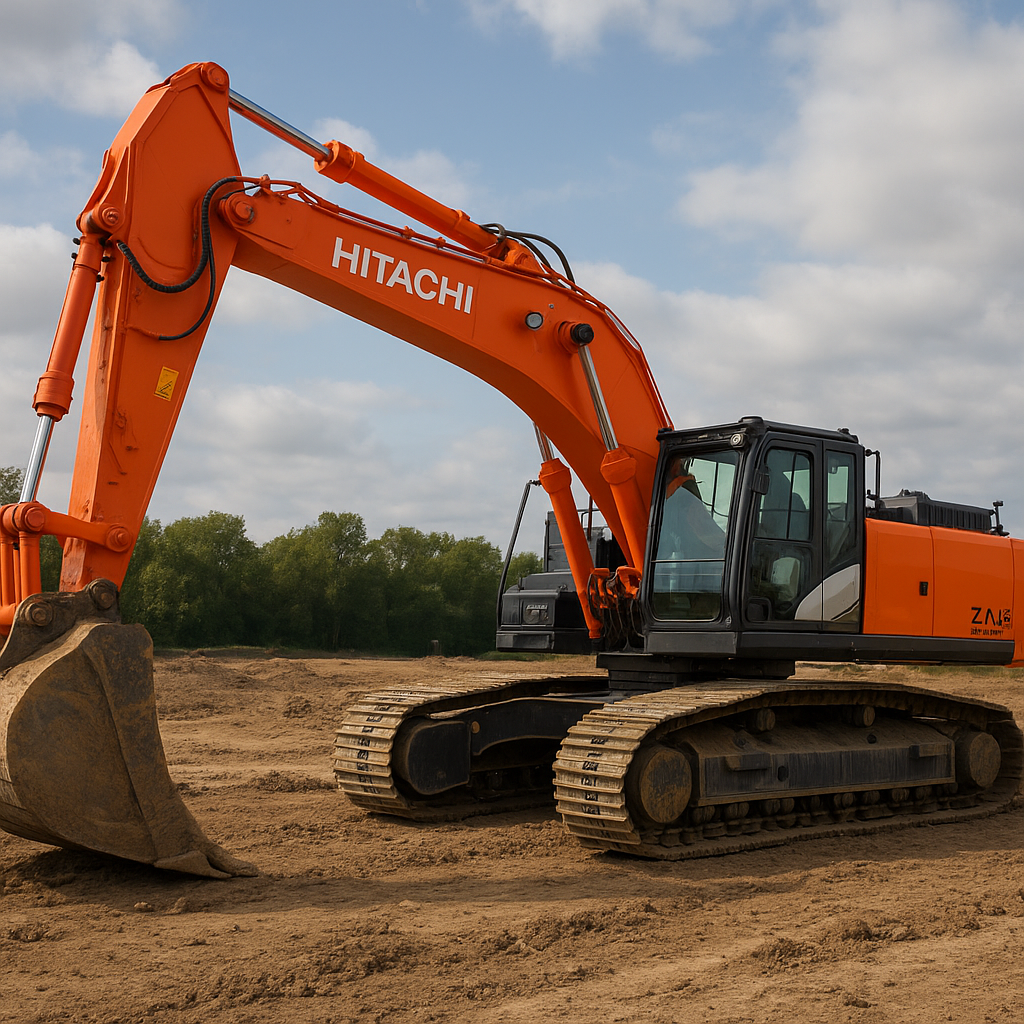
The following article provides an in-depth look at the Hitachi ZX670LCR-5G excavator — a large, heavy-duty machine designed for demanding earthmoving, quarrying and construction work. It covers the machine’s design philosophy, typical applications, operational strengths, maintenance considerations and economic factors. Where precise model-specific figures are uncertain, I give typical ranges and class-standard data so you can understand expected performance. Throughout the text, key concepts such as excavator, hydraulic systems, power, efficiency, operator comfort, durability, attachments, fuel use, maintenance and safety are highlighted for quick reference.
Design and technical overview
The Hitachi ZX670LCR-5G belongs to the heavy crawler excavator class designed for high-production environments. The model designation suggests a machine with a reduced tail swing or long crawler configuration (the LCR designation is typically used by manufacturers to indicate a tailored undercarriage and counterweight arrangement). As a member of the ZX-5G generation, this excavator integrates modern electronic control, advanced hydraulics and improved fuel-management systems intended to meet contemporary emissions and efficiency expectations.
Key structural elements
- Undercarriage and track system: robust, heavy-duty tracks for stability on uneven ground. A longer track frame improves lifting stability and operational reach, especially important for heavy lifts and large buckets.
- House and counterweight: optimized for balance between digging performance and swing clearance in confined sites when reduced tail swing variants are used.
- Boom, arm and linkage: designed for high digging forces and durability; many configurations are available to prioritize reach, breakout force, or digging depth.
Powertrain and hydraulics (typical values)
Exact engine and hydraulic specifications for the ZX670LCR-5G vary by market and configuration. For a machine in the 60–75 tonne class, typical values are:
- Operating weight: approximately 65–75 tonnes (65,000–75,000 kg) depending on configuration and counterweights.
- Engine power: typically in the range of 300–400 kW (400–540 hp), providing the torque and horsepower needed for heavy digging and powered attachments.
- Bucket capacity: commonly between 2.0 and 4.0 m³ for standard buckets, with larger capacities possible for light-density materials or reduced-profile buckets for trenching.
- Hydraulic system: advanced load-sensing, variable displacement pumps and electronic control valves allow high-precision work and the ability to simultaneously operate multiple hydraulic functions with stability.
These numbers reflect general expectations for the machine class rather than a single immutable specification; buyers should confirm precise factory specs for their market and desired configuration.
Typical applications and use cases
The ZX670LCR-5G is engineered for high-intensity tasks where brute force, reach and endurance are critical. Its most common applications include:
- Large-scale civil engineering: highway and rail construction, dam and levee projects, deep excavations for foundations and basements.
- Quarrying and mining: loading haul trucks, bench digging and secondary breaking where high breakout force and large bucket capacities deliver productivity.
- Port and bulk handling: material handling of aggregates, scrap, and bulk commodities when fitted with specialized grapples or clamshell attachments.
- Pipeline and infrastructure: trenching over long runs, spoil handling and preparation of pipeline right-of-way with appropriate arm lengths and buckets.
- Demolition and recycling: with shear, pulverizer and high-reach attachments, heavy excavators can take on structural demolition tasks.
The machine’s balance of reach and power makes it suitable for both excavation and loading tasks on projects where cycle times and throughput directly affect job economics.
Performance, productivity and attachments
Productivity of a ZX670LCR-5G depends on terrain, operator skill, attachment choice and job design. In a typical loading cycle operating on rock or compacted soil, the combination of an efficient hydraulics package and an optimized bucket can yield high rated outputs. To maximize output, projects often rely on a matched fleet: excavator size, truck capacity and material handling workflow must be balanced.
Common attachments and uses
- General-purpose and heavy-duty buckets — for earthmoving and loading.
- Rock buckets and bevel-tooth buckets — for harder materials in quarries.
- Hydraulic breakers — for primary and secondary rock breaking, concrete demolition.
- Grapples, orange-peel and magnet attachments — for scrap, demolition and bulk handling.
- Thumbs and rotators — for precision handling of irregular loads and demolition debris.
- Compactors and vibratory plates — for trench and embankment compaction (rear-mounted or arm-mounted depending on configuration).
Versatile attachment systems and quick couplers shorten changeover times and extend the machine’s utility across multiple tasks on the same site.
Operator environment and safety features
Modern Hitachi excavators emphasize the operator environment to increase productivity and reduce fatigue. The cab is typically designed with wide glazing for visibility, ergonomic controls, intuitive monitor interfaces and climate control to enhance comfort across shifts.
Safety and control systems
- Rollover and falling object protective structures (ROPS/FOPS) for crew protection.
- Advanced electronic monitoring and alarms for over-temperature, hydraulic pressure and diagnostics to prevent catastrophic failures.
- Camera systems and proximity sensors improve situational awareness, especially in confined sites or when multiple machines operate nearby.
- Lockout systems and hydraulic control interlocks for safe maintenance and attachment changes.
Economics, fuel efficiency and lifecycle costs
Capital and operating costs for large excavators are significant considerations. The ZX670LCR-5G aims to reduce total cost of ownership through improved fuel efficiency, durable components and reduced downtime via easier service access and predictive maintenance tools.
Fuel consumption and operational cost (approximate)
Fuel consumption varies widely with duty cycle. For a machine in this class, typical fuel burn under normal to heavy usage might range from roughly 25–45 liters per hour (depending on load and duty cycle). In high-production quarry or hard digging contexts, consumption trends toward the higher end; in lighter loading or long-reach digging it trends lower. Fuel efficiency is improved by:
- Electronic engine controls that match output to demand.
- Hydraulic systems that reduce parasitic losses and enable simultaneous flow to multiple functions.
- Auto-idle and shutdown features that limit unnecessary idling.
Operators and fleet managers should track fuel burn per operating hour and per cubic meter of material moved to quantify efficiency gains and make payback calculations on machine investments.
Maintenance, serviceability and reliability
Heavy excavators are judged as much by uptime as by raw performance. The ZX670LCR-5G is designed for straightforward service access to reduce downtime. Key service features typically include grouped service points, easy-access filters and remote diagnostic capability.
Routine service tasks and wear items
- Daily checks: fluid levels, greasing pins and bushings, track tension, and visual inspection for leaks.
- Regular replacements: hydraulic filters, engine oil and filters, fuel filters and air cleaners at manufacturer-recommended intervals.
- High-wear items: undercarriage components (track shoes, rollers, idlers), bucket teeth, pins and bushings — these need periodic inspection and replacement based on site conditions.
Predictive maintenance platforms — often available through OEM telematics — can further minimize unexpected downtime by sending alerts on component health, oil analysis and abnormal vibration patterns.
Environmental and regulatory aspects
As emission regulations have tightened globally, construction OEMs have updated engines and after-treatment systems. The ZX-5G series is designed to comply with contemporary emission tiers applicable to its target markets (e.g., EU Stage V, EPA Tier 4 Final in some regions). These systems typically include exhaust after-treatment such as diesel particulate filters (DPF) and selective catalytic reduction (SCR).
- Idle and auto-shutdown functions to limit emissions during non-productive time.
- Efficient hydraulic controls to reduce engine load and fuel consumption.
- Noise suppression measures for operations in urban or noise-sensitive zones.
Comparison and market position
In the large hydraulic excavator segment, Hitachi competes with several global OEMs. The ZX670LCR-5G’s strengths include a reputation for solid build quality, reliable hydraulics and a focus on operator comfort and electronics. When comparing machines, buyers should consider:
- Net productivity (material moved per hour) rather than only engine size.
- Long-term support and parts availability in their region.
- Resale values and known reliability of model lines.
- Match between jobsite conditions and machine configuration: undercarriage type, boom/arm options and appropriate counterweights.
Case studies and practical examples
Real-world productivity examples for a class-leading machine like the ZX670LCR-5G include:
- Quarry loading: Using a heavy-duty bucket and aggressive cycle patterns, a 60–75 tonne-class excavator can load 25–40 tonne haul trucks quickly, with site productivity depending on material density and bench layout.
- Foundation excavation: With extended reach and high breakout force, foundation pits for large structures are completed faster when the excavator is paired with efficient haulage and spoil management plans.
- Demolition and material handling: When equipped with grapples and shears, the machine provides both bulk handling and selective demolition capability, reducing the need for multiple specialized machines on site.
While exact output figures depend on many variables, well-configured operations typically report significant time-savings versus smaller machines performing the same volume of work.
Buying considerations and fleet integration
Procurement of a heavy excavator is a strategic decision. Key considerations for buyers include:
- Match the excavator class to typical project demands to avoid overpaying for unused capacity or buying a machine that is undersized for peak tasks.
- Evaluate OEM support network, warranty coverage and availability of spare parts in the operating region.
- Consider telematics and fleet-management integrations to track utilization, fuel consumption and maintenance intervals across a fleet.
- Assess customization options: specific buckets, booms, hydraulic circuits for specialized attachments and operator cab configurations.
Summary and outlook
The Hitachi ZX670LCR-5G fits into a category of powerful, high-capacity excavators engineered for heavy civil, quarry and industrial applications. With an emphasis on durability, operator comfort and modern hydraulic controls, machines like the ZX670LCR-5G deliver the force and reach required for major earthmoving tasks while offering technologies that reduce fuel burn and improve uptime. For buyers and fleet managers, the decision to operate this class of excavator should be driven by a clear understanding of project scale, attachment needs and total cost of ownership — including maintenance regimes and parts support.
Final practical tips
- Always verify the factory specification sheet for the exact model and market you plan to buy, because configurations and emissions packages differ by region.
- Plan attachments and service schedules ahead of delivery to ensure the machine is productive from day one.
- Use telematics and operator training to optimize fuel usage and prolong component life.
)
)