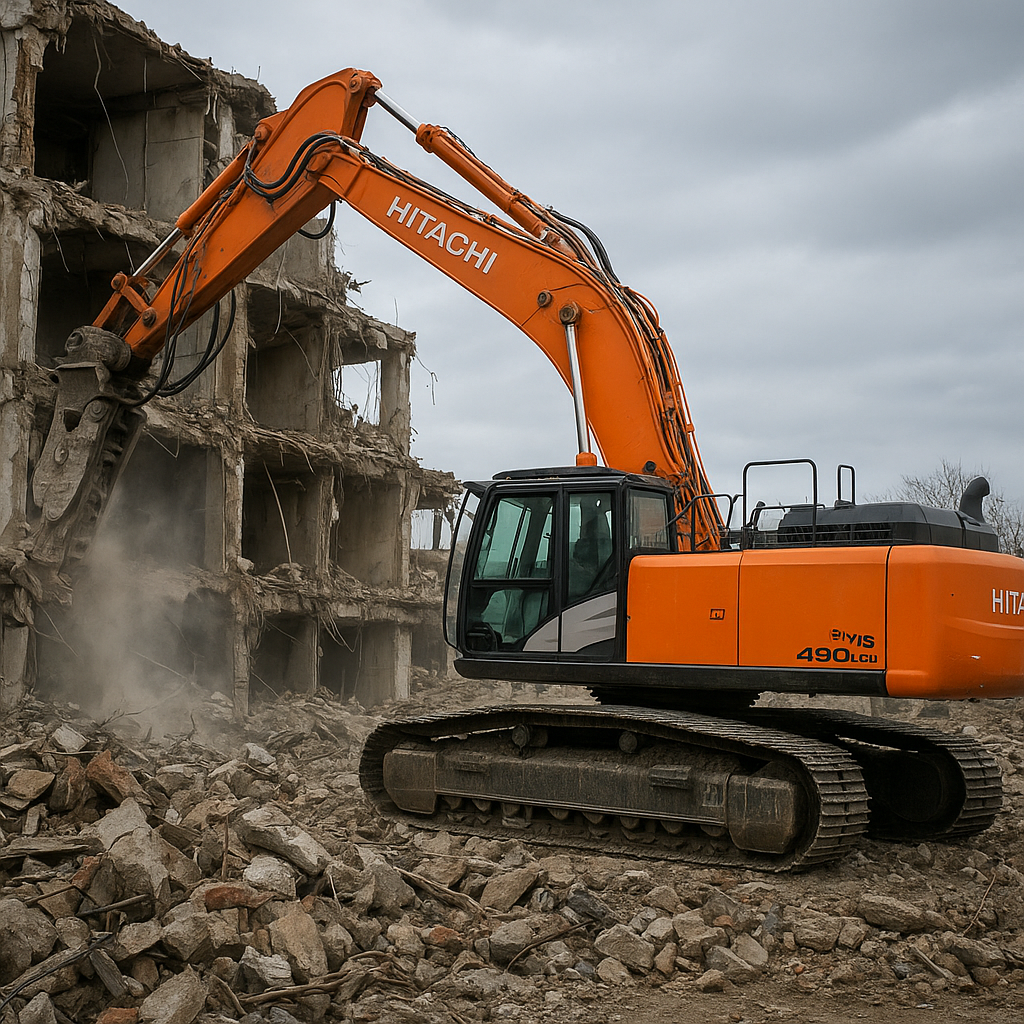
The Hitachi ZX490LCH-7 in its demolition configuration is a purpose-built heavy excavator widely used where controlled dismantling of large structures, selective material processing and site clearance are required. Combining Hitachi’s seventh-generation hydraulic systems with reinforced structural components and versatile attachment compatibility, this machine is designed to deliver high productivity, improved fuel efficiency and enhanced operator safety on demanding demolition jobs. The following article outlines its main applications, technical and operational highlights, typical attachments and configurations, plus tips for maximizing uptime and safety on demolition sites.
Design and technical highlights
The ZX490LCH-7 is part of Hitachi’s ZX-7 series and is tailored to the 40–50 tonne excavator class. In demolition spec the machine typically features a reinforced upper structure, strengthened boom and stick options, and specific counterweight and undercarriage packages to improve stability and balance when working with long-reach booms or heavy attachments. The chassis options commonly include a Long Carriage Heavy (LCH) undercarriage for increased track base and improved resistance to overturning moments during high-reach tasks.
Key technologies and design aspects that distinguish the ZX490LCH-7:
- Hydraulic performance: Advanced hydraulic circuits and pumps deliver responsive control for both fine manipulations and powerful demolition cycles. Proportional hydraulic flow management keeps attachment performance consistent while reducing unnecessary power draw.
- Engine efficiency: The machine is equipped with a modern, low-emission diesel engine compliant with current emissions standards (Stage V / Tier 4 Final in most markets), with electronic control systems for optimized fuel consumption and reduced idling.
- Reinforced structures: Boom, arm and undercarriage elements are strengthened and fitted with wear-resistant components in demolition packages to handle high bending and impact loads.
- Operator environment: Spacious cab with climate control, ergonomic joystick controls, a multifunction monitor and enhanced visibility aids (cameras, mirrors, optional prevention systems) to support long shifts under challenging site conditions.
- Serviceability: Grouped service points, easy-access filters, and long maintenance intervals reduce downtime and operating costs.
Applications and typical working environments
The ZX490LCH-7 demolition variant is used across a wide range of tasks where power, reach and reliability are required. Typical applications include:
- Structural demolition of mid- to high-rise concrete and steel-framed buildings, where controlled dismantling with hydraulic shears, crushers or pulverizers is needed.
- Industrial plant dismantling and site remediation — removing piping, columns, tanks and heavy equipment in chemical plants, refineries and manufacturing facilities.
- Selective demolition in urban environments where parts of structures must be removed without disturbing adjacent buildings, requiring precise attachment control and limited ground disturbance.
- Material handling and sorting at demolition recycling yards — loading trucks, separating recyclable material and feeding crushers.
- Bridge and civil demolition for taking down spans, abutments and concrete elements using specialty attachments and staged demolition methods.
Because the machine can be built with different boom and arm combinations, it adapts to both low-profile demolition tasks and long-reach dismantling. The LCH undercarriage helps maintain a low center of gravity and greater footprint, essential when using extended booms or heavy attachments at height.
Attachments and configurations for demolition
A major strength of the ZX490LCH-7 lies in its compatibility with a broad range of demolition-specific attachments. Choosing the right attachment and configuration is critical to maximize cycle efficiency and operator safety.
Common attachments
- Hydraulic shears for cutting steel beams and rebar.
- Hydraulic pulverizers and crushers for breaking concrete and processing material for recycling.
- Hydraulic breakers for heavy concrete and rock work.
- Demolition grapples for sorting, grabbing and handling debris.
- Rotating demolition heads and multi-processor units for selective dismantling and precision cutting.
- Clamshell buckets and sorting grabs for material handling at recycling facilities.
Boom/arm choices and reach considerations
Demolition-specific boom and arm packages are designed for either high reach (to work safely at greater heights) or for increased breakout force (shorter arms with heavier sections). High-reach configurations prioritize reach and clearance; heavy-duty short-reach setups prioritize force and durability for primary breaking operations. It is common for rental fleets and contractors to switch between several frames depending on project phase.
Performance, fuel economy and typical statistics
Exact manufacturer data can vary by market and configuration, but typical performance indicators for a machine in this class include:
- Operating weight range: approximately 48–53 tonnes depending on demolition package and counterweights.
- Net power: commonly in the region of 200–270 kW (about 270–360 horsepower), depending on engine tuning and emission regulation configuration.
- Hydraulic system pressure and flow optimised for high attachment performance; auxiliary circuits deliver continuous flow for shears and rotators.
- Fuel consumption: notable improvements versus earlier generations — many users report fuel savings of 5–10% under comparable working conditions, achieved through improved hydraulic management and engine controls.
- Uptime metrics: with factory service intervals and proper maintenance, typical availability on contract jobs often exceeds 90% during scheduled deployment periods; actual availability depends on operator practice and environment.
Manufacturers and fleet operators track metrics such as cycles per hour, attachment hydraulic flow usage, and fuel burn per tonne of material processed. For demolition contractors, productivity is often measured in tonnes of material removed per day; a machine in the ZX490 class, when paired with an efficient attachment and skilled operator, can move multiple hundreds of tonnes per day in sorting and feeding roles, or dismantle multi-story concrete elements progressively when performing structural demolition.
Safety features and operator considerations
Demolition work demands high standards of safety. The ZX490LCH-7 demolition variant includes several features and optional systems to support safe operation:
- ROPS/FOPS cab protection and reinforced glazing for protection from falling debris and impact.
- Optional cab guards and protective screens for side and front windows on high-risk projects.
- Camera systems and proximity sensors to assist visibility around blind spots, particularly useful on congested urban sites.
- Automatic travel and boom interlocks that prevent unsafe motions when attachments are engaged in specific positions.
- Diagnostic systems and onboard monitoring that alert operators to overheating, hydraulic leaks or service requirements early.
Training and site procedures are as important as machine features. Operators must be qualified in demolition techniques, attachment mounting, and safe load handling, and work alongside riggers and spotters when performing complex dismantling near utilities or adjacent structures.
Maintenance, serviceability and lifecycle costs
Lifetime cost of ownership for a demolition excavator depends heavily on maintenance practices, attachment wear and the operating environment. Hitachi’s designs for the ZX-7 series emphasize easy service access and long-life components:
- Grouped daily checks and easily accessible filter locations reduce inspection time.
- Extended service intervals on hydraulic oil and engine oils where permitted by operating conditions.
- Modular attachment mounting and robust quick-coupler options speed attachment changes and minimize downtime between tasks.
- Wear parts such as bucket teeth, shear blades, and crusher wear plates are consumable by design, and rotating scheduled replacement based on hours or tonnes processed will prolong structural elements.
Demolition applications are harsh on machines — frequent impacts, dust, abrasive material and heavy cyclical loading can accelerate wear. Preventive maintenance regimes that include frequent greasing, inspection of pins and bushings, and monitoring hydraulic oil condition will extend component life and preserve resale value.
Operational tips to maximize productivity
To get the most out of a ZX490LCH-7 on demolition sites, consider these practical guidelines:
- Match the attachment to the task — use shears for structural steel, crushers for concrete reduction, and grapples for sorting; mismatched attachments reduce efficiency and increase wear.
- Utilize the machine’s hydraulic flow controls and engine modes to balance speed and fuel use. ECO modes are valuable during light maneuvers or when precision is more important than power.
- Where possible, stage demolition to reduce handling — break in place, segregate materials and feed crushers steadily rather than making intermittent heavy cycles that spike fuel usage.
- Monitor track and undercarriage wear closely when operating on piles of debris; stray steel and compacted rubble can accelerate undercarriage degradation.
- Invest in operator training and routine safety briefings — skilled operators extract more productivity with fewer incidents.
Real-world uses and case examples
Contractors around the world deploy machines in the ZX490 class for mid-to-large scale demolition projects. Common scenarios include urban deconstruction where a machine with a compact footprint and long reach dismantles the upper floors while lower levels are prepared for removal, or industrial tear-downs where heavy crushers attached to a robust arm are used to reduce reinforced concrete to recyclable rubble. In many municipal projects, machines like the ZX490LCH-7 are used in combination — one machine equipped with a shear for steel separation and another with a crusher for concrete reduction — achieving a continuous workflow that prioritizes material reuse.
Benefits reported by contractors include reduced labour required for manual separation, improved site safety through mechanized removal, faster cycle times versus older machines, and lower overall fuel and maintenance costs on modern ZX-7 generation equipment.
Environmental and regulatory considerations
Modern demolition equipment must meet emissions regulations and often contributes to site environmental performance through improved fuel consumption and lower noise emissions. The ZX490LCH-7’s compliant engine packages and idle management systems help reduce CO2 and particulate emissions. When planning demolition, operators should also consider dust suppression, noise abatement and proper disposal or recycling of demolition waste to meet local environmental regulations.
Summary
The Hitachi ZX490LCH-7 configured for demolition is a capable and versatile machine for heavy dismantling, material handling and processing tasks. With reinforced structures, modern hydraulic systems, and a wide array of compatible attachments, it meets the performance, safety and efficiency demands of professional demolition contractors. Proper configuration, operator training and disciplined maintenance are essential to extract the best productivity and lowest lifecycle costs from this class-leading excavator.
)
)