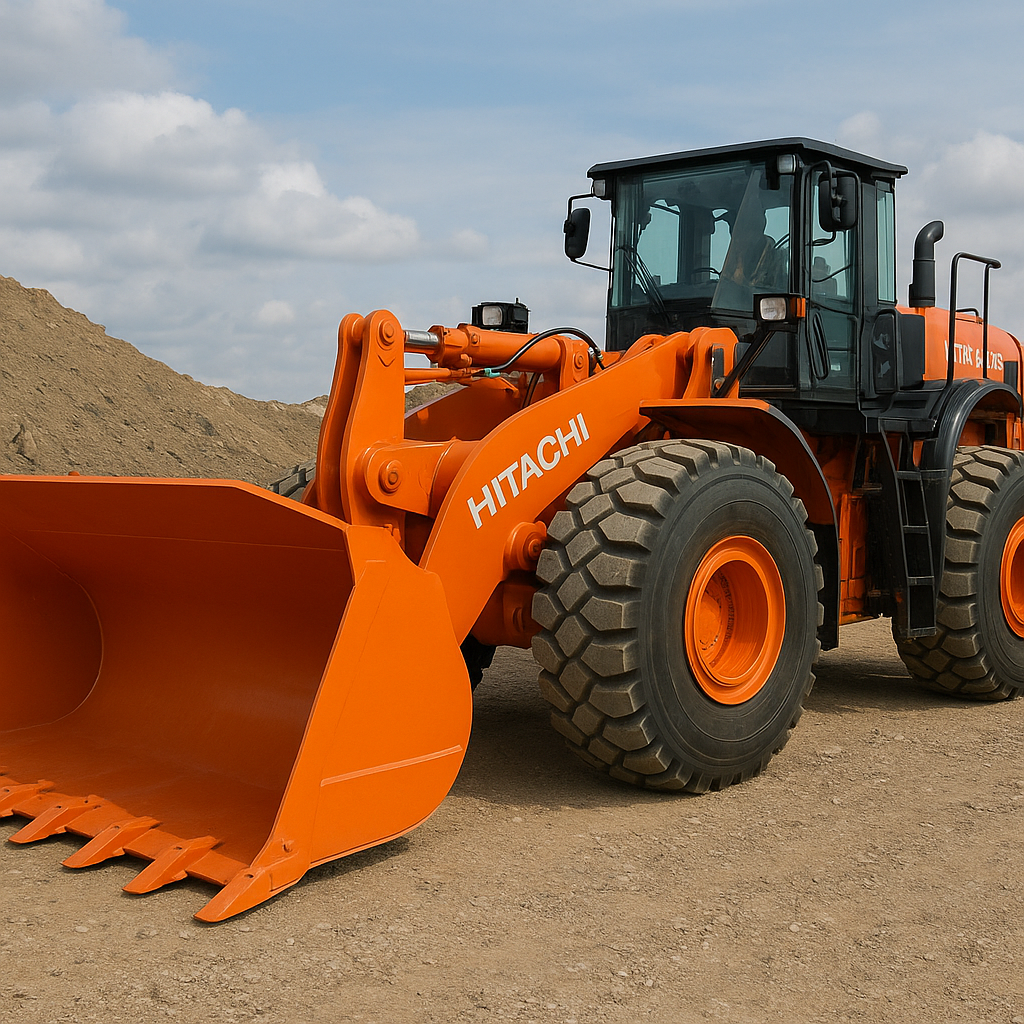
The Hitachi ZW550-6 is a heavy-duty wheel loader designed to serve demanding applications in quarrying, mining, bulk material handling and heavy civil engineering. Combining robust mechanical components with modern engine and hydraulic systems, this model aims to deliver high levels of productivity, reliability and operator comfort. The following article examines where the ZW550-6 is typically used, key technical and performance characteristics, operator features and maintenance considerations, and how this machine fits into the broader market of large wheel loaders. Where exact figures vary by configuration or market, approximate ranges and commonly reported data are given to provide a realistic picture.
Overview and Intended Applications
The Hitachi ZW550-6 is built for large-scale material-moving tasks where capacity and endurance matter. Typical environments and tasks include:
- Quarrying and aggregate production — loading haul trucks, feeding crushers, stockpile management.
- Open-pit mining and medium-scale mining operations — moving overburden, transferring material to crushers and conveyors.
- Ports and terminals — handling bulk cargo such as coal, ores, sand and grain.
- Construction and infrastructure — earthmoving for road, dam or large civil projects.
- Landfill and recycling facilities — pushing and loading heavy, abrasive wastes and recyclables.
- Snow removal and municipal fleet work — clearing heavy accumulations where large bucket capacity is useful.
In all these settings the ZW550-6 is chosen where a balance of high bucket capacity, robust undercarriage components and durable drivetrain design are priorities. Operators and fleet managers often select this class of machine to maximize cubic meters moved per hour and reduce the number of cycles required to fill haul vehicles.
Key Technical Characteristics and Performance
While exact specifications depend on region and optional packages, several characteristic technical attributes define the ZW550-6 class of wheel loader:
Engine and emissions
- The loader is typically powered by a high-displacement diesel engine tuned for heavy-duty torque and reliable operation under load. Engines used on similar Hitachi ZW-series loaders deliver power in the mid-200 to low-300 kW range (roughly 330–420 hp depending on rating and market).
- Emission control is achieved through modern aftertreatment systems (DOC/DPF and selective catalytic reduction with DEF/AdBlue where required), so machines meet stringent standards such as Tier 4 Final / Stage IV or regionally equivalent limits. Exact compliance depends on the market configuration.
Transmission and drivetrain
- Heavy-duty powershift transmissions with multiple forward and reverse gears are typical, offering smooth shifting under load and efficient torque management.
- Hydro-mechanical torque converters and robust axles with planetary final drives are standard in this class to provide the traction and reliability required for heavy loading cycles.
Hydraulics and lift system
- Advanced hydraulic systems provide precise control of bucket lift and tilt, with priority flow for steering and implement functions to maintain responsiveness under heavy work.
- High breakout and tear-out forces are a key performance metric for loaders used with heavy, compacted materials. For machines in this size bracket, breakout forces commonly fall into a high range sufficient to penetrate hard stockpiles and load large haul trucks efficiently.
Bucket capacity and cycle performance
- Bucket sizes for the ZW550-6 class usually range from approximately 4.5 m3 to 6.5 m3 for general-purpose buckets, with specialized buckets (light material, rock, high-tip) available to suit specific applications.
- Cycle times are optimized through balanced hydraulic and drivetrain tuning; productivity is commonly measured in cubic meters moved per hour and is heavily influenced by bucket selection, loading method (truck or hopper), and operator technique.
Typical dimensional and weight figures (approximate)
- Operating weight: commonly in the range of approximately 28,000–34,000 kg, depending on bucket and counterweight configuration.
- Breakout force: typical values for similar machines range upward of 200–260 kN, though exact numbers vary by bucket geometry and hydraulic settings.
- Travel speed: maximum travel speeds often approach 35–40 km/h, useful for site-to-site relocation without a transport vehicle.
- Fuel tank capacity: machines in this class usually hold several hundred liters of diesel (often around 400–600 L), enabling long operating shifts.
Note: The numerical ranges above are indicative and vary by exact model configuration and market. For precise values consult factory specification sheets or an authorized Hitachi dealer.
Design, Comfort and Operator Environment
Modern wheel loaders must combine ruggedness with operator ergonomics to sustain long shifts and high productivity. The ZW550-6 series focuses on both:
Cab and visibility
- Spacious, ROPS/FOPS-certified cabs with large glazed areas provide excellent all-around visibility to the bucket, ground and rear. Good sightlines help improve loading accuracy and reduce cycle times.
- Comfort features such as adjustable air-suspended seats, climate control, low-vibration mounts and intuitive instrument clusters reduce operator fatigue and improve focus.
Controls and ergonomics
- Ergonomic joystick or lever arrangements for lift and tilt allow precise control of the implement, while multi-function displays provide diagnostics, fuel usage and operating parameters.
- Optional features often include automated or semi-automated modes (such as auto-tilt or return-to-dig functions), which streamline repetitive tasks and improve consistency between operators.
Safety systems
- Standard and optional safety equipment can include rear-view cameras, 360-degree camera packages, LED lighting arrays for low-light operation, audible reverse alarms and proximity detection systems.
- Robust stairways, handrails and well-placed service points improve safe access to maintenance areas.
Fuel Economy, Emissions and Environmental Considerations
Fleet managers increasingly prioritize machines that balance power with reduced fuel consumption and emissions. The ZW550-6 class addresses these concerns through:
- Modern diesel engines with common-rail fuel injection or equivalent systems that optimize combustion and lower specific fuel consumption under load.
- Aftertreatment systems that reduce NOx and particulate emissions to meet regional standards, while maintaining performance. Machines may be supplied with DEF/AdBlue systems in markets enforcing Tier 4 Final / Stage IV regulations.
- Operational modes (eco, standard, power) that allow operators to select performance profiles according to the job: higher-power mode for digging and loading, economy mode for light travel or reduced-hour work.
Actual fuel consumption depends strongly on duty cycle, material density, bucket fill factor and operator technique. In heavy quarry or mining cycles, fuel use is significantly greater than in light-loading or stockpile management tasks. Monitoring tools and operator training are often the most cost-effective ways to reduce site fuel consumption.
Maintenance, Serviceability and Total Cost of Ownership
Reliability and low ownership costs are critical in large wheel loaders. The ZW550-6 range is engineered with serviceability in mind to reduce downtime:
Service access and routine maintenance
- Large service doors and separation of major components (engine, transmission, hydraulics) aid quick access for inspections and repairs.
- Centralized grease points, accessible filters and grouped service items shorten routine maintenance intervals and labor time.
Component durability
- Heavy-duty axles, reinforced boom and linkage, and wear-resistant bucket options extend component life in abrasive environments.
- OEM replacement parts and rebuild kits for major components (hydraulic pumps, torque converters, axles) help maintain uptime over long service lives.
Telematics and fleet management
- Hitachi’s connected solutions (telemetry and remote monitoring platforms offered in many markets) allow fleet managers to track operating hours, fuel consumption, fault codes and location data. These systems enable predictive maintenance, which reduces unplanned downtime.
- Data-driven maintenance planning can extend component life and optimize parts inventory, lowering the total cost of ownership (TCO).
Attachments and Customization
Flexibility in attachments increases the versatility and utilization of a ZW550-6 loader across different tasks:
- Different bucket types: general-purpose, rock, light-material, high-tip and multi-purpose buckets for handling diverse materials.
- Fork and bale clamps for timber, recycling and palletized loads.
- Optional quick couplers reduce downtime during attachment changes and expand the machine’s usable functions on site.
- Wear packages, heavy-duty undercarriage options and cold-weather kits allow configuration to demanding operating environments.
Market Position, Comparisons and Usage Considerations
The ZW550-6 competes in the large wheel loader segment against models from other global manufacturers. Key considerations for buyers include:
- Job match — choosing bucket size and breakout force appropriate to the material and loading target (e.g., haul truck size or hopper throat).
- Lifecycle cost — initial purchase price, fuel consumption, scheduled maintenance intervals and resale value all influence total ownership cost.
- Dealer network and service support — local availability of parts, trained technicians and telematics support is often decisive.
- Operator familiarity and training — productivity gains are realized when operators are trained to maximize bucket fill and minimize unnecessary travel.
Compared with smaller loaders, a ZW550-6 class machine reduces the number of cycles required to move the same volume of material, which can lower cycle-related wear on tires, brake systems and operator fatigue. Compared with larger mining-class wheel loaders, machines like the ZW550-6 offer a balance between capacity and operating flexibility for sites that do not require the very largest units.
Economic and Operational Metrics
When evaluating the ZW550-6 for a fleet, several quantitative metrics help determine its fit:
- Volume per hour — determined by bucket capacity, fill factor and cycle time. For example, a 5.5 m3 bucket at an 85% fill factor can move substantially more material per hour than a 3.5 m3 machine on the same cycle.
- Fuel cost per tonne moved — combining fuel consumption data with material density and loading efficiency gives a cost-per-tonne metric useful for comparing machines.
- Availability rate — percentage of scheduled hours a machine is operational. High availability (above 90–95%) is the target for critical operations.
Manufacturers’ published figures and independent field tests give the most reliable numbers for these metrics. Buyers should request jobsite-specific productivity estimates from dealers and, where possible, perform trials under representative conditions.
Real-World Considerations and Best Practices
To maximize the value from a ZW550-6 wheel loader, consider these practical recommendations:
- Match the bucket to the material: oversized buckets on dense, heavy material reduce productivity and increase fuel use; undersized buckets increase cycles and wear.
- Use telematics data proactively to schedule maintenance and coach operators on fuel-saving behaviors.
- Plan operations to minimize travel with a loaded bucket and to reduce unnecessary idling time.
- Invest in routine training to ensure consistent bucket-fill techniques and safe operation practices.
Summary
The Hitachi ZW550-6 sits in the segment of large, heavy-duty wheel loaders designed for high-capacity material handling in quarries, mines, ports and major civil projects. Its strengths lie in robust mechanical components, flexible attachment options, operator-focused cab design and modern engines tuned for a balance of power and emissions compliance. While precise specifications vary by market and configuration, typical features include bucket capacities in the 4.5–6.5 m3 range, operating weights commonly in the high 20-tonne to low 30-tonne class, and modern aftertreatment systems to meet regional emissions standards.
For fleet managers considering this class, the decision should be based on job-specific productivity estimates, lifecycle cost calculations and the local dealer and service network. Proper matching of bucket size to material, operator training and the use of telematics can significantly improve performance and reduce operating costs. By focusing on these areas, operators can leverage the ZW550-6’s design to move more material per hour with reliable and efficient service life.
)
)