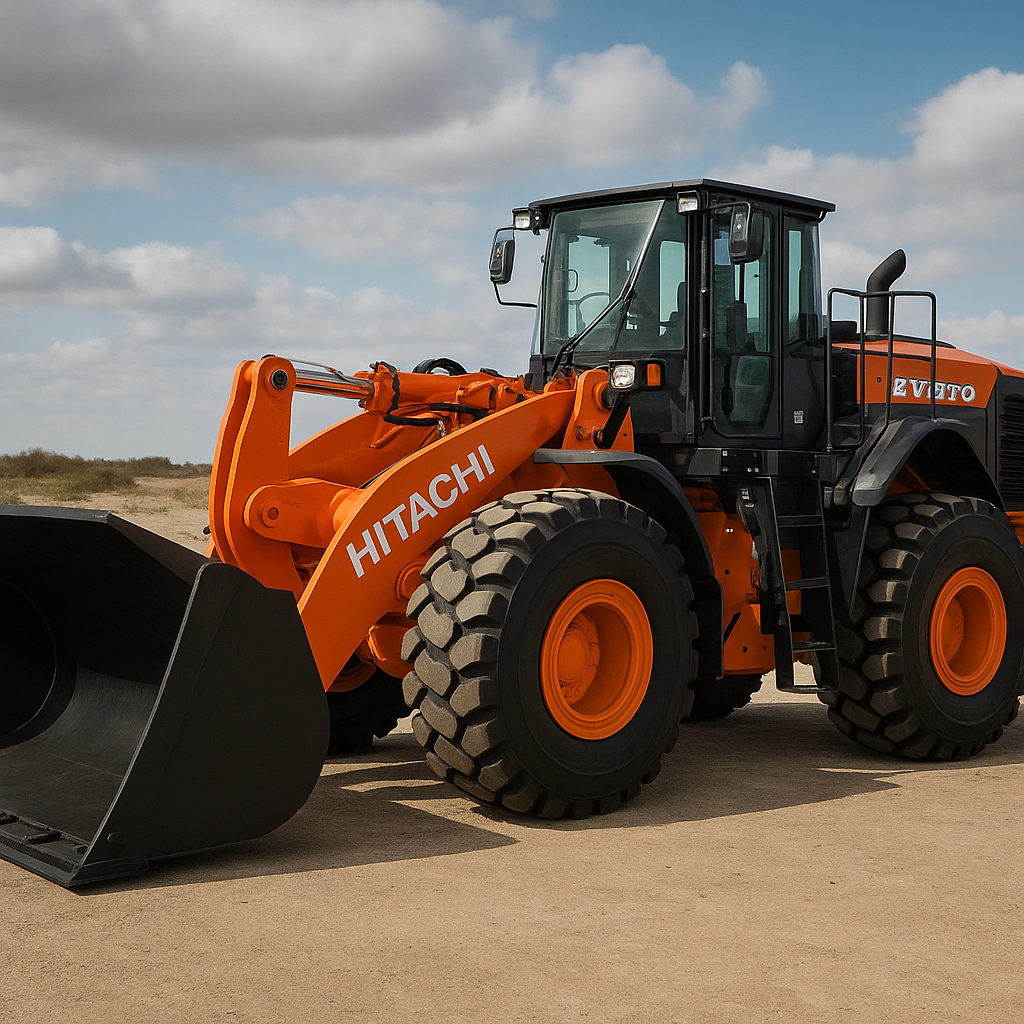
The Hitachi ZW370-6 represents a robust member of Hitachi’s wheel loader family, designed to combine power, durability and versatility for heavy-duty material handling. This article examines the machine’s design, typical specifications, practical applications, ergonomics, maintenance considerations and economic and environmental aspects. Wherever possible, statistical ranges and typical figures are provided to give a realistic picture of what operators and fleet managers can expect from the machine in the field.
Overview and design philosophy
The Hitachi ZW370-6 is a purpose-built wheel loader intended for demanding tasks such as quarry loading, bulk material handling, road construction and heavy-duty earthmoving. Hitachi’s ZW series focuses on striking a balance between raw power and operator-centric features. The ZW370-6 is engineered with a heavy-duty frame, reinforced lift arms and a drivetrain tuned to deliver consistent performance across a variety of materials and operating conditions.
Key design goals for this model include durability under continuous use, ease of maintenance to minimize downtime, and modularity to accept a range of attachments. Many design details emphasize the reduction of life-cycle cost by using proven components for the engine, transmission and hydraulic systems, while providing a comfortable working environment that improves productivity.
Technical specifications and performance
Exact specifications for the ZW370-6 can vary with region, optional packages and local emissions regulations. Below are typical performance figures and component descriptions that reflect common factory configurations and manufacturer data sheets for machines of this class.
Engine and powertrain
- Engine type: turbocharged diesel 6-cylinder, common-rail fuel injection (emissions-compliant versions available to meet Tier/Stage requirements).
- Rated power: commonly in the range of 180–220 kW (approximately 240–295 hp), depending on tuning and market-specific calibration.
- Torque: robust low-end torque characteristics to support heavy loading cycles and rapid response during digging and breakout operations.
- Transmission: direct-drive or power-shift transmission with multiple gears for road travel and working modes, often featuring an automatic shift mode to optimize performance and fuel consumption.
Hydraulics and breakout force
- The hydraulic system is designed to provide steady flow to the lift and bucket functions, enabling smooth cycle times and precise control.
- Hydraulic pump capacity and pressure are tuned to match the loader arm geometry—this helps maximize breakout force for tough digging and loading.
- Typical hydraulic flow rates and pressures will vary by configuration; auxiliary hydraulic circuits may be available for attachments.
Capacities and dimensions
- Operating weight: generally ranges from about 20,000 to 28,000 kg depending on bucket size, counterweights and optional features.
- Bucket capacity: typical standard buckets for this size class range from roughly 3.0 to 5.5 m³, with specialized buckets (rock, coal, light-material) affecting payload and cycle time.
- Fuel tank capacity: often in the 300–400 L range for extended operating shifts without refueling.
- Breakout force and tipping load: these values depend on the bucket and arm configuration. Typical maximum breakout forces for loaders in this class can be in the dozens to low hundreds of kilonewtons, designed to handle compacted material and frozen ground when required.
Because regional variants and optional equipment influence final figures, fleet managers should consult local Hitachi representatives or official specification sheets for precise numbers before purchase or deployment.
Applications and industries
The ZW370-6 is versatile and used across many sectors. Its capabilities make it a common choice for operations that require a combination of lifting capacity, traction and continuous-duty reliability.
- Quarries and aggregates: High breakout force and large bucket options make it suitable for loading haul trucks, handling blasted rock and performing stockpile management.
- Construction and earthmoving: The loader excels at moving large volumes of soil, aggregate and fill materials during site preparation, base construction and roadworks.
- Mining (surface operations): Used in small-to-medium surface mining pits for ore handling, stockpile reclaim and light hauling between conveyors and crushers.
- Ports and terminals: Bulk handling of materials like coal, ores and fertilizer benefits from the machine’s capacity and adaptability to different bucket types.
- Recycling and waste: With specialized grapples and buckets, the ZW370-6 can be applied to large waste transfer stations and recycling centers that require robust material handling.
Its balance of size and power makes the machine a go-to option when operators need a loader that can be productive without the transport and site constraints of much larger models.
Operator comfort, safety and controls
Operator environment and ergonomics are critical for sustained productivity. The ZW370-6 incorporates cabin design and visibility features intended to reduce fatigue and improve situational awareness.
- Cab comfort: Spacious, climate-controlled cabins with adjustable seating, low-vibration mounts and intuitive control layouts support longer shifts with less fatigue.
- Visibility: Large glazed panels, strategic mirror placement and optional camera systems improve forward and rear visibility, lowering the risk of accidents during loading and maneuvering.
- Controls and displays: Electronic displays provide engine diagnostics, fuel economy readouts and maintenance reminders. Joystick or lever layouts are optimized for predictable hydraulic response.
- Safety systems: Features commonly include ROPS/FOPS-certified cabs, secondary steering lockouts, and optional advanced systems like load-sensing alarms and telematics integration for remote monitoring.
These human-centered features help maximize effective operating hours and reduce the likelihood of costly accidents or premature component wear due to operator error.
Maintenance, uptime and lifecycle cost
One of the strongest selling points for machines in this class is the combination of simple maintenance procedures and high component service life. The ZW370-6 is designed to reduce total cost of ownership (TCO) through several strategies:
- Accessible service points: Ground-level access to routine checkpoints—oil, filters, coolant—reduces downtime and simplifies preventive maintenance.
- Modular components: Use of standardized parts for major systems (engine, transmission, axles) supports easier repairs and parts availability.
- Telematics and diagnostics: Optional factory telematics allow fleet managers to track fuel consumption, idle time, hours to service and fault codes to plan maintenance proactively.
- Durability features: Reinforced boom sections, high-strength pins and bushings, and robust axles extend the intervals between major rebuilds.
When comparing machines, it’s important to weigh initial purchase price against operating hours, fuel consumption and the expected resale value. Machines maintained according to manufacturer schedules typically demonstrate better residual values and lower per-ton handling costs over multi-year ownership.
Attachments and versatility
One reason wheel loaders remain central equipment on many sites is their ability to adapt via attachments. The ZW370-6 supports a variety of attachments that expand its utility beyond straight loading tasks.
- Buckets: General-purpose, rock, high-volume and light-material buckets allow matching the machine to the material and job cycle.
- Forks and pallet forks: Transform the loader into a material-handling machine for loading pallets or moving packaged goods.
- Grapples and multi-purpose buckets: Useful for demolition, scrap handling and waste management applications.
- Snow pushers and blowers: Seasonal attachments make the loader suitable for municipal snow clearing and winter maintenance.
Quick-coupler systems reduce attachment-change time, enabling the machine to remain productive throughout multi-task shifts. Properly matching attachments to the loader’s rated capacities is essential for safety and to preserve structural integrity.
Fuel efficiency, emissions and environmental considerations
Fuel consumption is a major operating cost for heavy equipment. The ZW370-6 incorporates multiple strategies to improve fuel efficiency and reduce emissions:
- Engine technologies such as common-rail injection and electronic engine management improve combustion efficiency and lower specific fuel consumption.
- Automatic idle shutdowns and engine idle management reduce wasted fuel during nonworking periods.
- Emissions controls (DOC, DPF, SCR) are often integrated to meet local Tier/Stage regulations, balancing power delivery with environmental compliance.
Operationally, fuel-efficient driving techniques, correct tire pressures, matched bucket sizing and regular maintenance (air and fuel filter changes) all contribute to reduced consumption. Moreover, telematics monitoring helps identify opportunities to cut idle time and improve cycle efficiency.
Economic and productivity considerations
From a fleet management perspective, productivity is measured by tons moved per hour, fuel consumption per ton and machine uptime. The ZW370-6’s value proposition is rooted in:
- High cycle efficiency: Short lift and dump cycles combined with optimized bucket sizes enable strong material throughput.
- Durability: Heavy-duty components reduce unscheduled repairs and extend service intervals.
- Resale and lifecycle value: Machines maintained under manufacturer guidelines often retain stronger market value after several years of service.
Examples of productivity metrics will vary by site and material. For instance, in quarry loading with a matched bucket and haul-truck combination, loaders in this mid-to-large class can move several thousand tons per shift under ideal conditions. Fleet planners should conduct trial runs or consult OEM productivity calculators to estimate site-specific output.
Common limitations and field considerations
No machine is perfect for every task. Potential limitations to consider include:
- Transport and maneuverability: Larger loaders may require special permits or transport equipment for long-distance moves between sites.
- Site constraints: Tight urban sites with limited swing radius or narrow access routes can limit the effectiveness of a heavy loader.
- Material matching: Using too-large a bucket on tight or dense material can reduce cycle efficiency and increase tire wear; conversely, undersized buckets can underutilize engine power.
Matching the machine to the job—considering payload, cycle time and site layout—remains the most important factor when assessing suitability.
Future developments and lifecycle upgrades
Construction equipment continues to evolve around electrification, advanced telematics and automation. For the ZW370-6 platform and similar models, likely developments include:
- More refined telematics for predictive maintenance and autonomous scheduling of service intervals.
- Hybridization or electrified drivetrains for reduced fuel consumption and lower emissions in urban or regulated environments.
- Enhanced operator assistance systems, such as weighing systems, load optimization tools and semi-autonomous machine controls to reduce operator variability and increase throughput.
Retrofit programs and software upgrades can extend the useful life of existing machines, allowing fleets to adopt gradual improvements without full fleet replacement.
Summary
The Hitachi ZW370-6 is a versatile, heavy-duty wheel loader designed to meet the demanding needs of quarrying, construction, mining and bulk-handling operations. Its combination of a powerful engine, robust hydraulics, flexible attachments and operator-focused features provide a platform aimed at maximizing productivity and minimizing total ownership cost. While exact specifications vary by configuration and market, typical figures show a machine capable of handling large bucket capacities, substantial operating weights and extended operating shifts with competitive fuel efficiency. For optimal results, purchasers and operators should align bucket selection, maintenance plans and telematics usage with the specific materials and cycle characteristics of their sites.
If you need precise factory specifications for a particular regional model, I can provide a compiled table of official figures (engine model, rated power, operating weight, bucket options, breakout force and fuel capacity) for the ZW370-6 as sold in major markets. Provide the target country or emissions stage and I will tailor the data accordingly.
)
)