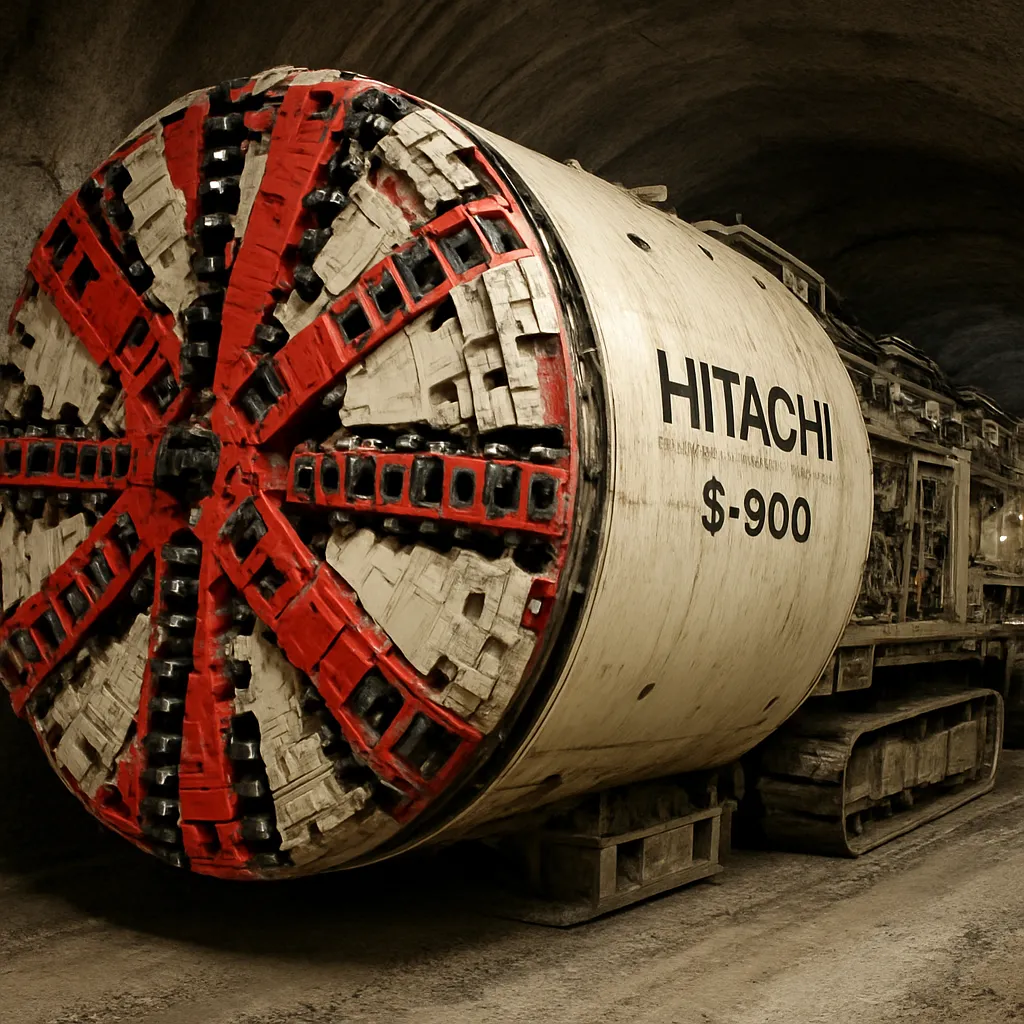
The Hitachi TBM S-900 is a representative example of modern mechanized tunneling technology developed for efficient, safe, and precise underground excavation. In this article we explore the machine’s design philosophy, typical applications, operational principles, and noteworthy technical aspects. We will also discuss performance ranges, logistical and environmental considerations, and practical tips for planning projects that use a machine of this class. Where precise manufacturer data are required, readers should consult Hitachi or the supplying contractor; the figures below are presented as typical ranges and illustrative values based on comparable TBM classes.
Design and core technical features
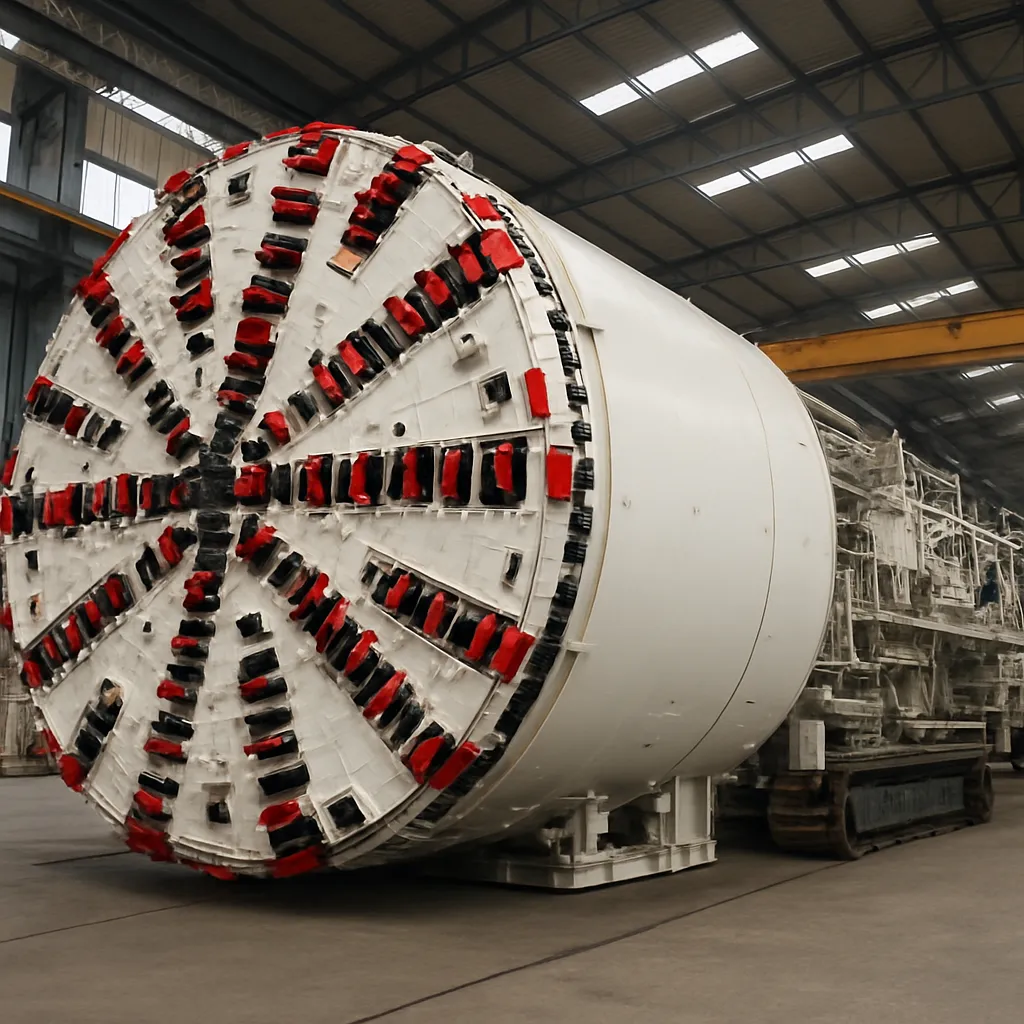
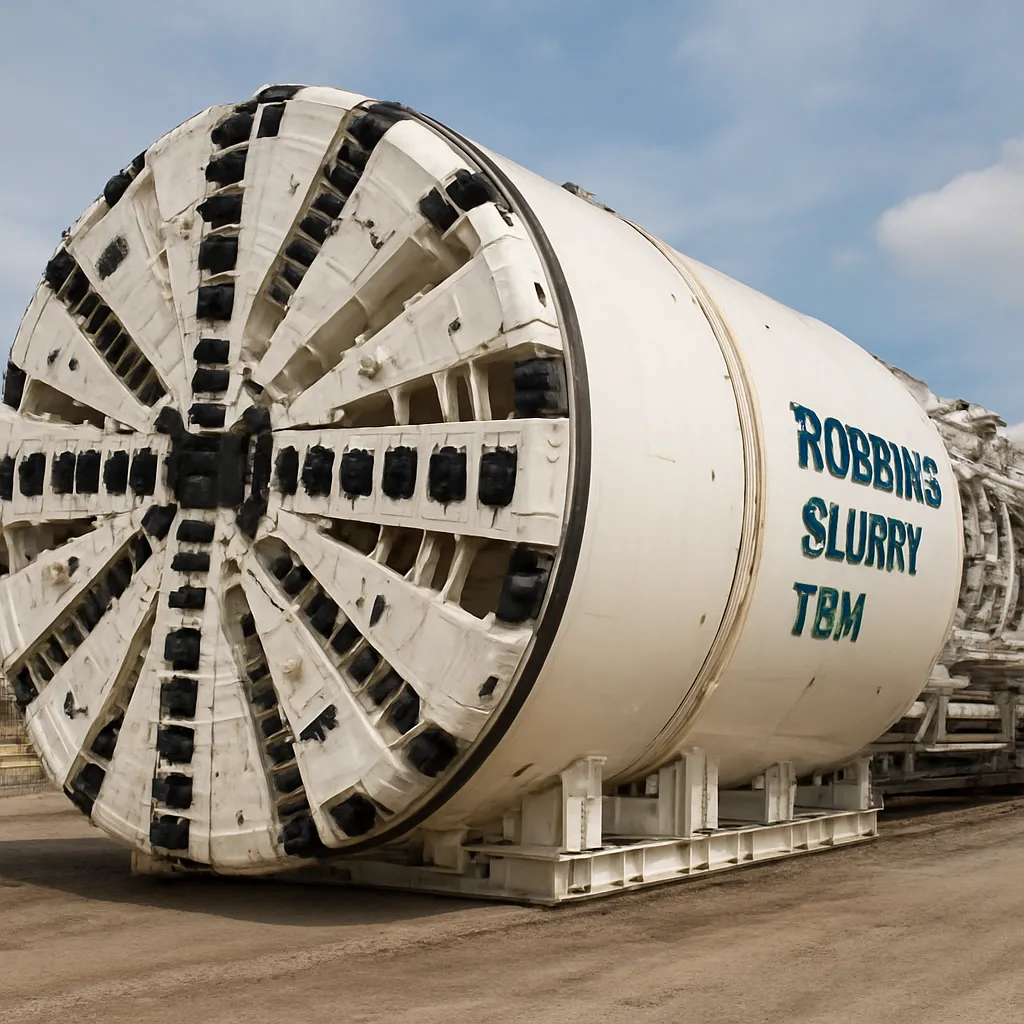
At the heart of the S-900 lies a robust combination of mechanical and hydraulic systems engineered to transform rock and soil into safe, lined tunnels with minimal surface disruption. The term TBM (tunnel boring machine) refers to the integrated assembly that includes the cutterhead, drive motors, thrust cylinders, muck handling conveyor systems, segment erector, and ancillary systems for ventilation, power, and control. The S-900 is configured to operate as either an earth pressure balance (EPB) machine or a slurry shield, depending on ground conditions and project requirements — the designation S-900 typically implying a machine intended for medium-to-large diameters.
Key subsystems include:
- Cutterhead and cutting tools — designed to accommodate disc cutters for rock or carbide-tipped cutters and scrapers for mixed-face conditions. Cutterhead design is optimized for balance between cutting efficiency and tool longevity.
- Drive and powertrain — electrically driven main motors provide rotational torque; variable frequency drives (VFDs) and advanced control logic modulate torque and speed to match geology and maintain steady progress.
- Thrust and guidance — hydraulic jacks provide reaction thrust against the rear gantry and shield to push the cutterhead forward. Guidance systems (laser and inertial) keep the machine on the designed alignment with high precision.
- Muck management — conveyors, slurry pipelines, or screw systems are sized for continuous spoil removal; optimal muck handling is critical to productivity and site logistics.
- Segment handling and lining — integrated erectors place precast concrete segments to form the permanent lining, ensuring rapid ring closure and ground support during excavation.
Materials and structural considerations
The S-900’s shield and structural components use high-strength steels and wear-resistant linings in key areas to resist abrasive wear and reduce maintenance downtime. Wear liners, replaceable wear plates, and modular cutterhead components minimize replacement times. Corrosion protection and coatings are specified for marine or chemically aggressive environments.
Applications and where the S-900 excels
The S-900 is suited for a wide range of tunneling projects, particularly where precision, high output, and environmental control are important. Typical applications include:
- Urban metro and rail tunnels requiring low surface settlement and accurate alignment control.
- Water conveyance tunnels and large-diameter sewer systems where continuous lining and watertightness are critical.
- Road tunnels, service and utility tunnels, and under-river or under-sea crossings where sealed shields and slurry systems mitigate water ingress.
- Hydropower tunnels and adits in mixed rock and soil profiles, especially where transition zones exist.
In urban environments the S-900’s ability to control face pressure and maintain continuity of lining installation reduces risks associated with building settlement and utility impact. The machine’s modularity allows it to be adapted for shorter drives with frequent retrieval or for long buried alignments spanning several kilometers.
Operational workflow and construction process
Using an S-900 on a tunneling job involves a sequence of closely coordinated operations from launch to breakthrough. The broad steps include site preparation and launch pit construction, machine assembly, tunneling and segmental lining assembly, and reception pit and disassembly. Each phase requires specialized teams and equipment:
Launch and assembly
Assembly typically occurs inside a reinforced shaft or launch cavern. The shield is advanced piece-by-piece and aligned on the planned axis. Power, slurry/waste pipelines, ventilation ducts, and instrumentation are connected before cutting begins. Prestart checks of hydraulic systems, guidance systems, and cutterhead instrumentation are essential.
Tunneling cycle
A typical excavation cycle for a machine like the S-900 comprises:
- Face support: maintaining controlled pressure at the working face (EPB or slurry pressure) to stabilize overburden and reduce settlement.
- Cutterhead advance: rotation and advance under controlled torque and speed to cut the face.
- Muck removal: continuous extraction by conveyor or slurry pipeline to surface muck treatment facilities.
- Ring erection: installation of segmented concrete lining immediately behind the shield with precise alignment and gasketed joints where required.
- Grouting: annulus backfilling ensures long-term stability and water sealing.
Cycle time is influenced by geology, machine condition, segment erection time, and site logistics. In favorable ground conditions, modern TBMs may achieve tens of meters per day; in difficult mixed-face conditions the progress may drop to a few meters per day.
Performance, productivity and statistical ranges
Exact specifications for the Hitachi S-900 should be obtained from the manufacturer or project documentation; however, typical performance and physical ranges for TBMs in the 7–12 m nominal diameter class — which the S-900 designation commonly suggests — are useful for planning:
- Nominal cutterhead diameter: Often centered around 8–10 m for an “S-900” style machine if the number relates to diameter in centimeters (e.g., 9.00 m). Confirm with supplier for the precise value.
- Drive power: Main drive motors commonly range from ~1,500 kW to 6,000 kW depending on rock hardness and torque requirements.
- Thrust capacity: Total thrust can vary widely; common values for medium-to-large TBMs lie in the range of tens to low hundreds of meganewtons (MN) distributed across multiple hydraulic cylinders.
- Advance rates: Typical average daily advance in favorable conditions might be 10–30 m/day; in mixed or difficult ground the rate may be 1–10 m/day. Peak short-term advances can be higher during exceptional conditions.
- Weight and length: Assembled TBM weight may range from several hundred to a few thousand tonnes; machine length can exceed 50 m when including backup systems for long drives.
- Cutter tool life: Bit and disc cutter life is largely geology-dependent; planned interventions for cutter replacement are scheduled on the basis of wear monitoring and run-lengths applied on a project-by-project basis.
Productivity statistics are also strongly affected by logistical factors—shaft access, spoil removal capacity, segment production and storage, and continuous maintenance planning. Projects with mature supply chains and experienced crews can demonstrate significant productivity gains compared to one-off or first-time TBM operations.
Geology, ground conditioning and machine selection
One of the S-900’s strengths is its adaptability to variable ground conditions. Proper geotechnical investigation informs whether the machine will be configured as an EPB or slurry shield, and which cutterhead and face-support systems are required.
- Soft soils and high groundwater content usually favor EPB machines with conditioning agents (polymers) to stabilize the muck and control face pressure.
- Highly permeable sands or cobble-bearing alluvium often call for slurry systems that transport cuttings in a bentonite or polymer slurry circuit to surface separation plants.
- Hard rock drives require robust disc cutter systems and often higher torque and thrust ratings; mixed-face conditions necessitate hybrid cutterheads and flexible spoil handling systems.
Ground improvement techniques—jet grouting, compressed air, freeze methods, chemical grouting—may be used ahead of tunneling to improve face stability or reduce risk in particularly challenging stretches.
Maintenance, life cycle and logistics
Long-term performance of an S-900-class TBM depends on planned maintenance regimes and rapid response to wear. Critical maintenance activities include cutter inspection and replacement, hydraulic system checks, bearing monitoring, and regular non-destructive testing of structural components.
- Condition monitoring systems track vibration, torque, thrust, and cutterhead speed; predictive maintenance strategies reduce unplanned downtime.
- Onsite spare parts logistics—critical spares such as cutterbits, seals, hydraulic components, gaskets, and wear liners—must be staged to minimize interruptions.
- Refurbishment intervals: Depending on total drive length and ground abrasiveness, major overhauls may be required every few kilometers, often coinciding with intermediate retrieval or during long layovers.
Life-cycle cost planning should include the capital cost of the TBM (or rental), transport and assembly, operating power, segment production, spoil treatment, and end-of-life disposal or resale. Modern TBMs are often refurbished and redeployed across multiple projects, making resale and refurbishment an important economic consideration.
Safety, environment and community impact
Safety is integral to TBM operation. The S-900 incorporates multiple layers of protection: redundant hydraulic systems, emergency shutdowns, pressure relief valves, and escape routes for crews. Guidance and monitoring systems reduce the risk of uncontrolled deviation and surface settlement which could threaten nearby structures.
Environmental considerations include mitigation of spoil disposal impacts, slurry and bentonite management, dust and noise control at launch and reception sites, and groundwater management. Effective community engagement and transparent monitoring programs help maintain social license to operate in urban settings.
Automation, remote monitoring and digitalization
Contemporary TBMs like the S-900 integrate digital control systems for improved precision and reduced human risk. Features commonly found include:
- Real-time telemetry of torque, thrust, penetration rate and face pressure to centralized control rooms.
- Automated cutterhead speed and advance control to optimize wear and energy consumption.
- 3D guidance and inertial navigation to ensure alignment over long runs without surface intervention.
- Data analytics for predictive maintenance, productivity optimization, and post-project records.
These technologies contribute to safer tunneling by providing early warning of changing ground conditions, enabling adaptive control strategies, and reducing the need for manual inspection in hazardous zones.
Case examples and hypothetical applications
While specific project deployments of the S-900 should be verified with project owners and Hitachi, illustrative applications show how a machine of this class can deliver value:
- Urban metro extension under dense downtown districts: the S-900 configured as an EPB maintains face support and limits settlement, enabling tunneling beneath utilities and heritage structures.
- Under-river road tunnel: a slurry-configured S-900 reduces water ingress risk while enabling longer continuous drives between shafts, minimizing marine dredging and bed disturbance.
- Large-diameter water conveyance tunnel for a hydroelectric scheme: high advance rates and immediate segmental lining installation shorten construction schedules and reduce the time the mountain face remains exposed.
Such projects highlight the machine’s impact on schedule compression, safety improvements, and reduced surface disruption compared to conventional drill-and-blast or NATM methods.
Planning considerations and procurement
When procuring a TBM like the S-900, clients and contractors should plan for:
- Comprehensive geotechnical investigation and risk allocation in contracts to deal with unforeseen ground conditions.
- Detailed logistics planning for transport, assembly, and spoil management, including road access and shaft sizing.
- Contract provisions for machine performance incentives and penalties tied to progress and quality metrics.
- Collaboration with experienced TBM operators and maintenance teams; availability of manufacturer support during the entire project duration is important for reliability.
Summary and final observations
The Hitachi S-900 represents the capabilities of modern mechanized tunneling machines: adaptable to a range of geologies, capable of precise alignment control, and designed to support continuous, high-quality segmented lining installation. Key benefits include reduced surface impact in urban settings, improved worker safety, and the ability to maintain steady rates of excavation in varied ground conditions. For planners and contractors, successful application depends as much on the preparatory geotechnical work, logistics, and maintenance planning as on the machine itself.
The information above emphasizes typical technical principles, operational practices, and planning advice relevant to a TBM of the S-900 class. For exact performance data, component specifications, and availability, contact Hitachi or the OEM’s TBM division to obtain manufacturer datasheets, case histories, and project-specific calculations.
)
)