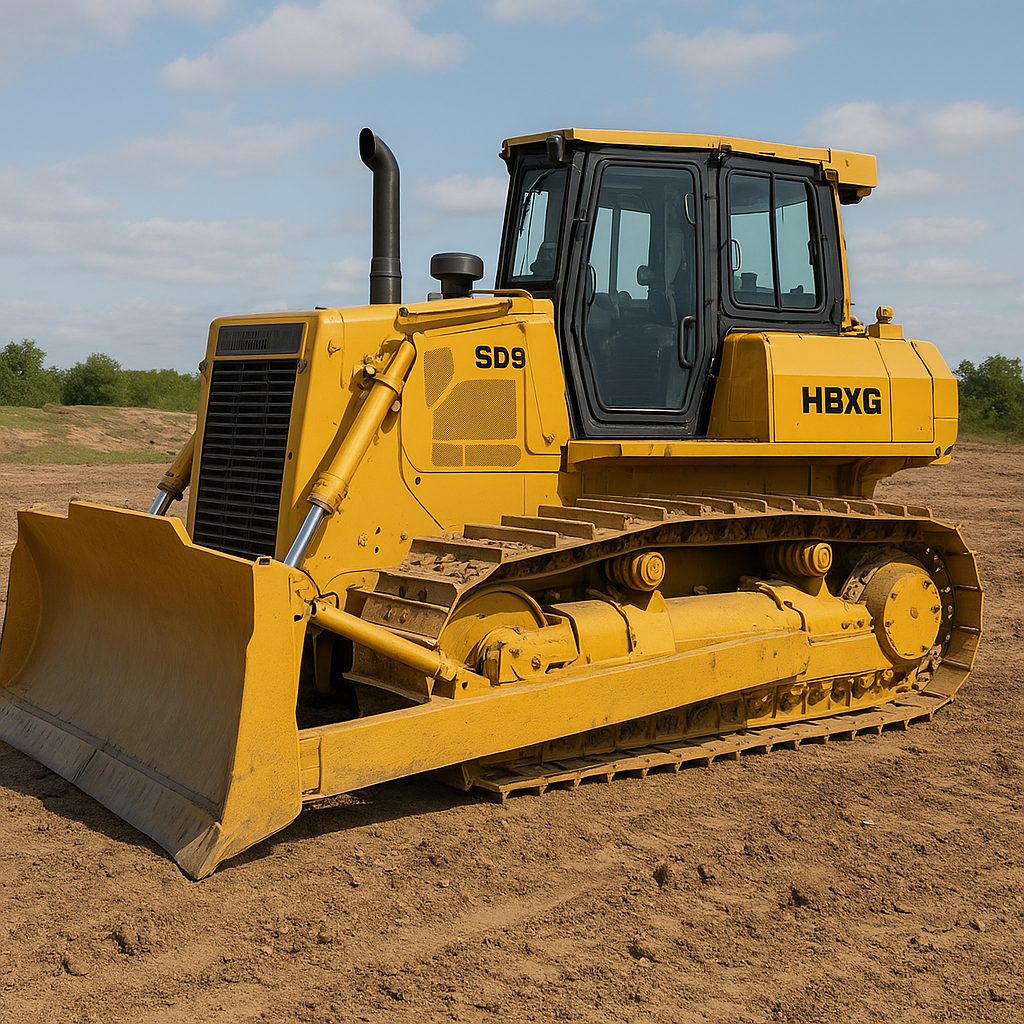
The HBXG SD9 dozer is a compact-to-medium sized crawler tractor designed to deliver balanced performance across a wide range of earthmoving tasks. Built with a focus on durability and straightforward serviceability, this model appeals to contractors, municipal operators and firms working in site preparation, landscaping, pipeline construction and similar sectors. In the following sections you will find an overview of the machine’s design, typical applications, operational strengths, maintenance considerations and market-related information. The article emphasizes practical details and useful metrics commonly associated with the SD9 class of dozers, along with operational recommendations for maximizing uptime and long-term value.
Design and technical features
The HBXG SD9 is engineered as a dependable work machine with a compact footprint that supports both maneuverability and stable soil engagement. Most SD9-class machines are characterized by a blend of mechanical simplicity and robust components to minimize downtime and ease field repairs.
Powertrain and engine
The SD9 typically uses a diesel engine tuned for torque at low-to-mid RPMs, favoring pushing power over high-speed operation. Typical engine outputs reported for machines in this class range from approximately 70 to 110 kW (roughly 95–150 hp), depending on the year, market and any optional engine packages. The emphasis is on continuous torque for effective dozing and raking operations.
Transmission and drive
Transmission systems for the SD9 are commonly hydrostatic or power-shift planetary drives with multiple forward and reverse speeds. The driveline is designed to deliver consistent track torque and to simplify operator inputs. A heavy-duty final drive and sealed rollers help protect the system from contamination and abrasion.
Undercarriage, tracks and blade
- Undercarriage: The undercarriage is built to tolerate abrasive environments with replaceable wear parts such as track shoes, sprockets and rollers. Typical operating weights for SD9-type dozers range from about 9 to 12 tonnes, depending on blade and attachments.
- Tracks: Track shoe widths are often configurable (for example 400–600 mm) to balance flotation and ground pressure. Wider shoes reduce ground pressure for soft soils, while narrower shoes improve traction and maneuverability on firm ground.
- Blade: Blade capacity commonly varies from about 1.5 to 3.0 cubic meters depending on blade type (straight, angle, or semi-U). Blade controls are typically hydraulic with pilot or full-flow assist systems, enabling precise grading and dozing operations.
Hydraulics and attachments
Hydraulic systems on the SD9 are designed for reliability and moderate work rates. They power blade lift/tilt/angle, optional ripper cylinders and auxiliary implements such as winches or hydraulic mulchers. Attachment compatibility makes the SD9 a versatile platform capable of handling rippers, winches, mulchers, and specialized blades for snow removal or land reclamation.
Cab and operator environment
Cab design balances protection and visibility. Many SD9 configurations include a rollover protective structure (ROPS) and optionally a certified FOPS. The operator station prioritizes simple, intuitive controls and clear sightlines to the blade and tracks. Operator comfort features you may find include adjustable seating, climate control (in enclosed cabs), and vibration dampening to reduce operator fatigue during long shifts, contributing to improved productivity.
Applications and typical use cases
The HBXG SD9 is commonly deployed where a combination of power, low ground disturbance and agility are required. It is especially well-suited for projects where a larger dozer would be inefficient or where transport and maneuvering in confined sites matter.
Construction and site preparation
- Earthmoving for building pads and foundations
- Backfilling trenches and grading access roads
- Clearing and leveling small-to-medium construction sites
Agriculture and land management
- Field leveling and drainage preparation
- Small-scale land reclamation and pond construction
- Removal of tree stumps and debris when equipped with a winch or mulcher
Utilities and pipeline works
The SD9’s compact size and steady push force make it a good fit for pipeline right-of-ways, trench backfill and grading around utility installations. Its ability to work in relatively constrained corridors without excessive soil compaction is a key benefit.
Road building and maintenance
On secondary roads, rural tracks and construction access roads, the SD9 can be used for grading, shoulder work and snow removal (with appropriate blade options). It provides a cost-effective solution where a larger machine would be over-specified.
Forestry and environmental work
With appropriate attachments (rippers, mulchers) the SD9 can handle site preparation for reforestation, invasive vegetation management and roadside clearing. Its lower ground pressure options are useful in minimizing environmental disturbance.
Performance characteristics and operational strengths
Operators and fleet managers often choose the SD9 for a combination of reliability, predictable operating costs and a favorable balance between power and compactness. Below are some of the performance attributes that are typically highlighted for this class of machine.
Push force and traction
SD9 machines are designed to deliver substantial drawbar pull relative to their size. The tractable power delivery of the diesel engine combined with a robust undercarriage provides strong traction for pushing heavy loads, grading, and light ripping. This makes them effective at moving moderate volumes of material without the fuel and transport penalties of larger dozers.
Fuel efficiency and operating economy
Smaller dozers like the SD9 often achieve better fuel economy per hour than larger counterparts when performing tasks appropriate to their class. Typical fuel consumption depends on duty cycle, engine tuning and operator behavior, but many users report hourly consumption in the range of 8–15 liters per hour under normal work conditions. Properly matched tasks maximize the SD9’s cost-effectiveness.
Maneuverability and site adaptability
Relatively narrow track width options and compact overall dimensions allow the SD9 to operate in tighter spaces, reducing the need for extensive site clearing. This makes it a popular choice for urban redevelopment, residential construction and constrained industrial sites.
Attachment versatility
The SD9 supports a range of attachments that expand its utility beyond pure dozing. Common add-ons include single- or multi-shank rippers for breaking compacted layers, angle blades for finishing work, and winches for forestry and recovery tasks. The ability to swap implements quickly enhances fleet flexibility.
Maintenance, troubleshooting and lifecycle management
Sound maintenance practices extend component life and reduce operating costs. The SD9 benefits from straightforward service access and a modular approach to many wear components.
Routine maintenance essentials
- Daily checks: engine oil level, coolant, hydraulic oil, track tension and visual inspection for leaks or loose hardware.
- Greasing: regular lubrication of pivot points, rollers and idlers to prevent premature wear.
- Air and fuel filters: replace on schedule to protect the fuel system and turbocharger where equipped.
- Undercarriage inspections: monitor track shoe wear, sprocket tooth condition and roller seals.
Common wear items and their management
Typical components that require periodic replacement include track shoes, bushings, pins, idler seals, blade cutting edges and ripper teeth. A planned spare-parts inventory tailored to the machine’s work profile can significantly shorten downtime. For operators working in abrasive or highly corrosive environments, more frequent inspection intervals are recommended.
Troubleshooting typical issues
- Loss of hydraulic response: check for low hydraulic fluid, clogged filters or air in the system.
- Excessive smoke or power loss: inspect fuel system, injection timing and turbocharger health.
- Track slippage or uneven wear: verify track tension, check for misaligned rollers or damaged sprockets.
Lifecycle considerations and rebuild options
With robust maintenance, SD9 dozers can deliver many thousands of operational hours. When major systems reach end-of-life, components such as the engine, transmission or undercarriage can often be rebuilt or replaced at lower cost than purchasing new equipment. Rebuild programs that include updated emissions components or improved seals and materials can extend the useful life and modernize the machine.
Safety, operator training and ergonomics
Safe operation depends on both machine features and trained operators. The SD9’s design often emphasizes simplicity and visibility, but safe procedures remain essential to minimize incidents.
Key safety features
- ROPS and FOPS certified cabs or frames to protect the operator in rollover or falling-object incidents.
- Emergency stop systems and clearly labeled controls.
- Good sightlines to the blade and reference points for grading.
- Backup alarms and optional cameras for improved rear visibility on busy sites.
Recommended operator training
Operators should be trained in machine controls, routine inspection procedures, safe lifting and dozing techniques, and emergency response. Familiarity with load dynamics, slope operations and traction management reduces the risk of accidents and improves productivity.
Market presence, economics and resale
The HBXG SD9 competes in a crowded market of light-to-medium dozers from many global and regional manufacturers. Its market attractiveness is often based on a lower acquisition cost relative to large OEM brands combined with acceptable serviceability and component availability in regions where HBXG has distribution support.
Purchase and operating cost considerations
- Initial price: Typically lower than full-featured large-brand alternatives, making it attractive for smaller contractors or municipal fleets.
- Operating costs: Favorable fuel economy for class-appropriate tasks and relatively low repair costs when replacement parts are available locally.
- Depreciation and resale: Dozers generally hold value when well maintained; resale for SD9-class machines is influenced by overall hours, undercarriage condition and documented service history.
Global reach and parts support
HBXG and similar manufacturers rely on regional dealers and aftermarket networks for parts and service. Prospective buyers should confirm local parts availability, warranty terms and dealer service capacity before purchase to avoid extended downtime in remote locations.
Environmental considerations and emissions
Modern diesel engines and aftermarket retrofits help reduce emissions and improve fuel efficiency. When evaluating an SD9, consider options that comply with regional emissions standards (Stage IIIA/IIIB, Tier 3/4 equivalents where applicable) and the availability of exhaust after-treatment systems.
Noise and dust management
Worksite mitigation strategies—such as muffler upgrades, enclosed cabs with filtration, and dust suppression during grading—improve operator comfort and reduce environmental impact. For projects with strict environmental limits, operators should confirm that the machine’s emissions and noise levels meet permit requirements.
Real-world examples and best-practice tips
Across many small-to-medium sized projects worldwide, HBXG SD9-type dozers have shown consistent value where versatility and cost-sensitive ownership are priorities.
Case examples
- Municipal works: An SD9 used for urban road maintenance and sidewalk grading benefited from its compact size and quick transport between short job sites.
- Agricultural reclamation: Farmers employing a compact dozer for pond shaping and field levelling reported quick return on investment due to lower fuel consumption and low transport costs.
- Pipeline projects: Contractors praised the SD9’s ability to operate in right-of-way corridors with minimal clearing while still providing adequate push force for backfilling trenches.
Operator tips to maximize productivity
- Match blade type and track shoe width to soil conditions to reduce cycle times and minimize ground disturbance.
- Train operators on fuel-efficient techniques such as proper gear selection and avoiding unnecessary idling.
- Implement a simple preventive maintenance checklist to catch small issues early and avoid major repairs.
Summary and purchasing considerations
The HBXG SD9 represents a pragmatic choice for fleets and contractors needing a dependable, versatile dozer that balances power, durability and operating economy. When selecting an SD9 or a comparable model, evaluate the following factors closely:
- Local parts and service support to ensure reasonable downtime when repairs are needed.
- Engine and emissions configuration compatible with regulatory requirements in your operating region.
- The specific mix of attachments (rippers, winches, blades) that will meet your typical jobsite demands.
- Operator training programs and safety equipment that reduce the risk of incidents and improve machine longevity.
With correct specification and disciplined maintenance, an HBXG SD9-class dozer can deliver years of productive service. Its compact dimensions, practical power delivery and capacity for attachments make it a strong candidate for site preparation, municipal work, small-to-medium construction tasks and forestry support operations. The combination of reasonable acquisition cost and predictable lifecycle expenses often places the SD9 among the most cost-effective choices for operations that require dependable dozing capability without the scale and higher costs of larger crawler tractors.
)
)