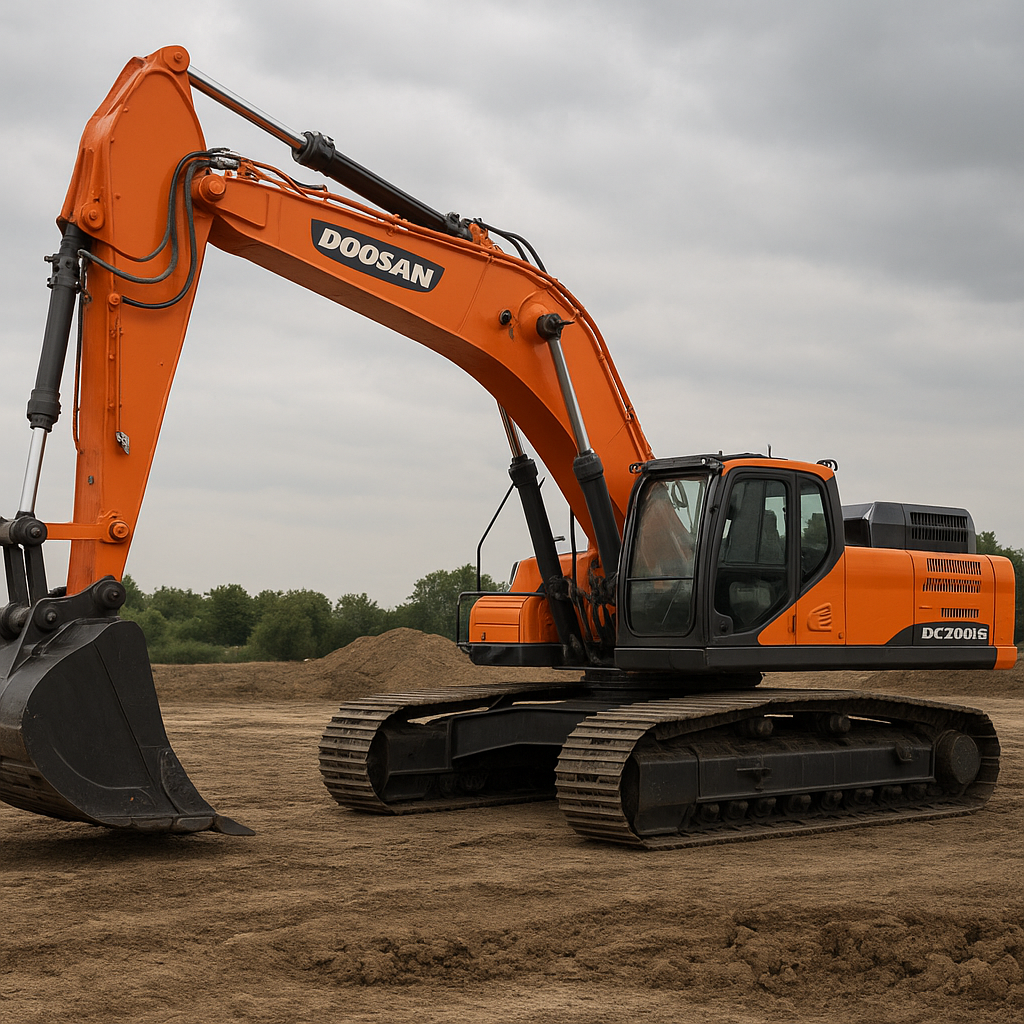
The Doosan DX700LC is a heavy-duty hydraulic excavator designed for demanding earthmoving, mining, quarrying and large-scale construction projects. Combining robust engineering with modern electronics and hydraulic systems, this machine targets contractors and operators who need high productivity, durable components and improved fuel efficiency in a 70-ton class platform. The following article explores the machine’s design, typical applications, technical highlights, operational advantages, maintenance considerations and market position.
Design and engineering philosophy
At the heart of the DX700LC’s concept is a balance between raw power and component longevity. Doosan’s approach to large excavators emphasizes structural strength, simplified service access, and modular systems that ease repairs and parts replacement. The undercarriage and upper-structure are engineered to withstand continuous heavy use, while the hydraulic system is tuned to deliver consistent performance across a range of duties.
Structure and materials
- Heavy-duty box-section boom and arm, using high-strength steel for extended fatigue life.
- Reinforced undercarriage designed for prolonged operation in abrasive environments such as quarries and open-pit mines.
- Counterweight and frame optimized for stability during deep digging and high-reach operations.
These design choices result in a machine that resists deformation and maintains alignment under high loads, reducing downtime and ensuring predictable performance on tough jobsites.
Powertrain and hydraulics
The DX700LC typically features a high-output diesel engine coupled with an advanced hydraulic system. While exact engine models and outputs can vary by market and production year, typical specifications for machines in this class include engine power in the range of approximately 350–400 kW (roughly 470–540 hp). The hydraulic pumps and valves are sized to provide high flow at stable pressure, enabling fast cycle times and consistent digging forces.
Hydraulic controls commonly include load-sensing or variable-displacement pumps and intelligent control logic that optimizes oil flow for simultaneous movements, improving both speed and fuel economy.
Key specifications and performance figures
Key specifications for the DX700LC can vary by configuration and optional packages. The values below are representative figures based on the 70-ton excavator class and typical Doosan offerings; actual numbers should be confirmed with the latest manufacturer documentation or a local dealer.
- Operating weight: approximately 65,000–75,000 kg (around 143,000–165,000 lb)
- Engine power: approximately 350–400 kW (470–540 hp)
- Bucket capacity: typically 2.5–4.5 m³, depending on application (digging, loading, rock)
- Maximum digging depth: roughly 7.5–9.0 m
- Maximum reach at ground level: often in the 11–13 m range
- Maximum breakout force: designed to deliver very high stick/arm force suitable for heavy digging and rock handling
- Hydraulic system pressure: engineered for high-pressure operation to maximize attachment performance
These figures underline the DX700LC’s role as a machine built to move large volumes of material quickly while maintaining long-term reliability.
Applications and industries
The Doosan DX700LC is used where size, reach and robust digging force are required. Common application sectors include:
- Mining and quarrying – loading haul trucks, bench digging, high-production material handling.
- Large-scale civil engineering – excavation for tunnels, dams, major earthworks, and infrastructure projects.
- Port and bulk terminal operations – stockpile reclaim, material stacking and shiploading support.
- Heavy utilities and pipeline construction – deep trenching, pipe laying and backfilling.
- Demolition and recycling – when equipped with specialized attachments (shears, pulverizers), the DX700LC can handle structural demolition on a large scale.
In each of these settings, the machine’s combination of reach, hydraulic power and stable chassis enables faster cycle times compared with smaller machines and reduces the number of machines needed on a jobsite.
Operator environment and safety features
Modern Doosan large excavators put emphasis on operator productivity and safety. The DX700LC typically offers a well-insulated cab with ergonomic controls, visibility improvements and HVAC systems to maintain operator comfort during extended shifts.
- High-visibility cab glazing and optional camera packages for 360° awareness.
- Ergonomic joystick controls and adjustable seats to reduce fatigue.
- Integrated safety systems such as overload warnings, travel alarms and emergency stop functions.
- Rollover protective structure (ROPS) and falling object protective structure (FOPS) cab options for hazardous environments.
These elements contribute to lower operator fatigue, better situational awareness and an overall safer jobsite when used in combination with correct training and safe operating procedures.
Fuel efficiency and environmental considerations
Large excavators consume significant amounts of fuel, so manufacturers and fleet operators continually pursue improvements in fuel economy. The DX700LC benefits from optimized hydraulic management, engine tuning and potential auxiliary systems that reduce consumption without sacrificing productivity.
Key strategies implemented in such machines include:
- Engine control systems that match engine speed to load rather than running at high rpm continuously.
- Efficient hydraulic circuit design (load-sensing pumps, flow-sharing valves) to minimize energy losses.
- Eco-modes or operator-selectable work modes that reduce fuel use for lighter-duty tasks.
- Aftertreatment systems (where required) to meet emission regulations such as Tier 3/Stage IIIA up to Tier 4 Final/Stage V, depending on the market and production year.
When properly maintained and operated with fuel efficiency in mind, the DX700LC can deliver competitive fuel consumption numbers for its class, which helps lower operating costs per ton moved.
Attachment versatility and productivity options
A major strength of large excavators is their ability to adapt to multiple tasks through attachments. For the DX700LC, common attachments include:
- General-purpose and heavy-duty buckets for digging and loading.
- Rock buckets and ripper attachments for hard ground and quarry work.
- Hydraulic breakers for secondary breaking in demolition or quarrying.
- Grapples and sorting arms for recycling and scrap handling.
- Quick couplers to speed attachment changes and improve operational flexibility.
Proper selection of buckets and linkage ratios can have a substantial effect on volumetric production and fuel consumption. For example, a larger bucket increases bucket-fill productivity but may reduce cycle speed depending on material density and lift requirements.
Maintenance, serviceability and uptime
One of the most important economic considerations for owners of large excavators is uptime. The DX700LC is designed with accessible service points and modular components to reduce downtime for planned maintenance and repairs.
- Ground-level service access to filters, fluid fill points and routine inspection areas.
- Centralized lubrication points and remote monitoring options in some configurations.
- Robust hydraulic hoses and fittings, plus protective routing to reduce damage in harsh environments.
- Availability of factory-supported parts and dealer networks to minimize lead times for replacement components.
Following manufacturer-recommended service intervals for engine oil, hydraulic oil and filters, along with regular inspections of tracks, pins and bushings, is essential to preserve machine value and prevent costly failures in remote operations.
Lifecycle costs and fleet considerations
While purchase price is an initial consideration, many buyers evaluate excavators on lifecycle cost per hour or per ton moved. Several factors influence lifecycle economics for a DX700LC:
- Initial acquisition cost versus the productivity gains provided by larger capacity and faster cycle times.
- Fuel consumption and maintenance intervals; larger machines typically have higher absolute fuel use but lower cost per ton moved on high-production tasks.
- Resale value and parts availability—Doosan’s global service network can support better uptime and value retention in many markets.
- Insurance, transport and site mobilization costs, since moving a 70-ton class excavator requires heavy haul logistics and permits in many regions.
For contractors handling large-volume tasks, investing in a machine such as the DX700LC can reduce the overall number of machines required and improve cycle efficiency, making it cost-effective over medium and long-term projects.
Comparisons and competitive landscape
The DX700LC competes with other 60–80 tonne class excavators from global manufacturers. Buyers typically compare machines based on:
- Digging force and bucket breakout power.
- Hydraulic flow rates and precision of control systems.
- Fuel consumption and emissions compliance.
- Operator comfort and safety features.
- Dealer support, parts availability and total cost of ownership.
Doosan positions its large excavators to be competitive on price while offering strong support and robust components. Features such as enhanced hydraulic management and operator comfort packages help it match or exceed expectations for productivity and crew welfare on long shifts.
Field examples and case uses
Real-world deployments of large Doosan excavators typically highlight the following use cases:
- Open-pit mining: deep-bench excavation and loading of large haul trucks with minimal machine repositioning.
- Quarrying: high-production bench cutting, with rock buckets and breakers for secondary fragmentation.
- Major civil projects: digging foundation pits, moving massive volumes of earth for dam construction or airport works.
- Marine and port operations: loading bulk materials onto conveyance systems or handling breakbulk cargo when equipped with suitable attachments.
Operators often report improved cycle times and reduced manpower requirements when a single large machine replaces multiple smaller units for heavy-duty operations.
Safety and regulatory considerations
Operating large excavators involves strict adherence to site safety and regulatory requirements. Important considerations include:
- Ensuring proper ground conditions and pad preparation to avoid overturning or subsidence during heavy lifts.
- Maintaining clear communication and exclusion zones when working near haul trucks, conveyors or other heavy equipment.
- Complying with emissions and noise regulations applicable in the operating region, which may require specific engine or aftertreatment options.
- Periodic operator training and certification for working with large excavators and specialized attachments.
Following these guidelines helps protect personnel, equipment and project schedules.
Purchasing and customization options
Doosan and its dealers typically offer multiple configuration options for machines like the DX700LC, allowing buyers to tailor the excavator to their needs. Popular choices include:
- Different undercarriage lengths and track shoes for stability or mobility trade-offs.
- Choice of buckets and linkage packages optimized for digging, loading or rock handling.
- Advanced monitoring and telematics systems for fleet management and predictive maintenance.
- Various cab packages including climate control, premium seating and high-end audio/visual systems for operator comfort.
Customization ensures the excavator matches job demands from day one and contributes to faster payback when matched to the intended application.
Conclusion
The Doosan DX700LC is a heavyweight contender in the large excavator market, offering a blend of power, durability and operational flexibility suited to mining, quarrying and large civil works. With a focus on serviceability, operator comfort and hydraulic efficiency, machines in this class are engineered to reduce downtime and deliver high daily output. Buyers should evaluate specific configurations, intended attachments and local support when choosing a machine to ensure the best match for productivity and lifecycle cost. For projects that require moving large volumes of material with reliability and safety, the DX700LC and comparable 70-ton excavators remain a practical and productive option.
)
)