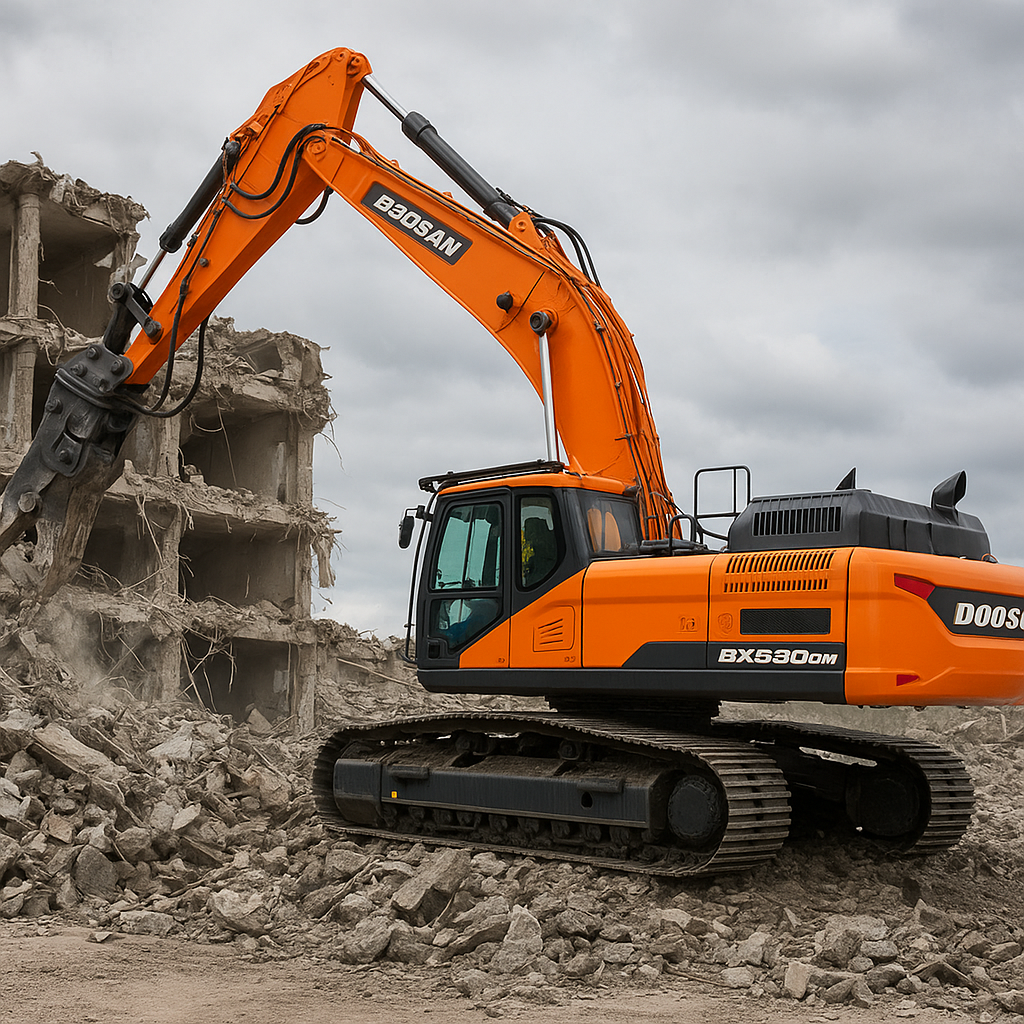
The following article provides a comprehensive overview of the Doosan DX530DM demolition excavator: its design features, typical applications, available attachments, operational strengths, and practical considerations for contractors. The aim is to describe where the machine delivers the greatest value, the technical and safety characteristics that matter on demolition sites, and the real-world factors that influence productivity, cost of ownership, and environmental performance. Wherever specific figures appear, they are presented as typical or approximate values for this machine class and may vary by configuration and market.
Overview and design intent
The Doosan DX530DM is a member of the heavy demolition excavator family designed specifically to handle the rigours of building dismantling, structural removal, and selective deconstruction. Compared with standard construction excavators, demolition variants such as the DX530DM are typically modified to prioritize safety, operator visibility, stability, and compatibility with a wide range of specialized attachments.
The machine is engineered around a robust undercarriage and reinforced house to withstand high loads and lateral forces encountered during demolition tasks. Key design choices include strengthened boom and arm options (including long‑reach or high‑reach configurations), reinforced hydraulic circuits, and optimized counterweight arrangements to maintain stability when working with heavy breakers, shears, grapples, and concrete pulverizers. The cab and upperworks may receive additional protection packages—such as FOPS/ROPS guarding, window screens, and protective coatings—to extend equipment life in harsh working environments.
Typical technical characteristics (typical values)
Models from this class usually share a number of common technical traits. Below are approximate, representative figures; exact numbers depend on the machine’s specification, chosen boom/arm, and optional packages.
- Operating weight: typically in the range of 45–55 tonnes (45,000–55,000 kg) depending on configuration and counterweight.
- Engine power: approximately 260–300 kW (≈350–400 hp), tuned for reliable torque and steady power delivery during high‑load cyclic work.
- Hydraulic system: high‑flow, high‑pressure systems designed to power hydraulic breakers and heavy attachments while maintaining smooth control.
- Maximum reach: varies with boom/arm choice — standard demolition reach may start around 10–12 m; long‑reach or high‑reach configurations can extend to 15–20 m or more.
- Travel speed and swing: optimized for stable repositioning on demolition sites, with hydraulic braking and controlled swing rates for precision.
These characteristics allow the DX530DM to handle demanding tasks with attachments that concentrate high forces at the tool end while ensuring structural integrity of the carrier machine.
Applications and use cases
The Doosan DX530DM is most often found in projects where demolition requires controlled, safe removal of structures and the selective separation of materials for recycling or disposal. Primary applications include:
- Building demolition — multi‑storey concrete and steel structures where a combination of breakers and shears are necessary.
- Industrial dismantling — removal of heavy plant equipment, steel frameworks, and complex infrastructure within factories and plants.
- Concrete processing and recycling — machines fitted with crushers and pulverizers for on‑site reduction of concrete and separation of rebar.
- Selective demolition and interior strip‑outs — using grapples and hydraulic thumbs to remove interior fixtures while minimizing collateral damage.
- Bridge and civil structure deconstruction — where reach and stability are critical to working at height or over water.
Demolition projects emphasize precision and safety: the DX530DM is configured to operate in restricted urban sites, demolition yards, and hazardous environments where protecting people and adjacent structures is vital.
Attachments and tooling
One of the DX530DM’s greatest strengths is its ability to accept a wide variety of demolition‑specific attachments. These tools convert the carrier into a multifunctional machine capable of cutting, crushing, shearing, and handling debris. Typical attachments include:
- Hydraulic breakers — for breaking reinforced concrete and rock. Breaker selection depends on energy delivery and duty cycle.
- Grapples and sorting shears — used to handle and segregate different waste streams and materials on site.
- Concrete crushers and pulverizers — fit to the arm for on‑site reduction and rebar separation.
- Rotating shears and demolition shears — designed for cutting steel beams, rebar, and structural members.
- High‑reach booms and long‑reach arms — extend demolition envelope for taller structures and bridges.
- Hydraulic thumbs and magnets — improve material handling and facilitate efficient loading and sorting.
Attachment choice—and the hydraulic plumbing, control logic, and counterweighting—directly affect the machine’s performance, cycle times, and fuel consumption. Heavy, high‑force attachments will typically require additional counterweight and may reduce travel speed and transportability.
Operator environment and safety features
Demolition applications impose greater safety demands than many construction tasks. Accordingly, the DX530DM emphasizes operator protection and situational awareness:
- Cab protection: reinforced structures, front guards, and polycarbonate or laminated glazing reduce risk from flying debris.
- Visibility: elevated cabs, optional cameras, and wide sightlines assist operators in close coordination with ground crews.
- Controls and ergonomics: intuitive hydraulic controls and adjustable seating reduce operator fatigue and improve precision.
- Emergency features: fail‑safe hydraulic locking, fire suppression options, and easy egress routes are commonly integrated.
- Worksite compliance: alarm systems, beacons, and operator training supports adherence to site safety plans and regulatory standards.
These systems collectively reduce downtime caused by accidents and improve overall site safety metrics.
Productivity, efficiency, and fuel considerations
In demolition work, productivity is measured not only by raw tonnage removed but also by the speed and accuracy of separating recyclable materials and minimizing rework. The DX530DM’s hydraulic responsiveness, attachment compatibility, and machine balance combine to deliver high throughput in many scenarios.
Fuel efficiency is a frequent concern for contractors running heavy machines. Key factors affecting fuel use include engine tuning, hydraulic system efficiency, operator technique, and attachment load. Modern demolition excavators incorporate features such as engine idle management, load‑sensing hydraulics, and optimized hydraulic flow distribution to reduce unnecessary consumption. In practice, fuel burn for machines in this class will vary widely depending on attachment duty cycle: heavy percussive work with breakers consumes significantly more fuel than sorting and grappling operations.
Contractors typically evaluate productivity by comparing cycle times, fuel burn per tonne of material processed, and total hours between required servicing. A well‑matched attachment‑machine combination and trained operators can dramatically reduce operating cost per tonne.
Maintenance, reliability, and lifecycle costs
Maintenance is a central part of the total cost of ownership for a demolition excavator. Heavy duty cycles, abrasive environments, and attachment shock loading mean that wear components—such as pins and bushings, hydraulic hoses, and attachment mounting points—require frequent inspection and periodic replacement.
- Preventive maintenance: scheduled greasing intervals, oil changes, hydraulic filter replacement, and cooling system checks prolong machine life and prevent costly breakdowns.
- Component upgrades: reinforced pins, wear plates, and heavy‑duty undercarriage options help reduce downtime in demolition settings.
- Diagnostic systems: on‑board telematics and fault monitoring allow predictive maintenance strategies, reducing unplanned downtime.
- Resale and rebuild value: demolition carriers often retain strong resale value when well maintained; certified rebuild programs and refurbishment can extend usable life for another heavy duty cycle.
Lifecycle cost planning should include insurance for high‑risk tasks, attachment lifecycle, transport costs (due to weight and length for long‑reach configurations), and compliance upgrades such as noise or emission reduction packages.
Environmental and regulatory considerations
Demolition projects are subject to strict environmental and waste management regulations. Machines like the DX530DM contribute to compliance through efficient material handling and the ability to process materials on site, thereby reducing haulage and disposal costs. Important considerations include:
- Emission standards: engines generally comply with Tier/Stage emission regulations. Always check the specific engine variant for regional emission tier compliance.
- Noise and vibration: demolition attachments generate significant noise; mitigation strategies include acoustic enclosures, quieter tooling options, and restricted working hours in urban locations.
- Dust control: integrated or complementary water spraying systems help suppress dust during concrete breaking and crushing.
- Waste segregation: efficient on‑site processing reduces landfill volumes and increases recovery rates of concrete, steel, and non‑ferrous metals.
Using a machine designed for demolition can help contractors meet local environmental rules and improve the sustainability profile of a project by maximizing reclamation and minimizing transportation emissions.
Selection criteria and buying considerations
Choosing the right DX530DM configuration depends on the nature of the demolition work, transport logistics, and budget. Key selection criteria include:
- Scope of work: decide whether the project requires long‑reach, high‑reach, or standard demolition reach.
- Attachment mix: identify the primary attachments and ensure the hydraulic system, boom strength, and counterweight are matched.
- Transportability: long‑reach machines may require disassembly or escorts; factor transport cost and route restrictions into the procurement decision.
- After‑sales support: local dealer service, availability of spare parts, and warranty terms influence uptime.
- Resale and rental demand: machines in popular demolition configurations often have higher residual values and better rental market prospects.
Contractors frequently choose a balance between initial capital cost and expected uptime, favoring machines that reduce rental requirements and deliver predictable lifecycle costs.
Case examples and real‑world performance
Real projects illustrate how the DX530DM class of machines is applied on site. Common scenarios include urban high‑rise deconstruction where selective removal is required to protect adjacent properties, industrial plant dismantling where heavy shears and breakers are used in combination, and bridge removal where long reach and deck handling are critical.
In an urban multi‑storey demo case, a DX530DM fitted with a long‑reach boom and concrete pulverizer allows sequential dismantling from the top down, with on‑site crushing of concrete into transportable aggregates. This reduces traffic movements and disposal costs while improving site safety. In an industrial teardown, the same machine contracted with rotating shears enables quicker removal of steel frameworks, reducing manual cutting and speeding up salvage operations.
Performance metrics reported by contractors operating similar machines commonly focus on throughput (tonnes per shift), attachments’ uptime, and total fuel consumption per tonne of material processed. These metrics are used to refine fleet composition and justify investment in carrier and attachment upgrades.
Market context and demand trends
The heavy demolition excavator market remains steady where aging infrastructure, urban renewal, and increased focus on recycling create ongoing demand. Machines in the 45–55 tonne class, like the DX530DM family, are particularly popular for medium to large projects because they combine mobility with the ability to handle heavy attachments. The rental market for demolition equipment is also significant; many contractors prefer renting specialized long‑reach configurations for specific projects rather than owning them outright.
As demolition practices trend toward higher recycling rates and more robotic or remote‑control operations in hazardous environments, manufacturers continue to refine control systems, telematics, and attachment integration to meet evolving customer needs.
Summary
The Doosan DX530DM demolition excavator represents a purpose‑built solution for demanding deconstruction tasks. Its strengths are found in reinforced structural design, compatibility with a wide range of heavy-duty attachments, and operator and site safety features tailored to demolition. When matched to the correct boom and attachment package, it offers high productivity while supporting better material recovery and environmental compliance.
Decisions about purchase or rental should consider the specifics of the demolition scope, attachment lifecycle, transport logistics, and dealer support. With proper maintenance and operator training, a DX530DM‑class machine can deliver strong return on investment across multiple demolition projects by improving cycle times, reducing disposal costs, and elevating site safety.
)
)