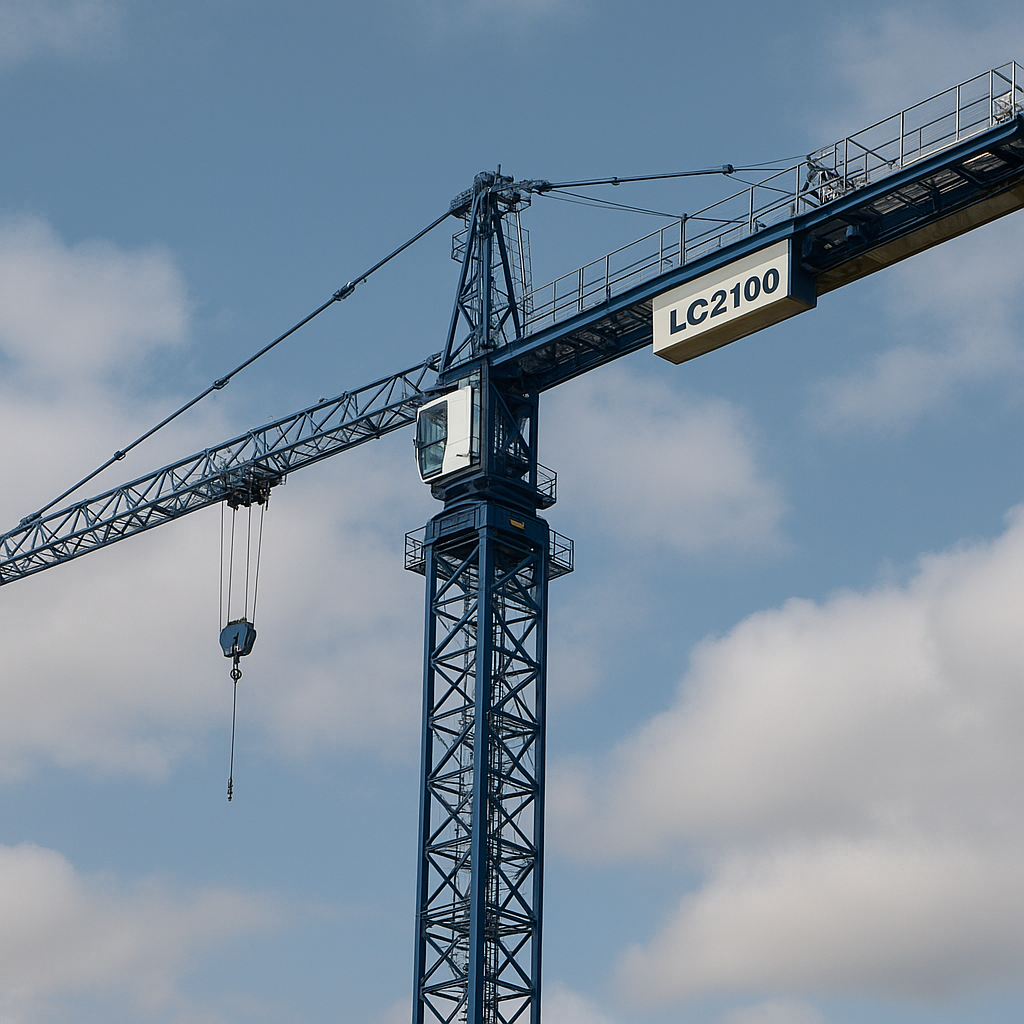
The COMANSA LC2100 is a widely recognized model in the lineup of tower cranes designed for demanding construction projects. Known for its adaptability and robust engineering, the LC2100 is used across a broad spectrum of sectors where high-capacity vertical and horizontal handling of materials is required. This article explores the machine’s design principles, typical applications, logistics and installation considerations, safety features, maintenance practices, and available performance information. Wherever specific numerical data are mentioned, they are presented as typical ranges or representative examples, since exact figures depend on configuration, installation, and regional specifications.
Overview and design philosophy
The COMANSA LC2100 belongs to a family of tower cranes that prioritize a balance of strength, modularity, and ease of use. As a product intended for medium-to-large construction sites, it is engineered to support a variety of tasks ranging from concrete panel lifting and structural steel erection to heavy machinery placement and logistics for high-rise developments.
The underlying design philosophy emphasizes a modular mast and jib system that allows the crane to be tailored to project-specific requirements. This means that both the mast height and the jib length can be adapted to fit site limitations and load demands. The modular approach reduces transport costs, simplifies assembly and disassembly, and shortens on-site installation time.
Key technical features
The following list summarizes characteristic features you can typically expect from an LC2100-class machine. Specific implementations will vary by year of manufacture and customer configuration.
- Modular mast sections enabling flexible tower height and sectional substitution.
- Interchangeable jib segments that allow different jib lengths to match reach and capacity requirements.
- Robust hoist and trolley systems designed for smooth load travel and accurate placement.
- Efficient counterweight systems to balance loads while minimizing foundation and footprint demands.
- Multiple power and control options: electric motor drives, variable speed controllers, and remote or cabin operation possibilities.
- Optional anti-collision and telemetry systems for enhanced site coordination.
- Designs compatible with slewing configurations such as top-slewing or flat-top arrangements depending on site constraints.
Structure and materials
Mast and jib sections are typically manufactured from high-strength structural steel with bolted or pinned connections. The latticed structure offers an optimal strength-to-weight ratio, enabling high load capacities with relatively low self-weight. Bolted flanges and pin joints are designed for site assembly with standard tools and cranes, following strict tolerances to ensure stability and long-term fatigue resistance.
Hoist and lifting systems
The hoisting unit is a critical component of the LC2100’s performance. It commonly incorporates multi-speed motors, planetary gearboxes, and high-capacity wire rope drums. Redundant braking systems and limit switches are standard for safe operation. For heavy-duty configurations, the crane can be equipped with dual hoists for tandem-lift operations or to increase lifting speed under partial loads.
Applications and typical use cases
The COMANSA LC2100 is versatile and finds application in many sectors. Its combination of power, reach, and modularity make it suitable for:
- High-rise residential and commercial construction — where predictable reach and reliable lifting are required.
- Industrial plant erection — handling steel frames, pressure vessels, and prefabricated modules.
- Infrastructure projects — bridges, tunnels, and transportation hubs, where complex lifts and staging are common.
- Wind farm construction and heavy mechanical installations — particularly when long jib reaches and high hook heights are needed.
- Urban retrofit and refurbishment — flat-top configurations provide reduced height profiles for installation between buildings.
Beyond construction, tower cranes like the LC2100 are often used for special projects that require temporary heavy lifting capacity, including event infrastructure, shipyard operations, and large-scale art installations.
Installation, logistics and site planning
One of the practical advantages of the LC2100 is its emphasis on efficient logistics. The modular sections are sized to be transported on standard road vehicles, minimizing oversized load permits and reducing transport costs. Installation planning typically addresses the following items:
- Foundations and anchoring: Depending on height and load chart, footings range from concrete pad foundations to piled piles or tie-in points to existing structures.
- Assembly sequence: Mast sections are stacked progressively, and jib sections are assembled and installed either by mobile crane or by climbing/erection frames if site constraints require self-assembly.
- Access and site restrictions: Urban environments require precise delivery windows, noise mitigation, and often the use of flat-top crane variants to avoid height infringements.
- Transport and disassembly planning: Modular design reduces the number of parts and facilitates efficient dismantling at project completion.
Time and manpower expectations
For a medium height configuration, a typical assembly may take anywhere from a few days to a couple of weeks depending on site conditions and the presence of on-site mobile cranes. Experienced crews following manufacturer procedures and using planned lift sequences can keep installation times and costs predictable.
Safety systems and operational controls
Safety is front and center in modern tower crane design. The LC2100 typically includes a range of safety systems intended to reduce risk and comply with international standards:
- Load moment indicators (LMI) to prevent overloads and provide real-time diagnostics for the operator.
- Anti-collision systems and zone-limiting devices to avoid conflicts with other cranes or structures on congested sites.
- Automatic cut-off features for travel limits (hook height, trolley travel endpoints, slewing limits).
- Redundant braking and emergency lowering systems to ensure load control during power loss.
- Operator cabins with ergonomic controls and visibility, sometimes augmented by cameras and remote monitoring for difficult sightlines.
Operator training and robust site safety plans are essential complements to machine-level features. Regular inspections, daily checklists, and adherence to lifting plans ensure that the crane’s safety systems are properly maintained and respected.
Maintenance and lifecycle management
To maximize uptime and service life, a systematic maintenance program is recommended. Typical activities include:
- Scheduled lubrication of wire ropes, slewing bearings, and hoist components.
- Visual and non-destructive inspection of structural members for fatigue cracks and bolt integrity.
- Motor and gearbox servicing including thermal checks, gear oil changes, and vibration analysis.
- Electrical system diagnostics, including control cabinets, sensors, and limit switch calibration.
- Replacement planning for consumables such as wire ropes and brake linings before they reach critical wear levels.
Predictive maintenance strategies, using telemetry and condition-monitoring sensors, can increase availability and reduce unexpected downtime. Many operators now leverage remote diagnostics and manufacturer support agreements to maintain optimal performance.
Performance figures and statistics
Specific performance figures for the COMANSA LC2100 vary with configuration (mast section count, jib length, counterweight amount, and hoisting gear). Where manufacturer-supplied data are available for a given configuration, they typically present load charts showing maximum capacities at varying radii and hook heights. As a guideline for cranes in this class, expect the following representative ranges (approximate):
- Maximum lifting capacity (near the tower): typically between 6 and 16 tonnes depending on configuration.
- Rated capacity at mid-jib: often in the 2–6 tonne range at longer radii.
- Jib length: modular options commonly range from about 30 m up to 70–80 m in extended configurations.
- Hook height: with extended mast sections, practical hook heights may reach well beyond 60–80 m; attached climbing systems or tying into buildings can extend working heights substantially.
- Operational speeds: hoist speeds and trolley travel speeds are optimized for production lifts; specific values depend on hoist motor and gearbox options, and often provide multiple speed ranges for control.
These numbers should be validated against the specific crane configuration and the latest manufacturer load charts before any lift planning. The exact figures are critical for safe operation and must be consulted from the crane’s technical documentation.
Economic considerations and total cost of ownership
Purchasing or renting a COMANSA LC2100 involves evaluating both upfront and lifecycle costs. Key economic factors include:
- Purchase price vs rental: owning may be preferable for long-term use, while rental provides flexibility for shorter projects.
- Transport and erection costs: modular sections help reduce logistics costs but still require careful planning—especially for urban jobs.
- Maintenance and spare parts: OEM support and local dealer networks reduce downtime and keep maintenance predictable.
- Resale value: cranes with comprehensive service records and updated safety equipment typically retain higher resale values.
In many markets, the LC2100’s modularity and robust design translate into favorable utilization rates, making it an attractive option for contractors managing multiple projects or bidding on long-duration contracts.
Comparisons and alternatives
When selecting a tower crane, buyers often compare models by capacity, reach, footprint, and features like flat-top vs. top-slewing configurations. The LC2100 competes with other reputable manufacturers that provide similar modular solutions. Choosing among alternatives typically centers on:
- Site-specific constraints such as height limits, adjacent structures, and transport access.
- Load requirements at specific radii, which determine the necessary counterweight and jib configuration.
- Manufacturer support, spare parts availability, and local service networks.
- Integration with on-site safety systems and operator familiarity with specific controls.
Notable projects and operational examples
COMANSA cranes, including models similar to the LC2100, have been employed on a range of landmark projects worldwide—urban towers, industrial facilities, and infrastructure builds. Their use is often chosen for projects requiring a predictable combination of reach, lifting capacity, and efficient assembly. Case studies typically highlight rapid installation, reliable uptime, and reduced transport complexity as differentiating factors.
Environmental and regulatory considerations
Modern crane operations must consider noise, emissions, and site disturbance. The LC2100 can be specified with electric drives to reduce local emissions, and modern drive systems help minimize noise and energy consumption. Compliance with local lifting regulations and industry standards is mandatory; therefore, machine certification, periodic inspections, and operator licensing are central to lawful and safe operation.
Final remarks
The COMANSA LC2100 is a flexible and capable tower crane platform suitable for a wide range of construction and industrial tasks. Its strengths lie in modularity, robust construction, and adaptable configurations, which make it a practical choice for contractors and site planners who need dependable lifting performance across varied project types. For accurate project planning and procurement decisions, users should consult the official manufacturer documentation and certified load charts for the particular LC2100 configuration under consideration, and plan for appropriate training, maintenance, and safety oversight.
)
)