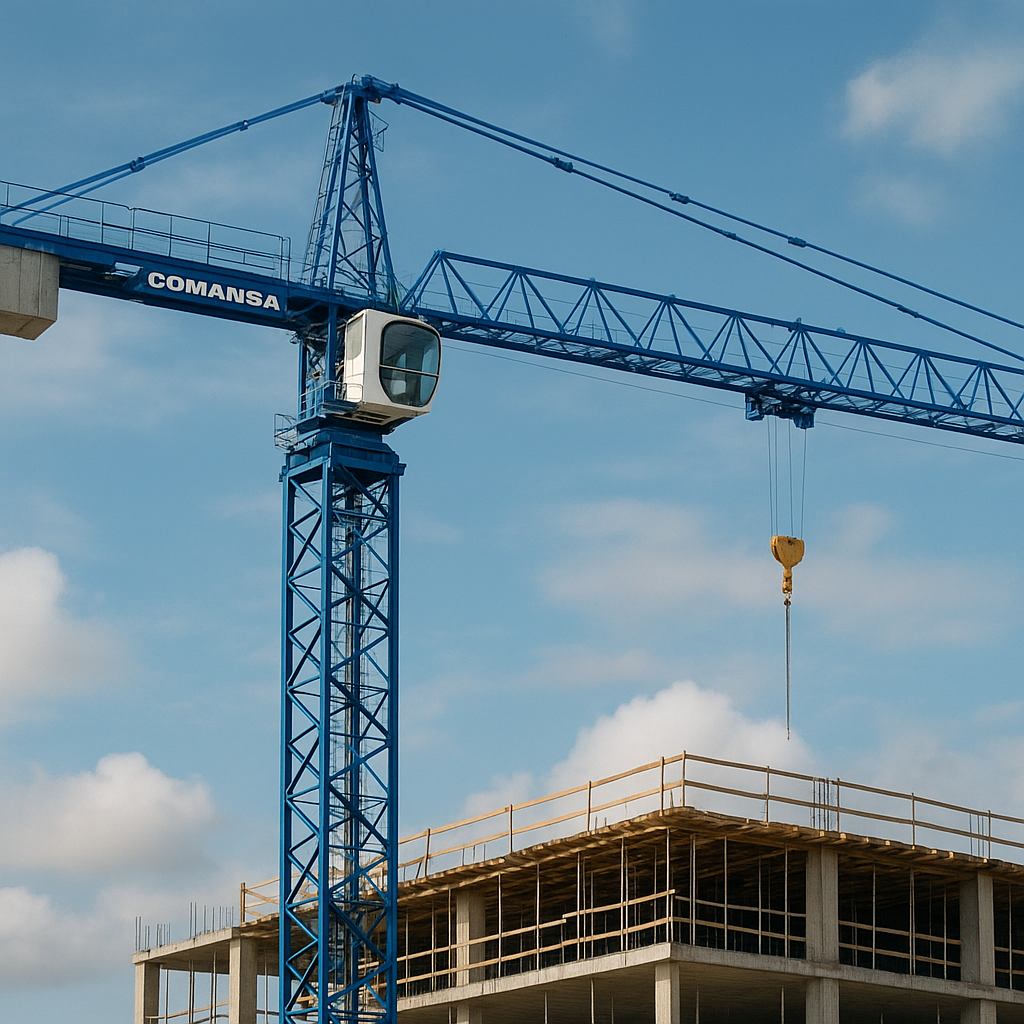
The COMANSA 21LC660 is a robust member of COMANSA’s line of tower cranes designed for demanding construction projects. Combining adaptable configurations, proven mechanical systems and a focus on operator safety, the 21LC660 addresses the needs of urban construction sites, high-rise projects and heavy industrial installations. This article explores the machine’s typical applications, design features, operational considerations and broader industry context, giving readers a practical and technical overview suitable for engineers, project managers and crane operators.
Applications and typical use cases
The COMANSA 21LC660 finds its place across a wide range of construction environments. Its strengths are most valuable where reliable, repeatable lifts and flexible configuration options are needed. Typical applications include:
- High-rise residential and commercial construction — the crane’s modular tower and variable jib lengths allow it to reach the heights and radii required for multi-storey buildings.
- Urban infill projects — compact base and careful footprint planning make it suitable for constrained city sites where space is limited.
- Industrial facilities and plants — lifting of heavy components for mechanical installations, structural steelwork and precast assembly.
- Infrastructure projects — bridge components, prefabricated segments and materials handling at rail, road or utility projects.
- Large-scale modular building and logistics hubs — repeated lifts of large, heavy modules benefit from the crane’s predictable performance.
Across these applications, the 21LC660 is typically selected when a balance between lift capability, reach and site versatility is required. Its design supports configurations optimized either for increased maximum radius or for higher hook capacities at shorter radii, depending on project priorities.
Design features and mechanical architecture
COMANSA’s design philosophy for the 21LC660 emphasizes modularity, serviceability and operator ergonomics. Key architectural aspects include:
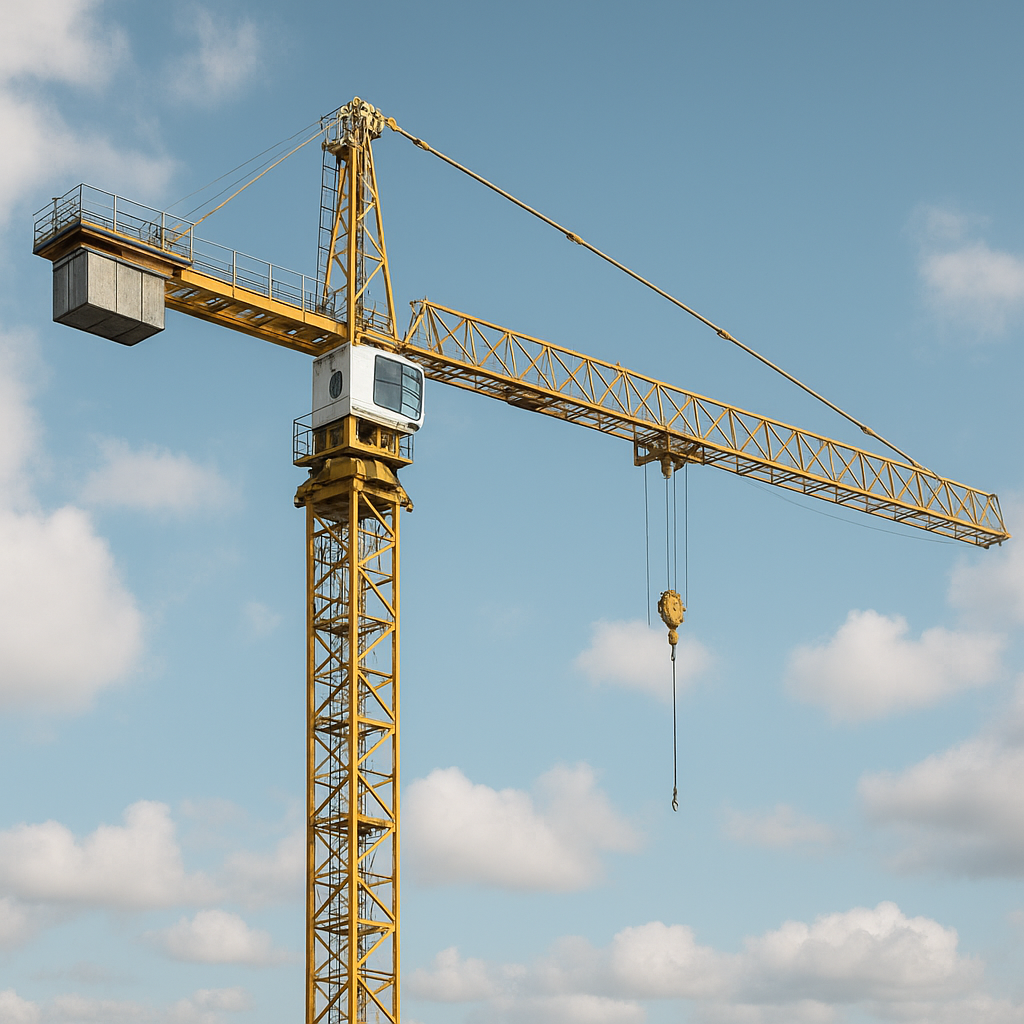
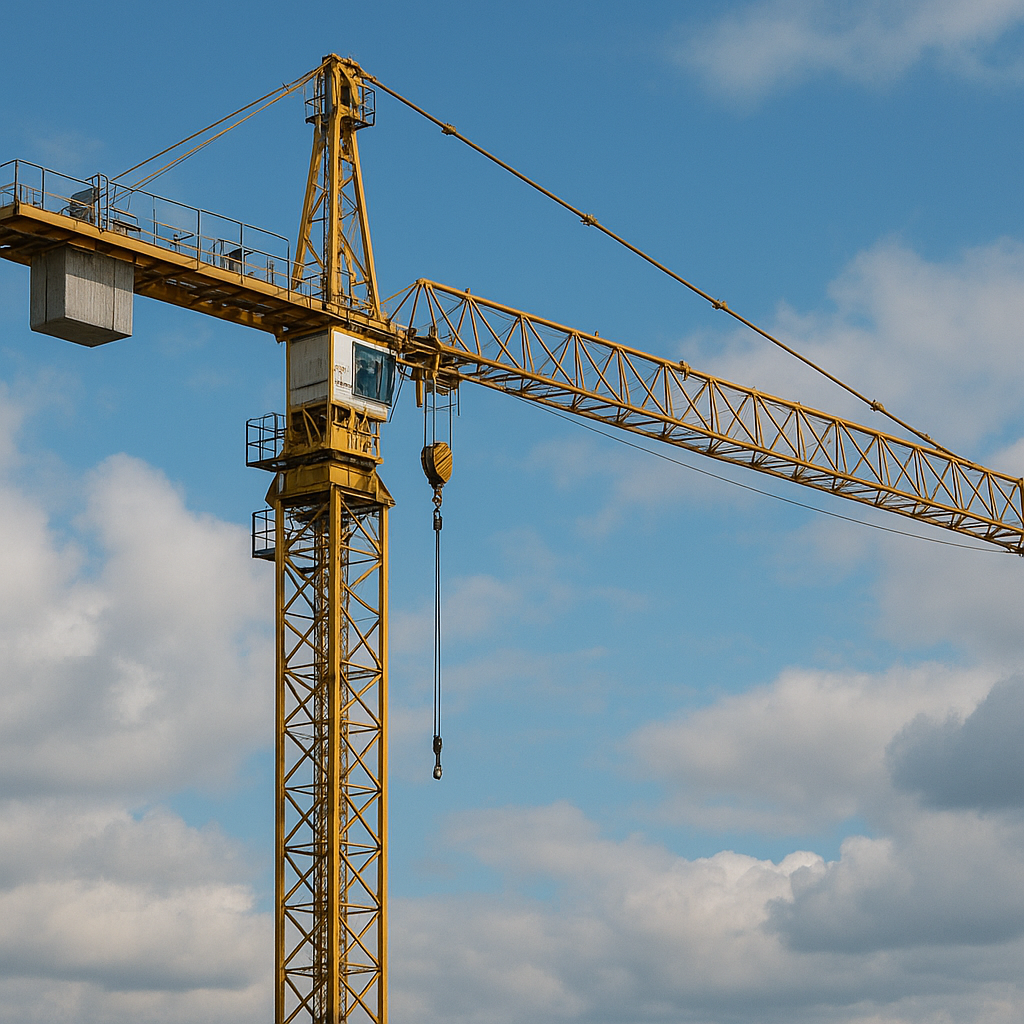
- Modular tower sections — the crane uses standardized lattice or box sections allowing rapid adjustment of free-standing height or mast climbing for rising structures.
- Interchangeable jibs — several jib lengths and tails are available to tune the crane for radius versus capacity trade-offs on a given jobsite.
- Slewing unit and gearing — robust slewing bearings and gearboxes are designed for frequent rotation cycles typical of building sites.
- Hoist and trolley systems — options for different hoist motors and trolley configurations enable operators to prioritize speed or lifting power.
- Operator cabin and controls — ergonomic cabins with advanced controls and visibility, plus remote-control options in some configurations, improve safety and productivity.
In practice, this mechanical architecture provides a balance of reliability and adaptability. The use of modular elements shortens erection time and simplifies logistics, while standardized parts reduce spare-parts complexity across fleets.
Performance, capacity and configuration options
The performance of the 21LC660 varies with the chosen configuration — jib length, counter-jib, tower height and hoist/trolley specification all affect rated loads. While exact numbers must be confirmed from COMANSA technical documentation or the crane’s load charts, some general points are useful for planning:
- Rated capacity decreases with increasing radius. Project planners should consult the crane’s load chart to match required lift weights at the intended radii.
- Jib length selection determines maximum working radius. Shorter jibs increase hook capacity near the tower; longer jibs increase reach but reduce maximum load.
- Counterweight and tail length configurations influence stability and the permissible working envelope; heavy lifts near the tower may require reduced radius or different counterweight setups.
- Hoist motor and rope specifications affect lift speed and fatigue life. Variable frequency drives (VFDs) and modern hoist controls deliver smoother starts and stops, improving precision for delicate installations.
When tendering or planning, it’s common for project teams to request multiple configuration quotes so that they can compare how different jib/tower/hoist combinations meet their lift charts, erection constraints and transport limits. The 21LC660’s modularity supports these customizations without needing a completely different base model.
Safety systems, operator support and regulatory compliance
Safety is central to the design and operation of modern tower cranes like the 21LC660. COMANSA and crane owners implement multiple layers of protection and support, including:
- Load moment indicators (LMI) and overload protection — these systems continuously monitor load, radius and boom angle to prevent operation beyond safe limits.
- Anti-collision systems — when used on sites with multiple cranes, proximity sensing and automatic limiting can reduce the risk of crane-to-crane contact.
- Wind and weather monitoring — built-in or site-supplied sensors help determine safe operational thresholds and trigger automatic actions when limits are exceeded.
- Emergency descent and fail-safe brakes — mechanical and electrical redundancies ensure safe handling of loads in case of power loss.
- Advanced operator interfaces — intuitive HMI screens, remote diagnostics and optional remote-control operation reduce operator workload and increase situational awareness.
Compliance with local and international standards (such as relevant EN standards in Europe, ANSI/OSHA guidelines in the U.S. and other national rules) is an essential part of safe crane selection and operation. The crane owner’s responsibility includes ensuring certified inspections, proper personnel training and documented maintenance programs.
Logistics, erection and site planning
Erecting a 21LC660 requires careful planning to optimize time and minimize disruption on site. Typical workflow items include:
- Foundation and anchoring design — depending on the tower height and expected loads, foundations range from engineered concrete pads to temporary base frames with ballast mats.
- Transport and lifting of crane components — modular sections are sized to fit road transport restrictions; heavy-lift mobile cranes or hydraulic jacking systems may be used for assembly.
- Climbing and height extension methods — climbing frames, internal climbing or external climbing solutions allow the crane to be raised as the building progresses.
- Sequence planning and coordination — sequencing the arrival of crane segments, counterweights and erection teams reduces site idle time and costs.
Because the 21LC660 supports a variety of erection methods and configurations, it can be adapted to tight urban schedules, phased builds and long-term projects that require in-situ height increases. Good communication between contractors, crane providers and site engineers is key to a smooth erection process.
Maintenance, lifecycle costs and fleet management
Managing the lifecycle of a tower crane involves routine inspections, preventive maintenance and strategic overhaul actions. For the 21LC660, important maintenance concerns include:
- Regular lubrication and inspection of slewing bearings, wire ropes and gearbox components.
- Scheduled replacement intervals for critical wear items such as ropes, brakes and couplings to prevent unexpected failures.
- Software and control updates to ensure diagnostics remain current and compatible with remote monitoring systems.
- Record keeping for inspections, repairs and load testing to comply with safety regulations and to preserve asset value.
From a cost perspective, operators should evaluate total cost of ownership (TCO) rather than initial purchase price alone. Factors that influence TCO include spare parts availability, ease of service access, energy consumption of hoist motors and the frequency of repositioning or transportation between sites. COMANSA and rental companies often provide maintenance packages or fleet management services to streamline these activities.
Environmental considerations and sustainable operation
Modern tower cranes are increasingly designed with environmental performance in mind. For the 21LC660 family, considerations that improve sustainability include:
- Energy-efficient motors and VFDs — reduce electricity usage during starts, stops and variable-speed hoisting cycles.
- Optimized transport packaging — modular parts sized for standard transport reduce the number of trips and associated emissions.
- Longer component life and recyclable materials — robust design reduces waste and the need for premature replacements.
- Operational planning to minimize idle times and unnecessary repositioning, which reduces fuel and energy use on site.
Project owners can further improve sustainability by selecting electrically powered tower cranes in locations where the grid is supplied by renewable energy, by coordinating lifts to reduce crane operating hours, and by opting for preventative maintenance that extends component life.
Market context, rental trends and economic considerations
The tower crane market is strongly linked to construction sector trends. Demand for cranes such as the 21LC660 typically rises with activity in residential high-rise, commercial development and infrastructure investments. Key market observations include:
- Many contractors prefer renting tower cranes to avoid large capital expenditures and to gain flexibility across multiple projects.
- Equipment manufacturers and rental companies increasingly offer digital services — telematics, remote assistance and fleet analytics — that help optimize utilization and reduce downtime.
- Regional variations affect the most common configurations: in dense urban markets shorter jibs and compact bases are more common, whereas large industrial sites favor longer jibs and higher capacities.
While exact sales or fleet numbers for the 21LC660 are proprietary to COMANSA and their customers, rental fleets of mid-to-high capacity tower cranes have grown in many markets as contractors aim to match crane capability to project complexity without overcommitting capital. Market analysts in recent years have reported steady, moderate growth in global tower crane demand, correlated with urbanization and infrastructure investment cycles.
Operator training, best practices and productivity tips
Maximizing productivity with a 21LC660 depends heavily on skilled operation and disciplined site practices. Recommended best practices include:
- Comprehensive operator training and certification — including familiarity with the crane’s specific LMI, hoist behavior and emergency procedures.
- Pre-lift planning and lift supervision — detailed lift plans reduce cycle times and avoid rework; taglines and trained riggers improve load control.
- Use of telematics and diagnostics — monitoring hoist usage, idle time and fault codes enables proactive maintenance and identifies productivity bottlenecks.
- Site housekeeping and traffic management — keep the crane base and haul routes clear to enable smooth access for counterweight handling and component delivery.
Incremental improvements in lift planning and coordination often yield larger productivity gains than marginal increases in crane capacity. The 21LC660’s flexibility is best leveraged when site logistics, sequencing and crane placement are carefully considered during pre-construction planning.
Case examples and practical deployments
Examples of where a crane like the 21LC660 performs well include:
- Central business district tower projects where the crane is used for both structural steel and facade installation over a multi-year build, followed by climbing frames for height extensions.
- Modular construction yards where repeated lifts of large units require precise control and consistent cycle times. The crane’s predictable performance minimizes handling risks for costly modules.
- Industrial plant upgrades where heavy equipment must be lifted into place inside constrained compound layouts — the crane’s configurable jib and counterweight system help match tight radius requirements.
In each case, the selection of the crane configuration and planning for contractor interfaces determines whether the investment in a particular model yields the desired operational efficiency.
How to choose the right configuration and supplier
Selecting the optimal 21LC660 setup and a reliable supplier involves several steps:
- Assess project lift requirements: compile a list of all lifts (weights, radii and frequencies) and produce consolidated lift charts for tendering.
- Request multiple configuration quotes: compare how different jib lengths, tower sections and hoist packages meet your lift chart and schedule.
- Evaluate supplier services: check availability of certified technicians, spare parts lead times and whether the supplier offers preventative maintenance packages.
- Consider rental vs purchase economics: analyze utilization forecasts, transport costs and residual values to determine total cost of ownership.
Good suppliers will provide detailed load charts, erection plans, transport dimensions and a clear maintenance schedule. A collaborative approach during procurement typically results in fewer surprises during construction.
Summary and final considerations
The COMANSA 21LC660 is a flexible mid-to-high capacity tower crane offering modularity, adaptable configurations and a suite of modern safety and control features. It suits a wide range of construction contexts — from urban high-rise sites to industrial installations — and benefits from careful planning around configuration, erection and maintenance. For project teams, the key value lies in matching the crane’s configuration to actual lift needs, leveraging maintenance programs to protect uptime, and integrating operator training with lift planning to maximize safety and productivity.
Key practical takeaways
- Match configuration to the project’s lift chart rather than selecting a crane on nameplate capacity alone.
- Prioritize suppliers offering strong maintenance support and clear documentation for load charts and erection plans.
- Invest in operator training and use telemetry to reduce downtime and improve decision-making on maintenance.
- Plan for environmental and logistical constraints early to optimize the crane’s placement and reduce operating hours.
)
)