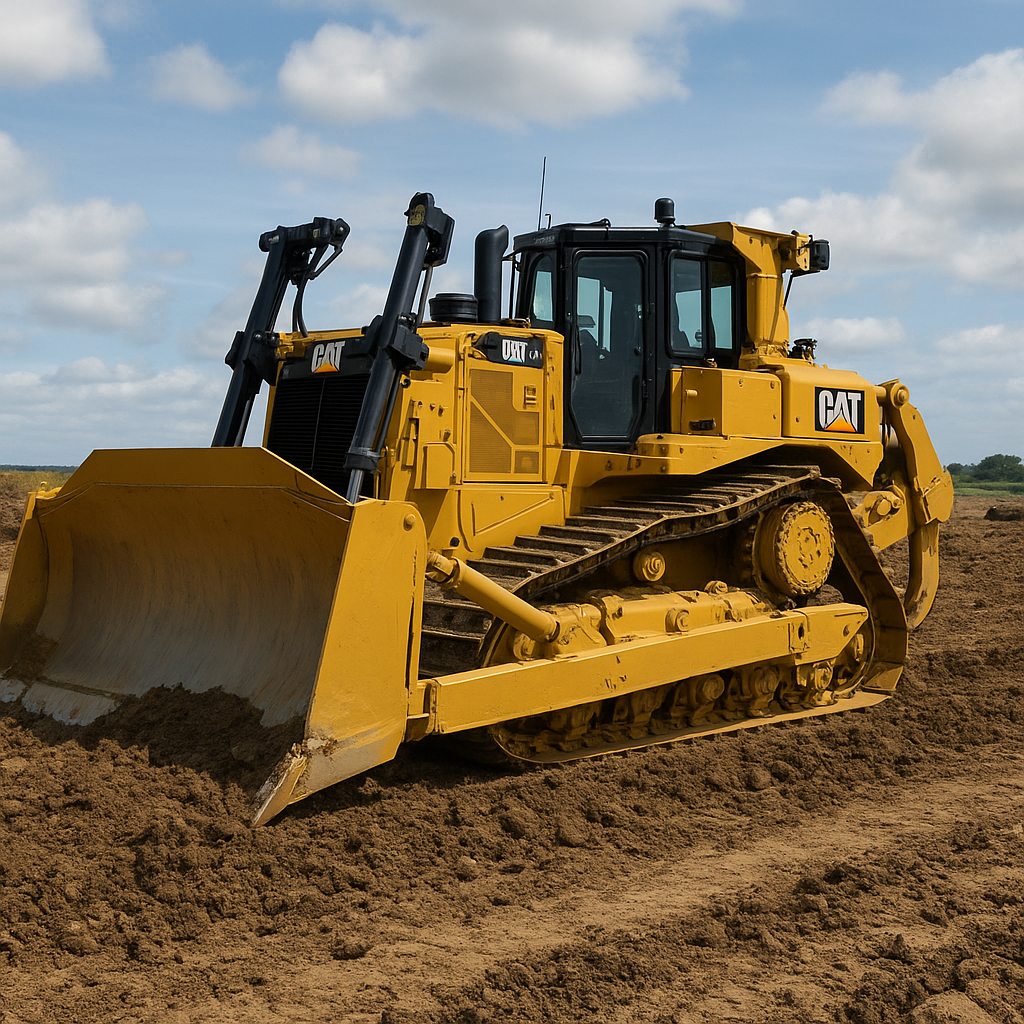
The Caterpillar D10T2 is a heavyweight in the world of earthmoving equipment — a purpose-built Caterpillar D10T2 crawler dozer designed for the most demanding projects. This article explores its design, capabilities, typical applications, operational considerations, and some practical data and statistics where available. You will find both technical descriptions and real-world context to understand why this machine remains a preferred choice for heavy civil construction, mining, quarrying, and large-scale land reclamation works.
Overview and development
The D10 lineage has long represented the upper end of Caterpillar’s dozer range. The D10T2 is a continuation of that tradition, combining immense pushing capacity with modern control systems and durability-enhancing design elements. While the D10T2 evolves from earlier models, it integrates updates in operator comfort, drivetrain resilience, and emission controls to meet contemporary regulatory and operational expectations.
Heritage and design philosophy
Caterpillar aimed to produce a machine capable of moving huge volumes of material while minimizing downtime and maintenance complexity. The D10T2 embodies a philosophy centered on robust components, serviceability, and adaptability to varied attachments and worksite conditions. Its design balances brute force — to handle heavy dozing and ripping — with features that optimize life-cycle operating costs.
Key differentiators
- High gross operating weight enabling stable, productive push performance.
- Strong emphasis on undercarriage longevity and ease of service.
- Integration options for modern telematics and machine-control systems.
- Compatibility with multiple blade and ripper configurations for diverse mission profiles.
Design and technical specifications
The D10T2 is engineered around several core systems: the powertrain, the undercarriage, the blade/ripper attachments, and the operator environment. Each system contributes to the machine’s overall capability to perform heavy-duty earthmoving efficiently and reliably.
Engine and powertrain
The heart of the machine is its diesel engine and drivetrain arrangement. The D10T2 is fitted with a high-displacement diesel engine that delivers the torque and continuous power necessary for heavy pushing and ripping tasks. The transmission and final drives are built to handle extreme loads and repeated shock events common in mining and heavy construction.
- Typical net power: in the range of approximately 600–900 engine horsepower (approximate, depending on configuration and regional specification)
- Torque-rich power curve optimized for low-speed, high-load operations
- Heavy-duty torque converter and planetary final drives designed for extended service intervals
Undercarriage and tracks
One of the most critical subsystems on a crawler dozer is the undercarriage. Caterpillar engineers focus on track frame strength, link life, roller and idler resilience, and track shoe design to reduce wear and downtime.
- Large, wide track shoes to distribute ground pressure and improve traction
- Advanced sealing and guarding to protect rollers and final drives
- Designed for easy replacement of wear components to simplify field maintenance
Blade and attachment systems
The D10T2 accommodates several blade styles — straight (S-blade), universal (U-blade), semi-U, and angle blades — as well as multi-shank rippers. The blade geometry, hydraulic assist systems, and mounting points are tailored for high productivity when pushing large volumes of material or when finishing tasks that require precision.
- Blade capacities range widely by blade type; typical capacities can be several cubic meters per pass.
- Ripper options include single-shank, multi-shank, and attachments optimized for rock or frozen ground.
- Hydraulic systems deliver smooth blade control and consistent force for aggressive engagement.
Operator environment and controls
Operator comfort and machine control are significant contributors to productivity. The D10T2’s cab includes ergonomic controls, climate control, and visibility improvements. Additionally, modern units often integrate electronic monitoring, GPS-based grading systems, and telematics for remote diagnostics and fleet management.
Applications and industries
The D10T2 is most commonly found where volume and toughness dominate project requirements. Below are the primary sectors and tasks where this machine excels.
Mining and quarrying
In surface mining and quarry operations, the D10T2 is used for stripping overburden, moving waste, and creating or maintaining haul roads. Its power and mass allow it to push large amounts of material quickly, and its heavy-duty undercarriage stands up to abrasive conditions.
Civil construction and earthworks
Large infrastructure projects — dams, airports, highways, and large-scale site preparation — benefit from the D10T2’s ability to reshape terrain and produce consistent grade and compaction when required. For operations requiring both bulk movement and finishing work, the machine’s adaptability to multiple blade types is valuable.
Land reclamation and heavy site preparation
Projects that involve converting degraded land into usable sites (e.g., reclaimed mine sites or major landscaping efforts) rely on the D10T2’s capacity to handle uneven, heavily compacted materials and to operate in remote or harsh environments where reliability is crucial.
Specialized heavy tasks
- Construction of large embankments and levees
- Road and runway grading at early construction stages
- Clearing and leveling for large-scale renewable energy sites (e.g., solar farms)
Performance indicators and statistics
Specific performance numbers for any individual D10T2 can vary by configuration, market, and optional equipment. The figures below represent typical ranges or commonly reported data points for machines in this class. Where precise factory specifications differ by region, those variances are noted as approximate.
Typical weight and dimensions
- Operating weight: commonly in the range of approximately 70,000–100,000 kg (154,000–220,000 lb), depending on attachments and build
- Length (with blade): varies; machines are long and heavy to stabilize the push and rip forces
- Width (track): wide undercarriage design to lower ground pressure and improve flotation on softer surfaces
Fuel consumption and efficiency
Fuel burn depends heavily on work intensity, terrain, and operator technique. Typical heavy pushing and ripping tasks can lead to high fuel per hour values relative to smaller dozers. However, the D10T2 is engineered to maximize productivity per liter/gallon — moving more material per unit of fuel when operated optimally.
Availability and uptime metrics
Fleet operators measure success by uptime percentages. With proper maintenance and component selection, operators commonly report high annual availability for machines like the D10T2 — often above 85% to 90% in well-managed fleets. Predictive maintenance and telematics data can significantly reduce unplanned downtime.
Operational considerations
Operating a machine of this size requires attention to technique, preventive maintenance, and support infrastructure. The following topics summarize practical considerations for maximizing life-cycle value.
Operator training and technique
Skilled operators can dramatically increase productivity and reduce wear. Proper engagement of the blade, correct ground-speed selection, and effective use of rippers protect both the machine and the worksite. Training programs that emphasize fuel-efficient techniques and machine-awareness reduce fuel consumption and component strain.
Maintenance strategy
Maintenance for heavyweight equipment centers on preserving the undercarriage, engine, and hydraulic components. Regular inspections, prompt replacement of wear items, and proper lubrication schedules are essential. Many operators adopt condition-based maintenance aided by telematics to plan interventions before failures occur.
- Frequent checks of track tension and wear patterns
- Routine oil and filter change intervals matched to duty cycles
- Monitoring temperatures and pressures for gearbox and final drives
Parts and logistics
Because the D10T2 is used in remote locations, a robust parts supply and maintenance capability are vital. Keeping critical spares on-site (e.g., track links, rollers, and hydraulic hoses) shortens repair times and improves availability. Caterpillar’s dealer network typically provides support and parts logistics for major deployments.
Safety and environmental aspects
Modern large dozers integrate design elements that improve safety and reduce environmental impact. For the D10T2, these include cab protection, visibility enhancements, and emissions-control systems aligned with prevailing standards.
Operator safety
Features such as reinforced cab structures, rollover protection, and better visibility contribute to operator safety. Platform access, anti-slip surfaces, and ergonomic controls reduce the risk of slips and strains during entry, exit, and operation.
Emissions and noise
Depending on the regional configuration, engines comply with local emissions regulations through fuel-management systems, after-treatment, and optimized combustion. Noise attenuation measures in the cab and engine compartments enhance the operator environment and help meet site noise restrictions.
Variants, upgrades, and aftermarket options
The D10T2 platform supports a variety of factory options and aftermarket upgrades targeted at improving productivity, durability, or operator comfort. Upgrades frequently seen in the field include enhanced cooling packages for hot environments, heavy-duty undercarriage kits for abrasive conditions, and integrated GPS machine-control systems for grading and dozing precision.
Telematics and fleet integration
Remote monitoring allows fleet managers to track fuel usage, idle time, fault codes, and location, supporting predictive maintenance and optimized machine allocation. Integration with grading and machine-control solutions transforms the D10T2 into a precision tool for site-shaping tasks.
Attachment and purpose-built kits
- Specialized blade options for coal, rock, or fine grading
- Ripper configurations for frozen ground or hard rock
- Heavy-duty guards and undercarriage protection kits for extreme abrasion
Case studies and real-world examples
Across mining sites and major civil works projects, the D10T2 has been employed in tasks that demand continuous heavy performance. Operators commonly report long service lives for frames and powertrains when the machines are matched to the task and supported with proactive maintenance schedules.
Long-term productivity
In operations where a single D10T2 replaces multiple smaller dozers or where continuous large-volume push work is required, the economics favor the larger machine due to fewer machine-hours per cubic meter moved and lower operator-to-machine ratios. This often translates into lower overall operating costs for massive earthmoving projects.
Buying considerations and second-hand market
For procurement professionals, key considerations include duty-cycle matching, expected life, maintenance history, and total cost of ownership. On the second-hand market, D10T2 units retain value if they have documented maintenance records and renewed critical components like undercarriage and final drives.
Depreciation and lifecycle costs
While acquisition costs are substantial, large dozers like the D10T2 can offer favorable economics on large, sustained operations. Lifecycle cost analyses should factor in fuel consumption, parts replacement rates, and expected resale value.
Summary
The Caterpillar D10T2 is a flagship heavyweight crawler dozer engineered for extreme-duty applications. Its strengths lie in robust mechanical design, adaptable blade and ripper systems, and the supporting ecosystem of telematics and dealer services. Whether in mining, heavy civil construction, or reclamation, the D10T2 excels where high productivity and durability are non-negotiable. Attention to operator training, preventive maintenance, and appropriate configuration will deliver the best balance of power, uptime, and lifecycle value for demanding projects.
Caterpillar continues to support these machines with upgrades and service offerings to help owners optimize performance, minimize downtime, and extend component life. For any operation contemplating a D10T2, careful matching of the machine to the task, plus investment in parts logistics and operator skill, will maximize return on investment and ensure safe, efficient project delivery.
)
)