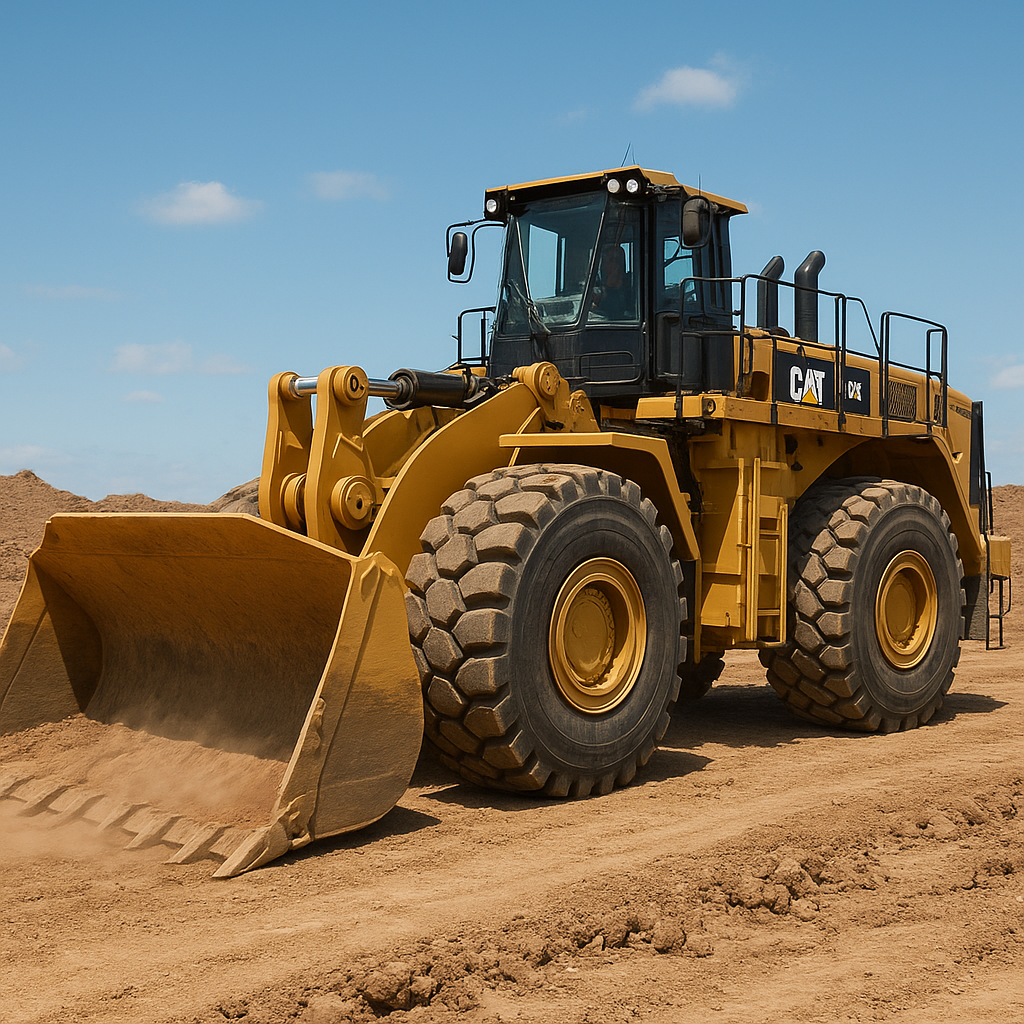
The following article explores the Caterpillar 854K wheel dozer — a heavy-duty machine widely used in mining, large earthmoving projects and industrial sites. It covers the machine’s design, typical applications, technical characteristics, operational economics, safety features and practical tips for owners and operators. The text aims to present both practical information and useful context for engineers, fleet managers and enthusiasts who want to understand what makes this model effective on large projects.
Design philosophy and core features
The Caterpillar 854K is engineered to deliver robust pushing capability while maintaining mobility and operating efficiency on large sites. The machine exemplifies a design balance between raw force and maneuverability. Key design goals include maximizing productivity per hour, minimizing downtime, and providing a comfortable and safe environment for the operator.
Powertrain and drivetrain
At the heart of the 854K lies a heavy-duty powertrain designed to cope with persistent load cycles typical for dozers working in mining and heavy earthmoving. The drivetrain typically includes a powerful diesel engine, a multi-stage torque converter and planetary final drives. The combination of components provides the tractive effort needed to move large volumes of material while controlling fuel consumption.
The powertrain is engineered for durability and ease of service. Heavy-duty cooling, oil filtration and access panels reduce routine-service time. Many units incorporate electronic engine management that helps optimize fuel injection and performance across load ranges.
Frame, axles and undercarriage
The frame and axles on the 854K are built to withstand repetitive impact and lateral loads. The axles are robust, high-capacity units designed for high torque transmission with extended service intervals. The wheel and axle design contributes to stability and pushing force while allowing mobility over rough terrain found in quarries, mines and port reclamation sites.
Blade and hydraulics
The blade system of the 854K is a defining element of its capability. It is hydraulically controlled with multiple adjustment axes — lift, tilt and angle — to adapt the cutting and spreading profile to the material and site conditions. Blades are offered in several configurations (straight, universal, and combination types) and sizes to fit different workflows. Hydraulics are sized for consistent blade control under heavy loads and often include features like load-sensing pumps to improve efficiency.
Operator environment
The operator cabin is designed with ergonomics and visibility in mind. Elevated seating, wide front glazing and camera options for rear and side views improve safety and precision during dozing tasks. Controls are laid out to reduce operator fatigue during long shifts, and climate control systems maintain comfort in extreme climates.
Caterpillar emphasizes operator comfort and serviceability to keep machines productive and reduce total cost of ownership.
Where the 854K is used: typical applications
The Caterpillar 854K is tailored for large-scale, continuous pushing tasks. Its typical work environments include:
- Open-pit mining — pushing overburden, windrows and stockpiles where continuous force and reliability are critical.
- Aggregate quarries — moving blasted rock, shaping benches and feeding crushers.
- Large civil engineering projects — mass grading, levee construction and large earthworks that require fast cycle times.
- Ports and terminals — reclaiming and spreading bulk materials such as coal or mineral concentrates.
- Heavy infrastructure projects — dam construction, runway preparation and other projects that require heavy pushing capacity.
Because of its balance of mobility and force, the 854K often replaces older track-type dozers in applications where ground bearing pressure control and speed of relocation between work faces matter. The machine’s wheels allow faster repositioning and lower infrastructure damage compared with tracked machines in some contexts.
Material-handling scenarios
Operators commonly use the 854K for rear-pushing and windrow forming. In push-and-spread cycles, blade control and machine momentum determine productivity. On bench operations, the 854K can clear haul roads and maintain benches at a rate that complements high-capacity haul trucks.
Performance and typical specifications
Specifications vary with configuration, market region and optional equipment. Below are approximate, typical figures and performance indicators for a machine in the 854K class. These numbers should be treated as indicative; consult official Caterpillar documentation or a dealer for precise values for a specific serial number and fitted options.
- Operating weight: approximately 40,000–55,000 kg (40–55 tonnes), depending on blade, ripper and ballast options.
- Engine power (gross, typical range): around 350–450 kW (470–600 hp), though specific engine tuning and emissions packages change net power.
- Blade capacity: commonly between 8–14 m³, depending on blade type (straight, universal) and material density.
- Top travel speed: typically 30–40 km/h in transport mode; working speeds are much lower and depend on ground conditions.
- Fuel consumption: highly dependent on duty cycle; typical heavy pushing consumption can range from 35–70 L/h in heavy operations, with lower consumption during light grading or idle periods.
- Hydraulic system pressure and flow: designed to support blade control and steering with sufficient responsiveness; specific values differ by model year and option.
- Ground pressure: variable depending on tire selection and ballast; wheel dozers are usually optimized to balance flotation and traction.
These performance figures reflect the machine’s focus on sustained power delivery and blade efficiency rather than short-burst acceleration. The emphasis is on torque and traction to maintain momentum when pushing dense or compacted materials.
Operational metrics that matter
For fleets deploying the 854K, the most relevant metrics include cubic meters moved per hour, fuel consumed per cubic meter, mean time between failures (MTBF) and service-hour cost. Operators commonly track:
- Production rate (m³/h) at a typical pushing depth and cycle length.
- Fuel economy (L/m³) to compare machines and select optimal configurations.
- Service interval length and average repair cost per operating hour.
- Operator productivity measures such as shift utilization and effective working hours.
Durability, maintenance and lifecycle costs
Heavy machines like the 854K are capital-intensive assets. Understanding lifecycle costs is essential for procurement and operation planning. Caterpillar designs these machines for extended component life, but achieving low lifecycle cost depends on preventive maintenance and correct application.
Maintenance priorities
- Engine and cooling system maintenance — high ambient dust and heat increase the need for cooling system flushing, filter changes and coolant checks.
- Hydraulic system service — monitoring for contamination and maintaining correct fluid levels preserves hydraulic pump life and cylinder seals.
- Axle and bearing inspection — final drive and axle seals are critical; timely oil changes and leak repairs prevent catastrophic failure.
- Blade wear parts — cutting edges and end bits wear out depending on material abrasiveness and should be rotated or replaced to maintain cutting efficiency.
Planned maintenance programs, parts kits for routine services, and remote monitoring (telemetry) can significantly reduce unplanned downtime. Many operators use Cat Product Link or similar telematics platforms to track fuel usage, idle time and health codes.
Resale, residual value and asset management
The residual value of wheel dozers depends on hours, maintenance history and local market demand. Machines with documented service records and lower hours command higher resale prices. Regular refurbishment of cabs and repainting, together with replacement of high-wear components, helps preserve asset value.
Safety, ergonomics and operator aids
Modern Caterpillar machines integrate safety systems to protect people and reduce risk exposure on complex sites. The 854K includes features and optional packages that target operator safety and site compliance.
Visibility and collision mitigation
Machines are often equipped with CCTV cameras, proximity sensors and working lights to support night operations. Large mirrors and elevated seating improve sightlines, while audible alarms and beacon lights signal movement to nearby personnel and equipment.
Operator controls and fatigue reduction
Cabs are designed with vibration dampening, climate control and adjustable seats to reduce fatigue. Intuitive control layouts — joystick blade controls, cruise or autoshift features — minimize repetitive strain and improve precision over long shifts.
Attachments, customization and auxiliary systems
The 854K supports a range of attachments and options to match the machine to specific tasks. Common options include:
- Different blade types (straight, universal, combination) and sizes.
- Rear ripper or scarifier for loosening compacted material before pushing.
- Ballast kits to increase traction in heavy-push applications.
- Specialized tires for high-heat or cut-resistant applications, and central tire inflation systems for pressure adjustments on the fly.
- Telematics and remote-monitoring packages for fleet management.
Customization allows fleet managers to match machine configuration to site productivity targets, reducing fuel per ton moved and increasing shift throughput.
Environmental considerations
Emissions regulations and site environmental policies influence engine choice and aftertreatment systems. Many modern Cat engines are equipped with advanced exhaust aftertreatment to meet Tier 4/Stage V standards, including diesel particulate filters (DPF) and selective catalytic reduction (SCR) where required. Operators should plan for:
- Periodic DPF regeneration and monitoring.
- Adherence to fuel quality and additive specifications for emissions system longevity.
- Noise mitigation strategies in urban or noise-sensitive areas (cab insulation, mufflers, operation scheduling).
Fuel efficiency improvements and targeted operator training can reduce greenhouse gas emissions per cubic meter of material moved.
Costs, procurement and financing
Purchasing and operating a machine like the 854K require a clear view of capital and operating costs. Key cost drivers include purchase price, financing interest, fuel and maintenance. Many organizations evaluate total cost of ownership (TCO) over a multi-year horizon using scenario-based modeling to compare new versus used machines.
Leasing and rental market
For projects with limited duration or variable requirements, renting a wheel dozer can be attractive. Rental fleets often offer well-maintained machines with support packages, reducing the immediate capital burden. Leasing and operating leases can preserve cash flow while providing upgrade flexibility.
Fuel and personnel
Fuel is often the single largest operating expense after depreciation. Operator training to improve cycle efficiency and minimize idle time yields measurable savings. Preventive maintenance that extends component life also reduces unscheduled repair costs and keeps machines working when they are needed most.
Field performance examples and practical tips
Across multiple industries, the 854K commonly demonstrates strong results where continuous pushing and material spreading are primary tasks. Below are condensed practical tips drawn from real-world applications:
- Match blade type to material: choose a universal blade for loose, flowing materials and a straight blade for precise cutting and spreading of cohesive soils.
- Use ballast strategically: increasing machine weight improves traction but also raises fuel consumption; find the balance that maximizes productivity per liter.
- Monitor tire wear and maintain correct pressure: uneven tire wear reduces traction and increases fuel use.
- Leverage telematics for preventive maintenance: track engine hours, oil analysis results and fault codes to schedule service before failures occur.
- Train operators on efficient push techniques: consistent, moderate-speed pushing often uses less fuel per ton than repeated high-throttle efforts.
Market context and alternatives
The 854K competes in a market with other large wheel dozers and, in some applications, with large track-type dozers. The choice between wheel and track machines depends on:
- Need for mobility between faces (favoring wheels).
- Soft ground and flotation requirements (tracks may be better in very soft soils).
- Maintenance preferences and existing shop expertise.
- Availability of parts and local dealer support.
Wheel dozers like the 854K often win where speed of relocation, lower damage to paved surfaces and reduced track maintenance are priorities. Track dozers remain advantageous in sticky soils and high-rimpull tasks where flotation is less critical than in-place traction.
Conclusion — practical summary
The Caterpillar 854K is a heavy-class wheel dozer designed for demanding applications where continuous pushing capacity, mobility and serviceability matter. Key attributes include robust powertrain design, adaptable blade systems and an operator-focused cab. Typical spec ranges give a sense of the machine’s scale—operating weights often fall in the 40–55 tonne range with engine power in the several-hundred-kilowatt band. For fleet managers and operators, the critical success factors are correct configuration (blade, ballast, tires), disciplined preventive maintenance and operator training to maximize cubic meters moved per liter of fuel.
When evaluating the 854K against alternatives, consider site-specific requirements such as ground conditions, travel distances, production targets and support infrastructure. Properly specified and maintained, the 854K can be a highly productive, durable asset in the fleet for heavy earthmoving and mining tasks.
)
)