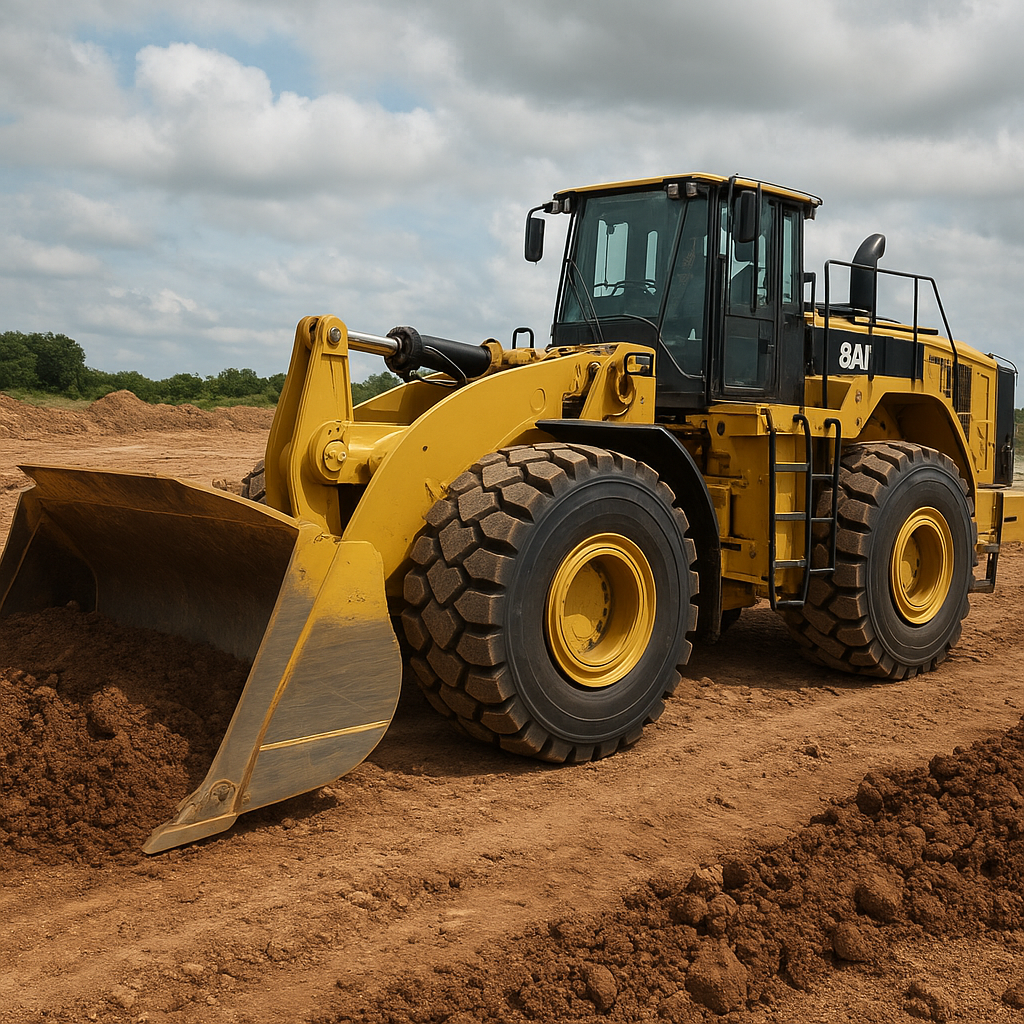
The Caterpillar 834K wheel dozer is a heavy-duty machine designed for demanding material-handling and earthmoving applications. Combining high tractive effort, robust structure, and modern operator comforts, the 834K represents a solution for mining, quarrying, heavy civil construction, and large-scale reclamation projects where speed, mobility, and productivity are essential. This article outlines the machine’s characteristics, typical uses, technical highlights, operational considerations, and market-context information useful for fleet managers, operators, and project planners.
Overview and design philosophy
The Caterpillar 834K belongs to a family of large wheel dozers engineered to move large volumes of material quickly while retaining the maneuverability benefits of wheeled machines. Compared to track dozers, wheel dozers offer higher travel speeds, simpler undercarriage maintenance, and greater efficiency in applications that require frequent repositioning across hard or firm surfaces.
Key design goals for the 834K include structural durability, ease of service, and operator productivity. The layout places emphasis on robust frame components, reinforced articulation and steering systems, and modular components for faster maintenance cycles. Caterpillar incorporated improvements in hydraulics, drivetrain control, and cab ergonomics in the K-series to raise availability and reduce life-cycle cost relative to previous models.
Technical specifications and performance
The 834K is a substantial machine; while exact specifications can vary depending on configuration and optional equipment, the following outlines the characteristic technical elements and typical performance figures associated with this wheel dozer class.
Engine and drivetrain
The power unit in the 834K is a high-displacement diesel engineered for continuous heavy load operation, with emphasis on torque delivery across a wide rpm range. The engine is matched to a heavy-duty powershift transmission and an advanced torque converter to provide rapid acceleration under load and efficient grading or pushing operations.
- Engine: robust, turbocharged diesel designed for high torque at low engine speeds.
- Transmission: multi-speed powershift with lock-up capability, designed for smooth directional changes and load distribution.
- Drive system: heavy-duty axles and differentials sized for high drawbar pull and extended service intervals.
Typical horsepower figures for machines in this size class commonly fall in the mid- to high-hundred-kilowatt range (often expressed as several hundred horsepower). Exact ratings change with emissions packages and regional variants; for procurement and operational planning, consult Caterpillar specifications for the installed engine option.
Operating weight and dimensions
Wheel dozers like the 834K are built with a heavy frame and reinforced blade mounts to yield high pushing capacity. Operating weight commonly places these machines in the multi-ton range appropriate for large-scale pushing tasks. Typical dimensions emphasize a low center of gravity and wide stance for stability during loading, stockpile construction, and pushing operations on slopes.
- Operating weight: substantial, designed to maximize ground contact force for efficient dozing.
- Tire options include varying sizes and tread patterns to suit rock, coarse gravel, or softer surfaces—selection impacts flotation, traction, and ride quality.
- Dimensions of the blade and machine width are matched to comply with transportation limits in many jurisdictions, while offering large material capacity.
Blade, attachments and implement options
The blade is a central working component, available in multiple shapes to optimize performance for different materials and tasks. Typical blade types include straight (S), semi-U (SU), and universal (U) configurations, each optimized for either spreading, pushing large volumes, or handling rock-laden material. Optional attachments increase versatility:
- Blades: semi-U for large loose material, straight for precise grading, and rock blades for rugged service.
- Rippers: rear ripper options for loosening compacted material prior to dozing.
- Counterweights and ballast: to increase traction and pushing force when required.
- Protective packages: rock guards, underbody protection, and heavy-duty bumpers for mining environments.
Fuel consumption, emissions and operating efficiency
Fuel use for an 834K varies widely with work cycle, duty cycle intensity, and operator technique. Under heavy continuous pushing, fuel burn climbs; during lighter or intermittent work, the machine may operate more economically. Modern engines and control strategies in the K series aim to improve specific fuel consumption through optimized combustion and transmission matching, while emissions-compliant packages reduce NOx and particulate output to meet regional regulations.
- Fuel: large-capacity tanks to reduce downtime between refueling; important when operating in remote sites.
- Efficiency improvements can include automatic idle-down, load-sensing hydraulics, and optimized shift strategies that reduce unnecessary high-rpm operation.
Operator environment and controls
Caterpillar improved cab ergonomics and visibility in the K-series. The operator station focuses on reduced fatigue, intuitive controls, and clear instrument displays to monitor engine, hydraulic and transmission parameters. Key features typically include:
- Suspended and climate-controlled cab with vibration isolation.
- Clear sightlines to blade corners and rear work area.
- Ergonomic joystick or lever controls with programmable settings.
- Integrated display for machine diagnostics, performance monitoring and optional telematics.
Applications and industries where the 834K excels
The Caterpillar 834K is well suited to sectors requiring high-volume material movement and frequent travel across large job sites. Common applications include:
- Mining: pit floor dozing, haul road maintenance, and stockpile management. The wheel dozer’s mobility allows it to reposition quickly between work fronts.
- Quarrying: handling blasted rock, feeding crushers, and maintaining temporary haul routes.
- Large civil works: levee construction, bulk earthworks for dams and reservoirs, and highway embankment construction where rapid material spreading is needed.
- Construction material handling: stockpile building for aggregates, recycled materials, and temporary stockyards.
- Reclamation and environmental projects: contour shaping, capping, and grading in restoration works where a balance of mobility and dozing capability is advantageous.
Compared to track dozers, the 834K is particularly effective where the surface is firm and travelling distance between work areas is substantial. In soft or extremely uneven terrain, track machines may still be preferred for flotation and traction.
Operational considerations, maintenance and lifecycle costs
Maximizing availability and minimizing operating costs for an 834K requires attention to maintenance best practices, application matching, and operator training.
Maintenance and serviceability
Caterpillar designs wheel dozers with service access points and modular components to accelerate routine maintenance. Key maintenance points include engine service intervals, transmission oil and filter changes, drivetrain inspections, tire management, and hydraulic system checks. Preventive maintenance yields longer component life and reduces unexpected downtime.
- Regular inspection of tires is crucial; tire damage or incorrect pressure impacts fuel economy and traction.
- Hydraulic hoses and fittings in heavy-contact areas should be checked frequently for abrasion and leaks.
- Monitoring undercarriage and blade wear parts (cutting edges, end bits, and wear plates) helps plan replacements before failures.
Lifecycle cost factors
Key cost components across the machine’s lifecycle include acquisition price, fuel consumption, maintenance and repairs, downtime, and residual value. To control costs:
- Match machine size and blade configuration to the task to avoid over- or under-specification.
- Use telematics to track fuel burn, idle time, and service intervals.
- Implement operator training programs to reduce unnecessary wear and lower fuel consumption.
Safety, electronics and telematics
Modern iterations of the 834K incorporate both active and passive safety systems along with electronic monitoring tools that support safe and efficient operation.
- Safety features: rollover protection, operator restraint systems, rear and sideview cameras, and improved lighting packages for low-light operation.
- Telematics: optional fleet-management systems provide remote monitoring of machine hours, fuel use, fault codes, and maintenance reminders. These systems allow fleet managers to optimize utilization and plan services proactively.
- Diagnostics: onboard diagnostic systems reduce troubleshooting time and typically provide clear fault codes to enable faster repairs.
Market trends, resale value and fleet integration
Wheel dozers like the 834K are a strategic choice for fleets that prioritize flexibility and productivity across large sites. Market demand often follows investment cycles in mining and civil infrastructure; during periods of high commodity prices or major infrastructure spending, demand for such machines rises.
- Resale value: depends on service history, hours, and condition. Well-maintained machines with documented maintenance and telematics histories command better prices.
- Fleet integration: the 834K can be paired with loaders, graders, and haul trucks; standardized maintenance practices and parts stocking across a fleet can deliver economies of scale.
- Used market: the availability of certified used units provides options for expanding capacity at lower capital cost, though buyers should prioritize machines with good service records and low structural wear.
Best practices for operation and productivity
To extract maximum productivity from an 834K while limiting costs and wear, consider the following operational tips:
- Train operators on machine-specific techniques for efficient dozing, blade control, and transmission use to minimize fuel use and component stress.
- Customize tire selection and pressure to match ground conditions—this improves traction, reduces tire damage, and extends service life.
- Implement planned maintenance schedules and use telematics to reduce idle time and identify early signs of component degradation.
- When moving heavy, abrasive rock, choose rock blades and protective underbody guards to preserve frame and implement life.
- Use appropriate ballast and counterweighting to optimize traction without overloading axles or driveline components.
Statistical and performance benchmarks (typical values)
Exact figures vary by country, emissions configuration and optional equipment. The following are representative benchmarks for a machine in the 834K class. These should be confirmed with current Caterpillar materials for procurement or operational planning.
- Net power: commonly in the several-hundred horsepower range (exact rating varies by engine tuning and emissions options).
- Operating weight: substantial—sized to provide high blade force for pushing and spreading large volumes of material.
- Blade capacities: multiple blade widths and shapes are available; capacities are designed to move hundreds of cubic meters of material per hour depending on material density and operating conditions.
- Fuel capacity: large tanks to support long shifts in remote operations; refueling intervals depend on duty cycle, typically planned to minimize lost productive time.
- Typical fuel burn: varies widely. Under heavy continuous dozing, fuel consumption may be significant; monitoring and operator techniques are the primary levers to control fuel cost.
Choosing between wheel and track dozers
Decision drivers when selecting a wheel dozer such as the 834K versus a track dozer include:
- Travel distance between work sites—wheel machines are faster and consume less under-road time.
- Ground conditions—track machines provide superior flotation on very soft or muddy ground.
- Maintenance preferences—wheels and tires simplify undercarriage upkeep compared to tracks but add tire management responsibilities.
- Application type—material handling and stockpile building often favor wheel dozers; extreme slope work and severe ripping favor tracked dozers.
Final remarks on suitability and procurement
The Caterpillar 834K wheel dozer is a powerful and versatile machine suited to heavy material handling, mining, and large-scale civil works where mobility and pushing capacity are required. When evaluating the 834K for purchase or lease, confirm the exact specifications for the planned configuration, review service and parts support in your region, and consider telematics and protection packages tailored to the operating environment. Matching blade type, tire selection, and optional protective equipment to the job will significantly influence machine productivity, operating cost, and life-cycle value.
For specific numbers on horsepower, operating weight, blade capacity, fuel tank size, and other precise technical data, consult the latest Caterpillar product literature or an authorized dealer to ensure configuration and regulatory compliance for your locale.
)
)