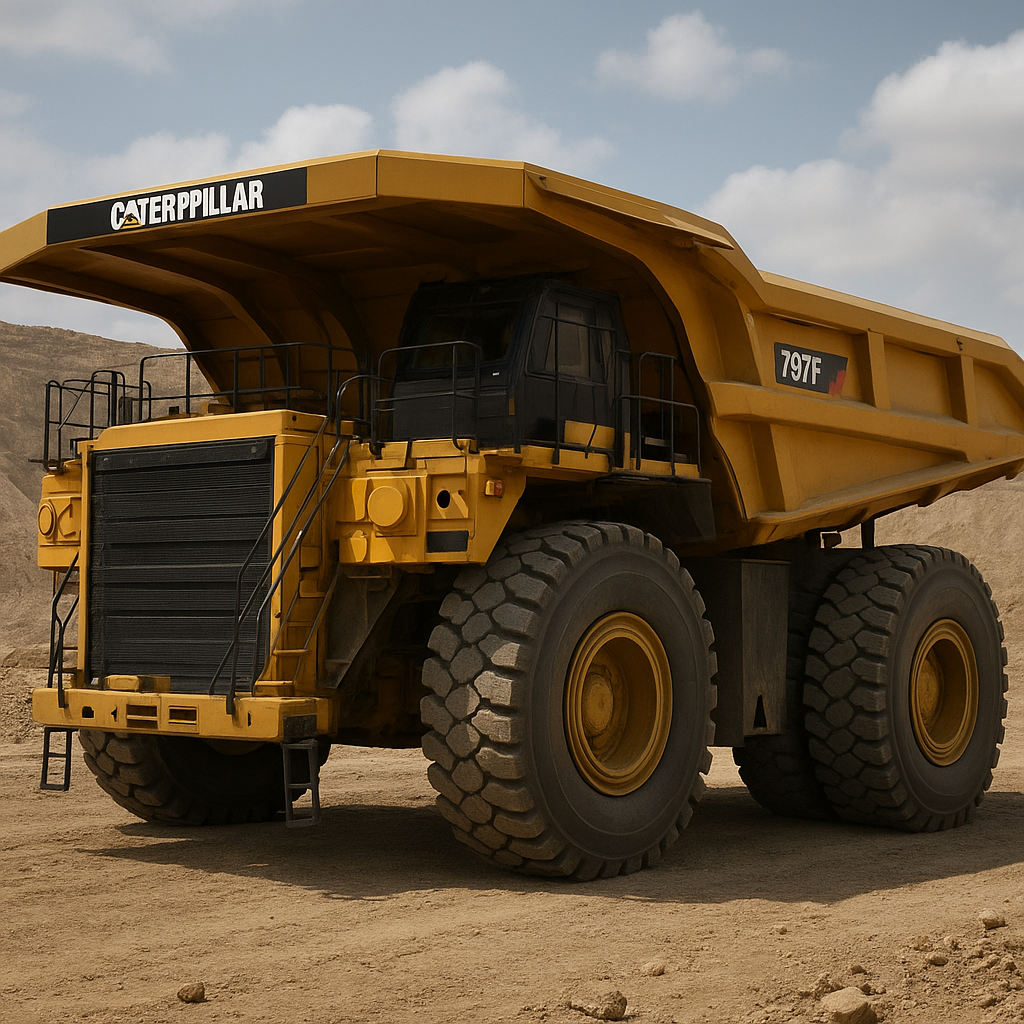
The Caterpillar 797F is one of the most recognizable symbols of modern surface mining: a colossal, purpose-built hauling machine designed to move enormous volumes of material efficiently and reliably. For decades the 797 family has set benchmarks in the industry for payload, durability and technological evolution. The 797F — a high-capacity, diesel-electric haul truck produced by Caterpillar Inc. — combines rugged mechanical design with advanced systems that help mines achieve high productivity while managing operating costs, safety and environmental concerns. This article explores the machine’s design, typical applications, technical characteristics, operational considerations and the broader role the 797F plays in modern mining operations.
Design philosophy and core engineering
The Caterpillar 797F was engineered to address the specific needs of large open-pit mines: moving high volumes of ore and waste rock over short distances while minimizing downtime and lifecycle cost. The vehicle’s underlying design philosophy balances three primary objectives — high payload capacity, robust durability and systems integration for easier maintenance and monitoring.
Structure and frame
The 797F employs a heavy-duty, welded frame engineered to absorb and distribute extremely high loads. Structural components are designed for long fatigue life under repetitive loading and unloading cycles typical in mine haulage. Key structural features include reinforced front and rear box mounts, heavy-duty axles and robust suspension geometry to handle both static and dynamic stresses.
Powertrain and propulsion
One of the defining features of modern large haul trucks like the 797F is the diesel-electric drive system. Rather than a mechanical gearbox driving the wheels, the truck uses a large diesel engine coupled to an electric generator; the generated electrical power feeds traction motors driving the axles. This arrangement provides several advantages: smooth power delivery, excellent low-speed torque for heavy starts, reduced mechanical complexity in the transmission, and simplified control of wheel torque for traction optimization.
The 797F’s powertrain is tuned to combine the engine’s durability with advanced electronic controls and electric traction motors, delivering the high tractive effort necessary to haul maximum loads up grades and across varied pit surfaces.
Operator environment and ergonomics
Given the long shifts and demanding operating conditions, Caterpillar designed the 797F cab to emphasize operator comfort, visibility and control. Features often highlighted include vibration-damped seating, climate control systems engineered for extreme environments, ergonomic control layouts, and integrated displays that provide real-time machine diagnostics, performance metrics and safety alerts. These improvements can reduce operator fatigue and support safer, more consistent operation.
Performance, capacities and typical specifications
The 797F is a member of the ultra-class haul truck category, optimized for very high payloads and heavy-duty duty cycles. While exact numbers may vary with configuration, region and equipment options, some representative figures and performance characteristics are widely cited for the 797F.
- Payload: The 797F is commonly rated at approximately 400 short tons (around 363 metric tonnes). This rating reflects the truck’s designed carrying capacity under typical loading and hauling conditions.
- Drive system: Diesel-electric drive with large traction motors providing high torque at wheel hubs; the configuration improves traction and reliability versus purely mechanical drivetrains in this size class.
- Engine: The truck is powered by a high-displacement diesel engine sized to meet heavy-duty power demands. Engine ratings for machines in this class typically fall in the multi-thousand horsepower range (kilowatt-level power) to move full loads efficiently and climb pit ramps under heavy duty cycles.
- Top speed: Empty top speeds can exceed 60 km/h (≈37 mph) depending on gearing and site restrictions; loaded travel speeds are considerably lower and are restricted by safety and traction considerations.
- Body / dump box: The hauling body is engineered for durability under abrasive loads and may be configured with different liner options (e.g., abrasion-resistant steel, bolt-on liners, or specialized wear packages) depending on the material type and customer preference.
- Braking: Regenerative-style braking and dynamic retarding provided by the electric drive help control downhill speed and reduce wear on service brakes. Service brakes (multiple discs or assemblies) are designed for heavy duty and heat management.
Because manufacturers and mine operators frequently specify optional packages — from enhanced cooling systems for hot environments to specialized load monitoring and telematics — the precise configuration can vary substantially. Nevertheless, the typical 797F configuration optimizes the balance between payload, fuel consumption and component life to reduce cost per tonne moved, the central metric in haul truck economics.
Applications and operational use cases
The primary application of the 797F is in large-scale open-pit mining operations where high volume material movement is required. Typical use cases include:
- Transporting ore from pit faces to crushers or stockpiles.
- Hauling waste rock (overburden) to dumping areas or reclamation sites.
- Supporting large-scale earthmoving for mine expansions and infrastructure development.
- Integrated hauling in multi-shift, high-cadence operations where cycle times and payload consistency are critical.
In practice, a 797F will be paired with large electric rope shovels, hydraulic excavators or loading systems capable of filling the box efficiently to maintain target cycle times. The economics of using such a large haul truck hinge on a reliable loading partner, predictable cycle times, and optimized pit design to minimize empty haul distances and ramp grades.
Typical fleet integration
Large mines often operate fleets of dozens to hundreds of haul trucks across multiple models and brands. The 797F is typically deployed where the mine needs to maximize payload per truck to reduce the total fleet size, operator costs and overall maintenance overhead. Fleet managers balance truck size against shovel capacity, haul road geometry and site economics; in many operations, the 797F enables fewer trucks to deliver the same throughput as a larger fleet of smaller machines.
Technology, telematics and autonomy
Modern 797F trucks are often equipped with advanced onboard systems to improve productivity, safety and uptime. These systems fall into several categories:
- Machine monitoring and diagnostics: Sensors across the drivetrain, engine, hydraulics and structural systems feed diagnostic software to identify wear trends and predict component failure before catastrophic issues occur.
- Payload monitoring: Onboard weighing systems and load sensors help ensure loads are within limits, improving load distribution and preventing overloading that accelerates wear.
- Fleet management and telematics: Integrated systems collect GPS, cycle time, fuel consumption and operator behavior data to support dispatching, performance analysis and maintenance planning.
- Autonomy and remote operation: In recent years, major mining companies and OEMs have developed autonomous haulage systems (AHS) that allow trucks like the 797F to operate without onboard drivers. Autonomy integration focuses on safety (collision avoidance, geofencing), consistent cycle execution and reduced labor exposure to hazardous conditions.
The adoption of autonomous systems has been driven by a desire to increase productivity, reduce variability in cycle times and address workforce safety. Autonomous operations also allow continuous operation in night shifts without decline in performance tied to human fatigue.
Maintenance practices and lifecycle considerations
Given the capital cost of ultra-class haul trucks, mines focus on extending component life and reducing unscheduled downtime. Key maintenance strategies for a 797F-class machine include:
- Condition-based maintenance (CBM): Using sensor data to perform maintenance when indicators suggest it is necessary rather than strictly on calendar intervals. CBM reduces unnecessary parts replacement while avoiding catastrophic failures.
- Predictive analytics: Machine learning models analyze telemetry to predict failures and schedule repairs during planned downtime windows.
- Component remanufacturing and parts pooling: Large mines often establish parts pools and remanufacturing programs for major components (e.g., electric motors, drive modules, axles) to reduce lead time and cost.
- Operator training and standardized procedures: Consistent operator training reduces abusive operating behaviors that accelerate wear, such as harsh starts, overloading, or improper braking patterns.
Because the life-cycle cost is a critical factor, manufacturers and customers evaluate metrics such as cost-per-tonne, hours-between-failure, and parts availability. In many operations, well-executed maintenance programs can extend service life dramatically and significantly lower total cost of ownership.
Safety features and risk management
Operating ultra-class haul trucks involves managing risks from vehicle collisions, rollovers, braking failures and human factors. The 797F integrates numerous safety-oriented features, including:
- Advanced braking systems with dynamic retarding through the electric drive to reduce thermal load on mechanical brakes.
- Collision avoidance systems and proximity detection, often tied into fleet-wide telematics and autonomous-control overlays.
- Enhanced lighting and visibility packages to help operators see and be seen under variable weather and dust conditions.
- Emergency egress systems and cab designs that protect occupants in the event of rollover or impact.
Operational safety is also strongly affected by site design: haul road geometry, berms, traffic management systems and operating procedures (e.g., speed limits and separation zones) play an outsized role in mitigating incidents.
Environmental and economic impacts
At face value, large haul trucks like the 797F consume significant amounts of fuel and produce commensurate emissions. However, their environmental and economic impacts must be evaluated in context:
- Economy of scale: Moving more tonnes per truck can reduce the number of vehicles required for a given throughput, potentially lowering total fuel consumption and emissions per tonne moved when operations are optimized.
- Efficiency improvements: Advances in engine efficiency, optimized haul cycles and idle-reduction strategies can reduce fuel burn. Retrofitting or specifying engines that meet regional emissions standards also helps limit local air impacts.
- Electrification and hybridization: While fully battery-electric ultra-class haul trucks are still nascent due to energy density and charging challenges, diesel-electric architectures and experimentation with trolley-assist (overhead catenary power) are practical near-term options to reduce fuel use and emissions on steep or long haul routes.
From an economic standpoint, the 797F’s value proposition is typically framed as cost-per-tonne moved. When matched to a mine with proper shovel sizing, short haul distances and optimized road systems, the 797F can reduce overall operating costs despite its high acquisition price.
Global deployment and typical operational case studies
The 797F and its counterparts operate in some of the world’s largest mining sites across Australia, North and South America, Africa and Asia. Deployments often focus on copper, iron ore, coal, gold and large bulk commodities where high-volume movement is essential. Several operational trends are notable:
- Integration with large shovels and in-pit crushing systems to minimize empty haul distances and shorten cycle times.
- High utilization rates in mines with continuous operations and multi-shift schedules; these environments tend to justify the capital cost because increased productivity compounds value.
- Use of advanced fleet management systems to choreograph loading and hauling, reducing queuing at shovels and improving overall pit throughput.
In many mines, the 797F’s large payload necessitates matching shovel capacity — for instance, excavators or shovels able to consistently load a 400-ton truck in two to three passes. This pairing ensures loading efficiency and minimizes non-productive loading cycles.
Economic considerations: acquisition, operating cost and resale
Purchasing and operating a 797F-class truck is a major capital decision. Factors considered by mining companies include:
- Capital expenditure and financing: The initial cost for an ultra-class haul truck is substantial; many operators evaluate leasing, rental or fleet management agreements to mitigate capital burden.
- Operating costs: Fuel, tires, parts, labor for operators and maintenance technicians, and downtime. Fuel and tyres represent significant recurring costs that scale with machine size and utilization.
- Resale and reman markets: Due to their robust construction and high rebuild value, major components and whole machines often have residual value. Remanufactured parts and rebuild programs can lower long-term replacement costs.
Most operators perform a rigorous economic analysis before committing to ultra-class trucks, comparing alternatives including a greater number of smaller trucks versus fewer ultra-class units. The optimal choice depends on shovel capacity, haul profiles, availability of skilled operators, and site-specific logistics.
Future trends and the evolving role of ultra-class haul trucks
Several trends are shaping the future of machines like the Caterpillar 797F:
- Greater automation: Autonomous haulage systems are becoming more common in greenfield and retrofit contexts, promising improved consistency and reduced labor risk exposure.
- Electrification and trolley-assist adoption: To reduce fuel consumption and emissions, mines are increasingly considering electrified haul corridors or hybrid power systems.
- Digital twins and advanced analytics: Predictive maintenance and digital twin models that simulate truck behavior and component stress can further reduce downtime and extend component life.
- Material handling innovation: Changes in how ore is processed and staged (e.g., in-pit crushing & conveying systems) can reduce reliance on long haul truck fleets, influencing future demand and deployment strategies for ultra-class trucks.
These trends suggest the 797F will continue to evolve in capabilities while its role may be reshaped by broader mine electrification efforts and material handling innovations.
Summary and concluding remarks
The Caterpillar 797F represents an apex in haul truck design for large surface mining operations: a heavy-duty, high-payload vehicle engineered to deliver consistent throughput while offering advanced systems for monitoring, safety and maintenance. Its diesel-electric drive, large-capacity body and robust frame make it suited to the heaviest haul cycles. The machine’s value is realized when matched with appropriate loading equipment, optimized haul roads and disciplined maintenance and fleet management practices.
Key themes surrounding the 797F’s deployment include maximizing throughput and minimizing cost-per-tonne, integrating telemetry and autonomy to improve consistency and safety, and exploring electrification or trolley-assist options to reduce fuel usage and emissions. For major mining companies investing in long-life assets, the 797F remains a proven choice for operations where moving large volumes quickly and reliably is paramount.
Key highlighted terms:
- Caterpillar 797F
- haul truck
- payload
- engine
- horsepower
- fuel efficiency
- autonomous
- mining
- maintenance
- operator comfort
)
)