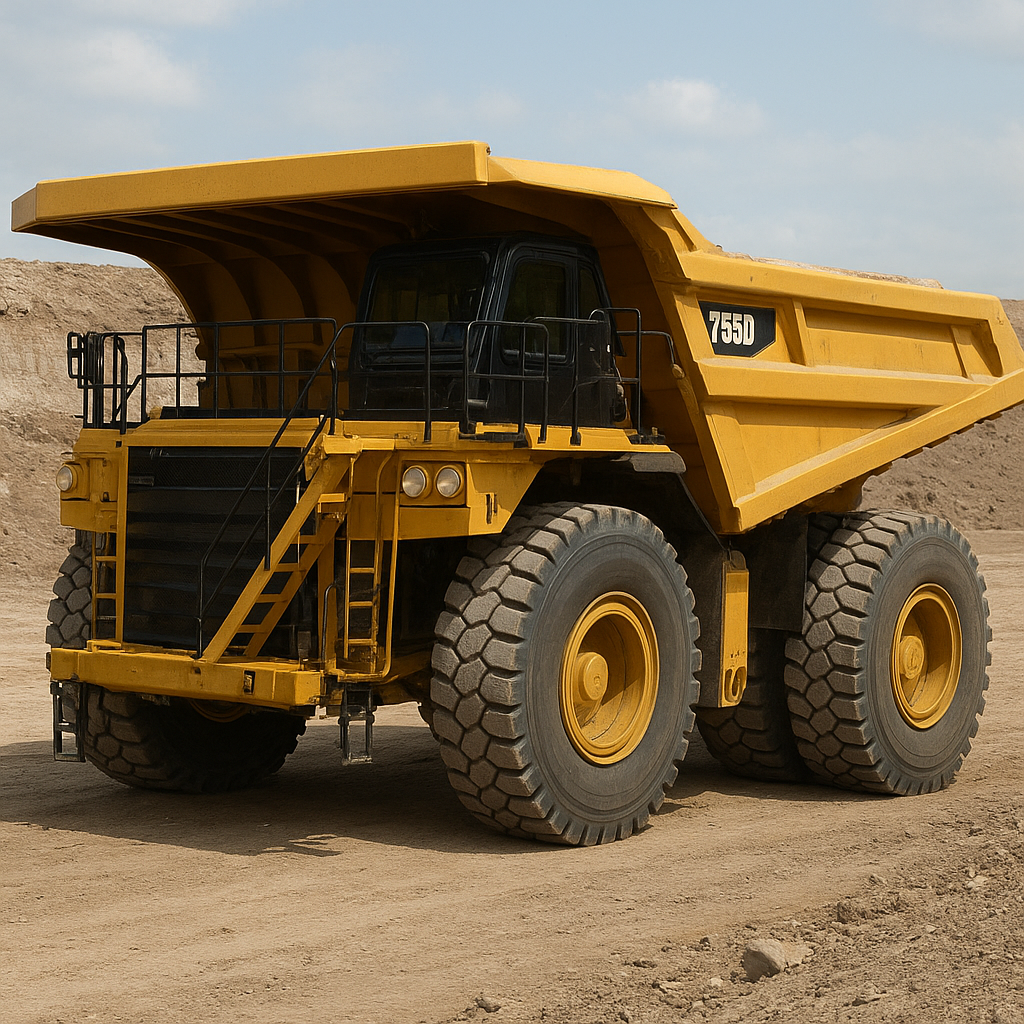
The Caterpillar 785D is a stalwart of large-scale surface mining and heavy earthmoving operations worldwide. Designed to move very large volumes of material quickly and reliably, this model belongs to a class of mechanical behemoths that shape open-pit mines, quarries and major infrastructure projects. In the following sections you will find an in-depth look at the machine’s origins, design principles, typical applications, operational performance, maintenance practices and economic and environmental considerations. The article includes approximate technical data and practical notes to help engineers, fleet managers and enthusiasts better understand what makes the 785D a widely used mining haul truck.
Overview and historical context
The Caterpillar 785D evolved from earlier iterations of Caterpillar’s 70–100 ton class haul trucks, intended to bridge the needs between smaller haul trucks and the largest ultra-class machines. The 785 series has been valued for combining high productivity with relatively simple maintenance and strong parts support. This balance has made the 785D popular in operations where consistent, heavy-duty performance is required without the extreme logistics of the largest haul trucks.
Introduced as part of a lineage of 785 models, the 785D embodied incremental improvements in engine management, drivetrain robustness and operator ergonomics compared with predecessors. Over its service life the model found homes in a variety of operations, from metalliferous and coal mines to large-scale quarrying and major civil earthworks.
Design, construction and main components
Chassis and frame
The 785D chassis is engineered to withstand continuous high-cycle loading typical in mining. The frame and suspension systems are overbuilt relative to on-road trucks to tolerate shock loads from uneven haul roads and frequent stops and starts. The truck’s overall architecture — rear-dump body, rigid frame, and independent front steering — is optimized for robustness and predictable load dynamics.
Powertrain and drivetrain
The powertrain of the 785D typically consists of a large diesel engine coupled to a torque converter or often to an AC drive system in later or upgraded configurations. The emphasis is on delivering sustained torque at low engine speeds to move heavy payloads efficiently. The drivetrain components — axles, differential and final drives — are sized to handle heavy cyclical loads and frequent directional changes.
- Engine: Large-displacement diesel optimized for torque and durability.
- Transmission: Heavy-duty automatic or torque-converter transmission; later variants or retrofits may include AC electric drive options for improved traction control and reduced mechanical wear.
- Axles and brakes: High-capacity axles with multiple wet-disc braking systems, often supplemented with retarding technologies such as engine braking to manage downhill speed in mines.
Body and payload handling
The dump body on the 785D is designed for rapid loading and reliable material ejection. Typical bodies are built from abrasion-resistant steel and can be fitted with liners, ejector systems or specialized geometry for sticky ores or cohesive material. Load distribution, bed geometry and center of gravity are critical to safe operation and maximize effective payload per cycle.
Operator cab and controls
Ergonomics and visibility are focal points: the cab is elevated for a broad field of view, instrument clusters are laid out for quick information access, and HVAC and seating systems are designed for long shifts. Many 785D trucks have been retrofitted with modern telematics, camera systems and collision avoidance systems to enhance safety and fleet coordination.
Typical technical data and performance indicators
Exact technical specifications can vary by configuration, year of manufacture and optional equipment. What follows are typical performance ranges and figures commonly associated with the 785D class, useful for planning and comparative evaluation. For definitive numbers, consult the specific machine’s data plate or Caterpillar documentation.
- Nominal payload: commonly in the range of approximately 80–100 metric tonnes (varies by configuration and regional designation).
- Gross machine operating weight: often between 100,000 and 140,000 kg depending on fuel, body choice and ballast.
- Engine power: large diesel engines, typically rated in the several hundred to low thousands of kW (commonly expressed in several hundred to over a thousand horsepower equivalent depending on model variant and tuning).
- Top speed: unloaded top speed could be in the order of 40–60 km/h; fully loaded operational speeds are much lower and depend on grade and safety rules.
- Fuel consumption: highly variable with load and cycle, commonly measured in liters per hour; average fleet fuel burn is managed by duty cycle optimization and engine tuning.
- Turning radius and dimensions: large and requiring wide turning envelopes and well-built haul roads and ramps.
Note: these figures are approximate and intended to indicate the order of magnitude. Operators should always rely on the machine’s official technical manual for planning and engineering design.
Applications and operating environments
Open-pit mining
One of the primary roles for the 785D is transporting blasted ore and waste from the excavation face to primary crushers, stockpiles and waste dumps. The truck’s design favors continuous operation, robustness and simple servicing so it can be integrated into high-cycle mining benches.
Quarrying and aggregate production
Large quarries benefit from the 785D’s payload capability for moving rock and aggregate from pit faces to processing plants. The capacity to take relatively large loads reduces the number of cycles required, improving throughput for high-volume operations.
Major civil construction and bulk earthworks
For projects involving large-scale cut-and-fill operations — dams, highways, canal works — the 785D provides heavy-duty hauling capability that can speed earthmoving and reduce the number of trucks required.
Specialized or regional deployments
Operators sometimes adopt variants or retrofit 785D trucks for unique applications: waste hauling at mining complexes, transporting overburden across long benches, or serving as part of mobile stockpile transfer systems. The truck’s relative simplicity and strong aftermarket support make it adaptable to local needs.
Operational performance, productivity and fleet integration
Cycle times and payload optimization
Productivity is primarily a function of payload delivered per hour, which depends on payload capacity, travel distance and cycle time (loading, haul, dump, return). Fleet planners use payload optimization and truck-shovel matching to maximize tonnage moved per shift. The robust body and wide payload envelope of the 785D make it attractive where consistent heavy loading is required.
Fuel efficiency and cost per tonne
Fuel consumption is a major cost driver in mining operations. While larger ultra-class haul trucks may be more fuel-efficient on a per-tonne basis at extreme payloads, the 785D often provides an attractive balance between capital cost, fuel use and operational flexibility, especially in medium-to-large mines where ultra-class trucks are not economical or physically necessary.
Telematics and fleet management
Modern mine fleets increasingly rely on telematics to monitor fuel use, idle time, cycle time, maintenance needs and key performance indicators (KPIs). Retrofitting 785D trucks with fleet management systems can yield substantial improvements in throughput and reductions in unscheduled downtime by enabling predictive maintenance and data-driven dispatching.
Maintenance, lifecycle and reliability
Planned maintenance
Planned maintenance intervals for major components — engine, transmission, axles — are governed by hours of operation, environmental conditions and fleet policies. Regular inspections of structural components, hydraulic systems and braking systems are critical. Many operations adopt condition-based maintenance (CBM) using oil analysis, vibration monitoring and thermography to extend component life while reducing unplanned failures.
Common wear items and rebuilds
- Brake assemblies and retarding systems
- Final drives and axle seals
- Body liners and bed repairs due to abrasion
- Engine and transmission overhaul at major intervals
Because haul trucks are subject to continuous heavy loads, scheduled component rebuilds (e.g., engine and transmission overhauls) are part of typical lifecycle planning. A well-managed 785D fleet can achieve many thousands of operating hours before major component replacement, provided maintenance regimes are followed closely.
Safety features and operator considerations
Safety is a top priority in mining operations. The 785D’s safety suite often includes the following:
- High-visibility cab design and integrated camera systems to reduce blind spots.
- Railing and access steps designed for safe ingress and egress.
- Robust braking systems and hill-hold features for steep ramp control.
- Warning systems for overload, high coolant temperature or hydraulic issues.
- Integration with site-wide collision avoidance and proximity detection systems.
Operator training is essential to achieve safe and efficient use. Proven training programs focus on proper loading techniques, speed control on ramps, pre-start inspections and emergency procedures.
Economic and environmental considerations
Capital cost vs. lifecycle cost
Decision-making for truck selection typically compares upfront purchase price with lifecycle operating costs: fuel, maintenance, parts, tires and downtime. The 785D often presents a lower acquisition cost than ultra-class trucks while still delivering high hourly tonnage in many contexts. Fleet sizing, matching to loaders or shovels, and route optimization heavily influence the cost-per-tonne metric.
Emissions and fuel stewardship
Like all large diesel-powered machinery, emissions are a consideration. Operators can pursue several strategies to reduce environmental impact:
- Engine tuning and regular maintenance to keep emissions and fuel use within design parameters.
- Retrofitting with after-treatment systems where local regulations or corporate policy require reduced NOx and particulate emissions.
- Using higher-efficiency routes and minimizing idle time through telematics and improved dispatching.
Alternative powertrains and future directions
The mining industry is testing hybrid and electric haulage concepts. While the 785D is traditionally diesel mechanical or diesel-electric, retrofits and new designs in the same capacity envelope are exploring battery assist, trolley assist and full-electric solutions to reduce emissions and operating costs. The adaptability of mid-size and large haul trucks makes them candidates for phased modernization within existing fleets.
Fleet management, resale and global support
Caterpillar’s global dealer network and parts availability have helped make the 785D a long-lived asset for many mining companies. Key considerations for fleet managers include:
- Availability of local parts and experienced technicians to minimize downtime.
- Resale value: machines with documented maintenance histories and telematics records typically command higher resale prices.
- Upgrade and retrofit pathways: installation of improved braking, telematics and emission controls can extend useful life and regulatory compliance.
Used 785D trucks remain active in secondary markets, particularly where operators need robust capacity without the highest capital outlay. Their mechanical simplicity relative to the newest ultra-class trucks makes them attractive to operators with competent maintenance teams.
Notable operational examples and real-world insights
Across various mines the 785D has been used for decades to move both ore and overburden. Some real-world observations from operations that have deployed the 785D include:
- Strong reliability when maintenance schedules are adhered to and when haul roads are well maintained.
- Good match to mid-sized shovels and loaders in terms of payload and cycle cadence.
- Ease of training new operators due to straightforward controls compared with more complex systems.
Many sites have reported that the most significant productivity gains come not from incremental machine upgrades but from improvements in road maintenance, loading discipline and fleet coordination — areas where the 785D performs well when integrated into a data-driven operation.
Summary and practical recommendations
The Caterpillar 785D is a proven workhorse for heavy hauling in mining, quarrying and large civil earthworks. Its value lies in a balance of robust construction, manageable operating costs and adaptability in medium-to-large production environments. For operators considering the 785D or similar machines, practical recommendations include:
- Match truck capacity to shovel or loader cycle times to avoid under- or over-utilization.
- Implement telematics early to measure KPIs such as fuel burn, idle time and cycle efficiency.
- Adopt condition-based maintenance to extend component life and reduce unscheduled downtime.
- Consider environmental retrofits and operational changes (idle reduction, route optimization) to reduce fuel use and emissions.
- Ensure operator training emphasizes safety on grades and correct loading procedures for consistent payload distribution.
With thoughtful fleet management, the 785D remains a cost-effective and reliable choice for many heavy-haul applications. Its balance of capacity, durability and relative simplicity continues to make it relevant even as the industry explores electrification and automation.
Key words highlighted
The most essential concepts emphasized in the article include: Caterpillar 785D, haul truck, payload, engine, horsepower, fuel efficiency, reliability, maintenance, operator and safety.
)
)