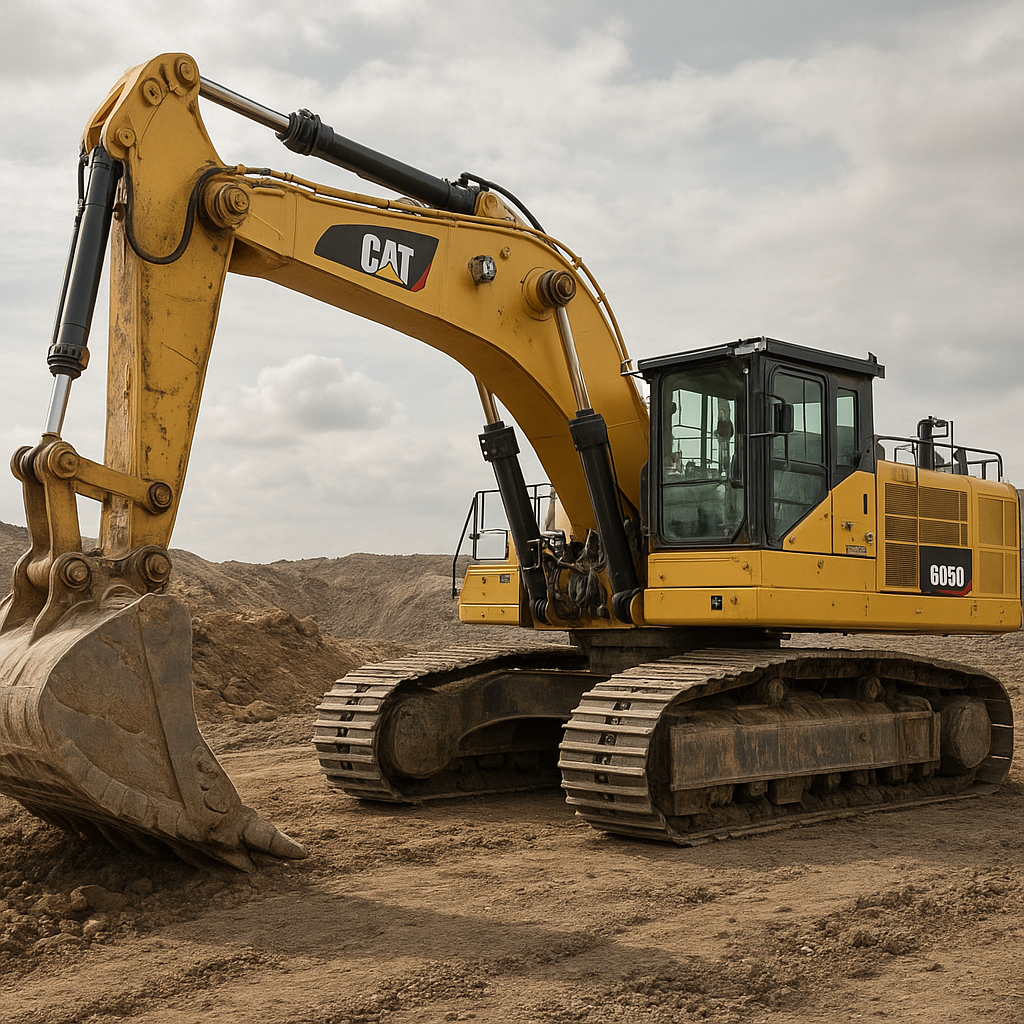
The Caterpillar 6030 is a purpose-built large hydraulic mining excavator designed for the demanding conditions of modern open-pit mining. Combining scale, robustness and modular design, the 6030 is intended to move large volumes of overburden and ore with high availability and predictable operating costs. This article outlines the machine’s core characteristics, typical applications, key technical and operational considerations, and other interesting information relevant to mine operators, fleet managers and equipment enthusiasts.
Design and technical characteristics
The Caterpillar 6030 follows the design principles common to large hydraulic mining shovels: a heavy-duty undercarriage, a powerful hydraulic system driving a large dipper or bucket, and serviceable structures that can be rebuilt during the machine’s life. The 6030 is built to prioritize uptime, maintainability and ease of integration into a mining fleet.
Powertrain and hydraulics
- The machine uses a heavy-duty diesel engine (or in some configurations, an integrated electric-drive option through hybridization or electric rope shovel alternatives), coupled to a high-capacity hydraulic system. This hydraulic system supplies the cylinders and motors required for boom, stick, swing and hoist functions.
- Power output and hydraulic flow rates are scaled to deliver high digging forces while enabling controlled, precise movements required for loading trucks and managing bench conditions.
Structural components
- The undercarriage and superstructure are engineered for cyclic loads and abrasive environments, with wear-resistant materials used in critical areas such as the boom, stick, and bucket-linkage pins.
- Key components like the final drives, swing gear, and hydraulic piston rods are designed for rebuildability—allowing for multiple major overhauls across the machine’s service life.
Bucket and attachments
A primary feature of the 6030 is its range of bucket sizes and attachment options that allow adaptation to different material types and cycle-time requirements. Bucket capacities for machines in this class typically fall in the mid-to-high tens of cubic meters, with options for:
- Standard mining buckets optimized for maximum payload per cycle
- Rock buckets with reinforced lips and side cutters for abrasive, hard material
- Specialized attachments such as hydraulic breakers and ripper-style tools for preconditioning hard benches
Applications and operational use
The Caterpillar 6030 is primarily used in large-scale surface mining operations where large volumes of material must be moved quickly and reliably. Its typical roles include:
- Loading haul trucks in open-pit mining operations for commodities such as copper, iron ore, coal and gold
- Removal of overburden and waste rock during pit development
- Primary excavation duties in large civil earthworks projects where continuous high productivity is required
Mining environments
In mining, the 6030 is most commonly found in benches with large haul trucks (100–400 tonne class) where its cycle time and bucket capacity match the truck fleet, providing efficient truck loading cycles and good fleet productivity. Its robustness also allows use in harsh climates and abrasive ground conditions, such as:
- High-altitude copper and gold mines with cold conditions
- Desert operations where dust and heat stress components
- Tropical mines with high humidity and heavy rainfall
Operational flexibility
Operators can configure the machine for specific tasks by changing buckets and control settings. Modern 6030 units support advanced operator aids such as payload monitoring, automated boom control profiles for consistent swing speeds, and telematics that allow remote diagnostics and performance tracking. These systems support improved cycle consistency and reduced fuel consumption over time.
Performance, capacity and typical specifications
Specifications vary by configuration, but certain performance characteristics are common across machines deployed as the Caterpillar 6030. The numbers given here are indicative ranges to reflect typical installations rather than a single factory spec sheet.
- Operating weight: commonly in the range of several hundred tonnes; operators can expect a machine of this class to weigh between about 400 and 700 tonnes depending on configuration and attachments.
- Bucket capacity: typical bucket volumes range from roughly 20 to 35 cubic meters for payload-focused configurations; specialty buckets or multi-pass buckets can be outside this range.
- Engine power: hydraulic power units are sized to deliver high torque and flow; installed engine power generally falls within a wide band to suit different regional emissions and powertrain choices.
- Cycle times: a full dig, swing and dump cycle depends heavily on bench geometry, operator technique and material hardness; typical cycles when loading matched trucks are optimized to minimize truck idle time.
- Payload per hour: fleet productivity is measured in tonnes per hour—optimally matched fleets with 6030-class excavators can move many thousands of tonnes per hour depending on truck size and mine layout.
Because of variable configurations and the range of operating conditions, precise factory figures should be reviewed with the manufacturer or the equipment supplier to determine the exact specification for a given procurement.
Maintenance, lifecycle and economics
One of the key selling points of machines like the Caterpillar 6030 is the predictable maintenance cycle and the possibility of staged rebuilds that spread lifecycle costs. Major points for fleet managers include:
Planned maintenance and component life
- Routine maintenance covers daily checks, hydraulic-filter changes, lubrication of pins and bushings, and inspections of structural wear areas.
- Hydraulic components and engines are typically on scheduled intervals measured in operating hours; filters, fluids and seals are replaced according to service plans.
- Large components such as the undercarriage, swing gear, and boom may be reconditioned or replaced after tens of thousands of hours depending on usage and environment.
Lifecycle cost drivers
Major cost drivers for the 6030 class include fuel consumption, wear parts (buckets, teeth, lip segments), major component rebuilds, and downtime. Measures that reduce lifecycle cost include:
- Proactive condition monitoring using telematics and oil analysis
- Operator training to maximize digging efficiency and reduce abusive cycles
- Use of correct attachment selection for material type
Residual value and rebuild economy
Large mining excavators retain value because their main structures can be rebuilt multiple times; many mines opt to rebuild major components (engine overhaul, hydraulic pumps, boom reconditioning) rather than replace the whole machine. The rebuild economy and availability of OEM or aftermarket kits influence decisions to retain machines beyond initial service life.
Safety, technology and environmental considerations
Safety and environmental performance are integral to the design and deployment of large mining excavators such as the Caterpillar 6030. Manufacturers have focused on features that improve operator safety, reduce environmental impact and integrate machines into broader mine digital ecosystems.
Safety features
- Ergonomically designed cabs with visibility improvements, climate control and vibration isolation to reduce operator fatigue
- Access platforms and handrails to support safe climbing and maintenance
- Certified fall-protection anchor points and lockout/tagout procedures for service
- Advanced machine control and collision-avoidance integrations in some installations
Telematics and automation
Modern 6030 units commonly incorporate telematics for remote monitoring—collecting data on fuel use, hydraulic performance, engine diagnostics and equipment location. Integration with fleet management suites allows:
- Real-time performance dashboards
- Predictive maintenance alerts
- Automated reporting for regulatory and operational purposes
Environmental management
Environmental considerations include fuel consumption, emissions compliance (driven by regional regulations), and spill prevention during maintenance. Operators pursue strategies such as optimizing cycle times, using fuel-efficient control maps, and adopting oils and lubricants with lower environmental impact to reduce the machine’s footprint.
Interesting operational notes and case uses
There are several operational practices and notable use cases that highlight the value of machines in the 6030 class:
- High productivity comes from matching the excavator’s strike energy and bucket size to the haul-truck fleet. A poorly matched combination leads to longer cycle times and reduced utilization.
- In many large mines, these excavators operate in 24/7 shifts, with scheduled maintenance windows tightly coordinated to minimize lost production.
- Reclaimed and refurbished 6030-class machines often find second service lives in developing mines or large civil works where the capital cost of new machines would be prohibitive.
Training and human factors
Because cycle consistency and operator technique have a direct effect on fuel burn and throughput, many operations invest heavily in operator training and simulator practice. The human factor remains a key variable in unlocking the machine’s potential.
Purchasing and fleet-integration considerations
Procurement of a Caterpillar 6030 should consider not only the equipment price but also long-term costs and fleet integration:
- Upfront investment: large hydraulic mining excavators represent a significant capital outlay; pricing depends on options, country-specific emissions packages, and delivery logistics.
- Support network: availability of OEM parts, regional service centers and rebuild facilities influences total cost of ownership.
- Fleet matching: ensure that truck capacity, cycle distances and bench geometry complement the excavator’s capabilities to avoid bottlenecks.
- Financing and lifecycle planning: consider end-of-life rebuilds, trade-in options, and resale markets during procurement.
Conclusion and outlook
The Caterpillar 6030 and other large hydraulic mining excavator models continue to be pivotal assets in large-scale surface mining and heavy earthmoving. Their combination of high payload capacity, rebuildable components and evolving digital features make them adaptable to changing operational needs. Ongoing advancements in telematics, operator assistance systems and incremental efficiency gains mean that operators can extract more value from these machines through better planning, maintenance and integration into optimized fleets.
Note on numbers and configurations: exact technical specifications and performance figures depend on specific machine configuration, attachments and local regulatory requirements. Buyers and fleet planners should consult official Caterpillar documentation or an authorized dealer for certified specifications and tailored advice.
)
)