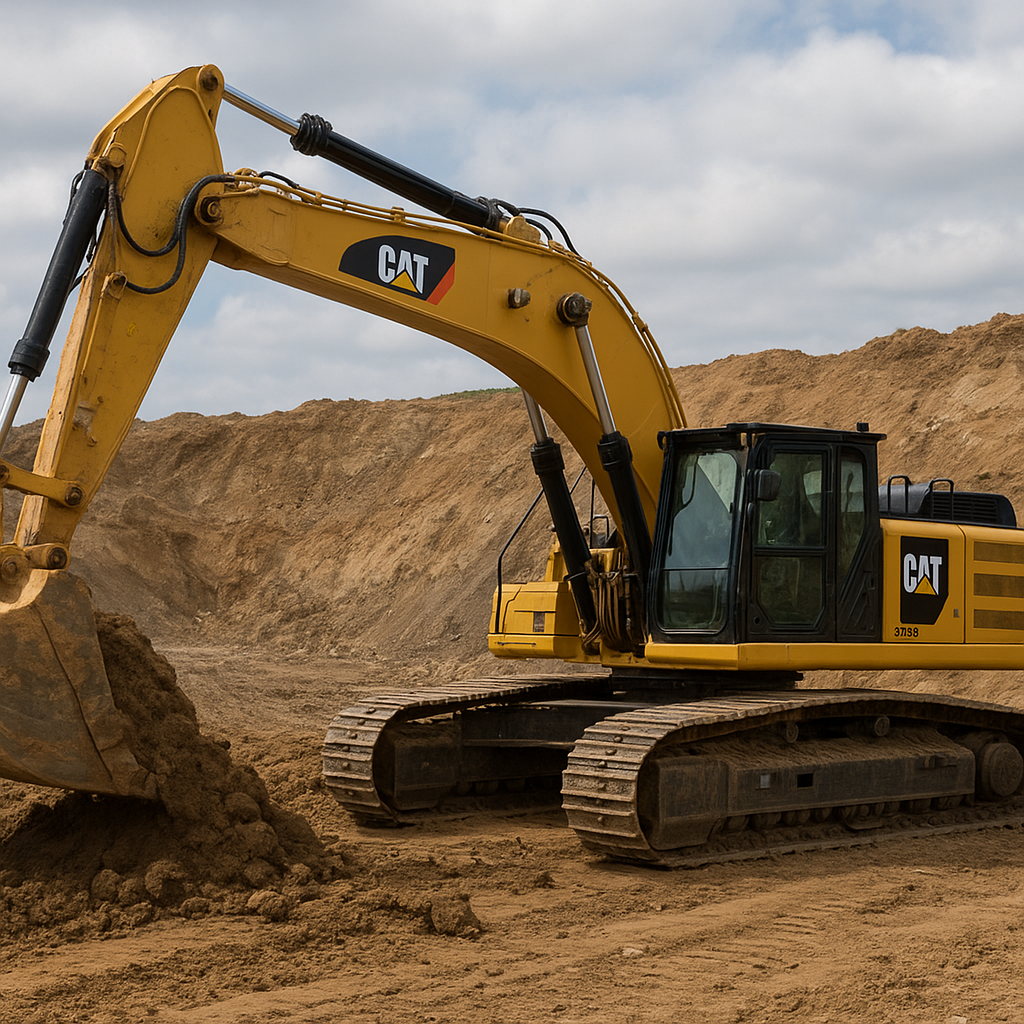
The Caterpillar 6015B is a heavyweight, purpose-built hydraulic excavator designed for demanding material handling and earthmoving tasks in heavy civil construction, mining and quarrying. Known for its robust engineering and adaptability, this machine combines high-capacity hydraulics, a reinforced undercarriage and operator-focused ergonomics to deliver consistent performance in the most challenging environments. In the following sections we will explore the machine’s typical applications, technical and operational characteristics, maintenance and lifecycle considerations, and real-world usage examples and performance indicators.
Design and technical characteristics
The Caterpillar 6015B is engineered around several core principles: high digging and loading productivity, long-term durability, and serviceability in remote or harsh sites. The model is part of Caterpillar’s range of large hydraulic excavators and often appears in fleets working in open-pit mining, large-scale quarrying, bulk material handling and heavy civil earthworks.
Structure and hydraulics
The excavator’s structural components—boom, stick, superstructure and undercarriage—are fabricated with high-strength steels and reinforced joints to withstand repetitive heavy loads. The hydraulic system is built to deliver high flow and pressure with precise control. Key elements include:
- High-pressure, high-flow axial piston pumps to power main functions (boom, stick, bucket and swing).
- Load-sensing or electro-hydraulic controls (depending on configuration) for smoother cycle control, improved fuel efficiency and better simultaneous operation of functions.
- Large hydraulic reservoirs and efficient filtration systems to extend component life and reduce contamination-related wear.
Powertrain and engine
The 6015B typically uses a high-displacement diesel engine calibrated for continuous heavy-duty operation, balancing torque delivery and fuel economy. Engines in this class often include electronic fuel management and emissions controls compatible with the regulatory requirements of the region (e.g., Tier or Stage emissions standards). The powertrain integrates the engine output with hydraulic pumps and swing motors to optimize digging force and swing torque.
Operator station and controls
Modern cabs for machines of this class emphasize safety and productivity. Typical features include ROPS/FOPS certification, air suspension seats, climate control, multi-function joysticks, and color display monitors that provide live diagnostics, fuel consumption data and system alerts. Ergonomics and visibility are designed to reduce operator fatigue and increase effective working hours.
Attachments and versatility
The 6015B is commonly fitted with high-capacity buckets (ranging from general-purpose to rock and heavy-duty buckets), but the platform supports a wide array of attachments such as:
- Hydraulic breakers and hammers for rock breaking.
- Grapples and clamshells for bulk loading and material handling.
- Rippers and tilt buckets for specialized earthmoving.
- Quick couplers that speed attachment changes and improve fleet flexibility.
Applications and operational roles
The Caterpillar 6015B finds its highest value in environments where large material volumes and heavy-duty tasks require a reliable, high-capacity excavator. Typical applications include:
Mining and quarrying
In surface mining, the 6015B is used for loading haul trucks, reclaiming stockpiles, benching and selective digging. Its heavy-duty bucket options and strong hydraulics make it effective for hard rock and overburden removal. When combined with high-capacity haul trucks, the excavator can contribute to high tons-per-hour (tph) production rates.
Bulk material handling and ports
Ports, terminals and stockyards often use large hydraulic excavators for moving coal, ore, scrap and aggregates. With specialized grapple attachments, the 6015B can operate effectively in ship-loading or rail-to-stockpile workflows, providing controlled, high-throughput loading.
Civil and infrastructure projects
Large infrastructure projects—dams, highways, port construction and major earthworks—require machines capable of both excavation and heavy loading. The 6015B is often chosen for foundation excavations, landscaping, trenching for utilities where deep digging and high breakout forces are necessary.
Demolition and recycling
When fitted with processing attachments (shears, pulverizers, sorting grapples), heavy excavators of this class can be adapted for selective demolition and material separation in recycling yards, improving speed and safety compared to smaller machines.
Performance metrics and sample statistics
Exact specifications for the 6015B depend on configuration, attachment choice and regional options, but some general and practical performance indicators are useful for fleet planning and estimating productivity. The figures below are representative ranges often seen in large hydraulic excavators in the similar class and should be treated as indicative.
Typical technical ranges (indicative)
- Operating weight: roughly in the range of tens to low hundreds of metric tonnes depending on configuration and counterweights.
- Bucket capacity: common buckets for high-production excavators range from about 3.0 to 11.0 cubic meters, with specialized heavy rock buckets typically on the lower end of that range.
- Engine power: heavy excavators can range from several hundred to well over one thousand kilowatts in the largest mining-class variants; the 6015B family is positioned to provide substantial continuous power for long shifts.
- Swing torque and breakout force: engineered to handle heavy loads, exact numbers vary with boom and stick geometry; breakout forces are designed to match bucket-to-ground interaction needs in rock or compacted materials.
- Fuel consumption: depends on load cycles, payload and duty cycle; large excavators can consume tens to hundreds of liters per hour under heavy continuous loading; modern engine controls and efficient hydraulics reduce consumption in light-to-moderate cycles.
Example productivity calculation (hypothetical): If a 6015B is fitted with an 8.0 m³ bucket, loading material with a bulk density of 1.6 t/m³ (e.g., blasted rock), each bucket contains roughly 12.8 tonnes. With an average cycle time of 25 seconds, the excavator could theoretically achieve about 1,840 tonnes per hour (tph) (12.8 t / 25 s × 3600 s/h). Real-world production will be affected by truck spotting, swing distance, operator skill and material handling losses, so planners typically apply an efficiency factor (e.g., 60–80%) to derive expected field production.
Maintenance, life-cycle and fleet economics
Large excavators such as the Caterpillar 6015B are significant capital investments; understanding maintenance regimes and life-cycle costs is essential for maximizing return on investment.
Preventive maintenance
Key maintenance considerations include hydraulic oil and filter changes, engine servicing, undercarriage inspections and track component replacement, boom and stick pin wear monitoring, and cooling system checks. Scheduled inspections at specific hour intervals (e.g., daily checks, 250-hour, 500-hour, 1000-hour service points) help detect wear early and reduce unplanned downtime.
Component life and rebuilds
Caterpillar’s model lineup is supported by remanufactured components and certified rebuild programs. Major components such as engines, pumps, swing motors and final drives can be remanufactured or replaced, extending machine life and often improving residual value. Track frames, rollers and idlers represent recurring items in the undercarriage that require periodic renewal depending on operating terrain and abrasive conditions.
Total cost of ownership (TCO)
Operators consider acquisition cost, fuel consumption, maintenance and repair expenses, operator productivity, and resale value to estimate TCO. Fuel-efficient hydraulics, longer maintenance intervals, and availability of local service networks reduce TCO. For large fleet operators, reliability and parts commonality with other Caterpillar machines also improve uptime and spare-part logistics.
Safety, environmental and regulatory considerations
Safety features are integral to the design of heavy excavators. The 6015B platform generally incorporates operator protection, visibility improvements and optional technology packages to meet modern safety expectations.
Operator and site safety
- ROPS/FOPS-certified cabs to protect operators from rollovers and falling objects.
- Integrated camera systems, proximity sensors and audible alarms to assist in close-quarters operation and to reduce the risk of collisions with personnel or other equipment.
- Lockout and emergency-stop systems for maintenance and risky operations.
Emissions and environmental performance
Engines are configured to meet applicable local emissions regulations (e.g., EPA Tier or EU Stage). Additionally, diesel particulate filter and selective catalytic reduction (SCR) technologies are adopted where needed. Strategies to reduce environmental impact include fuel-saving operating modes, monitoring and reduction of idling, and improved hydraulic efficiency. Spill containment measures, proper disposal of hydraulic fluids and used filters, and the ability to install secondary containment on-site are common environmental controls.
Operational tips and best practices
To maximize the performance of a 6015B, operators and fleet managers typically follow several best practices:
- Match bucket size and tooth style to the material: oversizing buckets reduces cycle speed while undersizing reduces productivity and increases wear.
- Monitor telematics and onboard diagnostics: early warning of hydraulic or engine issues reduces catastrophic failures.
- Train operators on fuel-efficient techniques: smooth control inputs, minimizing unnecessary idling, and correct sequencing of functions improve fuel economy.
- Implement a proactive undercarriage program: track tension management and regular inspections extend component life.
- Maintain cleanliness and fluid hygiene: proper filtration and oil change intervals significantly impact hydraulic pump and motor longevity.
Interesting facts and industry context
The heavy-excavator market emphasizes not just size but integration into whole-site productivity strategies. Machines like the 6015B are part of systems that include high-capacity haul trucks, conveyor systems and processing plants. Some notable points:
- Modularity and customization: large excavators are commonly customized to customer specifications—counterweight packages, cab options, attachment pins and hydraulic circuits are tailored to application needs.
- Technology integration: modern fleets often use telematics to monitor fuel usage, working hours, idle time and fault codes, enabling data-driven maintenance and operational planning.
- Resale and rebuild market: because large excavators represent long-lived assets, there is a well-established remanufacturing and resale market. Machines can be rebuilt to a certified standard and redeployed with many years of service remaining.
- Cross-brand compatibility: some operators use third-party attachments and service providers; however, OEM-certified attachments and maintenance are often recommended to retain warranty coverage and maximize life-cycle value.
Conclusion
The Caterpillar 6015B occupies an important niche among large hydraulic excavators, offering the power and durability required for heavy-duty mining, quarrying and bulk handling operations. Its combination of robust structural design, powerful hydraulic systems and operator-focused features make it a versatile tool for high-production environments. While precise specifications vary by configuration and market, the machine’s value is best understood through its capacity to reduce cycle times, increase material throughput and integrate with broader site operations. With proper maintenance, operator training and application-matched attachments, the 6015B can be a cornerstone asset for large-scale earthmoving and material handling fleets.
)
)