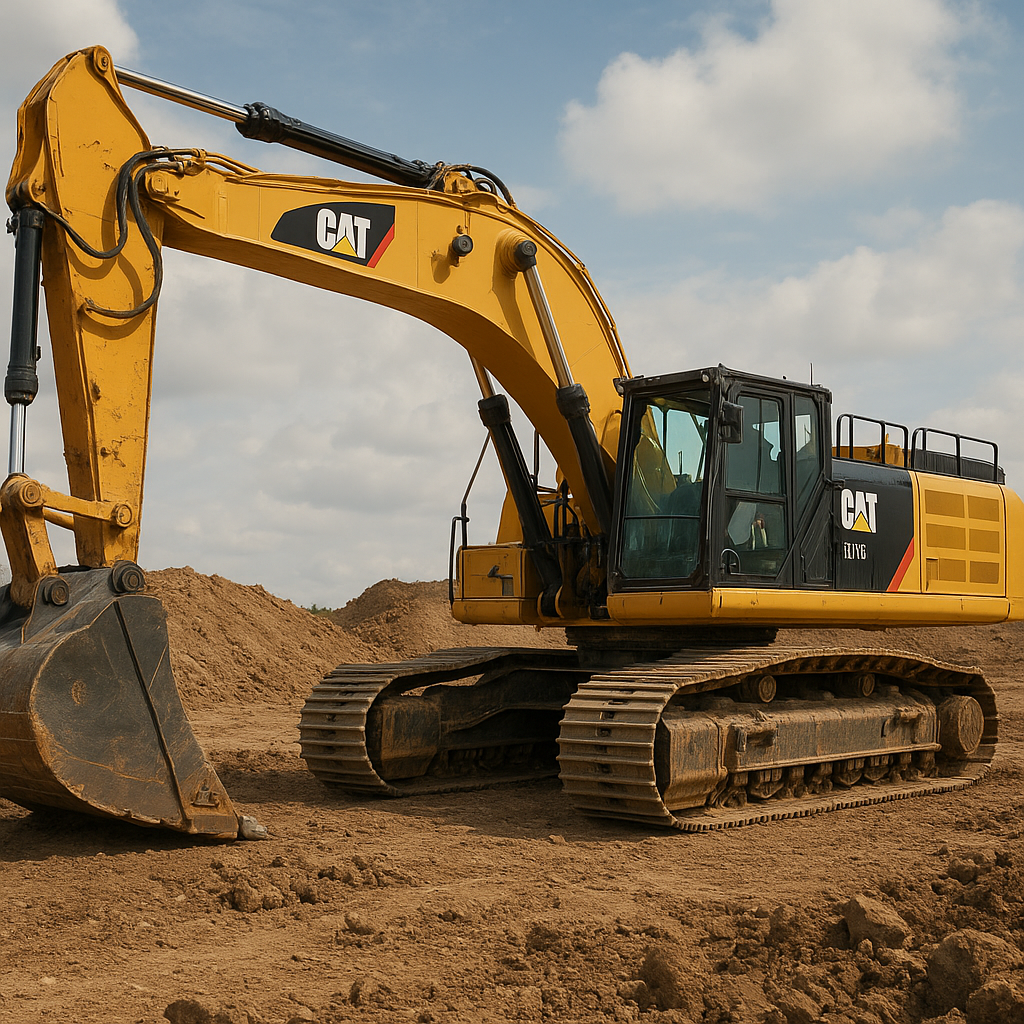
The Caterpillar 374F is a heavy-duty hydraulic excavator designed for demanding tasks across construction, quarrying, mining and large-scale earthmoving projects. Combining robust engineering with modern electronic controls, this machine aims to deliver high levels of productivity, fuel economy and serviceability. In the text below you will find an overview of its principal features, typical performance figures, common applications, available attachments, maintenance considerations and operational tips that can help owners and operators get the most from the machine.
Overview and Key Features
The Caterpillar 374F belongs to Caterpillar’s line of large hydraulic excavators. It is engineered to be a versatile platform capable of handling heavy digging, loading, trenching and material-handling duties. At the heart of the machine is a powerful diesel engine driving advanced hydraulic systems that provide smooth, controllable power to the boom, arm, bucket and travel motors.
Key design priorities for the 374F include durability, reliability, and ease of maintenance. The undercarriage, boom and stick are built from high-strength steels and are designed to resist fatigue and abrasion in harsh applications. The hydraulic components are sized to supply strong breakout and digging forces, while electronic controls optimize power delivery for different working modes.
Operator comfort and productivity are also central to the 374F’s design. The cab typically offers wide visibility, ergonomic controls, adjustable seating, and climate control. Modern versions include integrated monitoring systems, telematics options and advanced hydraulic management for precise work and improved fuel efficiency. For many buyers, the combination of high productivity and lower operating costs is a compelling reason to choose this model.
Typical Specifications and Performance Data
Specifications for the Caterpillar 374F can vary by market, configuration and whether the machine is a standard or long-reach variant. The figures below are representative ranges based on commonly published data for mid-to-large excavators in the 374 class. Always consult the official Caterpillar specification sheet or dealer for exact numbers for a specific serial or configuration.
General characteristics
- Class: mid-to-large hydraulic excavator (commonly described in the approximate 35–40 tonne operating-weight class depending on configuration)
- Engine: turbocharged diesel engine with electronic control, meeting applicable emissions standards for the market
- Rated net power: approximately 250–350 kW (varies by engine tune and certification)
- Operating weight: typically in the range of 35,000–40,000 kg for standard configurations (variations occur for long-reach booms, heavier counterweights and specialized attachments)
- Bucket capacity: commonly between 1.5–3.0 m³ depending on bucket type and application
Performance and working ranges (representative)
- Maximum digging depth: roughly 6.5–8.5 m, depending on boom and stick lengths
- Maximum reach at ground level: commonly in the range of 10.5–12.5 m
- Bucket breakout force: approximately 180–300 kN depending on attachment and hydraulic package
- Arm (stick) digging force: typically around 140–220 kN
- Travel speed: two-speed travel with top speeds around 4–6 km/h in typical configurations
Fuel consumption and efficiency
Actual fuel consumption depends heavily on duty cycle, attachment, operator technique and site conditions. Typical fuel burn for machines in this class on mixed duty could range from 18–35 L/h under normal working loads, with higher consumption in heavy continuous digging or when powering hydraulic attachments. Many operators realize savings through eco modes, auto-idle, and by matching engine/hydraulic settings to the task.
Note: The values above are provided as representative guidance. Caterpillar publishes exact specification sheets and performance charts for each configuration and regional variant, and dealers can provide precise performance curves and test data.
Applications and Typical Use Cases
The Caterpillar 374F is used across a wide spectrum of heavy earthmoving and material-handling applications. Its combination of hydraulic power, robust structure and flexible attachment options make it suitable for:
- Quarrying and mining: Loading rock breakers, handling boulders, benching operations, and moving crushed material—often fitted with heavy-duty buckets or hydraulic hammers.
- Large civil construction: Excavation for foundations, deep trenches, bridge abutments, and infrastructure projects where long cycles and high breakout forces are required.
- Pipeline and utilities: Trenching for pipeline installation with specialized trenching buckets and quick-coupler systems for fast changeover.
- Demolition: With reinforced structures and specialized grapples or shears, the 374F can tackle demolition, sorting and secondary processing tasks.
- Material handling and stockpile management: Fitted with grapples, clamshells or orange-peel attachments, it can load trucks, manage stockpiles and perform bulk handling duties.
- Dredging and riverbank work: Long-reach configurations or specialized booms can be used for dredging, channel maintenance and slope stabilization.
Because of its size, the 374F is particularly strong where sustained power and reach are essential. It often replaces or complements multiple smaller machines on large sites, reducing cycle times and improving overall site efficiency.
Attachments and Customization
One of the 374F’s strengths is the breadth of available attachments and customization options, allowing a single base machine to perform many tasks. Common attachments include:
- Buckets — general purpose, heavy duty, rock, and high-capacity loading buckets.
- Hammers (hydraulic breakers) — for primary and secondary rock breaking.
- Thumbs and grapples — for log handling, demolition waste and sorting.
- Shears and pulverizers — demolition and recycling applications.
- Rippers and compactors — ground preparation and compaction accessories.
- Quick couplers — for fast, safe attachment changes to increase machine uptime and versatility.
- Long reach booms — for dredging, deep excavation and high-reach demolition.
Attachment choice dramatically affects productivity and fuel consumption. Selecting the proper bucket size (volume vs. fill factor), the right shear or hammer rating, and an adequately spec’d quick-coupler system will ensure the excavator performs optimally in its intended role.
Technology, Controls and Telematics
Modern Cat excavators are fitted with electronic systems that improve both performance and maintenance oversight. Typical technology features available on or for the 374F include:
- Integrated machine monitoring and display systems for engine parameters, hydraulic pressures, and service intervals.
- Optional telematics (Cat® Product Link™) for remote health monitoring, utilization tracking, and geolocation to support fleet management and predictive maintenance.
- Selectable work modes (e.g., heavy, standard, economy) to tailor engine and hydraulic response to the task for improved efficiency.
- Electronic joysticks and proportional controls for smoother, more precise hydraulic operation; some models offer programmable settings for operator preference.
- Stability and swing dampening features to facilitate safer operation on slopes and during high-reach maneuvers.
Telematics and data-driven maintenance planning can reduce downtime by enabling predictive service, optimizing fuel use by analyzing duty cycles, and preventing component failures through early warnings.
Maintenance, Serviceability and Lifecycle Considerations
Managing lifecycle costs is a critical part of owning a heavy excavator like the 374F. Caterpillar designs these machines with accessibility and service intervals in mind to reduce downtime. Key maintenance and lifecycle considerations include:
- Easy access to daily service points (engine oil, hydraulic filters, coolant, air filters) to shorten routine checks and service routines.
- Robust undercarriage options and wear packages for extended life in abrasive environments; track tensioning and regular inspection are essential.
- Scheduled oil and filter changes, hydraulic system monitoring, and track/undercarriage inspections will extend equipment life and preserve resale value.
- Using genuine OEM parts and following recommended service intervals preserves warranty coverage and ensures optimal component compatibility.
- Training for operators on correct machine warm-up, shutdown procedures and attachment handling reduces wear and fuel consumption while increasing reliability.
Operators and fleet managers should adopt a proactive maintenance program, use telematics where possible for condition monitoring, and maintain a parts inventory for high-wear items to keep machines productive on-site.
Safety and Operator Considerations
Safe operation of the 374F requires attention to both machine capabilities and site-specific hazards. Important safety measures include:
- Thorough pre-shift inspections focusing on hydraulic lines, pins and bushings, track condition, and guarding for rotating components.
- Clear communication between ground personnel and the operator; use of radios, spotters and high-visibility markings when working near traffic or pedestrians.
- Load charts and lift capacities must be respected, especially when using long-reach booms or lifting with grapples—stable positioning and correct counterweight configuration are critical.
- Properly maintained cab glass, mirrors and camera systems to eliminate blind spots and improve situational awareness.
- Use of emergency stops, safe-locking quick couplers and lockout procedures when performing maintenance or swapping attachments.
Because the 374F often works in heavy, high-risk environments, regular operator training and refresher courses on machine controls, load handling and emergency response are indispensable.
Economic and Environmental Considerations
When evaluating the Caterpillar 374F, buyers consider both capital and operating costs. Factors influencing total cost of ownership include purchase or leasing terms, resale value, fuel consumption, maintenance costs, attachment versatility, and machine uptime.
On the environmental side, newer variants of the 374F use engines tuned to meet emissions regulations (Tier/Stage standards in different regions). Features that reduce environmental impact include:
- Engine controls for optimized combustion and reduced fuel burn under partial loads.
- Hydraulic system improvements that reduce energy losses and improve response.
- After-treatment systems as required by emissions legislation to lower NOx and particulate emissions.
- Recyclable materials and serviceable components designed for easier refurbishment and remanufacture.
Lower fuel consumption not only saves operating dollars but reduces CO2 emissions over the machine’s lifecycle. Fleet managers aiming to minimize environmental footprint can further optimize operations through route planning, intelligent scheduling and operator training for fuel-conserving techniques.
Purchasing and Fleet Integration
Deciding to incorporate a 374F into a fleet requires consideration of job types, transport logistics and supporting infrastructure. Important steps include:
- Matching machine configuration (standard, long reach, heavy-duty) to the most common job profiles.
- Planning for transport: due to size and weight, special permits or heavy-haul trailers may be needed for road moves.
- Training and certifying operators to maximize safety and productivity.
- Integrating telematics for centralized fleet monitoring, maintenance scheduling and utilization reporting.
- Evaluating trade-in, rental or lease options to manage capital expenditure and match fleet capacity to workload peaks.
For many contractors, the 374F serves as a core asset on large sites, reducing the need for multiple smaller machines and enabling faster cycle times on heavy digging and loading tasks.
Summary
The Caterpillar 374F is a robust, versatile hydraulic excavator suited to heavy civil, quarrying, mining and material handling applications. With heavy-duty structural components, powerful hydraulics and modern electronic controls, it strives to deliver high levels of productivity while keeping operating costs under control. Proper attachment selection, preventative maintenance, operator training and use of telematics significantly influence the machine’s real-world performance, fuel efficiency and lifecycle costs. When matched to the correct tasks and maintained proactively, the 374F can be a productive and reliable member of a heavy-equipment fleet.
)
)