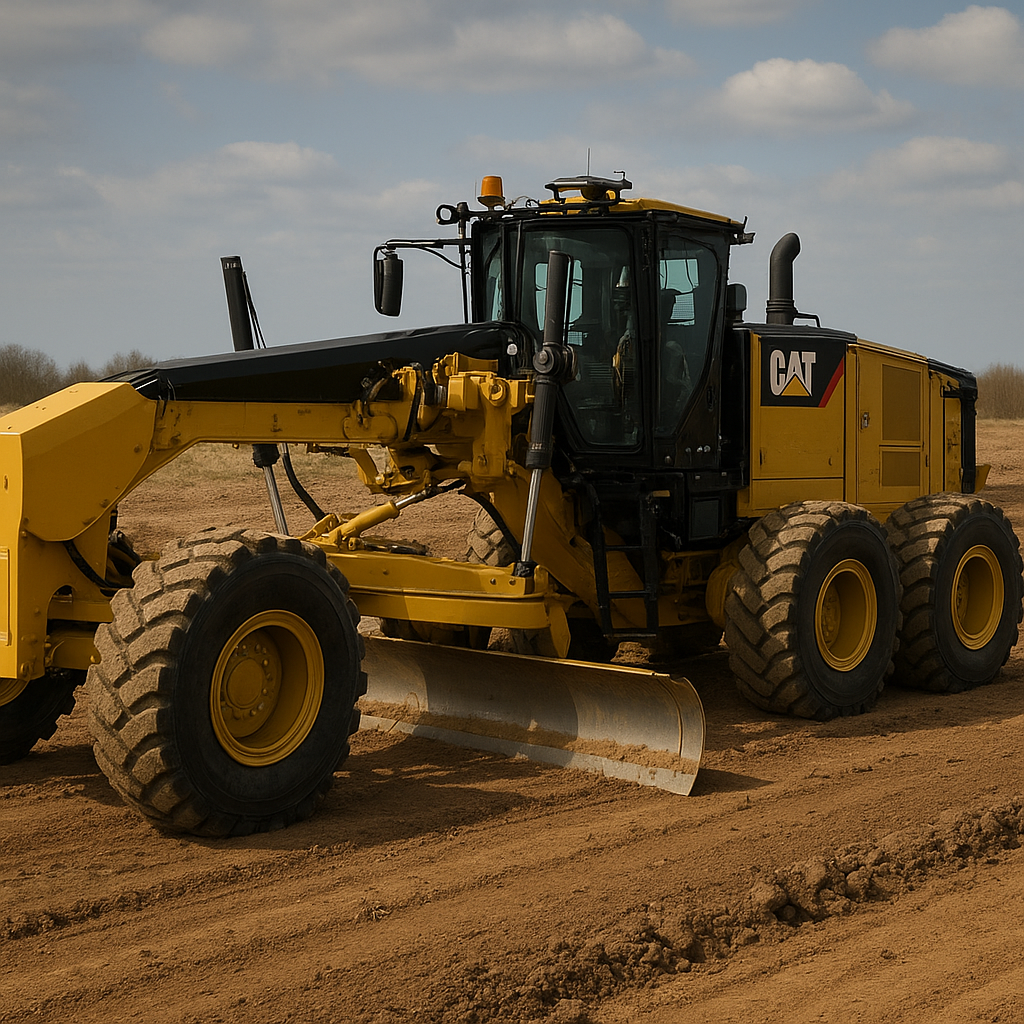
The Caterpillar 16M motor grader is a versatile piece of construction equipment designed for precision earthmoving, road building and finishing tasks. Built with a balance of power, control and operator comfort in mind, the 16M occupies a position in the mid-to-large class of graders and is widely used by contractors, municipalities and mining operations. This article explores its design, typical applications, technical characteristics, operational best practices, and market facts that highlight why this model remains a popular choice in many regions.
Overview and design philosophy
The Caterpillar 16M is engineered to deliver reliable performance in demanding grading applications. Its design emphasizes a combination of durable components, effective hydraulics and operator-focused ergonomics. Key design elements include a robust frame and circle assembly, a powerful engine matched to the hydraulic system, and a cab that provides visibility and controls optimized for precision work.
The machine’s moldboard (blade), articulation and circle mechanisms are built to provide accurate blade placement for smooth surfaces and consistent slopes. The grader’s weight distribution and undercarriage geometry are tuned to ensure stability during heavy cutting and while carrying loads. For contractors that require a wide range of tasks — from finish grading to ditching or snow removal — the 16M offers multiple optional configurations, such as rear rippers, front blades and different moldboard sizes.
Primary applications and typical uses
The Caterpillar 16M is used across a broad spectrum of industries due to its adaptability and precision. Typical applications include:
- Road construction and maintenance — establishing and maintaining road grade, creating crown and drainage features, and preparing subgrades prior to paving.
- Site development — final grading for commercial, residential and industrial sites where accurate slopes, finishes and transitions are required.
- Snow removal — equipped with specialized blades and shoes, the grader can clear large areas and shape snow banks efficiently.
- Agricultural and ranch operations — shaping terraces, maintaining farm roads and managing irrigation ditches.
- Mining and quarrying — maintaining haul roads and ramps where consistent surface quality reduces truck wear and fuel consumption.
- Ditching and drainage — cutting shallow or deep ditches and constructing drainage swales with precise angles.
Because of its ability to perform both rough and finish tasks, the 16M is often used throughout multiple phases of a project rather than being limited to a single task. Contractors value this flexibility when minimizing fleet size and maximizing machine utilization.
Technical highlights and typical specifications
Specifications for the Caterpillar 16M vary by model year and regional configuration. Below are representative figures and technical highlights that illustrate typical capabilities of machines in the 16M class. Note that exact numbers should be confirmed with Caterpillar’s official data sheets or an authorized dealer for a specific serial number and year.
- Engine and power — the 16M is driven by a mid-range Cat diesel engine that offers robust torque for blade cutting and traction. Typical net power for this class is generally in the mid-hundred to low two-hundreds horsepower range, tuned to balance fuel efficiency and response under load.
- Operating weight — graders in this category normally have an operating weight that places them in the mid-to-large class of motor graders, providing the ballasting required for heavy cutting without compromising maneuverability.
- Moldboard — the grader’s moldboard length and curvature are optimized for efficient material spread and finish grading. Moldboard lengths on machines comparable to the 16M frequently range between approximately 12 and 14 feet (about 3.6 to 4.3 meters), depending on configuration.
- Transmission and drivetrain — power-shift or automatic transmissions deliver smooth forward and reverse operation, with multiple speeds for matching ground conditions. Many units offer differential lock or limited-slip features for improved traction.
- Hydraulics — a responsive hydraulic system powers blade, circle and articulation functions. Hydraulic pilot controls or joystick options improve precision and reduce operator fatigue.
- Cab and controls — modern 16M variants typically include an enclosed ROPS/FOPS-certified cab, climate control, adjustable air-suspension seat, and ergonomically arranged joysticks or levers. Visibility to the moldboard and working surface is emphasized through cab placement and glass design.
- Attachments — common attachments include rear ripper, front blade, scarifier, GPS-ready mounts, and specialized winter equipment. The grader’s modular design facilitates quick changes to suit seasonal or project requirements.
Performance characteristics and productivity
The productivity of a 16M grader is influenced by operator skill, site conditions and machine setup. Key performance strengths include:
- Precision grading — the combination of blade geometry, circle control and smooth hydraulics allows for consistent surface finishes and contouring.
- Cycle efficiency — modern transmissions and power delivery reduce the time required to reposition and return the blade to grade, especially on long passes.
- Fuel efficiency — advanced engine controls and load-sensing hydraulics contribute to competitive fuel consumption for the class when matched to the task.
- Versatility — with multiple available attachments, the grader can perform a sequence of tasks that would otherwise require several machines, improving overall site efficiency.
On typical highway or large site projects, a well-maintained 16M operated by an experienced operator can grade several thousand square meters per hour on finish passes and substantially more for rough cutting, depending on depth of cut and material type. Productivity also increases with the integration of machine control systems such as GPS or laser guidance, which reduce rework and allow less experienced operators to achieve accurate results.
Operator experience, ergonomics and controls
Operator comfort and control design are crucial for long shifts and high-precision work. The 16M cab layout is designed to minimize fatigue and maximize visibility and control responsiveness. Typical features that enhance operator performance include:
- High-visibility cab windows and sightlines to the moldboard and front frame.
- Adjustable seats and control consoles that allow the operator to maintain an ergonomic posture.
- Intuitive joystick or lever layouts that put primary functions within easy reach.
- Climate control and low-noise insulation for a comfortable working environment.
- Integrated instrumentation and optional machine-control displays that provide real-time data on blade position, machine status and guidance overlays.
These design choices improve accuracy during fine grading and reduce the physical strain on operators, which in turn supports sustained productivity across long shifts.
Maintenance, durability and ownership costs
Routine maintenance and component durability are major factors in the total cost of ownership (TCO) for any grader. The Caterpillar 16M has been engineered with serviceability in mind, featuring accessible service points, simplified filter locations and durable wear components. Important maintenance considerations include:
- Scheduled service intervals — regular oil and filter changes, hydraulic oil monitoring, and coolant replacement according to hours-of-use recommendations help prevent premature wear.
- Wear item monitoring — cutting edges, moldboard shoes, circle teeth, and ripper shanks should be inspected frequently and replaced before excessive wear affects performance.
- Undercarriage and drivetrain care — while motor graders don’t have track undercarriages, driveline and tire condition (if equipped with tires) or final drives require attention to prevent downtime.
- Preventive maintenance — greasing schedules for pins and bushings, hydraulic leak inspections and battery checks are routine tasks that extend service life.
Operating costs can be optimized by using OEM parts for wear items, following recommended maintenance schedules, and training operators in fuel-efficient techniques. Well-maintained graders retain higher resale value and deliver more consistent on-site performance.
Safety and environmental considerations
Safety is a central concern in grader operation. The 16M integrates safety features such as ROPS/FOPS-certified cabs, seat belts, work lights, backup alarms and visibility aids (mirrors, cameras). Operator training and site procedures — such as establishing traffic controls, spotting for obstacles and ensuring proper signaling — are essential for preventing accidents.
From an environmental standpoint, modern engines comply with emissions regulations relevant to their year and market. Regular maintenance supports lower emissions and optimal combustion, while careful fuel and fluid handling reduces spill risk. For contractors focused on sustainability, options such as idle-reduction features, lower-emission engines and efficient work planning can lower the machine’s carbon footprint over its service life.
Technology integration and modern options
Many 16M graders are compatible with contemporary technology that enhances productivity and accuracy. These options include:
- Machine control systems (GPS, GNSS, laser) that provide automated blade positioning and grade guidance.
- Telematics and fleet-management platforms that transmit engine hours, fuel consumption, fault codes and location data to improve utilization and maintenance planning.
- Advanced operator-assist features such as programmable blade profiles and automated sequences for repetitive tasks.
The addition of these technologies often results in measurable improvements in finished-surface quality, reduced material waste and lower labor costs due to faster learning curves for operators and reduced rework.
Market context and statistical notes
While precise sales figures for a single model like the Caterpillar 16M vary by year and geography, motor graders as a segment are a steady and essential category within road construction and municipal fleets. Key market observations include:
- Demand for mid-size graders remains strong in regions investing in rural and secondary road networks, as well as in mining and large site infrastructure projects.
- Resale values for well-maintained Caterpillar graders tend to be competitive thanks to global service networks and parts availability.
- Adoption of machine-control systems has accelerated in the past decade; graders equipped with GPS/total-station guidance typically achieve faster payback by reducing material and labor costs.
To place the 16M in context, mid-class graders commonly account for a significant share of fleet hours on road-building projects, and machines with similar capabilities average multiple thousands of operating hours before major rebuilds, depending on maintenance regimes and application intensity. Regional preferences and specific model years influence the precise performance and lifecycle costing.
Practical tips for purchasing and operation
If you are considering acquiring a Caterpillar 16M — new or used — keep these practical points in mind:
- Confirm the machine’s configuration and verify the moldboard size, attachments and any factory or dealer-installed packages.
- Request a full maintenance history and inspect wear components such as cutting edges, circle teeth and articulation pins.
- Consider machines with telematics or machine-control infrastructure already installed to reduce retrofit costs.
- Factor in the availability and cost of parts in your region; Caterpillar’s dealer network is extensive in many markets but may vary locally.
- Plan for operator training if new technologies (GPS, automated grade control) are to be used for the first time.
Conclusion and outlook
The Caterpillar 16M motor grader combines durability, versatility and precision to meet the needs of a wide range of earthmoving and road-construction projects. Its strengths lie in robust mechanical design, operator-focused ergonomics and compatibility with modern control systems that improve accuracy and reduce operating costs. For contractors and public agencies seeking a reliable mid-to-large class grader, the 16M remains a strong option, particularly when supported by proper maintenance, operator training and technology integration.
Key words: Caterpillar 16M, motor grader, moldboard, blade, articulation, horsepower, operator, productivity, fuel efficiency, maintenance.
)
)