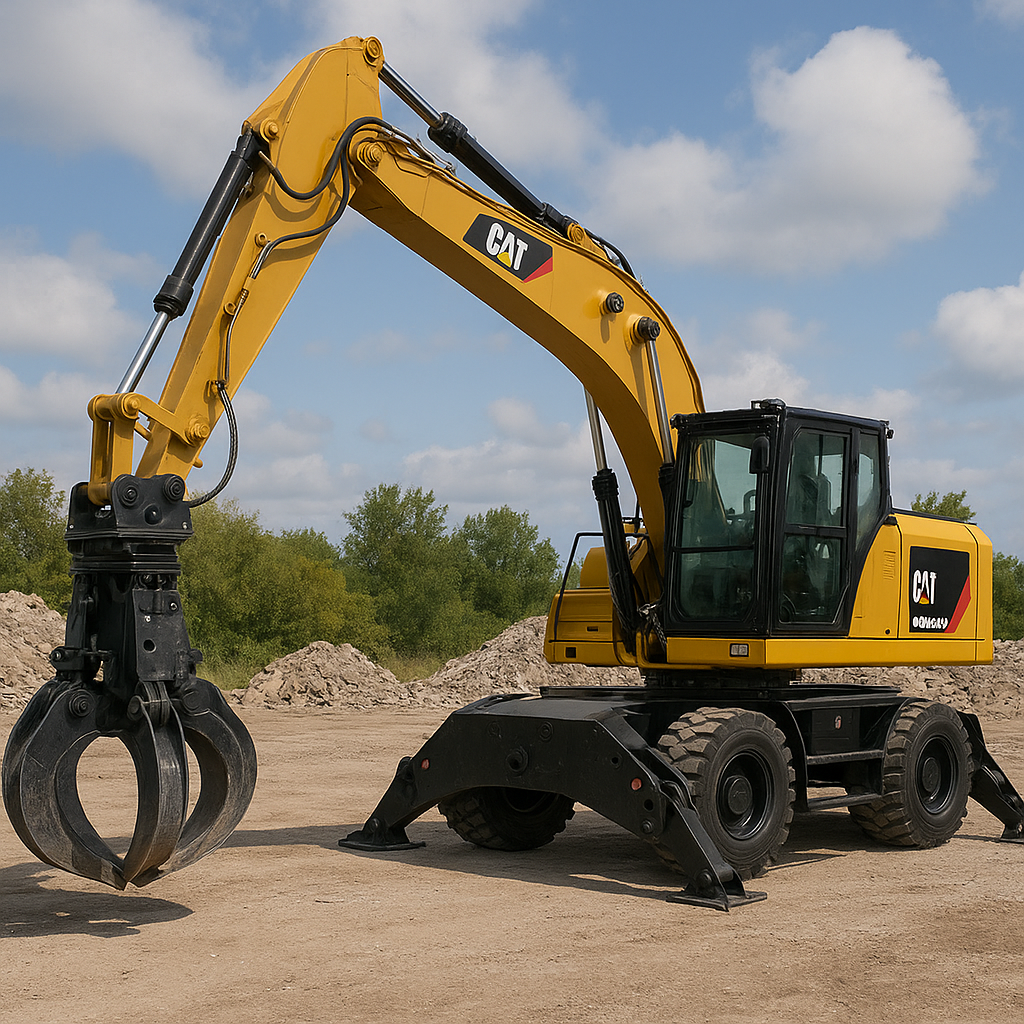
The CAT MH3040 is a purpose-built Caterpillar material handler designed to excel in demanding bulk, scrap, forestry and port applications. Combining a specialized undercarriage, extended-reach structures and hydraulics tuned for precise cycle control, the MH3040 aims to deliver productivity, safety and low lifecycle costs where conventional excavators would be inefficient. This article examines the machine’s design philosophy, typical use cases, important attachments, operator- and maintenance-focused features, and broader considerations for fleet managers evaluating a material handler like the MH3040.
Overview and design philosophy
The MH3040 is engineered from the ground up for material handling rather than as a converted excavator. That distinction matters: a purpose-built machine places emphasis on stability, tailored hydraulic circuits, and cab visibility geared toward repetitive lifting and sorting operations. The result is a machine that performs consistently over long shifts, minimizes swing inertia for controlled load placement and reduces wear on components commonly stressed by material-handling cycles.
Key design priorities include stability during extended reach operations, hydraulic systems optimized for lift and swing control, and a cab designed specifically for material handling tasks. Underlying those priorities is Caterpillar’s integration of components and systems intended to reduce total cost of ownership while improving productivity metrics per operating hour.
Core features and technical highlights
Stability and undercarriage
Stability is a central concern for any material handler. The MH3040 typically features a wide track or heavy-duty base frame, larger counterweights and a center of gravity tuned to support long booms and joysticks loads. A low center of gravity and reinforced boom pivots are common strategies to permit safe, controlled operation at extended reaches.
Hydraulic and electronic systems
Material handlers rely on hydraulic systems that are responsive but smooth. The MH3040’s hydraulics are configured to prioritize lifting capacity and precise control over sheer digging power. Electronic controls allow for fine modulation of boom, stick and attachment functions, and often integrate with optional systems for load sensing and automatic throttle-sensing to improve fuel efficiency and reduce operator fatigue.
Cab and operator ergonomics
Operator comfort and visibility are essential in material handling. The MH3040 cab is commonly elevated or moved forward relative to a standard excavator cab to give a clearer line of sight into piles, grabs and trucks. Ergonomic joysticks, climate control, sound suppression and easy access to service information support long shifts and aim to increase uptime by reducing operator errors and fatigue.
Attachment interface and quick-change capability
Attachment flexibility is a competitive advantage. The MH3040 is compatible with a variety of factory-supported couplers and hydraulic circuits to run grapples, clamshell buckets, sorting grabs, magnet systems and demolition attachments. Quick-change couplers and integrated hydraulic lines enable fast changeovers that keep machines productive across different tasks.
Typical applications and industries
The MH3040 suits many sectors where precision handling, long reach and high cycle counts are needed. Typical application areas include:
- Scrap yards — Loading/sorting scrap, feeding shears and balers, arranging piles for recycling.
- Ports and terminals — Bulk handling of woodchips, biomass, aggregates, and loading/unloading of barges and ships.
- Construction and demolition recycling — Sorting and moving demolition debris and feedstock for crushers and screens.
- Forestry yards — Handling logs and wood products for onward processing or export.
- Waste and transfer stations — Moving municipal solid waste, bulky items and preparing loads for transport.
In each of these sectors, the MH3040’s combination of reach, operator visibility and attachment options helps improve load cycle times and reduces the need for multiple machines.
Attachments and configurations
One of the greatest strengths of a material handler is its versatility through attachments. The MH3040 supports an array of tools that transform it for specific tasks:
- Hydraulic grapples — Multi-tine or clamshell grapples for scrap, logs, and bulk materials.
- Clamshell buckets — Ideal for bulk loading and unloading in terminals.
- Sorting grabs — Optimized for separation and precision placement in recycling yards.
- Electromagnets and conveyors — For separation and transfer tasks in metals handling operations.
- Shear and shear + magnet combinations — For specialized scrap-processing lines.
Many attachments are available in different sizes and configurations to match job demands and reach requirements. The machine’s hydraulic plumbing and electronic control scheme are usually designed to accommodate remote hydraulic couplers and proportional control for attachment fine-tuning.
Operator experience and safety features
Operator-focused features have a pronounced effect on productivity. The MH3040 typically includes:
- High-visibility cab glazing and elevated seating to improve line-of-sight to loads and attachment tips.
- Proportional joysticks with adjustable response curves for precision handling.
- Integrated cameras and optional 360-degree monitoring systems for blind-spot reduction on busy worksites.
- Machine guarding options for vulnerable hoses and hydraulic lines to minimize downtime from site damage.
- Automatic alarms and interlocks to prevent unsafe operations when the machine exceeds stability envelopes.
Safety systems are frequently calibrated to the attachments in use, and training programs typically emphasize correct boom geometry and load management to avoid tipping or overload scenarios.
Maintenance, serviceability and lifecycle costs
One of the biggest determinants of a material handler’s true value is the ongoing cost to own and operate it. Caterpillar’s approach with models like the MH3040 focuses on ease of service, readily available parts and long service intervals where possible.
- Thoughtful access panels, grouped service points and ground-level serviceability reduce time required for routine checks.
- Telematics and engine-management systems help monitor machine health, fuel usage, and maintenance alerts, enabling predictive maintenance strategies.
- Durable wear components and reinforced structures lengthen intervals between major overhauls in high-abrasion environments.
These measures are intended to lower the machine’s total cost of ownership by reducing unplanned downtime, optimizing fuel use and extending the life of high-value components.
Performance and efficiency considerations
Material handlers are optimized for repetitive lift-and-place cycles rather than heavy earthmoving. As a result, performance metrics of interest often include cycle time, reach-capacity charts, swing speed, and fuel consumption per ton moved. Operators and fleet managers gauge productivity by how quickly the machine can load trucks, sort material and sustain consistent cycles over shifts.
Fuel and emissions standards have pushed manufacturers to implement advanced engine controls and aftertreatment systems. Models in this class, including the MH3040, commonly use engines and exhaust aftertreatment that comply with current emissions regulations while prioritizing torque delivery at lower engine speeds for lifting tasks. Electric-hybrid assist systems and fuel-saving features like auto-idle, auto-shift and hydraulic flow management may also be available or offered as options to reduce operating costs and emissions.
Integration in a mixed fleet and telematics
Modern fleets rely on data to optimize utilization. The MH3040 typically supports telematics platforms that track hours, fuel consumption, idle time, location, and basic diagnostic codes. Fleet managers use this data to:
- Plan preventive maintenance and reduce breakdown risks.
- Analyze productivity by shift or operator and adjust training accordingly.
- Optimize equipment allocation across sites based on real-time needs.
Seamless integration with fleet-management software allows the machine to operate as part of a connected ecosystem, improving uptime and lowering costs.
Environmental and sustainability aspects
Material handlers play an important role in recycling and efficient material movement, supporting circular economy goals by enabling faster sorting and processing of recyclable material. Environmental considerations for a machine like the MH3040 include:
- Lower emissions engines and aftertreatment systems that meet regulatory standards.
- Design choices that emphasize long component life and recyclability of parts.
- Fuel-saving technologies that reduce greenhouse gas output per ton moved.
In many operations, a modern material handler helps increase the throughput of recyclable materials while consuming less energy per ton than older machines or less specialized equipment.
Resale value and market considerations
Resale value for specialized machines depends on hours, maintenance history, and the versatility of attachments included. The MH3040’s resale appeal benefits from:
- Wide applicability across scrap, port and waste sectors.
- Robust factory support and parts availability from a major OEM.
- Common attachment standards that make a used machine readily reconfigurable for many operators.
Well-documented service and telematics histories can significantly increase resale price by giving prospective buyers confidence in the machine’s condition.
Purchasing and rental strategies
Deciding whether to buy, lease or rent a material handler depends on utilization rates and project duration. Typical guidance includes:
- Buy when machine utilization is high (consistent full-time work across seasons), as ownership spreads capital costs over long-term use.
- Lease or rent for short-term projects, seasonal peaks or trial runs before committing to a specific model.
- Consider full-service rental or manufacturer-backed maintenance packages to transfer maintenance risk for short-term needs.
Additionally, evaluating the cost impact of attachments, specialized transport requirements for oversized reach configurations and operator training are essential parts of a total-cost calculation.
Real-world examples and operational tips
In scrap yards, the MH3040 is often used to feed shears, sort metals by type and load containers. Operationally, tips that improve productivity include organizing yard layout to minimize travel distances, using dedicated attachment sets for specific tasks and employing cameras or elevated cabs to reduce repositioning time.
In port operations, clamshell buckets and larger reach configurations enable rapid loading and unloading of bulk materials, increasing ship turnaround. Operators coordinating with conveyor systems and staging piles can achieve high throughput while minimizing dust and spillage.
Conclusion
The CAT MH3040 represents a class of specialized machines designed to maximize productivity, safety and longevity in handling operations across recycling, ports, forestry and waste management. Its strength lies in purpose-built design features—stability, hydraulics, cab visibility and attachment flexibility—that distinguish it from generic excavators doing material-handling work. For fleet managers and operators, evaluating the MH3040 involves balancing attachment needs, utilization rates, lifecycle costs and the available service network to ensure the machine meets operational objectives effectively.
)
)