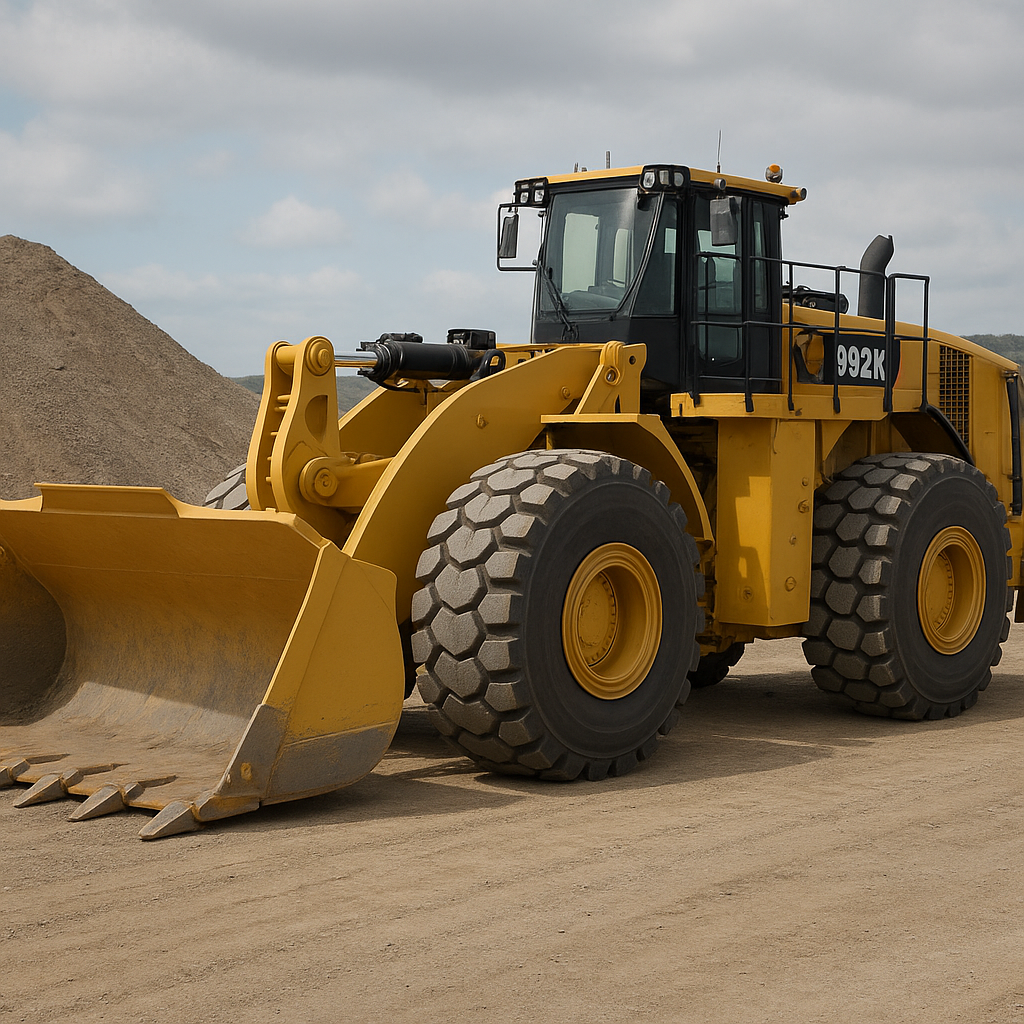
The Caterpillar 992K wheel loader is a heavyweight performer designed to move large volumes of material efficiently in demanding environments. Combining power, reliability, and modern electronic controls, the 992K is widely used across mining, quarrying, port operations, and heavy construction. This article provides a comprehensive look at the machine’s typical applications, design features, technical performance, and lifecycle considerations, with practical information for owners and operators.
Overview and positioning
The Cat 992K is part of Caterpillar’s class of large mining and heavy-duty wheel loaders. Built to tackle high-production loading tasks, it balances high breakout forces, significant bucket capacity, and robust driveline components to sustain continuous, heavy cycles. The machine is often chosen where material handling speed, uptime, and operator productivity are critical to overall site efficiency.
Key characteristics
- Wheel loader architecture optimized for heavy digging and loading cycles.
- Large bucket configurations for efficient material transfer to haul trucks or hoppers.
- Advanced electronic engine and drivetrain management for improved fuel economy.
- Rugged structural components and heavy-duty axles engineered for high stress applications.
Primary applications and industry uses
The 992K excels in environments that demand rapid, high-volume material movement. Typical use cases include:
- Open-pit mining: Loading large-capacity haul trucks and in-pit stockpiling of blasted ore and waste rock.
- Quarrying and aggregate production: Handling blasted rock, feeding crushers, and building stockpiles.
- Ports and terminals: Fast reclaim and ship-loading operations where cycle time directly affects throughput.
- Heavy civil and infrastructure projects: Moving large volumes of earth, base materials, and demolition debris.
- Scrap and recycling yards: With appropriate attachments, suited to scrap handling and loading railcars or trucks.
In many of these roles, the 992K is integrated with site-level fleet management systems to optimize assignment to haul trucks and to monitor productivity in real time.
Technical specifications and performance (typical)
Specifications vary with options, attachments, and regional configurations. The values below represent typical ranges and common configurations for the Cat 992K class loader.
Powertrain and engine
- Engine type: high-displacement diesel engine with electronic controls for emissions compliance and torque management.
- Rated power: commonly in the range of approximately 600–800 hp (rough estimate depending on market and tuning).
- Transmission: heavy-duty powershift or torque-converter transmission with multiple gear ranges for work and travel.
- Drive: articulated steering with heavy-duty axles and final drives designed for continuous high-load cycles.
Weights, capacities and forces
- Operating weight: typically in the range of approximately 60–90 tonnes depending on configuration and attachments.
- Bucket capacities: common buckets range from roughly 7–14 cubic meters (varies by material density and application); specialty buckets or rock buckets can change those ranges.
- Rated payload per pass: dependent on bucket and material, typically dozens of tonnes per cycle for material densities common in mining and aggregates.
- Breakout force and lift capacity: engineered to deliver strong breakout and rimpull suitable for loading large haul trucks quickly.
Performance and fuel consumption
Fuel consumption varies with duty cycle, material type, operator technique, and site conditions. Typical hourly fuel use under medium-to-heavy duty cycles for machines in this class can range from roughly 50 to 120 liters per hour. Many operators report that intelligent electronic controls and drivetrain management can reduce fuel burn per tonne moved by improving shift logic and matching power to load.
Production metrics
- Cycle time: depends on bucket fill factor, dump target, and distance to dump point; optimizing bucket size to match haul-truck capacity is critical for peak productivity.
- Material moved per hour: highly application-specific, but properly matched 992K loaders can move thousands of tonnes per hour in high-throughput quarry and mining operations.
- Availability: standard industry targets for such machines aim at uptime >90% with rigorous maintenance and parts support.
Design features and operator environment
Caterpillar focuses on a combination of mechanical robustness and operator-centric design. The 992K includes features intended to increase productivity while reducing fatigue and downtime.
Operator cab and controls
- Ergonomically designed cab with optimized visibility for loading operations; cameras and mirrors supplement sightlines around the machine.
- Comfort features such as climate control, air-suspension seating, and adjustable controls reduce operator fatigue during long shifts.
- Intuitive instrumentation and display screens provide engine, hydraulic, and payload data; many machines come equipped with onboard weighing (payload) systems and telematics integration.
Hydraulics and implement control
- Load-sensing hydraulic systems or electronically controlled hydraulics that provide smooth bucket and lift functions while conserving power.
- Attachment options include rock buckets, general purpose buckets, high-capacity buckets, and specialty tools for handling scrap or bulk materials.
- Hydraulic quick couplers and modular implement mounts allow rapid changeover between jobs, reducing idle time.
Structural robustness and serviceability
- Heavy-duty frame and linkages are designed for high-cycle durability in abrasive environments.
- Accessible service points, ground-level maintenance locations, and centralized greasing points speed routine servicing.
- Modular components (cooling package, hydraulic modules, electrical boxes) reduce repair times and help minimize downtime.
Maintenance, diagnostics and lifecycle costs
Effective maintenance strategies dramatically influence the total cost of ownership. The 992K supports both preventive maintenance and modern remote diagnostics to keep machines productive across the lifecycle.
Preventive maintenance practices
- Daily checks: fluid levels, visual condition of tires/axles, bucket teeth and cutting edges, lighting and safety systems.
- Routine intervals: scheduled oil and filter changes, hydraulic fluid checks, and track/axle inspections as recommended by manufacturer intervals adjusted for duty cycle severity.
- Component wear monitoring: wear parts such as bucket teeth, cutting edges, pins and bushings should be inspected and replaced on a planned basis to avoid secondary damage.
Telematics and remote monitoring
Many modern 992K machines support Cat’s remote telemetry solutions. These systems provide:
- Real-time fuel, location, and utilization data that help optimize fleet deployment.
- Diagnostic codes and service alerts that allow proactive maintenance and reduce unplanned downtime.
- Historical trend data useful for predictive maintenance and informed replacement decisions.
Lifecycle and resale considerations
When evaluating lifecycle costs, operators should consider:
- Initial acquisition cost vs. matched productivity—oversized or undersized loaders reduce overall fleet efficiency.
- Fuel and consumable costs, which are often the largest operational expense after labor.
- Parts availability and dealer network strength—rapid parts support preserves uptime on critical sites.
- Resale values for well-maintained machines remain strong; documented service history and telematics records often improve remarketing outcomes.
Safety features and best practices
Large wheel loaders pose significant safety risks if not operated and maintained properly. The 992K design includes numerous safety-oriented features, and operators should follow site-specific procedures to mitigate hazards.
Built-in safety systems
- Rollover protective structures (ROPS) and falling-object protective structures (FOPS) for operator protection.
- Backup alarms, camera systems, and optional radar-based collision awareness systems to enhance visibility around the machine.
- Automatic engine protection functions that limit performance in the event of critical system faults to prevent damage and reduce risk.
Operational best practices
- Match bucket size to haul-truck capacity to maintain balanced cycle times and reduce wheel slip.
- Train operators on fuel-efficient techniques such as throttle management and minimizing unnecessary lift/dump motions.
- Enforce strict lockout/tagout and ground-level procedures during service to avoid injuries from moving components.
Fleet integration and productivity strategies
To extract maximum value from a 992K within a fleet, planning and technology use are essential. Well-integrated loaders help increase throughput and reduce unit costs per tonne.
Matching to haul fleet
- Loader-to-truck matching: choose bucket sizes and loader settings that allow near-full truck loads per pass without exceeding safe payloads.
- Cycle optimization: minimize deadhead travel and establish efficient mucking patterns to reduce cycle times.
Use of technology
- Payload monitoring systems prevent over- or under-loading and provide data for productivity targets.
- Fleet management systems coordinate assignments, reduce empty-haul distances, and optimize fuel consumption across the fleet.
- Camera and collision systems reduce incidents that cause downtime and repair costs.
Purchasing considerations and operational tips
When considering procurement or replacement, weigh the machine’s match to the application, local service support, and long-term operating costs. Key factors include:
- Application fit: confirm that the bucket capacity and breakout force match the material characteristics and haul-truck fleet.
- Service network: prioritize vendors with strong parts and technical support to minimize downtime.
- Attachment flexibility: consider quick-change couplers and multiple bucket types to expand machine utility.
- Training and operator selection: skilled operators can reduce fuel consumption and wear rates significantly.
Final notes on performance and expectations
The Cat 992K class wheel loader is engineered to deliver substantial material-moving capability in arduous environments. When properly matched to site requirements and supported by disciplined maintenance and operator practices, it can achieve high availability and strong throughput results. While actual specifications such as engine power, operating weight, and bucket sizes depend on factory configurations and market options, planning around the machine’s capabilities—considering fuel consumption, service intervals, and fleet integration—ensures that the loader contributes positively to overall site economics.
Cat 992K, wheel loader, engine, payload, fuel efficiency, durability, hydraulics, operator comfort, maintenance, productivity
)
)