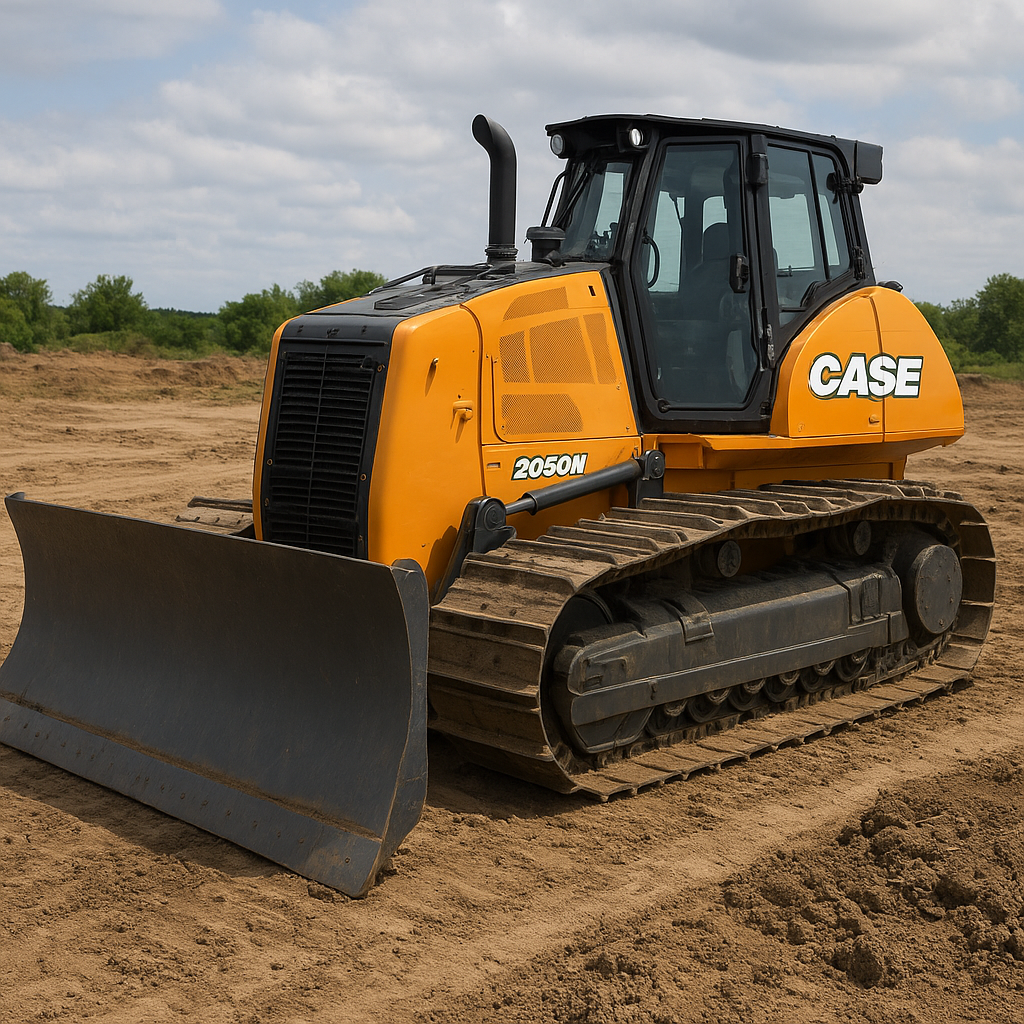
The Case 2050M crawler dozer is a powerful and versatile piece of heavy equipment designed for earthmoving, grading and site-preparation tasks. Widely used on construction sites, in mining, forestry and large-scale landscaping, this machine combines robust mechanical systems with operator-focused features to deliver reliable performance in demanding conditions. The sections below explore the dozer’s main attributes, typical applications, technical characteristics (noting that some figures vary by configuration), maintenance and operational considerations, and how it compares to similar machines on the market.
Overview and key features
The Case 2050M represents a class of medium-to-heavy crawler dozers intended to balance power, traction and versatility. Built on a tracked undercarriage, it excels where ground pressure reduction and traction on loose, uneven or muddy terrain are essential. Tracks give the machine better flotation than wheeled machines, allowing it to perform in conditions where wheeled loaders or graders would struggle.
- Powertrain: The 2050M is typically fitted with a turbocharged diesel engine delivering strong low-end torque for pushing and ripping operations. The drivetrain is engineered to provide smooth power delivery to the tracks through a robust transmission and final drives.
- Undercarriage: Heavy-duty track frames, rollers and idlers are designed for durability. The undercarriage geometry balances stability, ground contact and wear characteristics for extended life in abrasive conditions.
- Blade options: Available blade configurations usually include straight (S-blade), universal (U-blade) and semi-U or combination blades, allowing the machine to handle everything from fine grading to high-capacity dozing.
- Ripper and attachments: A multi-shank ripper is often available as an option for breaking compacted soil, rock and frozen ground. Other attachments may include winches, rear counterweights and specialized hydraulics.
- Operator environment: The cab emphasizes visibility, climate control and intuitive controls. Ergonomic layouts and sound-reducing designs improve operator comfort and reduce fatigue during long shifts.
Applications and industries
The Case 2050M finds use across a broad spectrum of heavy-equipment applications. Its design makes it suitable for roles that require sustained pushing power, traction control, and ground-shaping precision.
Construction and civil engineering
- Site preparation: Clearing, rough grading and creating level building pads.
- Road building: Subgrade preparation, shaping road shoulders and moving aggregate materials.
- Landfill operations: Spreading and compacting waste layers, covering daily cell deposits.
Quarrying and mining
- Ore and overburden movement: Pushing material to spoil piles and assisting in loading operations.
- Bench maintenance: Reshaping benches and reducing slope hazards.
Forestry and land reclamation
- Access road creation: Building and maintaining skid trails and access roads in remote locations.
- Reclamation: Restoring disturbed lands through contouring and soil spreading.
Agriculture and large-scale landscaping
- Field clearing, pond construction and large earthworks for irrigation or drainage projects.
In each of these roles, the machine’s ability to operate in wet or soft ground, its stability on slopes and its heavy pushing capability make it a go-to option for contractors and site operators who need reliability and versatility.
Technical characteristics and performance (typical values)
Exact specifications for a Case 2050M can vary by year, market, and optional configurations. The figures below are representative of the machine class and common configurations; for precise data consult the manufacturer’s specification sheet for a specific serial number and build configuration.
- Operating weight: Approximately 20–28 metric tons (20,000–28,000 kg) depending on blade, ripper and counterweight configurations. The variation is driven by different undercarriage choices and optional equipment.
- Engine power: Typical net power in this class is roughly 150–220 kW (200–300 hp). The turbocharged diesel engine emphasizes torque for pushing and ripping rather than high-speed roaming.
- Blade capacity: Blade volumes commonly range from 3 to 8 cubic meters, depending on blade type (S, U or semi-U). U-blades maximize capacity for high-volume dozing, while S-blades are optimized for precise grading.
- Ground pressure: With wide tracks, ground pressure commonly ranges from 40 to 80 kPa, improving flotation on soft ground. Track shoe width and machine weight significantly influence this value.
- Ripper force: Multi-shank ripper options deliver substantial drawbar pull and shank penetration force; exact numbers vary by configuration, but rippers are engineered to handle compacted soils, frozen ground and light rock.
- Fuel capacity and consumption: Fuel tanks often range from 300 to 600 liters. Fuel consumption varies widely by task: light grading may consume a fraction of capacity daily, while heavy ripping and continuous pushing could yield consumption in the mid double-digit liters per hour. Precise fuel burn depends on load, terrain and operator technique.
- Travel speed: Dozers in this class usually offer low-speed forward and reverse ranges optimized for pushing and manoeuvring—typical top travel speeds are modest (e.g., under 10 km/h in high range), reflecting the machine’s emphasis on power over speed.
Performance in the field is influenced heavily by operator skill, undercarriage condition, correct blade selection and adherence to recommended load limits. Inspecting the hydraulic system, cooling system and track tension regularly will keep performance consistent.
Design elements that matter in real-world use
Several design choices directly affect productivity, downtime and total cost of ownership for the Case 2050M.
- Hydraulics: Responsive, well-sized hydraulic pumps and valves ensure efficient blade and ripper movement. Smooth hydraulic response helps the operator control material flow and reduces cycle times.
- Cooling and filtration: Heavy-duty cooling packages and high-capacity air and oil filters extend component life in dusty or hot environments. Ease of access to filters reduces maintenance time.
- Track system maintenance: Sealed and lubricated track components (where used), robust rollers and replaceable wear parts help lower long-term operating costs.
- Visibility and controls: Large glazed areas, well-positioned mirrors and optional camera systems improve jobsite awareness and safety. Intuitive controls reduce operator training time and improve consistent machine use.
Maintenance, serviceability and common operating tips
Longevity and productivity of a dozer like the 2050M rely heavily on routine maintenance and good operating practices. Here are practical points to maximize uptime and extend component life.
Routine maintenance highlights
- Daily checks: Inspect undercarriage, track tension, fluid levels (engine oil, hydraulic oil, coolant), and blade/ripper mounting points before each shift.
- Filter and fluid schedules: Follow recommended intervals for air, fuel, hydraulic and engine oil filters. Using high-quality lubricants and filters suited to the operating environment reduces wear.
- Undercarriage monitoring: Replace worn track shoes, rollers and sprockets before excessive wear leads to accelerated damage elsewhere. Track alignment and proper tension reduce uneven wear.
- Cooling system care: Keep radiators and charge-air coolers free of debris. Overheating shortens component life and reduces productivity.
Operating tips
- Match the blade to the job: Use U-blades for bulk material movement and S-blades for precision spreads and grading.
- Avoid unnecessary aggressive steering: Use coordinated track braking and steering techniques to reduce track and sprocket wear.
- Use the ripper judiciously: Overly deep ripping in one pass may overstress components—multiple passes at moderate depth are often more efficient and kinder to the machine.
- Monitor fuel and payload balance: Overloading reduces fuel economy and accelerates wear on drivetrain components.
Safety, ergonomics and environmental considerations
Modern dozers incorporate safety and environmental features that protect operators and help meet regulatory and sustainability objectives.
- Operator protection: ROPS/FOPS-certified cabs, seat belts and well-designed ingress/egress reduce the risk of injury. Emergency shutoffs and ergonomic control layouts aid rapid reaction in incidents.
- Visibility aids: Rear and side cameras, as well as mirrors and clear sightlines, reduce blind spots and the risk of collisions on congested sites.
- Emissions and fuel efficiency: Engines comply with regional emissions standards (Tier/Stage equivalents), often using common-rail injection, aftertreatment systems and engine-management software to balance power and emissions.
- Noise and vibration: Cab damping, insulated mounts and modern engine designs reduce operator exposure to noise and vibration, supporting safer and more comfortable shifts.
Economics and total cost of ownership
Purchasing and operating a machine like the Case 2050M involves initial capital outlay plus ongoing operating expenses. Key economic factors include fuel efficiency, maintenance costs, resale value, and machine availability.
- Fuel and engine efficiency: Choosing the right engine tune and operating practices yields measurable fuel savings over the machine life.
- Preventive maintenance: Investing in routine service and early replacement of wear parts reduces catastrophic failures and downtime.
- Attachment flexibility: Using a single base machine for multiple tasks (dozing, ripping, winching) maximizes asset utilization and reduces the need for specialized machines.
- Resale and fleet management: Well-maintained machines command higher resale values. Maintaining service records and using OEM parts supports long-term value retention.
Comparison with similar machines
When comparing the Case 2050M to other crawler dozers in its class, buyers consider power rating, blade capacity, undercarriage durability, serviceability and dealer support. Competitors in this category often include machines from other major manufacturers offering similar power and weight ranges. Key differentiators are often dealer network strength, aftermarket parts availability, operator comfort and the availability of technological aids such as telematics and advanced machine-control systems.
- Case’s dealer and service network can be a deciding factor in markets where rapid parts delivery and local expertise reduce downtime.
- Machine-control compatibility: Integration with GPS grading systems and telematics can significantly boost productivity in precision grading tasks.
- Customization: Availability of factory options and aftermarket attachments influences how well the base machine can be adapted to niche applications.
Operational case studies and typical job performance
Real-world performance is best assessed through specific use cases. The following examples illustrate how a dozer like the 2050M performs in common tasks.
- High-volume site excavation: With a U-blade and experienced operator, a machine in this class can move hundreds of cubic meters of soil per hour on favorable ground—efficient bulk dozing reduces cycle times and cuts fuel consumption per cubic meter moved.
- Landfill daily cover: The 2050M is well-suited for spreading cover material quickly due to blade capacity and predictable push power.
- Ripping frozen ground: Equipped with a robust multi-shank ripper, the dozer can fracture permafrost or compacted subgrade, enabling follow-up excavation or grading.
- Road grade preparation: With a semi-U blade and skilled operator, the machine can achieve consistent subgrade profiles before compaction and paving.
Attachments, upgrades and technology options
Versatility is amplified through a selection of attachments and technology add-ons. These can improve productivity, safety and data capture for fleet management.
- Ripper types: Single-shank or multi-shank options for different ground conditions.
- Winches: For forestry or salvage operations where pulling capacity is needed.
- GPS and machine-control: Onboard grading systems for precision earthworks and reduced stake time.
- Telematics: Remote monitoring of health parameters, fuel usage and location to optimize fleet operations.
Final considerations for buyers and operators
Choosing a Case 2050M or a comparable crawler dozer should be driven by the intended primary tasks, site conditions and total operating budget. Key evaluation points include matching blade and undercarriage configurations to typical ground conditions, confirming dealer support and parts availability in your region, and considering long-term fuel and maintenance budgets.
- Assess typical workload: High daily hours of heavy ripping require a different specification than light grading tasks.
- Consider operator ergonomics and training: Comfortable operators are more productive and make fewer costly errors.
- Plan for resale: Machines with comprehensive service histories and standard OEM components retain more value.
The Case 2050M, when properly specified and maintained, offers a balance of strength, durability and adaptability that makes it a strong candidate for contractors needing reliable dozing performance across diverse projects. Its combination of blade options, ripper capability and track-based flotation enables it to perform in environments where traction, stability and consistent pushing force are required.
)
)