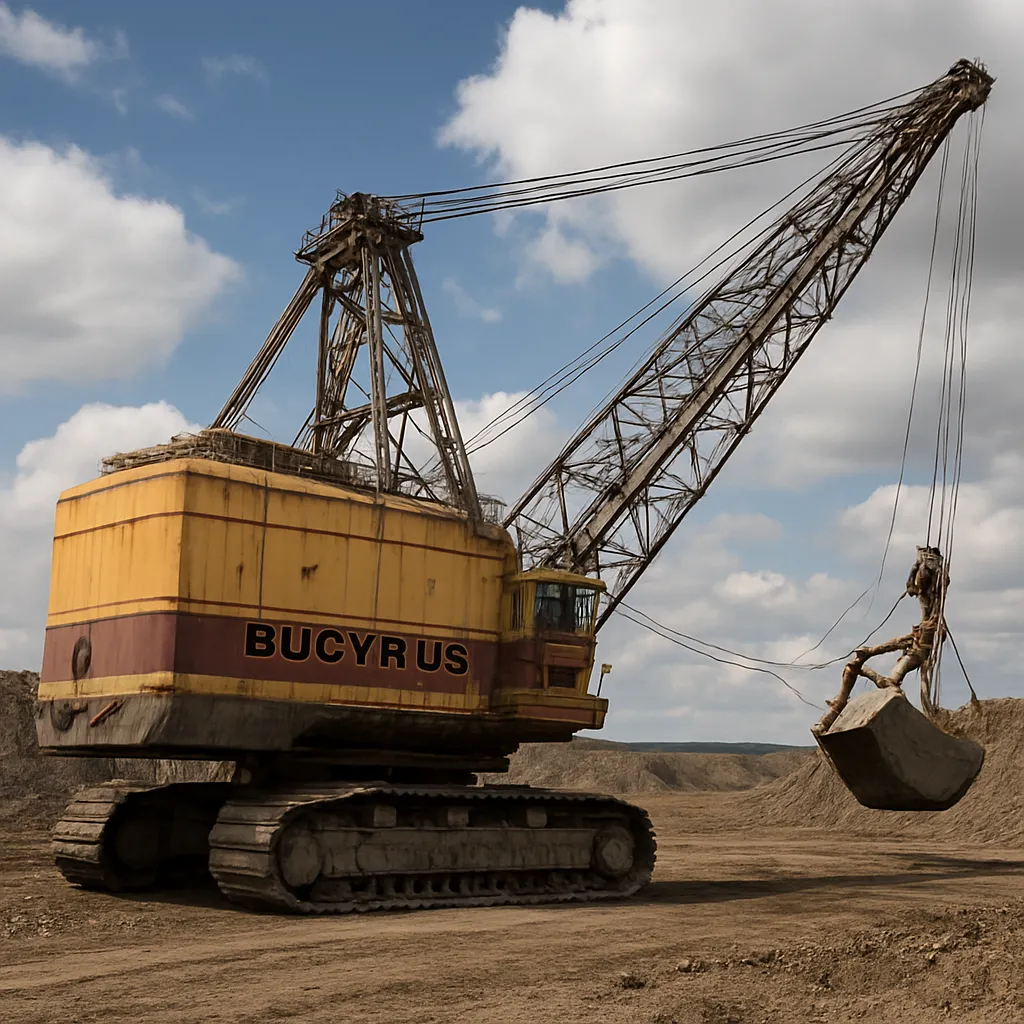
The Bucyrus 1570W is a class of large walking dragline that has played an important role in heavy earthmoving for surface mining and large civil engineering projects. This article examines its design, typical applications, operational characteristics, maintenance needs, and the wider context of its use in industry. Wherever possible, approximate technical figures and practical examples are provided to illustrate performance, but exact specifications vary by configuration, retrofit and owner requirements.
Overview and design philosophy
The Bucyrus 1570W belongs to a family of purpose-built machines conceived for efficient removal of overburden and bulk material in open-pit operations. Manufactured originally by Bucyrus-Erie (and later under the Bucyrus and related brands), the 1570W is characterized by a large fixed boom, a cable-operated bucket assembly, and a walking undercarriage that enables relocation without need for disassembly.
- Walking mechanism: Instead of traditional tracked movement, the 1570W typically uses a multi-legged walking system that lifts and “walks” the house on pads. This reduces ground pressure during relocation and avoids the need to build access roads suitable for crawlers.
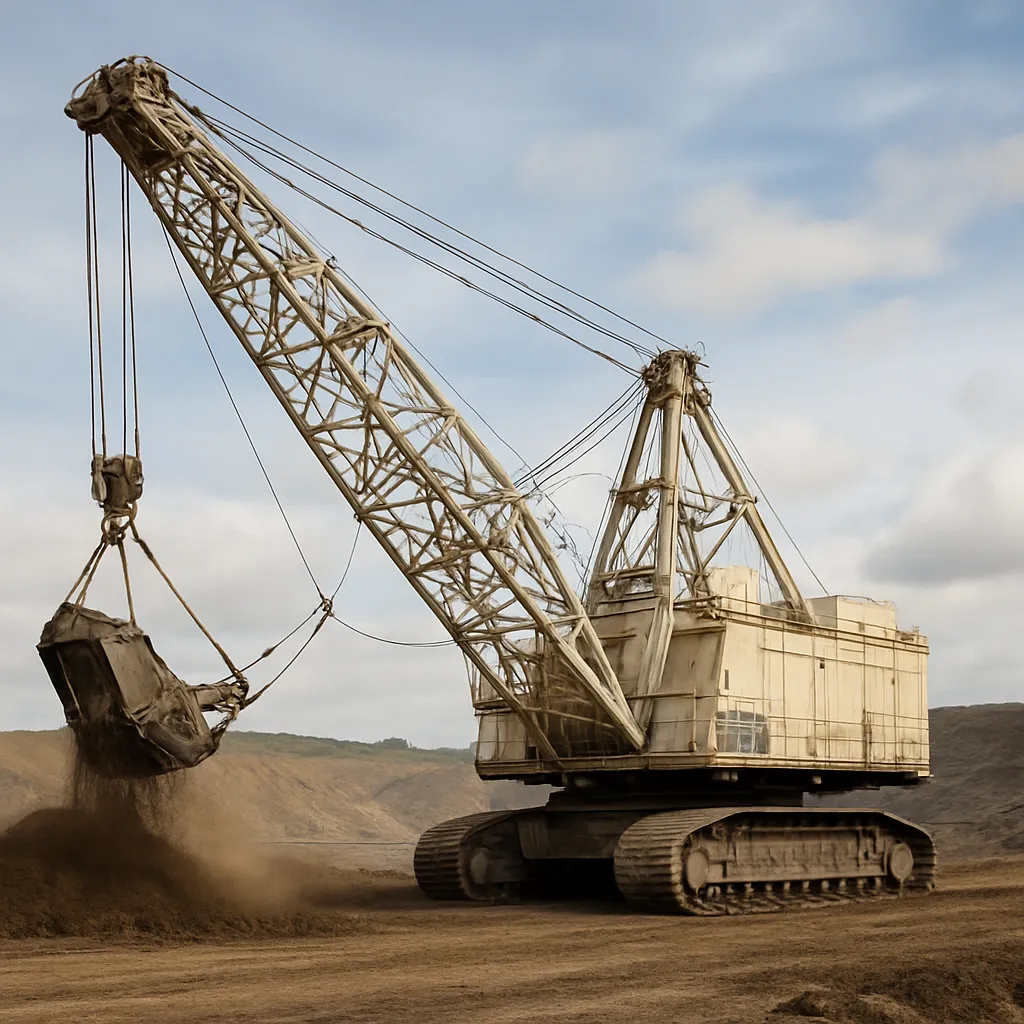
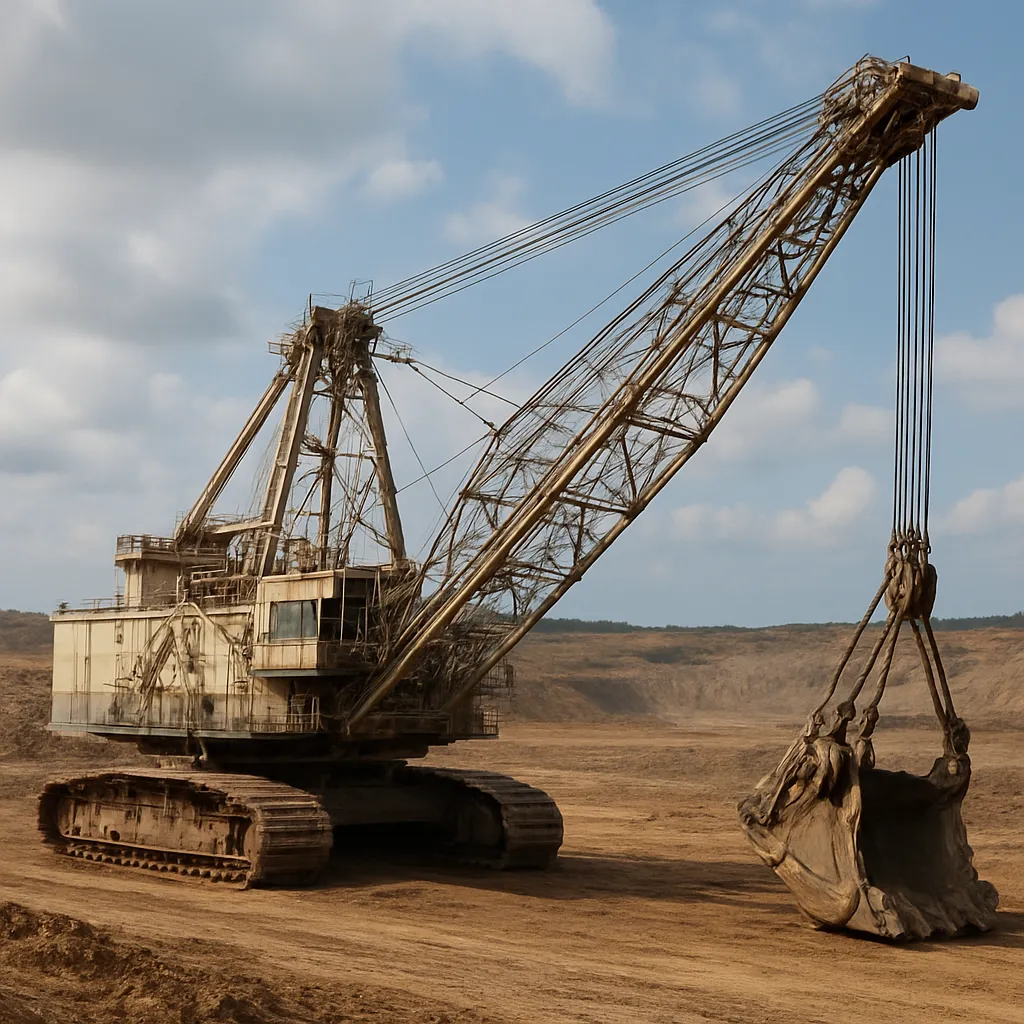
- Cable-driven bucket: The dragline bucket is controlled by a set of hoist, drag and crowd ropes operated by electric winches. The bucket is dragged across the face of material, then hoisted and swung to dump.
- Electric power: Most modern 1570W machines are electrically powered, often drawing supply from an on-site substation or diesel-driven generators during relocation or assembly.
- Modularity: Components such as booms, buckets and winches can be reconfigured, replaced or upgraded to suit production goals—making the machine adaptable over decades of service.
The underlying design objective of the machine is to maximize the amount of material moved per cycle while keeping operating costs and downtime low. The walking dragline design is favored in operations where mobility across unstable or soft ground is required and where long reach is a significant advantage.
Primary applications and roles
Draglines such as the Bucyrus 1570W are highly specialized tools used where bulk removal of unconsolidated material is required. Their most common applications include:
- Surface coal mining – removing overburden to expose coal seams with fewer passes and reduced need for rehandling.
- Open-pit mining – large-scale stripping in metal and industrial mineral operations where reach and bucket size can improve economies of scale.
- Quarrying and aggregates – handling sand, gravel and other unconsolidated deposits where continuous bulk movement is essential.
- Civil engineering and reclamation – construction of large earthworks, canal and harbor excavation, and post-mining land reclamation where precise but large-volume earthmoving is required.
- Environmental and emergency works – dredging, levee building, or rapid clearing where heavy duty, high-capacity excavation is needed.
Because draglines can reach considerable distances, they are especially valuable when mines have steep benches or when the spoil disposal area is distant. The ability to swing large loads over long radii reduces the number of repositioning cycles compared with shovel-and-truck fleets, often improving fuel and operational efficiency at scale.
Technical characteristics and typical specifications
Exact specifications for the Bucyrus 1570W can vary based on customer configuration and upgrades, but the machine’s class exhibits some common ranges. The figures below are typical approximations intended to illustrate the order of magnitude and should be verified against a specific machine’s data plate for engineering work.
- Bucket capacity: Typical dragline bucket sizes for a machine in the 1570 class often range from about 30 to 60 cubic yards (roughly 23–46 m3). Some configurations may use larger or smaller buckets depending on material density and production targets.
- Boom length: Booms are commonly in the range of 150–200 feet (45–60 meters). Longer booms increase reach and dipper height but require stronger structural components and different rigging geometry.
- Operating weight: Gross operating masses often range from several hundred to a few thousand metric tonnes—typical walking draglines of this scale commonly weigh in the order of 800–1,500 short tons (approximately 720–1,360 metric tonnes) when assembled with boom and bucket.
- Power demand: Electrical installed power for machines of this class can be several megawatts, commonly between 2 MW and 6 MW depending on winch and swing motor sizes and electrical configurations.
- Reach and swing: Draglines are valued for horizontal reach; a 1570W-class machine may swing loads across radii approaching the boom length, enabling placement of spoil many bench heights away from the cut face.
- Cycle time and production: Production rates vary with bucket size, cycle time and material. For example, a 35 m3 bucket operating at 15–20 cycles per hour could move roughly 525–700 m3/hr in bank cubic meters. Actual hourly tonnages depend on in-situ material density and operator efficiency.
These figures underline why draglines are used on very large projects: their per-cycle volumes frequently exceed those of typical hydraulic excavators, and their low operating cost per cubic meter can become competitive on high-throughput sites.
How a dragline operates: cycle and crew
Understanding the dragline cycle helps to appreciate the machine’s efficiency and the skill required to operate it effectively. A typical operating sequence includes:
- Positioning: The operator positions the bucket at the cut face, lowering it and setting for the drag pass.
- Drag pass: The bucket is dragged across the material to fill. The drag rope and crowd system control the bucket’s fill profile.
- Hoisting: Once full, the hoist rope raises the bucket to clear the ground and prepare for swing.
- Swing: The house rotates on its slewing bearing to carry the bucket to the spoil pile or dump area.
- Dumping: The bucket is released (by crowd or by opening the bucket lip) to discharge material.
- Return: The bucket is returned to the face and the cycle begins again.
Cycle time is influenced by rope lengths, swing distances, operator skill, and the coordination of winch motors. A well-maintained machine and an experienced crew can significantly improve effective production rates. Typical crews include an operator, a winchman/engineer, electricians and ground crew for routine servicing and repositioning.
Maintenance, refurbishment and lifecycle
Draglines are capital-intensive but built to long service lives; many manufacturers and owners expect multi-decade service with periodic overhauls. Several maintenance and lifecycle aspects are notable:
- Wear components: Wire ropes, sheaves, bucket teeth and wear plates are high-wear items. Wire rope replacement intervals depend on hours, loads and environmental conditions and can range from several months to years.
- Structural inspection: The boom and boom pins are subject to fatigue. Regular non-destructive testing (NDT) and structural inspections are essential to detect cracks and prevent catastrophic failure.
- Electrical systems: Winch motors, control cabinets and power distribution gear must be maintained and sometimes upgraded to modern variable-frequency drives or protective relays to improve efficiency and reliability.
- Refurbishment programs: Owners often rebuild draglines—replacing major components, repainting, and upgrading control systems—to extend working life. Well-executed rebuilds can add 10–30 years of productive service.
- Logistics and relocation: Despite the walking capability, major relocations or long moves may require partial disassembly, heavy lifting and transport. Planning for movement is a significant part of lifecycle cost.
When properly maintained, a dragline may remain economical for decades. The decision to rebuild versus replace depends on comparative costs, remaining life of key components, and changing operational needs at the mine or project.
Safety, environmental and regulatory considerations
Large draglines operate in environments where safety and environmental performance are critical. Key considerations include:
- Ground stability: The walking mechanism redistributes load, but operations must consider subsidence, bench integrity and working near highwalls.
- Electrical hazards: High-voltage supplies and large motors require strict lockout/tagout and electrical safety protocols.
- Dust and noise: Dust suppression, water sprays and noise mitigation are often required by regulators and for worker health.
- Rehabilitation: Mines using draglines plan spoil placement and progressive rehabilitation. The reach advantage of a dragline can reduce haul distances and enable more compact spoil designs.
- Regulatory compliance: Permitting for large earthmoving projects typically includes erosion control, water management and biodiversity protections which affect how and where draglines operate.
Safety culture and environmental stewardship are increasingly important to mining licenses and social acceptance of operations. Draglines, due to their size and visibility, often become focal points for community discussion about mining impacts and reclamation plans.
Economic and operational advantages
There are several economic rationales for choosing a Bucyrus 1570W or similar dragline over alternative fleets:
- Lower operating cost per cubic meter: When operating at high throughput, cable-operated draglines can move more material per energy input than truck-and-shovel fleets on a per-unit basis.
- Reduced fuel and haul road needs: Draglines reduce the need for extensive truck haulage, thereby lowering haul road construction and maintenance costs.
- High uptime potential: Robust designs and on-site spares lead to sustained operations; planned refurbishments can keep a machine productive for decades.
- Flexibility of spoil placement: With long boom reach, companies can place spoil at distances that optimize mine layout and reclamation strategy.
However, the capital cost and logistics for mobilizing a dragline tend to be large, and therefore they become economical mainly on large, long-life deposits where steady high-volume excavation is required.
Historical and industry context
Bucyrus-Erie was one of the prominent builders of large draglines through the 20th century, and machines like the 1570W continued a lineage of heavy excavation equipment designed for massive earthmoving tasks. In the 21st century, a combination of acquisitions and industry consolidation saw key manufacturing and service capabilities evolve, with legacy machines remaining in service through rebuilds and parts support.
Across the mining sector, technological trends such as remote operation, predictive maintenance and electrical drive modernization have been applied to legacy platforms. Retrofits with modern control systems, improved monitoring sensors, and more efficient motors can significantly improve fuel/electric efficiency and safety while extending the machine’s viable service life.
Example calculations and practical figures
To provide practical insight into what a 1570W-class machine can accomplish, consider a worked example using conservative numbers:
- Assume bucket capacity = 35 m3 (≈46 cubic yards).
- Assume effective cycles per hour = 15 (varies with swing distance and operator).
- Material density (bank) = 1.6 t/m3 (typical for mixed overburden).
Production per hour = 35 m3 × 15 cycles × 1.6 t/m3 = 840 tonnes/hour. Over a 24-hour period, continuous operation would yield more than 20,000 tonnes—demonstrating the scale at which draglines can operate when well-integrated into a mining plan. Variations in bucket size, cycle rate and density will change this result, but the example shows why draglines are selected for high-throughput projects.
Notable operational considerations when selecting a dragline
When an operator or owner evaluates a dragline like the Bucyrus 1570W, several practical and strategic factors influence the decision:
- Deposit geometry: Bench heights, face angle and lateral continuity of material must match dragline reach and dipper profile.
- Project duration: Long-life operations are more likely to recover the high capital and mobilization costs.
- Available power infrastructure: Electric draglines require robust supply; otherwise, onsite generation or hybrid solutions must be considered.
- Local support and parts: Access to experienced maintenance teams, spare parts, and refurbishment yards helps minimize downtime and extend service life.
- Regulatory environment: Permitting timelines and environmental constraints can affect how spoil is handled and where the dragline can legally operate.
Conclusion
The Bucyrus 1570W class epitomizes the strengths of walking draglines: enormous bucket capacities, long boom reach, and the ability to move substantial volumes of material economically. These machines continue to be relevant in modern mining and large civil works due to their low per-unit handling cost at scale, long service lives, and adaptability through refurbishment and modernization. While capital and logistical demands are high, for the right deposits and projects a 1570W-style dragline remains a compelling and proven choice for bulk excavation needs.
)
)