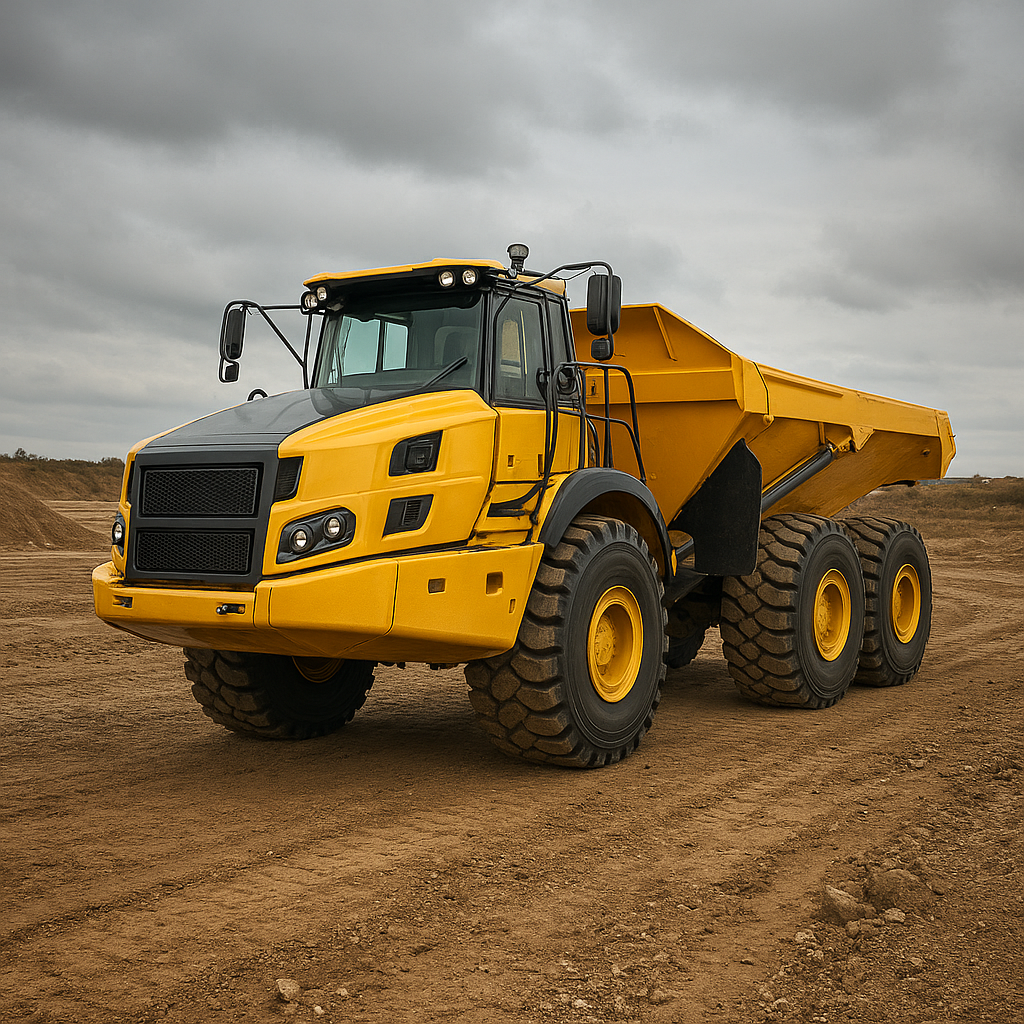
The Bell B60E is a heavy-duty, off-road articulated hauler designed to move large volumes of material across challenging terrain. Combining robust engineering with modern electronics and operator-focused features, the B60E represents a class of machines that are central to contemporary mining, quarrying, earthmoving and large-scale civil engineering projects. This article explores the machine’s main characteristics, typical applications, operational advantages and considerations for owners and operators, with practical insights into performance, maintenance and environmental aspects.
Overview and design philosophy
The Bell B60E embodies the core principles of modern articulated dump truck design: durable construction, simple yet effective drivetrain, and systems engineered for high uptime. As an articulated hauler, the B60E uses a jointed articulation point between the tractor and the body, allowing independent steering and excellent mobility on uneven ground. This layout delivers superior traction and stability compared with rigid-frame dump trucks when operating on slopes, in soft ground or across broken terrain.
Bell Equipment has focused the B60E on delivering high volumetric throughput per cycle while maintaining low operating costs on a per-tonne basis. Key design priorities include structural robustness of the front and rear frames, efficient powertrain integration, and a body designed for fast cycle times and easy dumping. The machine’s balance between gross vehicle weight and payload capacity is optimized to suit haul profiles commonly found in open-pit mines, large quarries and municipal earthworks projects.
Key technical features
The B60E’s configuration includes a heavy-duty chassis, power-dense engine, automatic transmission with retardation capability, and robust axles and final drives. Below are typical aspects that define the model’s technical makeup; specific figures vary depending on regional spec and optional packages.
- Engine and powertrain: The B60E is usually fitted with a turbocharged diesel engine delivering strong low-end torque to handle heavy loads and steep grades. Modern iterations include electronic engine management for optimized fuel delivery and diagnostics. The engine couples to an automatic powershift transmission, often with multiple gears optimized for both travel and loading/dumping phases.
- Articulation and steering: A single-pin articulation joint, combined with hydraulic steering cylinders, provides agile manoeuvring and excellent flotation in rough conditions. The steering geometry reduces tyre scrub and improves tyre life under articulation.
- Suspension and axles: Heavy-duty planetary axles and oscillating suspension components allow the B60E to sustain loads on irregular surfaces. Differentials can be lockable or feature automatic traction control to maximize ground engagement.
- Body design: The body is shaped to assist rapid material flow and efficient dumping. High-strength steels are typically used in wear areas with optional liners for abrasive materials. Tailgate designs may vary to optimize spread or containment depending on application.
- Operator environment: The cab is designed for operator comfort and visibility, with ergonomic controls, climate control, and increasingly, integrated telematics and camera systems. Reduced operator fatigue leads to safer and more productive shifts.
- Electronics and telematics: The B60E often offers modern fleet-management systems for remote monitoring of fuel use, duty cycles, maintenance intervals and GPS-based location services—tools that enhance uptime and lower total cost of ownership.
Applications and industries
Articulated haulers like the Bell B60E are versatile machines used wherever large volumes of loose material need to be transported across rough ground. Typical sectors and tasks include:
- Mining and quarrying — short-haul material movement from blast faces to crushers or stockpiles; access to areas not reachable by rigid dump trucks.
- Civil engineering and infrastructure — earthworks for highways, dams, airport runways and large construction projects requiring movement of soil, rock and aggregate.
- Pipeline and energy sector — transporting materials along long alignments where ground conditions change frequently.
- Reclamation and remediation — moving topsoil, overburden or contaminated material in restoration projects.
- Seasonal operations — in colder climates, articulated haulers serve in snow clearance and bulk material movement where articulated steering improves traction on icy surfaces.
Because of their combination of high payload capacity and off-road capability, machines like the B60E are often preferred for sites with steep gradients, soft subgrades and frequent changes in load type or destination.
Performance and operational considerations
When evaluating the B60E for a particular operation, several performance parameters are important to weigh against site needs:
Payload and cycle time
The B60E is typically positioned in the 50–65 tonne payload class, making it suited to bulk-haul tasks where maximizing tonnage per trip is critical. Cycle time—load, travel, dump, return—directly affects productivity. Factors that influence cycle time include road profile, load density, loading method (shovel, excavator or loader), and operator skill. Optimizing route planning and maintaining proper tyre selection and inflation are simple ways to reduce cycle duration and cost per tonne.
Fuel consumption and economy
Fuel use depends heavily on duty cycle and terrain. On average, fuel burn for large articulated haulers like the B60E may range widely; operators typically monitor litres per tonne-kilometre or litres per hour to evaluate efficiency. Key strategies for fuel savings include using electronic engine management modes, employing retarder braking on downgrades to reduce mechanical wear, and training operators in eco-driving techniques.
Traction and stability
Articulated design gives the B60E excellent traction in soft or broken ground. Many units are equipped with selectable differential locks or traction control systems. The low centre of gravity and articulated articulation reduces the risk of rollovers on uneven ground compared with rigid-frame equivalents, although safe loading practices and correct body configuration remain essential.
Noise and vibration
Modern cabs and driveline mounts minimize transmitted vibration and noise to the operator, which improves comfort over long shifts. Reduced noise can also be a regulatory requirement for operations near populated areas or in noise-sensitive projects.
Maintenance, uptime and life-cycle costs
One of the strongest selling points of the B60E line is emphasis on reliability and ease of maintenance. For heavy equipment owners, predictable uptime and manageable maintenance routines translate to lower total cost of ownership (TCO).
- Service accessibility: Key components such as filters, fluid reservoirs and inspection points are designed for easy access, minimizing downtime during routine service.
- Wear parts: High-wear areas—body liners, tailgate hinges, bucket interfaces—are designed for replacement or reinforcement. Choosing appropriate wear packages for the intended material reduces component turnover.
- Diagnostics: Integrated telemetry and onboard diagnostics alert maintenance teams to potential issues before they become critical, enabling planned interventions rather than reactive repairs.
- Component modularity: Commonality of parts with other models in the Bell range simplifies parts stocking for fleet operators that run mixed fleets.
To maximize service life, operators should adopt a preventative maintenance schedule tailored to the site’s operating conditions—abrasive materials, heavy loads and dusty environments will accelerate wear and demand shorter service intervals.
Safety features and operator support
Safety is integral to the B60E’s design. Features commonly found on contemporary models include:
- Rollover protection structure (ROPS) and falling object protective structure (FOPS) certified cabs.
- Advanced braking and retarder systems to control descent speeds on steep grades.
- Rear-view camera systems and proximity sensors to reduce blind spots and enhance site safety during reverse manoeuvres.
- Operator aids such as hill-hold, automated traction control and electronic stability management in certain packages.
- Ergonomic layout of controls and good sightlines to work areas to reduce operator fatigue and error.
Operator training is crucial: even with advanced safety systems, proper loading, travel speed management and site awareness prevent most incidents.
Environmental considerations and emissions
Modern versions of the B60E are designed to meet contemporary emissions standards through the use of after-treatment systems and efficient combustion tuning. Environmental topics relevant to articulated haulers include:
- Emissions compliance: Engines are typically available in tiers meeting regional regulations (for example, EU Stage or EPA Tier levels), utilizing selective catalytic reduction (SCR) and diesel particulate filtration where required.
- Fuel efficiency: Reducing fuel consumption lowers greenhouse gas emissions and operating costs. Strategies include optimized gear selection, telematics-driven route planning and idle-reduction protocols.
- Noise and dust control: Body design and controlled dumping sequences can reduce dust generation. Noise attenuation in cabs and mufflers helps meet site-specific limits.
- Lifecycle footprint: Long component life, rebuildable engines and remanufactured components help lower the long-term environmental footprint of a machine fleet.
Market positioning and economic factors
In the articulated hauler segment, the B60E competes with products from other major manufacturers offering similar payload classes. Fleet owners select machines like the B60E based on a mix of capital cost, expected productivity, maintenance costs and dealer support. Factors influencing purchasing decisions include:
- Project size and haul distances: Articulated haulers perform best on short to medium hauls over rough ground; for long paved hauls, rigid dump trucks may be more economical.
- Availability of local service and parts support: Proximity to competent dealers and spare parts reduces machine downtime and TCO.
- Resale value and fleet commonality: Common spare parts and shared technology across a fleet improve lifecycle economics.
- Financing and rental options: Many owners mitigate capital expenditure risk through leasing or rental arrangements that align machine capacity with project phases.
Operators increasingly rely on telematics and predictive maintenance contracts to convert uptime into predictable production results—this trend affects residual values and purchase strategies across the industry.
Comparisons and alternatives
When appraising the B60E class, consider comparative factors such as payload per unit cost, fuel economy per tonne, and compatibility with existing fleet equipment. Alternatives include a range of articulated dump trucks from other manufacturers that may offer different engine suppliers, electronic suites or axle configurations. The choice often depends on:
- Specific site topography and materials handled.
- Operator familiarity with particular control systems.
- After-sales support and parts logistics.
Practical tips for operators and fleet managers
Maximizing the value of a B60E in operation requires attention to both machine and human factors. Best practices include:
- Implementing structured operator training focusing on fuel-efficient driving, safe loading and route discipline.
- Using telematics to monitor fuel use, idle time and maintenance alerts; set benchmarks for litres per hour and tonnes per hour to track efficiency.
- Maintaining proper tyre selection and pressures for the mix of ground conditions to avoid premature wear and reduce rolling resistance.
- Scheduling routine inspections after heavy shifts to catch potential issues such as fluid leaks, loose fasteners and wear on pivot points.
- Choosing the correct body liner and tailgate option for high-abrasion materials to extend structural life and reduce downtime.
Selected statistics and real-world figures
Exact technical figures for a particular B60E depend on market specification and optional packages. Below are representative figures to give a sense of the machine’s scale—treat these as indicative averages rather than guaranteed factory specifications:
- Nominal payload capacity: approximately 60 tonnes (metric) — actual allowable payload can vary by jurisdictional road and site regulations.
- Body heaped volume: typically in the range of 35–45 cubic metres depending on body profile and material density.
- Engine power: common engines in this class produce roughly 350–420 kW (470–560 hp), with torque figures optimized for low-speed hauling.
- Operating weight (empty): often in the range of 25,000–30,000 kg, again depending on options and body configuration.
- Maximum travel speed (unloaded): usually 50–60 km/h on suitable surfaces, with governed speeds on many machines for safety.
- Fuel capacity: tanks often hold between 700–1200 litres, sized for long shifts in remote sites.
For budgeting and site planning, operators typically measure productivity in tonnes per hour. A well-managed B60E fleet can produce several hundred to over a thousand tonnes per hour per machine depending on cycle length, load factor and travel distance.
Upgrades, options and customisation
B60E units are often customised to the end-user’s needs. Common options and upgrades include:
- Heavy-duty bodies and wear packages for highly abrasive materials.
- Advanced telematics subscriptions for fleet optimisation and predictive maintenance.
- Climate packages for extreme temperatures (heating or enhanced cooling).
- Specialised tyres for soft ground, rock, or mixed conditions and tyre pressure monitoring systems.
- Supplementary safety systems such as enhanced cameras, radar-based collision warnings and operator alertness systems.
Conclusion
The Bell B60E is a versatile heavy hauler that brings together a robust mechanical platform, modern powertrain control, and operator-focused features to meet the demanding needs of mining, quarrying and major earthworks. Its articulated design provides superior off-road performance and operational flexibility on complex sites. When selected and configured correctly, and supported by strong maintenance and telematics practices, the B60E can deliver high throughput, predictable uptime and competitive lifecycle costs.
Bell B60E remains a compelling option for projects where high payload, off-road capability and reliable performance are required. Proper selection, operator training and preventive maintenance are key to unlocking its full value.
)
)