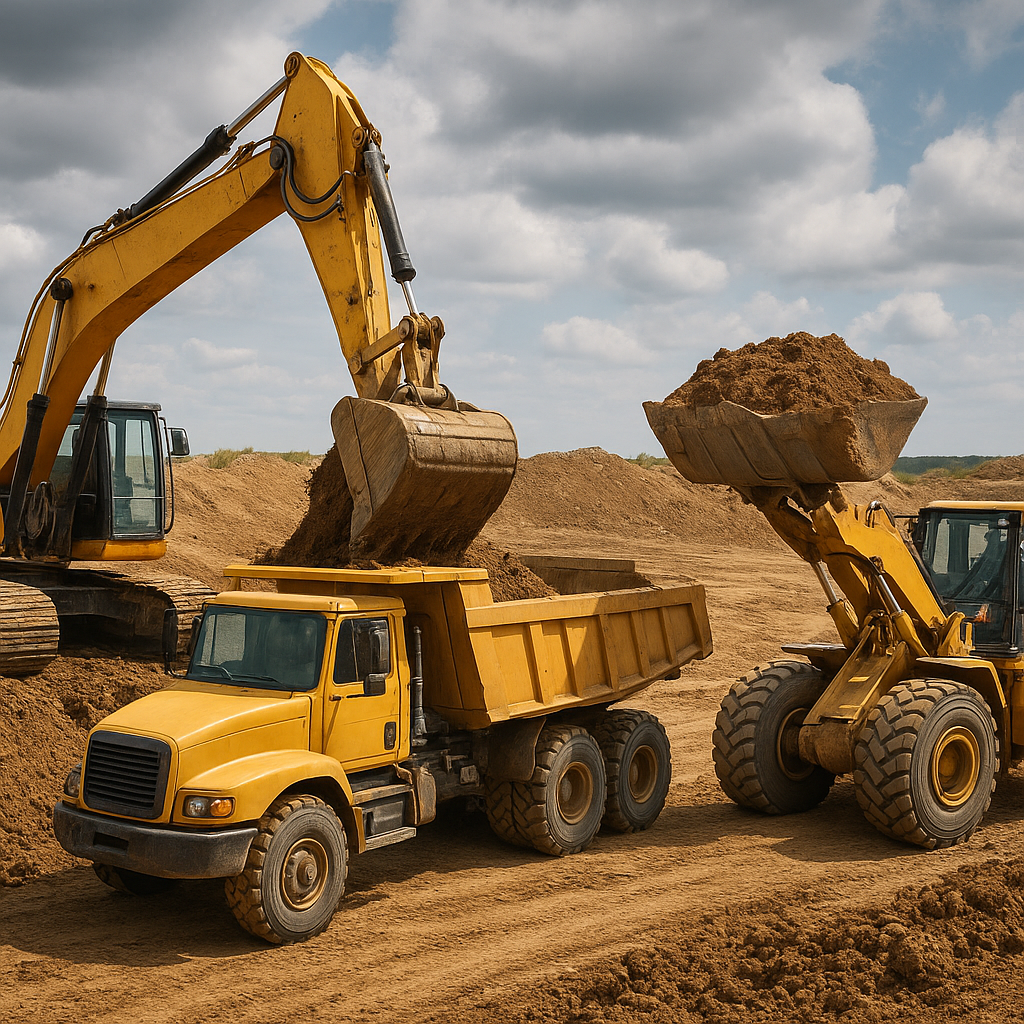
Heavy machinery is the silent backbone of modern civilization, shaping landscapes, raising skyscrapers and digging deep into the earth so that our cities can grow. From excavators and bulldozers to cranes and gigantic dump trucks, these machines combine raw power with precise engineering. Behind every highway, high-rise or tunnel there is a fleet of machines working in a carefully coordinated system. On newrecords.co.uk you can explore how records of performance, innovation and durability are constantly being pushed in this industry. Understanding how heavy machinery works is not only fascinating; it also reveals how technology, safety and sustainability are transforming construction and mining. This article breaks down the main types of machines, explains their core components and shows how they operate together on a real job site.
Key components shared by most heavy machines
Although excavators, cranes and bulldozers look very different, many rely on a similar set of core systems. Knowing these systems helps explain how such massive equipment performs delicate, precise tasks.
Power source: Most heavy machinery still relies on large diesel engines. These engines provide high torque at low speed, ideal for pulling, lifting and pushing. In some newer designs, diesel engines drive a generator that powers electric motors, creating a hybrid system that improves efficiency and control. Electric power is becoming more popular in smaller machines used in urban areas, reducing noise and emissions.
Hydraulic system: Hydraulics are the “muscles” of heavy equipment. A pump, driven by the engine, pressurizes hydraulic fluid. This fluid flows through hoses to cylinders and motors. When an operator moves a joystick, valves open or close, directing fluid to specific cylinders. The incompressible fluid transfers force efficiently, letting relatively small controls move extremely heavy loads with precision.
Transmission and drivetrain: To move the machine itself, power from the engine passes through a transmission to wheels or tracks. Modern transmissions can be mechanical, hydraulic or electric. Track systems spread the machine’s weight over a large area, allowing it to travel over soft ground without sinking. Wheeled machines, on the other hand, move faster and are more suitable for finished or firm surfaces.
Undercarriage and frame: The frame carries the load of the machine and absorbs vibrations and shocks. It must be both strong and flexible enough to handle twisting forces during operation. The undercarriage on tracked machines includes rollers, idlers, sprockets and track chains, all designed to work in mud, rock, sand and extreme weather.
Control systems: Older machines relied mostly on mechanical levers and basic hydraulics. Modern equipment uses electronic joysticks, sensors, and onboard computers. These systems monitor engine speed, hydraulic pressure, temperature and load levels. They help protect the machine from overload and assist the operator with smoother and more accurate movements.
Excavators: digging, lifting and precision work
Excavators are among the most versatile pieces of heavy machinery. They dig foundations, load trucks, demolish structures and even perform underwater work.
An excavator consists of a tracked or wheeled undercarriage, a rotating upper structure (called the house) and a working arm made of boom, stick and bucket. The house can rotate 360 degrees, so the machine can dig on one side and swing to dump material on the other without moving the tracks.
The operator sits in a cab filled with controls, screens and sometimes cameras. Two main joysticks manage the boom, stick, bucket and swing motions. Foot pedals or additional levers control travel and sometimes auxiliary tools. When the operator pulls a joystick, valves direct pressurized hydraulic fluid to specific cylinders. These cylinders extend or retract, changing the position of the arm or bucket.
Modern excavators can be equipped with quick couplers that let operators change attachments in minutes. Instead of a bucket, the machine might use a hydraulic breaker to crush concrete, a grapple to sort scrap metal, or an auger to drill holes. GPS and laser guidance systems can also be added, allowing precise depth control and automatic grading. This combination of power and accuracy makes excavators essential in almost every large project.
Bulldozers: pushing and shaping the ground
Bulldozers are built to push heavy materials and cut rough terrain into a more workable shape. Their large steel blade at the front can move soil, rubble and rock, while a ripper at the rear can tear up hard ground or old pavement.
The key to a bulldozer’s performance is its tracked undercarriage. Tracks distribute the machine’s massive weight, giving high traction and stability even on steep slopes or soft ground. Inside the machine, a strong diesel engine drives the tracks through a heavy-duty transmission. Blade movements rely on hydraulic cylinders that tilt, raise and angle the blade as the operator adjusts controls.
Advanced dozers often include automated grading systems. These systems use GPS, 3D design models and sensors on the blade to maintain the correct height and slope automatically. Instead of relying only on the operator’s judgment, the machine continuously compares its position to the planned surface. This reduces rework, saves fuel and delivers a more accurate final grade.
Loaders and dump trucks: moving huge volumes of material
Once material is dug or blasted, it has to be moved. Wheel loaders and dump trucks work together to shuttle soil, rock or aggregates across a site or to processing facilities.
Wheel loaders are front-mounted machines with large buckets. They are extremely maneuverable and can quickly scoop material, reverse, turn and load it into a truck. Their articulated steering, where the machine bends in the middle, lets them operate efficiently in tight spaces. Hydraulics raise and tilt the bucket, while robust axles and tires withstand heavy loads and uneven terrain.
Dump trucks transport large volumes over medium to long distances. On construction sites, articulated dump trucks with jointed frames navigate rough ground and steep inclines. In mining, gigantic rigid-frame haul trucks carry hundreds of tons per load. Their engines can rival those of small ships, and their brakes use advanced systems, sometimes including electric retarders, to safely manage slopes with massive weight.
The dumping process relies on hydraulic cylinders that lift the front of the truck bed, causing material to slide out the back. Operators must control speed, ground angle and load distribution to avoid tipping. Many modern trucks feature onboard weighing systems, helping maintain safe and optimal payloads for efficient operation.
Cranes: lifting heavy loads with precision and safety
Cranes specialize in vertical and horizontal lifting. Whether they are tower cranes rising above city skylines or mobile cranes mounted on trucks, the basic physics are similar: counterweights balance the load, and a boom or jib extends reach.
In a tower crane, the mast is fixed to a foundation, and a slewing unit at the top allows the jib to rotate. The operator, working from a cabin or via remote controls, manages winches that raise and lower the hook and trolley systems that move the load along the jib. Electric motors and sophisticated braking systems control movement smoothly, while heavy counterweights at the rear balance the forces created by the lifted load.
Mobile cranes use hydraulic booms that telescope to different lengths. Outriggers extend from the chassis to stabilize the crane during lifting operations. Before each lift, operators and engineers calculate load charts, verifying that the boom length, angle and radius are within safe limits for the crane’s configuration. Safety devices such as load moment indicators and limit switches warn or even stop the machine if an unsafe condition is detected.
Road construction machines: from raw ground to smooth asphalt
Building a modern road involves a chain of specialized equipment, each performing a specific step.
Graders fine-tune the shape of the roadbed, using a long adjustable blade that can cut, spread and level material with high accuracy. Their steering and blade controls work together to maintain the desired slope and crown of the road.
Pavers then place asphalt or concrete in a continuous layer. A paver receives hot asphalt from trucks into a hopper, moves it by conveyors and spreads it evenly using a screed at the rear. Sensors monitor thickness and temperature, ensuring consistent material distribution. Finally, rollers compact the surface. Smooth-drum and pneumatic rollers apply pressure and sometimes vibration, removing air voids and increasing surface durability.
Operator cabins and human–machine interaction
Although heavy machines are becoming more automated, human operators remain central to safe and efficient work. The operator’s cabin is a carefully designed environment that balances visibility, comfort and control.
Modern cabs include adjustable seats, climate control, noise reduction and ergonomic joysticks to reduce fatigue during long shifts. Large windows and sometimes cameras or radar systems provide better awareness of surroundings. Digital displays present data on fuel use, engine status, maintenance alerts and work parameters such as grade or load.
As technology advances, assistance features similar to those in modern cars are appearing: collision warnings, obstacle detection and automated stopping systems. Training simulators allow new operators to practice complex maneuvers in a virtual environment before handling real machines, improving safety and confidence.
Maintenance, safety and sustainability
Keeping heavy machinery reliable requires systematic maintenance. Scheduled inspections check for leaks, worn parts, fluid levels and structural damage. Sensors on major components can send data to maintenance teams, helping them predict failures before they occur.
Safety is a priority on every site. Clear communication protocols, regular training, lockout procedures and well-marked working zones reduce the risk of accidents. Machines incorporate protective structures around the cab, emergency stops and alarms. Load and stability monitoring systems help prevent rollovers and structural failures during lifting or pushing operations.
Sustainability is increasingly important. Manufacturers are improving fuel efficiency, introducing hybrid and fully electric models and using better filtration systems to reduce emissions. Precision control systems also limit unnecessary idling and overworking, saving fuel and cutting the environmental footprint of large projects.
How machines work together on a typical project
On a large construction site, heavy machinery operates like a coordinated team. Excavators dig foundations and load trucks. Bulldozers shape the terrain and create access roads. Loaders move stockpiled material. Cranes lift structural elements into place, while road machines prepare internal roads and final pavements.
Managers use digital planning tools to schedule machine use, avoiding idle time and congestion. Radio communication, site maps and sometimes GPS tracking help coordinate movement and positioning. This orchestration ensures that raw material arrives where it is needed, structures are assembled on time and safety zones are respected.
Behind the scenes, data from machines is increasingly collected and analyzed. Fuel consumption, operating hours and machine locations feed into systems that optimize fleet usage. This data-driven approach supports better decisions on maintenance, replacement and project planning.
The future of heavy machinery
The next generation of heavy machinery is moving toward increased automation and connectivity. Semi-autonomous dump trucks already operate in some large mines, following preprogrammed routes and reacting to obstacles. Remote-controlled excavators can work in hazardous areas, keeping operators at a safe distance.
Electric powertrains will become more common, especially in urban and indoor environments where noise and emissions are critical. Improved batteries, fast charging and grid integration will change how machines are refueled and maintained. Digital twins—virtual models of physical machines—will allow engineers to test updates, plan service and improve performance without stopping work on site.
Despite these advances, the fundamentals remain the same: engines or motors generate power, hydraulics transfer force, structural components carry loads and trained people oversee the process. Understanding how heavy machinery works, from the smallest sensor to the largest boom, provides insight into how our built environment is created and maintained, and how innovation will continue to reshape this powerful industry.