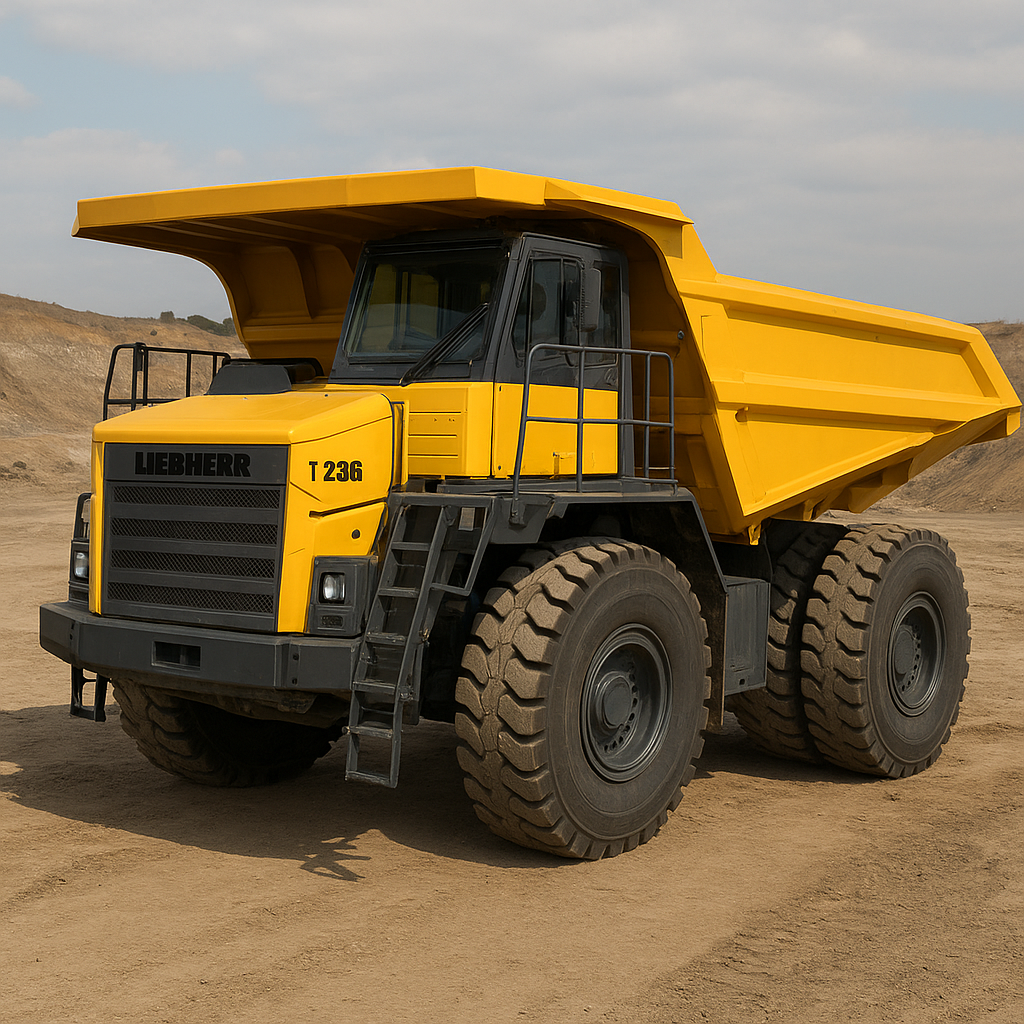
The Liebherr T 236 is a name that appears in the context of large off‑highway haul trucks used in demanding industries such as mining, quarrying and large earthmoving projects. Whether already established as a serial model or as a lesser‑known member of Liebherr’s heavy equipment family, machines in this category are engineered for a single purpose: to move massive volumes of material reliably, efficiently and safely over long production cycles. This article examines the design principles, typical applications, operational characteristics and economic considerations related to the Liebherr T 236 class haul truck, including common technical themes, modern technologies integrated into machines of this type, and practical advice for operators and fleet managers.
Overview and design philosophy
The core mission of the Liebherr T 236 class haul truck is to provide a robust platform for high‑volume material transport. Key elements of the design focus on structural strength, driveline durability, and operator ergonomics. Liebherr, known for engineering robust components across its product range, typically emphasizes modular design, ease of maintenance and integrated systems to maximise machine availability.
Typical design characteristics for haul trucks in this family include a heavy steel frame, reinforced dump body or box, large off‑road tyres designed for cyclical loading, and a driveline configured to deliver both tractive effort and efficient fuel use under heavy loads. These machines often combine a high‑torque diesel engine with either an automatic mechanical transmission, an electric drive (diesel‑electric), or advanced hybrid systems used for torque management and improved fuel economy.
- Liebherr engineering often targets long structural life and straightforward repairability.
- Emphasis is placed on operator visibility and operator comfort to reduce fatigue during long shifts.
- Accessibility for maintenance and diagnostics is integrated into component layout to reduce downtime.
Frame and body
The chassis and dump body are constructed to resist cyclical stresses and to allow easy replacement of wear parts such as liners, corners and sideboards. Reinforcements in key stress areas and use of high‑tensile steels are common strategies to extend service life while keeping overall weight optimized.
Driveline and powertrain
The driveline choices for haul trucks generally include mechanical, electric and hybrid options. Manufacturers like Liebherr design drivetrains to balance peak power with continuous torque delivery. Reliability, serviceability and compatibility with heavy‑duty planetary axles are major selection criteria.
Applications and operating environments
Haul trucks of the T 236 class are most commonly found in:
- Open‑pit mining — transporting overburden and ore between benches and processing areas.
- Large quarries — moving aggregates, limestone, and dimension stone materials.
- Major civil engineering and earthworks projects — long‑term material relocation on highways, dams and reclamation sites.
- Port and bulk handling facilities — where short, heavy haul routes require high payload throughput.
The operational environment dictates specific machine configurations: steep bench slopes and harsh, rocky ground increase demands on suspension, tyres and undercarriage protection; high ambient temperatures influence cooling system sizing; dusty environments require enhanced filtration systems. The adaptability of the machine to local conditions is a decisive factor in total productivity.
Operational roles
In a typical mining fleet, T 236 class trucks perform the repetitive task of hauling from pit faces to crushers, bins or stockpiles. Productivity metrics such as tonnes per hour (t/h), cycle time, and payload consistency are crucial. Aside from raw payload, haul road quality, loading tool capacity (shovels, excavators, loaders), and pit layout play a major role in actual fleet productivity.
Performance, capacity and technical characteristics
Exact manufacturer specifications for a specific model such as the Liebherr T 236 may vary by market and configuration; official data sources should be consulted for purchase decisions. However, haul trucks in this capacity range typically share several performance attributes and measurable indicators of efficiency.
- Payload — payload capacities are designed to match common loading shovels and loaders, aiming to maximise the load per cycle while staying within legal road and axle limits where applicable.
- Fuel efficiency — measured in litres per operating hour or litres per tonne moved, fuel efficiency is a key economic metric that drives powertrain choices and operational strategies.
- Availability and mean time between failures (MTBF) — manufacturers and fleet operators track these values closely to predict lifecycle costs and plan maintenance windows.
While definitive numerical figures for a T 236 specific model are not provided here, a reasonable expectation for modern medium‑to‑large haul trucks would include:
- Payload class commonly between several dozen to a few hundred tonnes, depending on market segment and configuration.
- Robust cooling and filtration systems to maintain power density in adverse conditions.
- Modular components to accelerate repairs and reduce downtime.
Fleet managers typically monitor key performance indicators such as:
- Tonnes moved per hour and per shift
- Fuel consumption per tonne
- Availability percentage (actual hours available vs. scheduled hours)
- Maintenance cost per operating hour
Telematics, automation and controls
Modern haul trucks increasingly feature advanced telematics systems that provide real‑time data on fuel usage, location, payload, engine health and fault codes. Integration with fleet management systems enables optimization of cycle times, predictive maintenance schedules and material flow planning. Some operators adopt partial automation (assisted steering, geofencing, collision avoidance) and, in specialized mines, fully autonomous haulage systems that coordinate multiple trucks for continuous operation.
Safety, ergonomics and operator support
Safety is integrated at multiple levels in haul truck design. Structures protect occupants in rollover events, while cab design focuses on reducing operator fatigue and improving situational awareness. Systems commonly present in trucks of this size include:
- High‑visibility cab layouts and tiered seating positions
- Advanced braking systems with retarders or engine braking
- Collision avoidance and proximity detection systems
- Fire suppression systems tailored to engine and payload risks
Operational policies that complement machine safety include strict training programs, defined communication protocols for loading and hauling activities, and regular inspections of haul roads and vehicle components. Together, these elements reduce incidents and protect both personnel and equipment.
Maintenance strategy and lifecycle costs
Haul truck life‑cycle cost is heavily influenced by maintenance practices, parts availability and how well the machine matches the application. Key maintenance strategies include condition‑based maintenance driven by telematics, scheduled component rebuilds, and proactive replacement of wear items like tyres, brakes and structural liners. Lifecycle costs are typically broken down into acquisition, fuel, maintenance, tyres, and residual value.
- Maintenance accessibility lowers downtime and labour costs; daily checks and automated diagnostics shorten repair cycles.
- Tyre management is a major expense; matching tyre compound and pattern to ground conditions extends service life.
- Refurbishment and rebuild programs offer fleet owners options to extend service life while controlling capital expenditure.
Environmental considerations and future trends
Environmental pressures and regulatory trends are pushing the industry toward lower emissions and improved energy efficiency. For haul trucks, this manifests as:
- Engine upgrades to meet stricter emissions standards, including aftertreatment systems.
- Hybridisation and electrification — diesel‑electric drivetrains and trolley assist systems reduce fuel consumption and emissions in high‑duty cycles.
- Improved aerodynamic and thermal management systems to reduce parasitic losses and enhance fuel economy.
Fleet electrification — either through battery systems or trolley overhead power — is becoming attractive in sites with predictable routes and high utilisation, as the total cost of ownership can improve when electricity is cheaper than diesel and when the grid or local power infrastructure supports the load.
Procurement, fleet integration and economic factors
When evaluating a model such as the T 236 for purchase, fleet managers consider compatibility with existing loaders and shovels, haul road geometry, maintenance capacity, and the availability of local service and spare parts. Procurement decisions often weigh:
- Acquisition cost vs. expected lifetime value and residual value
- Fuel consumption and expected fuel price volatility
- Availability of skilled service personnel and access to OEM support
- Financing options, warranty programs and parts availability
Many operators choose to run mixed fleets to balance unit cost, payload flexibility and risk. Contractual arrangements with OEMs for long‑term service agreements or guaranteed availability rates can also alter the economic calculus.
Practical tips for operators and fleet managers
- Match truck capacity to loading tool cycle time to avoid under‑utilisation or bottlenecks.
- Implement telematics from day one to build historical performance data useful for optimisation and negotiations.
- Standardise components across the fleet where possible to reduce spare parts inventory and simplify training.
- Invest in operator training and structured shift handover protocols to protect machine health and maximise productivity.
Summary
The Liebherr T 236 class haul truck embodies the characteristics expected from modern large off‑highway haul machines: structural robustness, emphasis on durability, integrated diagnostics for efficiency, and design choices that prioritise safety and operator comfort. Specific technical specifications for proprietary models should be obtained directly from the manufacturer or authorised dealers, since payload, engine calibration, and ancillary systems are often tailored to customer requirements and local regulations. For operations considering a machine in this class, the decisive factors are how well the truck integrates into the existing material handling chain, the total cost of ownership over its service life, and the availability of local support for maintenance and spare parts.
When planning a fleet strategy, combining robust equipment selection with modern data systems and targeted maintenance planning will generally deliver the best balance of productivity and cost control. The continued evolution of powertrains and automation promises to change the economics and operational models for haul trucks in the years ahead.


)
)