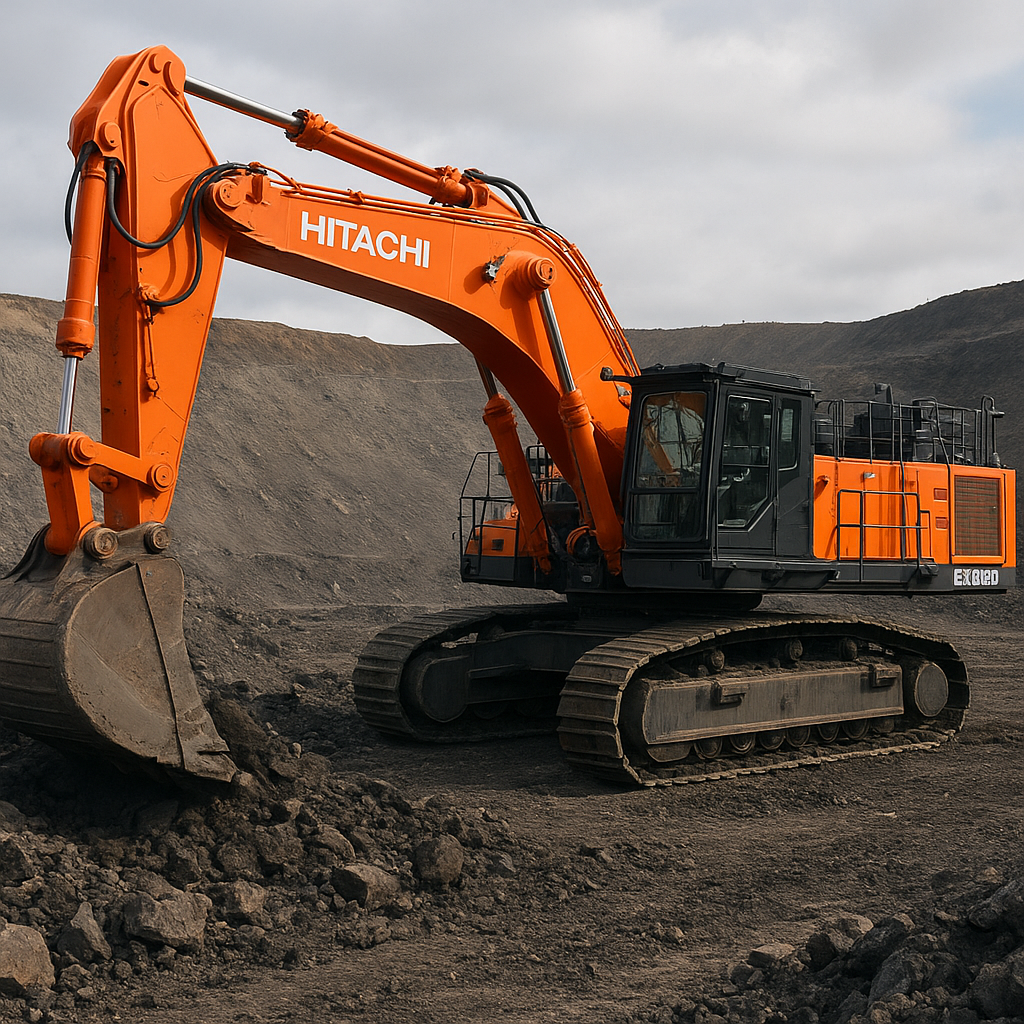
The Hitachi EX1900-6 is a purpose-built mining excavator designed to handle demanding surface mining and large construction tasks. Combining robust mechanical architecture with advanced hydraulics and operator-centered features, this machine is widely used where high production, reliability and ease of maintenance are essential. In the following sections we explore its design, typical applications, operational performance and other practical information valuable to fleet managers, operators and engineers.
Overview and general description
The Hitachi EX1900-6 belongs to the family of large hydraulic excavators tailored for heavy-duty mining operations. It is engineered to provide a balance of durability, productivity and serviceability. While specific configurations and options can vary by market and customer requirements, the EX1900-6 is typically specified for large open-pit mining, quarrying and heavy civil works where repeated loading of large haul trucks, crushers or stockpiles is required.
Key characteristics
- Hydraulic system optimized for smooth digging and high bucket fill factors
- Robust undercarriage designed for intensive cyclic loading and abrasive environments
- Large working envelope for deep digging and long reach loading
- Service points and modular components arranged for fast maintenance
- Operator cabin focused on visibility, ergonomics and reduced fatigue
Design, powertrain and hydraulics
The EX1900-6 combines a heavy-duty structural frame with a powerful powertrain and a hydraulic system tuned for mining cycles. The design philosophy emphasizes a long service life, capability to work in severe conditions and straightforward component replacement.
Structure and boom/arm
Excavator booms and arms on mining-class machines like the EX1900-6 are built with thick high-tensile steel and reinforcement in critical stress zones. The understructure features a track design optimized for stability when working on high benches. Swing and slew systems use large-diameter bearings and robust booms to withstand shock loads and side forces when loading large trucks.
Engine and power management
These machines are usually fitted with high-power, low-speed diesel engines from reputable manufacturers that deliver strong torque at low RPMs, which helps with fuel efficiency during heavy digging. Electronic engine management systems improve fuel use and provide diagnostics for preventive maintenance. The engine and cooling systems are sized for continuous operation in hot climates often found at mining sites.
Hydraulics and work tools
The hydraulic system prioritizes stable control, quick response and energy efficiency. Pilot-operated valves and load-sensing pumps are commonly used to optimize hydraulic flow to work circuits according to demand. Work tools for the EX1900-6 typically include large tooth or lip-type buckets, hydraulic breakers for secondary fragmentation, and specialized grapples or clamshells for material handling tasks.
Applications and industries
The EX1900-6 excels in multiple heavy applications, with a primary focus on various forms of surface mining. Its versatility makes it a choice machine for companies seeking a balance between capacity and maneuverability.
- Open-pit mining — excavating overburden, loading haul trucks, reclaiming benches
- Quarrying — extracting and loading blast rock and rubble into primary crushers
- Bulk material handling — moving ores, coal, aggregates and stockpile management
- Large civil engineering projects — canal excavation, dam construction, port works
- Specialized work — high-production dredging support (with adapted attachments)
Performance and productivity (practical metrics)
Performance for a mining excavator is best understood through how much material it can move in a shift and how reliably it operates under load. Productivity depends on bucket size, material density, cycle time, and machine availability. Below are representative examples and calculations commonly used to estimate productivity for machines in this class.
Example productivity calculation
Assume a bucket capacity of around 10–12 m3 (common for this size), an average material density of 1.6 t/m3 and an effective cycle time of 30–40 seconds (dig, swing, dump, return). A conservative worked example:
- Bucket volume: 11 m3
- Material density: 1.6 t/m3 → ~17.6 tonnes per load
- Cycle time: 35 s → ~103 loads per hour
- Hourly material moved: ~1,812 tonnes/hour
This theoretical figure must be adjusted for real-world factors such as partial fills, operator skill, haul road distance, truck queuing and downtime. Typical sustained hourly production in practice will be lower but still represents substantial throughput suitable for most medium-to-large mining operations.
Availability and life-cycle productivity
Mining operations measure machine value not only by instantaneous throughput but also by availability (percentage of time the machine is able to work) and maintenance intervals. The EX1900-6 is designed to allow rapid replacement of wear parts and filters, and its modular systems simplify major repairs. High availability—often targeted above 90% in well-managed fleets—directly increases tonnes moved per year and reduces overall cost per tonne.
Operator comfort, controls and safety
Modern mining excavators provide cabins that reduce fatigue and improve control accuracy. The EX1900-6 focuses on clear sightlines to the work area, comfortable seating, adjustable climate controls and intuitive controls.
Operator features
- Ergonomically positioned joysticks and pedals for reduced fatigue
- Climate-controlled cabin for extreme temperature environments
- Large windows and optional camera systems for improved visibility
- On-board diagnostics and display panels providing machine status and alerts
Safety systems
Safety on large excavators includes structural features (ROPS/FOPS cab protection), audible and visual warnings, emergency stop systems, and platform access ladders with handrails. Integrated monitoring systems can alert operators and maintenance staff to abnormal conditions such as overheating, low pressures or component wear, enabling proactive interventions.
Maintenance, serviceability and total cost of ownership
For mining operations, ease of maintenance and the resulting total cost of ownership are as important as purchase price. The EX1900-6 is engineered with accessible service points, grouped routine maintenance areas and modular components for faster turnaround.
Routine maintenance considerations
- Scheduled oil and filter changes, typically more frequent in high-dust conditions
- Wear part inspection and replacement (bucket teeth, cutting edges, track pads)
- Hydraulic system monitoring — fluid analysis to catch contamination early
- Cooling system maintenance to prevent overheating in hot climates
Lifecycle component strategy
Mining fleets often adopt a lifecycle replacement plan where major components (engine, hydraulic pumps, swing systems) are rebuilt or exchanged on a pre-planned schedule to avoid unexpected failures. This approach helps maintain high availability and allows predictable budgeting for capital and maintenance costs.
Attachments, customization and versatility
One advantage of large hydraulic excavators is their adaptability through attachments. The EX1900-6 can be configured with multiple tools to suit job-specific needs.
- Buckets — range from high-capacity general-purpose buckets to heavy-duty rock buckets
- Hydraulic breakers for secondary breakage or demolition
- Grapples and clamshells for handling irregular materials
- Specialized tools such as pulverizers or shears in non-mining roles
Customization also includes undercarriage options, reinforced attachment points for winches or rope shoveling conversion kits, and electronic package upgrades (telemetry, fleet monitoring). These options enable operators to match the machine precisely to site requirements.
Environmental impact and efficiency
Modern mining equipment is increasingly examined for fuel efficiency and emissions. While a machine of this scale consumes significant fuel by nature, improvements in engine management, hydraulic pump efficiency and operator training can reduce fuel per tonne moved. Noise reduction measures and dust control practices further mitigate environmental impact on site.
Efforts to reduce footprint
- Eco-mode engine settings to reduce fuel consumption during light cycles
- Auto-idle and auto-shutdown features to eliminate fuel waste during extended stops
- Use of diesel particulate filters (where required) and compliant engines for emissions regulations
- Integration with pit management systems to optimize truck-excavator matching and reduce idling
Operational tips and best practices
To extract the best value from an EX1900-6, operators and fleet managers typically follow a set of proven practices:
- Train operators on efficient digging techniques and bucket fill optimization
- Use telemetry and fleet management tools to monitor fuel burn, idle time and cycle times
- Maintain a preventative maintenance schedule with component condition monitoring
- Plan haulage and truck dispatch to minimize waiting times and maximize excavator uptime
- Document wear part life and replacement patterns to refine procurement and inventory
Global usage and typical fleet role
The EX1900-6 is suitable for medium-to-large scale pits where a single excavator must reliably load a fleet of haul trucks or feed crushers. In many operations, several machines of this size are deployed in combination with larger shovels or smaller excavators to create an efficient pit-system. Their flexibility makes them a common sight in coal, copper, iron ore and aggregate operations globally.
Examples of practical metrics and case considerations
When selecting a machine like the EX1900-6, operators consider metrics such as tonnage per hour, fuel consumption per tonne, and component life. To provide a practical feel:
- Typical targeted availability in well-run mines: 85–95%
- Common operating weights for machines in this class: roughly 160–200 tonnes, depending on configuration
- Bucket sizes for peak production: commonly 9–14 m3 depending on material and truck matching
- Maintenance intervals for major services: often measured in operating hours with major overhauls planned between 20,000–30,000 hours depending on use
Final considerations for procurement and fleet planning
Evaluating an EX1900-6 purchase involves balancing acquisition cost, expected production, maintenance capability and resale value. Important procurement factors include availability of local support, parts supply chains, operator training programs and compatibility with existing site logistics (truck sizes, bench heights, access roads).
Underlined for emphasis: choosing the right excavator is not only about peak capacity but about achieving reliable, cost-effective production over the machine’s operational life. When matched correctly to site conditions and supported by disciplined maintenance and operations, a machine like the EX1900-6 can deliver consistent high-volume performance at competitive cost per tonne.


)
)